
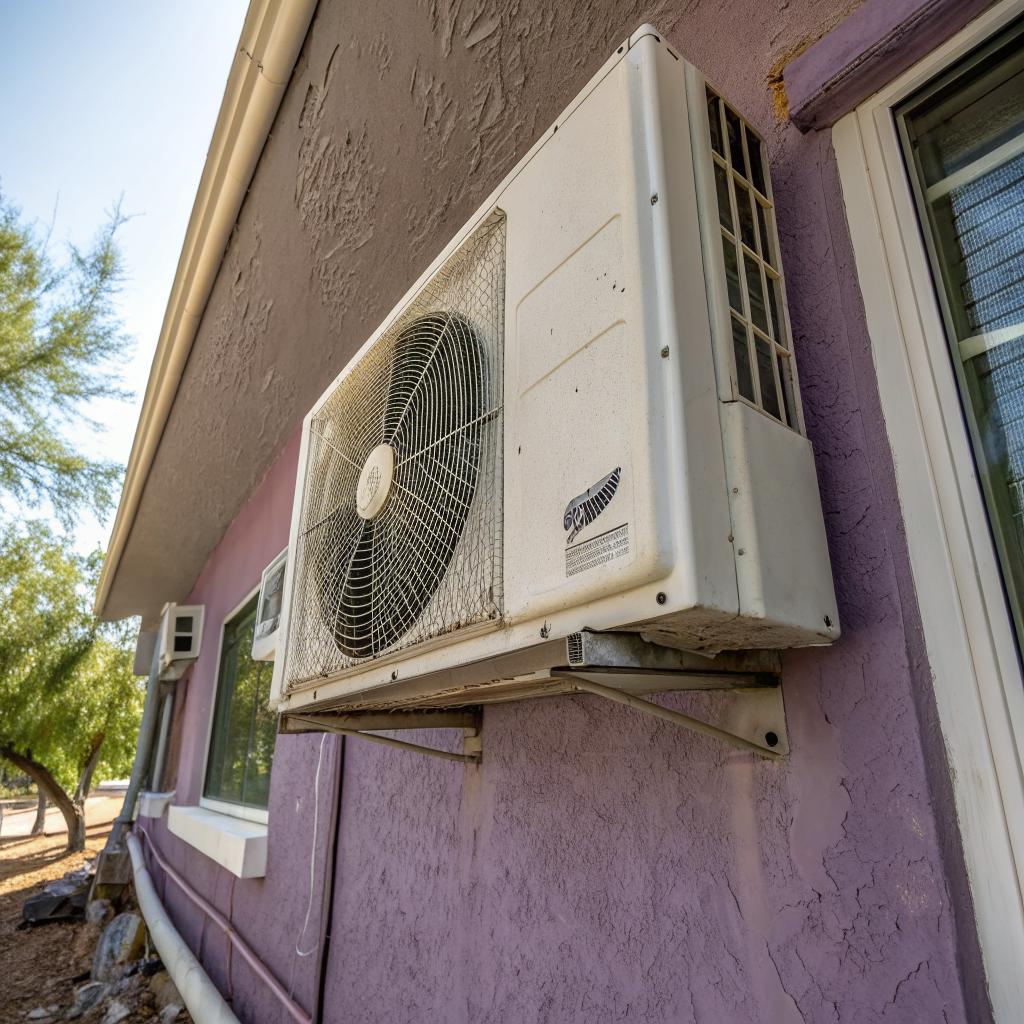
What if I told you that one of the fastest ways for a small business in Albuquerque to cut summer energy costs is not a new software subscription or some smart meter, but simply treating a ductless mini split like a revenue asset instead of a household appliance?
The short answer is direct: regular, targeted swamp cooler conversions Albuquerque cuts costs because it holds your system close to its original efficiency, prevents expensive failures, extends equipment life, and keeps your team and customers comfortable enough to stay productive and actually spend money with you. That is the whole thing, in one sentence. Everything else is just zooming in on that point and looking at it like a business decision, not just a comfort choice.
Why a ductless repair strategy behaves like a cost control plan
Most people think of air conditioning as a sunk cost. You buy the unit, pay the bill every month, and complain in July. That is it.
But if you run numbers even roughly, ductless systems are not just another line item. They behave more like an asset that can give a decent return if you manage it well, or drain cash if you ignore it.
Let me put it in simple business language:
If a ductless system drops from 20 SEER to 14 SEER because of neglect, you can end up paying 30 to 40 percent more every cooling season for the same comfort.
You do not need to love HVAC jargon to feel that. That loss compounds over 3, 5, or 10 years.
And the repair itself, when done on time, is not some abstract “maintenance cost.” It is closer to a small capital protection move. You are protecting the original performance you already paid for rather than buying it again later in the form of a new system.
For a business owner in Albuquerque, that translates into:
– Lower monthly operating costs in summer
– Fewer surprise outages in the middle of a sales rush or a busy service day
– Less pressure to pull cash or a line of credit for premature replacement
It is a cost control story, not a comfort story. Comfort is just the visible layer.
How ductless systems actually save money, when they work like they should
A ductless mini split is already more energy friendly than a typical older central unit for two simple reasons:
1. You do not lose cold air in ducts that leak into attics or crawl spaces.
2. The inverter technology lets the compressor ramp up and down instead of running full blast every time.
When the system is healthy, you get tighter control over energy use. When something is off, the system still runs, but the cost per hour goes up quietly. That is where repair makes or breaks your bill.
Here is a quick view of what “healthy vs neglected” really looks like in money terms for a small office or retail space in Albuquerque.
| Scenario | Seasonal electricity cost | What is going on |
|---|---|---|
| Well maintained ductless system | $900 | Filters and coils clean, refrigerant level correct, no airflow issues |
| Same system, no repairs for 3+ years | $1,250 | Coils dirty, minor refrigerant leak, fan working harder than needed |
| Neglected until major failure | $1,400 + $2,000 repair or replacement | Compressor stress, surprise outage, emergency visit or early replacement |
These numbers are simple estimates, not a quote, but they reflect real patterns HVAC companies see all the time.
So when we talk about ductless repair “cutting costs,” we are really talking about keeping you near that left column for as many seasons as possible.
Four main cost buckets ductless repair affects
If you step back and think like an owner or a finance person, costs from a ductless system fall into a few buckets. Repair work touches each of these in a slightly different way.
- Energy spend
- Emergency service calls
- System replacement timing
- Soft costs from downtime and discomfort
Let us walk through each, without trying to sound like a sales brochure.
1. Lowering energy spend without a huge upgrade
Energy is the obvious place to look first. Ductless units are rated with SEER and EER, which describes how much cooling you get per unit of electricity. That rating is based on a clean, tuned, brand new system.
Over time, three simple things chip away at that rating:
– Dirt on the indoor or outdoor coils
– Clogged or old filters that restrict airflow
– Refrigerant levels that drift away from the ideal range
Individually, none of these feels dramatic. The unit still blows cold air. Your team is not complaining. You forget about it.
But they all push the system to run longer at higher load for the same result. You might not notice each extra minute, but your utility bill does.
Routine repair and maintenance can recover 5 to 20 percent of lost efficiency, which often pays for the visit within one cooling season in Albuquerque.
An honest HVAC tech is not doing magic. They are just removing friction from the system:
– Cleaning indoor and outdoor coils
– Checking and adjusting refrigerant charge where needed
– Making sure the blower and fan run freely
– Fixing loose electrical connections that cause heat and stress
If you are used to spending, say, $300 per month across a few ductless heads in peak summer, pulling that down to $240 or $260 feels small in isolation. Over a 4 or 5 month heavy cooling period, it adds up.
For a small shop or office, that might be the equivalent of a software license or a part-time tool you wanted but did not feel comfortable paying for.
2. Avoiding expensive emergency calls and off-hours labor
Let me be direct here. The most painful HVAC bills rarely come from planned work. They come from late calls when the unit stops in the middle of a heat wave.
That is true for homes and it is very true for small businesses that rely on foot traffic or have staff in the office all day.
Think about a simple sequence:
– The indoor head has been running louder than usual for weeks.
– Everyone ignores it because it still cools.
– The fan finally fails on a 98 degree Friday.
– The space heats up, employees go home early, or customers leave after 2 minutes.
Now you are stuck with a few problems at once:
– A stressed system that might have damaged other parts
– An emergency or off-hours service call, which usually costs more
– Lost sales or lost productivity on that day
A fan motor replacement or capacitor swap is not expensive if handled early. But if the system overheats and takes the compressor with it, now you are close to that uncomfortable territory where the tech says something like, “At this point, you might want to think about a new unit.”
Catching small failures early is boring, but it is almost always cheaper than waiting for one big dramatic outage in peak season.
From a business view, this echoes something you probably already do in other areas. You patch software, you replace worn tires on company vehicles, you refresh old laptops before they die. HVAC should sit in that same group, not in the “we will wait until it breaks” category.
3. Stretching the useful life of your ductless system
Most ductless mini splits have a projected life of 12 to 20 years, depending on brand, load, and care. That range is wide.
If you sit closer to the low end, you pay for full replacement earlier. If you stay near the high end, you effectively spread your upfront cost over more years.
From a finance point of view, you are slowing your depreciation with each extra working year. That gives you space to invest in other parts of your business while still staying cool.
Regular repair and cleaning helps in at least three ways:
– Lower mechanical stress on the compressor and fans
– Reduced risk of electrical failures from overheating parts
– Better performance at lower loads, which avoids constant full power cycles
There is a quiet compounding effect here. A healthy system is less likely to generate the kind of severe faults that shorten its life. So one year of good care does not just save you that year. It lowers the chance that next year you face a major repair that pushes you toward replacement.
For example:
| Approach | Typical life | Expected major repair events |
|---|---|---|
| Repair only when it breaks | 10 to 12 years | 2 to 3, including at least one high-cost event |
| Scheduled repair / maintenance every 12 to 18 months | 14 to 18 years | 1 to 2, often lower cost and caught earlier |
Again, these are patterns, not a promise. But if you have managed physical assets before, the trend is familiar. Preventive work stretches life and smooths your cash flow.
4. Reducing the soft costs of heat, discomfort and downtime
Some costs do not show up on a line labeled “HVAC,” but they still connect back to your ductless system.
Think about scenarios like these:
– Your dev team or sales staff is sweating through calls and projects because the office is sitting at 80 degrees.
– Customers walk into a small retail space and walk right back out because the air feels stale or sticky.
– You host a small investor meeting and the AC decides to cycle off during the pitch.
You will not see a neat number that says “lost $413 due to bad air conditioning” on your P&L, but you will see hints. Lower in-store conversion. Shorter dwell time. Shorter meetings. Maybe more mistakes from tired staff.
Comfort does not create revenue by itself. But poor comfort quietly erodes it.
For people who read about growth and funding, that probably feels familiar. You know small friction points do not kill a deal on their own, they just reduce odds. Cooling is like that.
Treat room comfort as a basic condition for good work and good customer behavior, not as a luxury you deal with after everything else.
A well repaired and tuned ductless system is part of that baseline condition. It is not glamorous. Nobody is pitching an AC tune-up at a board meeting. But when the air feels right, you free mental space for the work that actually grows revenue.
How ductless repair decisions differ from central AC decisions
If you are used to traditional central air, ductless units can feel a bit odd at first.
– You have more indoor units, each with its own filters and behavior.
– You get zoned control, so some rooms run cooler than others.
– The outdoor unit often manages multiple heads.
Because of this, repair decisions look slightly different.
Zone by zone performance instead of all-or-nothing
With central air, a problem often affects the whole building. With ductless, you might see:
– The main work area cools fine.
– The small meeting room is weak and humid.
– The back office freezes.
A repair visit should respect that pattern instead of treating the whole system as either “working” or “not working.”
You might decide to:
– Prioritize the high traffic or revenue producing zones.
– Schedule lower priority fixes for slower seasons.
– Adjust setpoints and usage patterns based on how each head performs.
In other words, you can manage your repair budget more flexibly. You are not forced to solve every small issue on the same day, as long as you know what they are and how they affect comfort and cost.
More touchpoints, smaller tasks
A ductless system has several indoor heads. Each has:
– Filters
– A blower fan
– A drain line
– An electronic control
Instead of one big air handler in a closet, you now have multiple smaller devices on walls or ceilings. That might sound like more hassle, and sometimes it is, but it also means some tasks are lighter and faster.
For example, cleaning filters on a few indoor heads can be something your team does monthly. You do not need a tech for that, at least in many cases. Then you schedule a deeper cleaning and check once a year for things that require training.
So repair and maintenance split into:
– Simple recurring work you or your staff can handle
– Annual or semi-annual work for a pro
That split can cut costs if you organize it instead of treating the system as a mysterious box.
Building a basic ductless repair plan that makes financial sense
If you want something practical, not just theory, consider a simple structure like this.
1. Set a regular inspection rhythm
Most light commercial or small business setups in Albuquerque can benefit from:
– One professional inspection and cleaning in spring, before heavy cooling
– One quick check in late summer if usage is high or if you have many indoor heads
Spring visits usually focus on:
– Cleaning coils
– Testing electrical components
– Verifying refrigerant charge
– Flushing drain lines
– Checking outdoor clearances and airflow
Late summer checks might be shorter. The idea is to catch any problems that built up during heavy use, before they turn into failures next season.
Even if you are cautious about spending, you can treat this like insurance against the cost of emergency calls in July.
2. Track energy bills and comfort complaints
You do not need smart sensors everywhere. At minimum, you can track:
– Monthly electricity cost, compared to last year at similar temperatures
– Internal feedback such as “room X is always warm” or “unit Y is noisy”
If bills jump 15 to 25 percent without any clear reason, and your hours or equipment have not changed much, that is a flag that your ductless system might be working too hard.
Tie that to what people are saying inside the building. If a specific room always feels off, mention that when you schedule repair or maintenance. A good tech can target that zone instead of treating the system in a generic way.
3. Decide in advance how to handle end-of-life units
There is a point where repair stops being a smart decision and starts becoming a drag on your cash.
That point is not the same for every business. It depends on:
– Age of the unit
– Cost of the repair compared to replacement
– Expected remaining life after repair
– Your cash position and plans over the next few years
A simple rule many owners use, even informally, is something like:
– If the unit is under 10 years old and the repair is under 25 percent of a new unit, repair.
– If it is over 12 or 13 years and the repair cost is close to half the price of new, strongly consider replacement.
You can tweak those numbers, of course. But having a rough policy reduces the emotional stress of the decision. You are not guessing every time.
This also connects back to your business planning. If you know a group of indoor heads is over 12 years old, you can:
– Set aside a small monthly amount toward replacement.
– Group replacement work in a slower season.
– Use that replacement to upgrade to more efficient models and correct any sizing mistakes from the past.
That way, your ductless system does not surprise you. It becomes part of your longer term planning, like other equipment.
How this ties back to growth, funding, and the “business side” of things
You might ask, why should a reader who cares about funding or tech growth care about air conditioner repair?
On the surface, these topics are far apart. One lives in spreadsheets and boardrooms, the other on roofs and walls. But the mindset is similar.
Good companies pay attention to:
– Unit economics
– Lifetime value
– Cost of delay
– Cash runway
Your ductless system quietly affects all of those, just at a small scale.
Unit economics of comfort
If you run a coworking space, a coding shop, a small agency, a retail spot, or a service office, you are selling some mix of:
– Time
– Attention
– Trust
– Experience
Comfort helps support each of those, even if it does not show up as a line item on an invoice.
When you invest in repair and upkeep, you lower:
– Cost per usable hour in your space
– Risk of losing clients or staff time during heat waves
– Friction during key moments, like pitches or busy retail windows
These are not glamour metrics, but they feed into the real ones that investors care about.
Cash runway and avoided shocks
If you have ever tried to stretch runway, you know that avoiding surprises is almost as valuable as raising more money.
A sudden 3,000 to 7,000 dollar replacement in peak summer is the kind of surprise that hurts. It might not kill you, but it can push back a hiring plan, a marketing test, or a software tool you needed.
Preventive repair and smart planning do not remove that risk completely, but they lower it meaningfully.
This creates a smoother cost curve:
| Style | HVAC cost pattern | Business effect |
|---|---|---|
| No plan | Low costs for years, then sudden spikes from breakdowns | Budget shocks, rushed choices, poor negotiation position |
| Repair + maintenance plan | Steady moderate costs, fewer spikes, better predictability | Easier planning, better control over when to replace |
If you care about burn rate and predictability in other areas, it makes sense to apply that same mindset to physical systems like ductless AC.
Common objections and why some of them are wrong
When you talk to business owners about ductless repair, you often hear a few recurring arguments. Some are reasonable, some are half true, and some are just wrong.
“I will just run it until it dies. It is cheaper up front.”
This sounds tough minded. It is often not.
Yes, postponing repair saves cash this month. But you are trading:
– Higher utility bills every month
– Higher risk of emergency work at worse prices
– Shorter system life, which brings replacement closer
When you add those up over years, the “run to failure” approach usually costs more. It is similar to ignoring car service, then paying for a major breakdown early.
If you genuinely cannot afford repair right now, that is another story. But as an ongoing strategy, it often fails basic math.
“The system is still cooling, so it must be fine.”
Cooling alone is not a good sign of health. A tired system can still hit the setpoint while burning more energy and stressing parts.
In practice, by the time comfort noticeably drops, you have already been paying a hidden tax for months or years.
It is like assuming a laptop is fine because it turns on, even though it crashes three times a week and takes 10 minutes to boot. You know that is not really fine.
“Maintenance contracts are just upsells.”
Sometimes they are. Not all service plans are fair. Some companies overcharge or include things you do not need.
But that does not mean the whole idea is bad. It just means you need to read the terms and run numbers.
A fair contract should:
– Include clear tasks and visit frequency
– Be priced roughly in line with what individual visits would cost
– Offer some small extras, such as priority service or discounts on parts
If a contract is priced so high that it never pays for itself through lower emergency calls or better performance, then you are right to skip it. In that case, you can still schedule regular repair and cleaning a la carte.
So the concept of planned repair is sound. The specific offer in front of you might not be.
Simple actions you can take this month
To keep this practical, here is a short list of steps that do not require a huge project plan.
For owners and managers
- Pull your last 2 or 3 summers of electricity bills and look for patterns.
- List all spaces cooled by ductless units and note any comfort complaints you hear repeatedly.
- Ask your current HVAC provider what their standard ductless check looks like and what it costs.
- Decide on a basic rule for “repair vs replace” based on age and repair cost percentage.
For anyone on site day to day
- Make sure indoor filters are cleaned on a set schedule, often monthly in heavy use.
- Keep the area around the outdoor unit clear of debris and vegetation.
- Listen for new noises or watch for blinking error lights and log them by date.
None of this is complex. It is just attention and routine.
Q & A: Is ductless repair really worth thinking about like a business strategy?
Q: If I only have one or two ductless units, is all this overkill?
A: Not really. The smaller your space, the more every cost counts. One or two units are often responsible for all your comfort. A single failure can shut your space or drop productivity sharply. Even basic, low cost repair and cleaning can help you avoid that.
Q: How often should I actually schedule professional repair or maintenance in Albuquerque?
A: For most light commercial use, once per year before summer is a fair baseline, with extra attention if you run the units hard or have many indoor heads. If your bills are climbing or units are older than 10 years, you may benefit from more regular checks.
Q: When should I stop repairing and budget for replacement instead?
A: When the unit is older, say over 12 years, and a repair quote reaches 40 to 50 percent of a new system, you should at least compare options. If the system has a history of recurring issues, replacement often wins over time, especially with newer, more efficient models.
Q: Can I handle all this myself and skip professional repair completely?
A: You can do some of it, like cleaning filters and keeping areas clear, but deeper work on refrigerant, electrical parts, and internal cleaning needs training and tools. Trying to do everything alone can create bigger problems. A mixed approach tends to work best.
Q: Does this really matter for growth and funding conversations, or is it just building management detail?
A: It may not show up in your pitch deck, but investors and partners notice whether you manage basics well. A business that avoids preventable emergencies, plans for asset life, and controls operating costs in small areas is usually more disciplined in larger ones. So yes, it matters, even if quietly.