
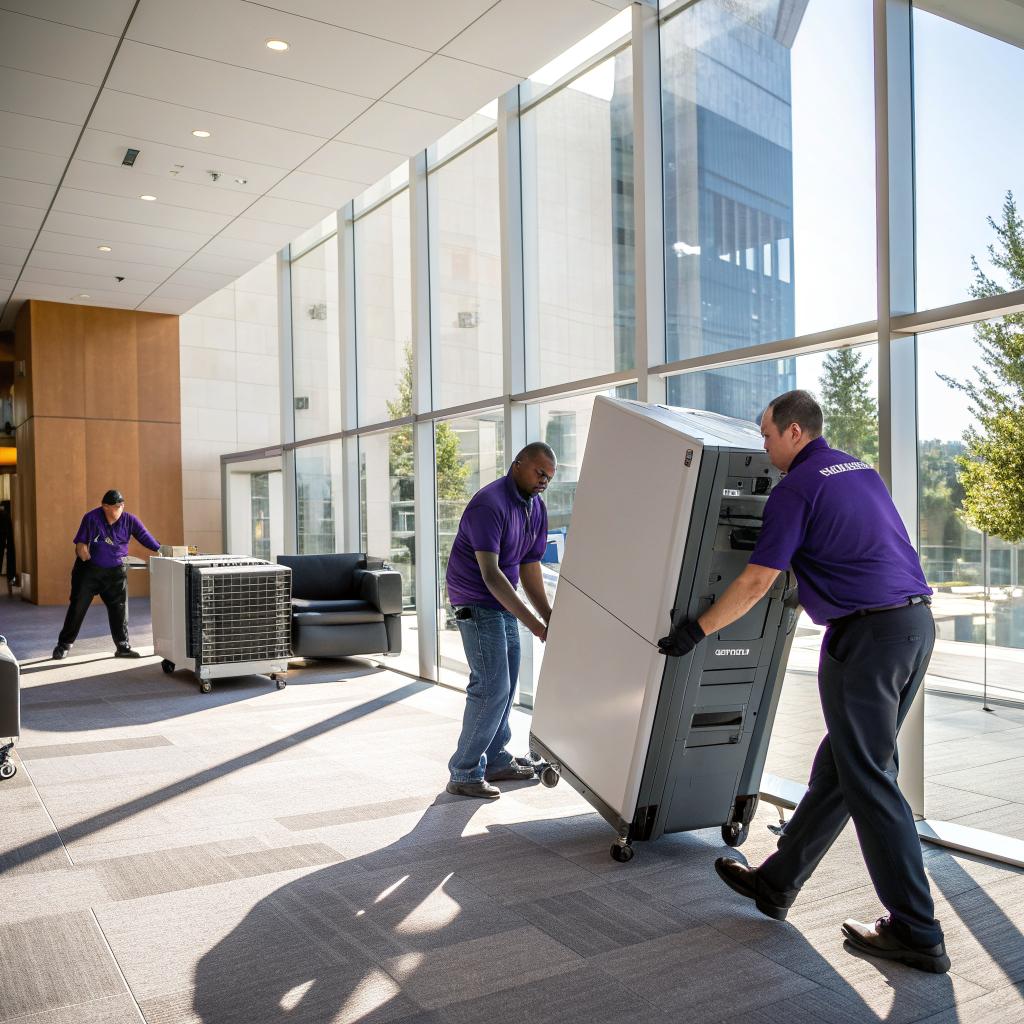
What if I told you one of the highest ROI decisions for a growing tech team in Salt Lake City is not another engineer, not a new sales hire, not even a bigger AWS bill, but the moving company you pick for your next office move?
Here is the short version: fast growing tech companies in Salt Lake City that treat their move as a real operations project, and partner with experienced Salt Lake City Office Movers, lose fewer engineering hours, get new hires productive sooner, avoid surprise downtime, and end up with offices that actually support growth instead of getting in the way. A good mover is not just carrying desks. They are protecting your burn rate, your roadmap, and frankly your sanity, during one of the most distracting events a company goes through.
That sounds like a big claim for “just” an office move. So let me unpack it a bit.
I have seen teams treat office moves as a side task, squeezed between sprint planning and board decks. People assume “we will just get some quotes, pick someone in the middle, and get it done over a weekend.” On paper, that looks lean. In practice, it can delay product launches, slow hiring, and create internal friction that lingers for months.
Why the way you move offices affects your growth curve
When you are fighting for growth, time is your main currency. Not capital. Not square footage. Time.
A poor move plan burns time in quiet, sneaky ways. A clever move partner reduces that burn. That is really what this article is about.
Here is where office movers quietly impact your growth:
- They control how much “engineering time” is lost to logistics and packing.
- They affect how fast your new space comes online with working internet, secure access, and stable workstations.
- They shape whether your new layout helps or hurts collaboration between product, engineering, and sales.
- They influence how smooth your hybrid or remote model feels for people who sometimes come on site.
If you are in Salt Lake City, there are a few extra layers. The tech scene is crowded, traffic is not always friendly, and commercial landlords can be firm on move windows. You cannot simply roll trucks at any time of day and hope it works out.
So yes, the mover you pick can change how quickly your team gets back to shipping features and closing deals.
A move that looks “cheap” on the invoice can be very expensive in lost product time.
How office moves steal or protect engineering hours
I want to start here because this is where most founders underestimate the cost.
When companies plan a move, they often budget:
- Rent overlap
- Furniture
- IT equipment
- Moving quote
They hardly ever budget staff time. But think about what usually happens in a poorly planned move:
What a bad move does to your team
Picture this:
Your senior engineer spends two afternoons labeling equipment, drawing diagrams, arguing with the building over elevator access, tracking down missing monitors. Your office manager spends two weeks juggling vendors and answering the same “where do I sit” question twenty times. Your founders are switching context between a board deck and carpet samples.
No one logs those hours anywhere, but they are very real.
With the right mover, you shift most of that burden. Not all of it, but a big chunk.
A mover that understands tech offices will:
- Create a detailed inventory so your people do not have to.
- Label and track workstations in a way that matches your team structure.
- Take over coordination with both buildings so your staff is not stuck in email loops.
- Handle packing for common areas and non-sensitive equipment.
Your internal team then focuses on only what they cannot outsource: security decisions, network design, and a few key priorities around layout.
Every task that shifts from your engineers to the mover is reclaimed roadmap time.
Is that dramatic? Maybe a little. But if you are a 30 person startup with 15 people in product and engineering, even losing 20 percent of their time for two weeks is the same as taking one engineer off the team for a full quarter.
Why scheduling windows in Salt Lake City matter more than you think
Salt Lake City buildings often have strict move windows. Nights. Weekends. Specific loading docks that get blocked by downtown events or construction.
A mover that works in the city a lot tends to know:
- Which buildings get very strict about freight elevator booking
- Where street access is tight and extra parking permits are needed
- Which days are bad because of sports events or conventions
This is not glamorous, but it translates into less risk of moves slipping into your workday, or dragging across multiple days. A small delay means your first week in the new office might be half-productive at best.
Connecting office layout to product speed
This part gets ignored, yet it shapes how fast teams move for years.
Growing tech companies often outgrow their space for one of three reasons:
- Headcount jumps and people are literally on top of each other.
- Meeting rooms are always booked and ad-hoc collaboration dies.
- There is no quiet space for deep work, so engineers escape home more often.
If you only tell your mover “here is the floor plan, move item A to room B”, you miss an opportunity. A mover that has seen lots of tech offices in the city can give real feedback about what tends to work or fail in practice.
Your next office should not just fit more people. It should make work easier to do.
From furniture placement to team dynamics
Here is where I have seen good movers help, even if they do not sell “workspace strategy”:
They know what happens after they leave.
They have watched teams regret putting sales in the middle of an engineering cluster. They have seen companies cram growing teams into corners because they did not plan desk growth paths.
A thoughtful mover can spot issues such as:
- No room for more desks in the highest growth team area
- Too many people funneled through one noisy corridor
- Meeting rooms located so far from the main engineering pod that people avoid using them
Sometimes all it takes is a small change, like flipping the side of the floor where you put the collaboration area, or leaving one wall free for future hot desks.
I am not saying movers replace architects. Of course not. But they can notice simple layout risks that have very real impact on how people work and talk to each other.
Hybrid work and “anchor days”
Many Salt Lake City tech teams run hybrid schedules. People come in two or three days a week. Those days are expensive in terms of commuting and context switching. You want them to count.
If your office is set up in a way that makes hybrid days stressful or cramped, people will avoid coming in. Then you lose the whole point of having an office.
A mover that understands hybrid work can:
- Help you plan team spaces around common “anchor days” when more people are on site.
- Set up shared desks in a way that does not cause daily confusion.
- Position monitors, power, and storage so people can plug in and get to work without hunting for cables.
Again, these are simple details. But hybrid work lives or dies in little details.
Protecting your data, gear, and uptime
For tech teams, this might be the biggest fear: “What if something gets lost, broken, or exposed?”
Servers, prototypes, dev machines with local data, whiteboards full of sensitive notes. There is risk everywhere.
Security is not only about NDAs
Some companies treat security for a move as “we have them sign an NDA, so we are good.” I think that is naive.
Real security means:
- Clear chain of custody for sensitive equipment.
- Labeled, sealed containers for protected hardware.
- Background checked teams on site during the move.
- Limited access to certain rooms during packing and unpacking.
A mover that has worked with banks, medical offices, or other regulated environments in Salt Lake City will be more ready for this. They are used to audits, to logs, to someone asking “who touched this device and when.”
You do not need perfection. You do need a sane plan that matches the real risk you face.
Network cutover and keeping your roadmap intact
The other side of this is uptime. If your sales team cannot access your CRM, or your engineers cannot sync code, your week falls apart.
Here is a simple comparison table that shows how planning with your mover can change your outcome.
| Area | No real move planning | Planned with experienced mover |
|---|---|---|
| Internet setup | ISP cutover scheduled, but modems, racks, and patch panels arrive unpacked and untested. | Racks and cables tagged, installed first; basic connectivity tested before main team arrives. |
| VPN / access | IT discovers VPN issues on first workday in new office. | Tested with a pilot setup a few days before full move. |
| Critical servers | Moved at the same time as everything else, downtime window slips. | Dedicated move window, separate crew, rollback plan, clear communication. |
| Support / helpdesk load | IT flooded with “my monitor does not work” tickets for a week. | Standardized setups, issues caught during unpacking, fewer helpdesk tickets. |
No mover replaces your IT team. They can still reduce chaos by handling the physical side in a predictable way, which gives your IT staff space to handle the logical side.
The less your engineers think about the office move, the more they can think about your product.
Handling growth spurts, contractions, and uncertainty
Tech growth is rarely a straight line. You hire faster than you expect, then pause. You may spin up a new product team and shut it down six months later. Office needs change faster than most leases.
Good Salt Lake City movers see this all the time.
Building flexibility into your new office
I have seen companies move into a shiny new space that fits the current headcount perfectly, and then six months later they are adding folding tables and cheap chairs in hallways.
This is where a bit of advance planning helps. For example:
- Reserve a zone of the office for “future growth”, even if it sits half empty for a while.
- Pick desk systems that can expand or shrink without a full reconfiguration.
- Keep some equipment in storage instead of trying to squeeze everything on the floor at once.
Movers who offer short term storage can help here. You can keep an inventory of extra desks, chairs, and monitors nearby. When hiring spikes, you pull them in. When you slow down, you send them back to storage instead of crowding the office.
This avoids the “cluttered warehouse” look that hurts morale more than people admit.
What if growth stalls or you need to sublease?
Not every story is pure growth. Sometimes markets turn. Sometimes funding gets delayed. Sometimes a pivot means you need less space, not more.
If you have to shrink your footprint or sublease part of your Salt Lake City office, the mover you choose now may become your partner again later.
Questions I would ask any mover if I were a founder:
- Can you handle partial moves, not just full office relocations?
- Do you offer decommissioning, so you can help restore space to lease conditions?
- Can you handle multiple sites if we split teams into two smaller offices?
You may not need those services soon. But picking someone that can grow or contract with you saves the future version of you a headache.
Cost: what you pay vs what it actually costs you
Let me push back on a common instinct: going with the cheapest quote by default.
I understand the impulse. You are watching runway. You want to be prudent. That part is sensible.
The problem is that people compare quotes side by side as if they are the whole cost. They are not.
Here is a simple way to think about it.
Compare invoices and “hidden” costs side by side
Consider a scenario where you receive two quotes:
| Item | Low-cost mover | Experienced tech mover |
|---|---|---|
| Invoice | $12,000 | $18,000 |
| Extra staff time spent planning & fixing issues | 120 hours across execs, IT, and managers | 40 hours, mostly IT |
| Effective cost of those hours (assume $80/hour loaded) | $9,600 | $3,200 |
| Downtime cost | 1 extra lost workday for most of the team | Half day slow, most can work |
| Estimated downtime value (30 staff at $600/day of output) | $18,000 | $9,000 |
| Total real cost | $39,600 | $30,200 |
These numbers are not perfect, of course. But they show the point: the invoice is only part of the story.
The right question is not “who is the cheapest mover”, but “who reduces the total cost of this move, including lost work.”
What you actually need from a mover, not from marketing
When you talk to movers, you will hear many similar phrases. Experience. Professional team. Reliable. Everyone claims those.
What tends to matter more for growing tech companies in Salt Lake City:
- Have they moved companies with a similar size and tech profile?
- Can they explain how they handle servers, lab gear, or unusual equipment?
- Do they provide a real schedule with milestones, not just a date on a calendar?
- Will you have a single point of contact who can answer questions fast?
I am skeptical of glossy presentations. I would rather see boring, clear documents: inventory sheets, checklists, diagrams of how they plan to sequence the move.
If a mover struggles to show that level of planning, there is a very high chance the move itself will feel just as vague.
How to work with movers so they actually help your tech scale
Let me be direct here: hiring the right company helps, but your own approach matters just as much.
A good mover is part partner, part vendor. You still need to drive some of the thinking.
Translate your business goals into move goals
Start with questions that sound more like a product discussion than a facilities one:
- What do we want our engineering output to look like in the 4 weeks around the move?
- Which hires are starting during that period, and what experience do we want them to have?
- Are we planning any big releases, funding milestones, or board meetings around the move date?
From there, draw out constraints:
- No major deploys on the move weekend.
- No first day for new hires on the exact move day.
- A buffer week after the move for minor fixes before big presentations.
Then share those with your mover and ask them to react. A strong partner will suggest ways to sequence the move so those goals have a better chance of happening.
Make your IT and ops team part of the moving “product squad”
Many companies accidentally leave their IT team out of early move planning. They bring them in when it is time to move hardware. That feels faster, but it is kind of backwards.
Ideally, your “move squad” includes:
- Someone from leadership who can make trade off calls.
- Office or operations manager to connect details.
- IT lead who understands your systems and dependencies.
- The mover’s project manager.
Treat your move a bit like a short project. You have milestones, constraints, success metrics:
- Zero lost days of development due to network problems.
- All workstations operational by 10 am on day one.
- Clear desk and room assignments sent to staff one week before.
This does not have to be heavy. A few short check-ins can be enough. What matters is that someone owns each risk before it turns into a problem.
Realistic expectations: what a mover can and cannot do for your growth
I want to be clear on limits too. A good mover helps a lot, but they do not:
- Fix a bad culture.
- Make a poor hiring plan magically work.
- Change a product that does not fit the market.
What they can do is remove friction around one major event, so your team can focus on these bigger, harder problems.
If your company is at the stage where you are worried about adding headcount faster than your processes, or you are about to raise a new round and need to show strong execution, this kind of friction matters.
You can think of a mover as part of your “growth stack”, in the same practical tier as good payroll, legal help, or solid IT support. None of these create growth alone. They stop it from falling apart.
Practical checklist you can actually use
I was almost tempted to give a huge checklist here, but those tend to look nice and never get used. Let me pick a shorter one that you can actually follow.
Before you choose your mover
- Map your critical dates: product launches, hiring waves, investor meetings.
- Estimate real staff time you can afford to lose during the move month.
- List sensitive equipment and data that need special handling.
- Decide what “success” looks like: zero downtime, low stress, future growth room.
Questions to ask movers
- What tech companies in Salt Lake City have you moved in the last 2 years?
- How do you handle servers, prototypes, test labs, or special gear?
- Can you walk me through a recent move schedule, day by day?
- Who will be my main contact, and how available will they be during the move window?
- What goes wrong most often on moves like ours, and how do you avoid it?
Internal prep to reduce chaos
- Communicate move dates early and repeat them often.
- Lock down a code freeze or reduced change window around the move.
- Give managers talking points so they can calm their teams’ worries.
- Create a simple “first day in the new office” guide with maps and WiFi info.
None of this is complicated. The hard part is not the tasks. It is giving them real attention among everything else you already have to do.
Questions founders and ops leaders often ask
Q: Are we overthinking this? It is just an office move.
A: Maybe a little. But underthinking it has a clear cost that lands right on your roadmap. You do not need a six month project. You do need more than a single email thread. If your company depends heavily on focus work and stable systems, giving the move a bit of structured thought is not overkill. It is basic self defense.
Q: Can we just let employees handle their own packing to save money?
A: You can, but it is rarely as cheap as it looks. People overpack, underpack, or stall. Engineers losing a full afternoon to pack and label their desk is not free. A better approach is often a hybrid: let people handle personal and very sensitive items, and have movers pack the rest in a systematic way.
Q: Is a local Salt Lake City mover really that different from a big national company?
A: It depends on your context. National brands bring scale, which can help for multi city moves. Local movers who focus on offices know the specific quirks of the city, buildings, and traffic patterns. For a single city move inside Salt Lake, local knowledge often saves time and hassle. For a multi office footprint across states, a national or regional player may be better. There is no one right answer; just match the scope of your move with the reach of the mover.
Q: How early should we book a mover if we are growing fast?
A: For a tech company with 20 to 200 staff, 2 to 3 months ahead is usually safe. Large, complex moves may need more time. The earlier you involve them, the more they can help you avoid date conflicts and building access issues. If your timeline is tight, you can still move, but you will trade money and stress for speed.
Q: Can a good mover really affect whether we grow faster?
A: Not directly, in the way a great product or strong sales team does. What they do is protect your ability to execute during a disruptive period. They keep you from losing two sprints worth of work to distraction, or from delaying a release because your systems were not ready. Growth is fragile. Sometimes guarding your focus is the most valuable thing you can buy.