
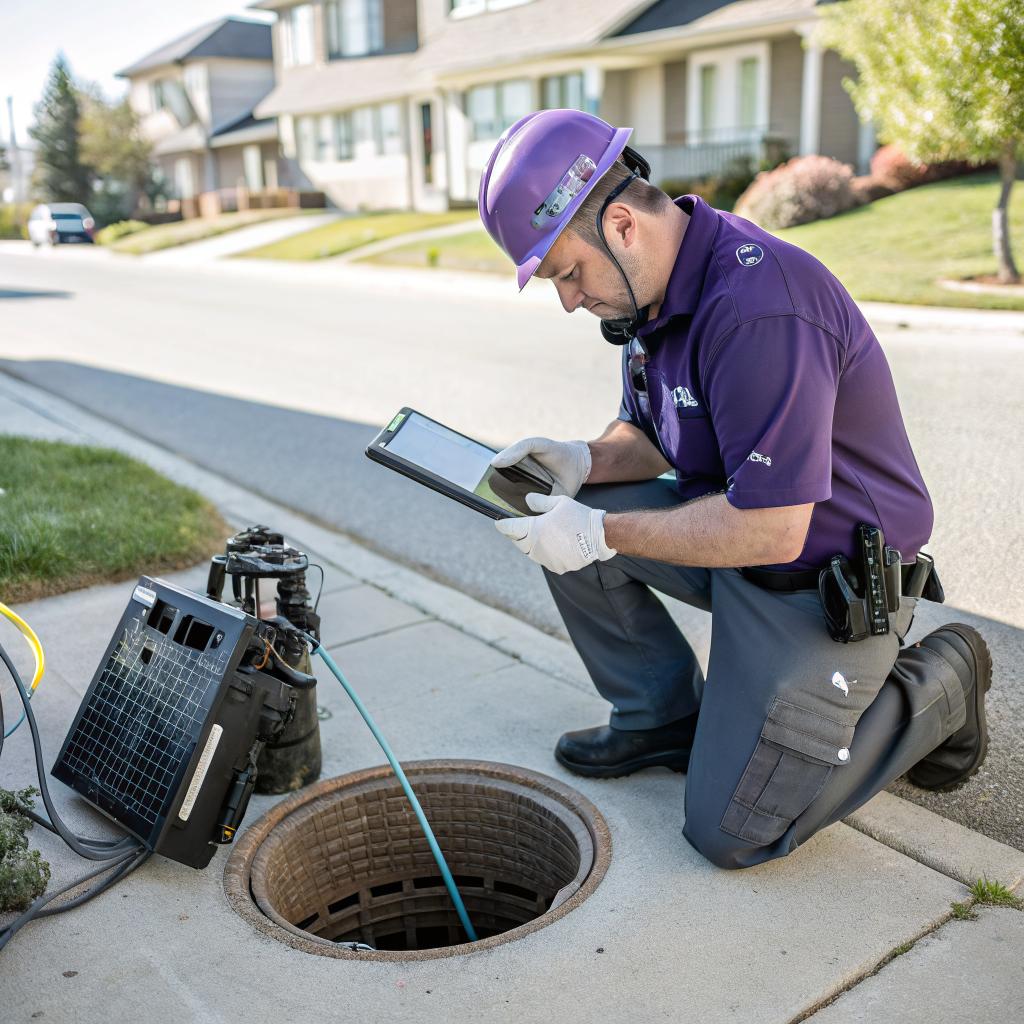
What if I told you that one of the strongest tech growth stories in your city is not a SaaS startup, but a drain cleaning crew crawling under houses and snaking sewer lines?
Here is the short version: a local drain cleaning company Arvada can scale with tech by treating every truck like a mobile data center, every call like a mini workflow, and every blocked pipe like a ticket in a queue. The tech is not glamorous. It is boring on purpose. Scheduling software, simple sensors, GPS, a CRM that actually gets used, photos and videos from the field, and real pricing discipline. Put together, those things grow revenue, cut wasted trips, and let a small crew behave like a bigger one without burning out.
That is the whole trick. The rest is details. But the details are where it either works or quietly dies in someone´s inbox.
Why drains are surprisingly good for tech growth
Drain cleaning sounds like the kind of work that should resist technology. Wet, dirty, urgent, kind of chaotic. But that is exactly why it is such a good test case for scale.
You have:
– High volume of small jobs
– Mix of planned and emergency work
– Parts and equipment that need tracking
– Customers who want quick updates and clear pricing
– Technicians on the road all day
That is not so different from a field service SaaS use case deck, just with more roots and grease.
What many plumbing owners miss is that growth is not blocked by demand. There is almost always another clogged kitchen sink somewhere in Arvada. Growth is blocked by:
Unpredictable scheduling, weak data, and chaos between the phone ringing and the technician leaving the driveway.
Tech does not fix the work. It fixes the chaos around the work. Once you see that, the roadmap gets clearer.
Turning a drain truck into a mobile tech stack
The easiest way to think about this is to stop seeing a drain truck as “a truck with tools” and start seeing it as a remote office.
Inside that office, you want a few basic systems to quietly talk to each other.
1. Scheduling that treats time like inventory
Most small trades operations still run on whiteboards, group texts, and “hey, where are you now?” calls. That works until it does not, and the break point comes sooner than many owners expect.
A practical setup looks like this:
- A shared calendar tied to real job data, not just notes
- Time windows that respect drive time in Arvada traffic, not wishful thinking
- Color coding for emergencies, repeats, warranty visits, and high-value customers
- Route planning fed by GPS, not memory
You do not need a complex system. You need one that the dispatcher and techs will actually open on their phones every day.
If you treat technician hours like inventory on a shelf, overselling those hours hurts as much as overbooking flights does for an airline.
Here is how that plays out in numbers, in a simple way.
| Per tech per day | Without structured scheduling | With structured scheduling |
|---|---|---|
| Jobs completed | 4 | 6 |
| Drive time per job | 35 minutes | 20 minutes |
| Unbilled gaps | 1.5 hours | 0.5 hours |
| Average revenue per day | $1,000 | $1,500 |
The tech does not work harder. The work is just packed better.
2. GPS and mapping that treat geography as strategy
Arvada is not huge, but routing still matters. Crossing town twice in the same afternoon to handle two small clogs is pure waste.
Simple GPS tracking lets the office:
– See which tech is actually closest to a new call
– Build “clusters” of jobs in the same neighborhood
– Protect high-value customers with faster response
– Cut fuel and time spent on zigzag routes
For larger companies, this is obvious. For a crew of 3 or 4, it is strangely controversial. Some owners feel GPS looks like surveillance. My view is different: if you want to grow, you need to manage by data, not guesses.
You cannot plan smart routes if you do not really know where your trucks spent their time last week.
3. Simple field apps that do one thing well
Most field apps try to do everything at once and end up too complex. Techs then avoid them, or fill them out quickly at the end of the day with poor data.
A better rule is: one tech, one app, one mission.
For example:
– App for job details, notes, and photos
– Built in customer signature and payment capture
– Automatic sync back to the office CRM
That is it. No extra clutter.
Real photo and video capture matters more than people expect. A drain tech can record a short video from a sewer camera and attach it to the customer file. That video:
– Justifies the repair estimate
– Reduces disputes later
– Trains new techs on diagnosis patterns
– Becomes data for future proactive offers
Tech that creates proof tends to pay for itself.
Data from dirty water: turning jobs into a growth engine
The strange thing about drain cleaning is how repeatable the work is. The same streets, the same pipe materials, similar root problems, similar grease build up. Patterns are everywhere, if you collect even basic data consistently.
What data is worth tracking for a drain company
You do not need “big data”. You need consistent data. Here is a simple set that already changes decisions:
- Address, building type, and age of property
- Type of clog: kitchen, main line, bathroom, floor drain
- Cause of clog: roots, grease, wipes, pipe collapse, unknown
- Time from first call to job completed
- Which tech handled it and how long it took
- What was sold: basic clear, camera inspection, jetting, repair
- Did the customer call back within 90 days
Over a year, that gives real answers to business questions like:
– Which neighborhoods are most likely to need jetting instead of a basic clear
– Which techs are strong at diagnosing, not just clearing
– Which ad channels bring customers who only want the cheapest fix
– Where to invest in more equipment, and where you are over equipped
You move from reacting to patterns you remember, to patterns you can show.
From emergencies to predictable revenue
Most drain work starts as an emergency. Water is backing up, someone is stressed, and they will pay a premium for someone who comes fast and does not make things worse.
That is fine for cash flow, but it is not smooth. A company that wants steadier growth has to move part of its revenue from emergency to planned work.
Data supports that shift.
You notice that some addresses call every 9 to 14 months with the same root problem in the same line. At that point, you do not need to wait for the next panic. You can call them 7 months after the last job and offer:
– A discounted preventive clean before the busy season
– A camera inspection with a written report
– A quote for partial or full line replacement
The tech becomes less “rescue” and more “maintenance”. For a drain company, that is a real business shift, not just marketing talk.
Table: from random jobs to a growth flywheel
| Stage | Without tech/data | With basic tech/data |
|---|---|---|
| Lead comes in | Phone call, handwritten note | Logged in CRM, tagged by source and urgency |
| Job scheduled | Verbal ETA, rough guess on time | Time slot based on drive time and job size |
| Work done | No photos, little documentation | Photos, video, parts used, cause recorded |
| Payment | Paper invoice, delayed payment | On site card payment via app |
| Aftercare | No follow up | Automatic reminders, offers for maintenance |
| Learning | Owner’s memory | Reports on jobs, techs, and areas |
Hiring, training, and culture: where tech usually breaks
This is where many owners in trades get frustrated. They sign up for software, set up automations, and 4 months later the system is half used and everyone is back to texting.
The problem is usually not the tool. It is the people system around the tool.
Hiring techs who can work with basic software
There is a quiet shift in field work hiring. Ten years ago, you hired mainly for hands on skills and toughness. Now you still need those, but you also need someone who can handle:
– A smartphone app reliably
– Digital forms and photo uploads
– GPS navigation
– Simple status updates
It is not about age. Some of the most tech curious people in field work I have met are in their 40s and 50s. The key is curiosity and low ego about asking questions.
An owner who wants to grow should be honest in job ads: “We are a trades company that runs on software. If you hate apps, this will annoy you.”
You will lose some applicants. You will attract the right ones.
Training that treats tech as part of the craft
If tech is trained as a side topic, tech looks optional. The fix is to blend it into the craft.
For example, when teaching a new tech how to clear a main line:
– Step 1: Diagnose and choose the right cable
– Step 2: Set up safety gear
– Step 3: Record a short clip from the sewer camera
– Step 4: Tag the job correctly in the app
– Step 5: Capture before and after photos
That way, using the app is not “extra admin”. It is part of doing the job right.
Owners also need to be blunt about habits. If someone does perfect work with the cable, but skips the photo and notes in the app, that is not “almost good enough”. That is a risk for the company later.
Culture: tech for support, not control
If tech is only used to watch people, staff push back. Quietly, but firmly.
If tech is positioned as support:
– Fewer wasted trips
– Fewer angry calls
– Less arguing over who said what
– Easier proof for bonuses or commissions
then adoption goes up.
If the only time someone hears about software is when they are in trouble, they will never like using it.
Some owners struggle with this. They want tech to give them more control, more oversight. That instinct is understandable, but the growth potential sits in freeing good people to do more good work, not in staring at a dashboard of small violations.
There is a tradeoff. A real one. You can go too far in either direction. And I think some tech people underestimate how much judgment field staff need in the moment. Strict scripts on apps can slow them down.
Pricing, quotes, and payments: where tech meets cash
For the readers who care about growth and funding, this is the part where plumbing looks less like a trade and more like a recurring revenue business with weird cycles.
Tech has a direct impact on:
– Average ticket size
– Payment delays
– Discounting habits
– Chargebacks and disputes
Digital price books and consistent quoting
One of the fastest ways a drain company leaks money is through random pricing. Different techs quote different prices for the same work, depending on mood and stress level.
A digital price book with clear menus does not need to be fancy. It only needs to be clear and enforced.
For example:
| Service | Baseline price | Conditions | Add ons |
|---|---|---|---|
| Basic kitchen drain clear | $195 | Access at sink, normal business hours | Camera add on $99 |
| Main line clear | $325 | Cleanout accessible | Jetting add on $249 |
| Emergency night/weekend fee | $150 | Applied outside 8am–5pm weekdays | None |
Techs choose from the menu on the tablet. Customers see the same prices every time. There is room for judgment, but within clear ranges.
For a growth focused company, that consistency is gold. It makes revenue more predictable. It makes valuation talks with buyers or banks much easier, because you can show patterns, not chaos.
On site digital payments
This part is almost boring, but it still surprises me how many service businesses drag their feet.
If a tech finishes a job, explains the work, and then hands a tablet or phone to the customer for card payment on the spot, a few good things happen:
– Cash flow improves instantly
– Collection risk drops
– The customer is still present and engaged, less likely to argue later
– The payment record is automatically tied to the job in the system
Paper invoices sound small, but they stack up into slow growth.
The same system can later support payment plans for larger jobs, which can change close rates for sewer replacement significantly. That is not for every company, and yes, financing can be a headache. But tech running in the background reduces that friction.
Marketing, reviews, and local brand: tech as a quiet amplifier
Growth for a drain company in Arvada is not about global brand awareness. It is hyper local. But local does not mean low tech.
Owning the data on where calls come from
A drain company that tracks every lead source in the CRM has a very different marketing conversation with agencies, or even with lenders.
For each job, log:
– How did the person find you: search, map, referral, yard sign, ad, repeat customer
– What did they search for, as far as they remember
– What area are they in
After a year you can say:
– 40 percent of high value jobs come from repeat customers
– 20 percent from local search, specific phrases
– 10 percent from realtor referrals
– The rest from a mix of ads and partners
Then you can shift spend based on fact, not on what the last sales rep pitched you.
Automating review requests without being annoying
Reviews drive local service businesses in a very direct way. But most people do not post unless you ask at the right time.
Tech makes this timely:
– Job marked as complete in the app
– System waits 2 hours
– Automatic text with a personal sounding message and direct link to review
– Optional reminder 3 days later if they did not respond
The message itself should sound like a person, not a script. Something like:
“Hi, this is Mark from the drain team. Thank you for having us out today. If you have 30 seconds, this link lets you share how we did. It helps us a lot.”
Nothing fancy. Just consistent.
From a growth and valuation angle, a strong and recent review profile on major platforms is not fluff. It is part of the moat that another company would have to spend real money to replicate.
Measuring marketing like a real business, not a hunch
Here is where the mindset shift matters. Many trade owners still see marketing as chaos: money spent, calls come in, who knows what worked.
With basic call tracking numbers tied into the CRM, you can show:
| Source | Calls per month | Jobs booked | Average job value | Cost per booked job |
|---|---|---|---|---|
| Google search | 80 | 40 | $350 | $40 |
| Local mailer | 30 | 10 | $280 | $90 |
| Realtor referrals | 10 | 9 | $600 | $0 (plus relationship time) |
Now marketing decisions are no longer emotional. They are simple tradeoffs.
Funding, exits, and why tech matters to outsiders
If you are reading this from the tech or finance side, the big question might be:
“Why should I care that some local drain company uses GPS and a CRM?”
Because from a buyer or lender point of view, a trades business with working systems looks less like a personality driven shop and more like an asset.
What investors and banks quietly check for
When someone reviews a service company for lending or acquisition, they often look past the glossy parts and ask simple questions:
- Can the owner step away for a week without chaos
- Are there standard prices and processes
- Is there a customer list with real data, not just a stack of invoices
- Do they know their numbers by month, not just by gut
- Is the sales pipeline dependent on one person
All of those tie back to tech habits.
A drain company that runs on paper looks fragile. A similar company, same revenue and trucks, but with consistent digital systems, looks more like a platform that someone can grow or roll into a larger operation.
That is where multiples move.
It is not that plumbing suddenly becomes “tech”. It is that tech takes some owner risk out of plumbing.
Small acquisitions and rollups
There is a quiet trend of regional service rollups: companies buying several local plumbing and HVAC shops, then standardizing branding and systems.
If a drain company in Arvada wants to be ready for that game, tech is not optional.
An acquirer will ask:
– Can your data plug into our backbone
– Can your techs adapt to our field app
– Are your numbers clean enough to compare with other branches
Companies that already use even basic job management and CRM systems have an easier time answering “yes” without large transition pain.
For an owner thinking about selling in 5 years, starting the tech shift now is not just a “process improvement” project. It is part of exit planning.
Step by step: how a small Arvada drain company can actually start
It is easy to talk about systems. Harder to change habits in a company where everyone is already busy.
Here is a practical, low drama sequence I have seen work better than “rip and replace everything”.
Phase 1: visibility before automation
For 2 or 3 months, the only real goal should be: see what is happening.
– Add basic GPS tracking to trucks
– Use a shared calendar for scheduling
– Log every job in a simple CRM or job system
No heavy automations yet. Just enough discipline so that you can pull a report next month and not be embarrassed by the blanks.
Phase 2: one workflow at a time
Instead of changing every process, pick one workflow that hurts the most. For most drain companies, that is scheduling and job documentation.
– Make it standard that techs must close jobs in the app with photos
– Tighten time windows and routes using real drive time data
– Have weekly 20 minute check ins to look at 3 or 4 jobs and see what went wrong or right in the system
Do that until it starts to feel normal. This may take longer than you expect.
Phase 3: pricing, payments, and follow ups
Once the basic workflow is solid, layer on the money side.
– Launch the digital price book
– Train on it, including role play with fake customers
– Turn on on site payments for all techs
– Add follow up reminders for root prone addresses
At that point, you start to see more reliable revenue per job and fewer lost invoices.
Phase 4: deeper reporting and planning
Only when the habits are there do reports become powerful. Before that, they just show chaos.
Now you can:
– See which techs need training help
– See which marketing source brings more repeat work
– Decide where to add another truck or crew based on real demand
– Forecast slower months and plan promotions or maintenance outreach
That is when this work goes from “we bought some software” to “we run on a simple, real system.”
Common mistakes and why they keep happening
No article like this would be honest without admitting where this often fails.
Overbuilding the tech stack
People who love tech tend to pick tools with many features. Then they get pulled into configuration, integrations, and dashboards.
Meanwhile, techs in the field just want:
– The next job address
– The customer name
– The work scope
– A way to get paid
If your tech stack excites the owner more than the dispatcher, you probably picked the wrong stack.
Ignoring the friction on bad days
Systems should be tested on bad days.
Heavy rain, three emergencies at once, someone called in sick, and traffic is slow. If, on those days, people skip the app because “it takes too long,” the design is wrong.
Ask your field staff bluntly:
– What feels slow or stupid in this app
– Where are you tempted to skip steps
– What part actually helps you get home earlier
Then change things. Pride in a workflow diagram is not worth much if techs hate using it.
Assuming tech will fix weak management
This is the uncomfortable one.
If dispatchers are vague, if owners avoid hard talks, if pricing has never been clear, software will not fix that. It will just show the chaos more clearly.
Sometimes the hardest part of scaling with tech is admitting that management habits need as much work as the app settings.
Q & A: A practical wrap up
Q: Can a small 2 truck drain company in Arvada really benefit from all this?
A: Yes, but only if you keep it small at first. A shared calendar, basic CRM, GPS, and on site payments are already a big step. If those four things are solid, you are ahead of many larger competitors.
Q: What is the first hire you would make for a growing drain company that is adding tech?
A: A strong dispatcher or office manager who is comfortable with software and not afraid to enforce process. Without that person, the owner tries to do everything and systems slide.
Q: Is all this tech stuff just about making more money?
A: Not only. Better scheduling and communication also reduce stress for staff and frustration for customers. That is hard to put on a spreadsheet, but it matters for retention and for your own sanity.
Q: What is the one metric you would watch month to month?
A: “Completed jobs per tech per day” paired with “average revenue per job.” If those two numbers are healthy and your staff is not burning out, the rest usually follows.