
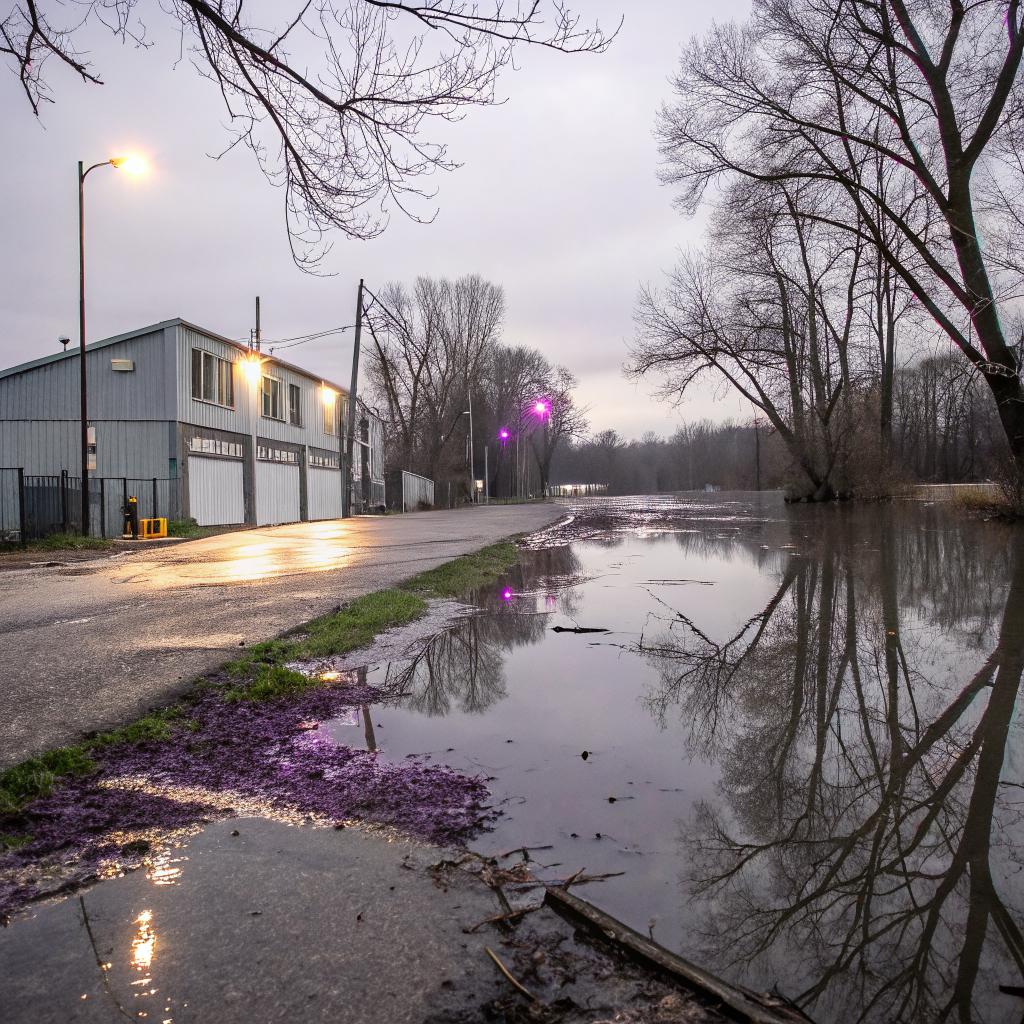
What if I told you that the fastest way to lose a funding round in Salt Lake City is not your pitch deck, not your churn rate, but a failed roof drain above your server room?
The short answer: treat water damage like an infrastructure risk, not a facilities problem. Have a written response plan, know exactly who you will call for water damage restoration Utah, protect your critical tech assets first, and document everything for insurance and future investors. The companies that handle this well look boring from the outside. On the inside, they are the ones who stay online, keep customers, and do not waste runway on preventable chaos.
Now, the longer, more honest version.
You probably do not wake up thinking about pipe failures, sprinkler heads, or snowmelt from a record Wasatch winter. You think about ARR, CAC, hiring engineers, and maybe that backlog of product requests that will not go away. Water feels like a facilities topic. Something for the building manager.
Until it is not. Until the ceiling tile over your support team turns brown, drops, and pours water onto 30 workstations. Or a backup line clogs overnight in a shared office building, and you walk in at 7:15 am to find your main hallway under two inches of water.
At that moment, your business is no longer a “tech company.” You are a logistics company under time pressure. How you respond in those first 60 to 90 minutes can decide:
– Whether you keep serving customers that day
– Whether your team can actually work from somewhere
– Whether your insurance carrier is cooperative or suspicious
– Whether your investors see you as prepared or reactive
This is not theory. I have seen founders spend more energy fixing after a flood than they spent closing their last funding round. And quite honestly, the flood was easier to predict.
Why water risk is higher for Salt Lake tech offices than people think
Salt Lake City seems stable. Dry climate. Four seasons that feel predictable. Not exactly a place where people expect floods. That can be a problem, because low perceived risk tends to produce low preparation.
Here are a few real-world factors that often catch tech companies by surprise:
- Old buildings retrofitted as “modern” offices
- Mixed-use buildings where your office shares systems with retail or industrial spaces
- Snow load on roofs during heavy winters followed by fast warm-ups
- Sprinkler systems above server rooms or storage for hardware
- Condensation or leaks from rooftop HVAC units running all summer
If water can move, it will move toward the worst possible place for your business: servers, cables, laptops, product inventory, or client records.
That sounds dramatic, but patterns repeat. Any space with electronics, paper records, and small gaps in maintenance becomes a target. Tech offices are full of that mix.
So if you are running or managing a tech business in Salt Lake City, water damage is not just about carpets and drywall. It touches:
– Uptime and service delivery
– Compliance and data protection
– Employee productivity
– Debt covenants, insurance, and, yes, investor trust
Map water damage to actual business risk
If you are still reading, it probably means you are thinking “fine, but where do I start?” I think it helps to translate physical risk into clear business categories.
| Risk category | Water scenario | Business impact |
|---|---|---|
| Revenue & uptime | Water in server/network closet, co-location access delay | Outages, SLA credits, refunds, churn |
| Productivity | Main work area flooded, power shut off for safety | Lost workdays, project delays, overtime costs |
| Compliance & data | Paper records or backup media damaged | Regulatory reporting, forensic recovery, legal costs |
| Finance & insurance | Improper documentation of the incident | Claim disputes, cash flow strain, increased premiums |
| People & culture | Unsafe or mold-prone office after slow remediation | Health complaints, attrition, low morale |
A broken pipe is a facilities event. The impact of a broken pipe is a business event. The bridge between those two is your plan.
The first 90 minutes: what your response should look like
This is where tech founders often underestimate the speed and order of operations needed. You cannot treat water damage like a slow ticket in your IT system. Moisture spreads. Materials soak. Mold risk starts surprisingly fast.
Here is a practical, non-theoretical flow for the first phase.
1. Stop the water and secure people
This sounds obvious, but in the middle of a mess people sometimes jump straight to saving hardware or calling their landlord.
Your first priority is simple: stop the source and keep people safe. Everything else comes next.
You need:
- Quick access to shutoff valves for your suite or floor
- A direct number for building management and after-hours maintenance
- A simple script for reception or whoever is first on site
If you do not know where the main shutoff is today, that is already a risk. Walk with your building contact and find it. Take a picture. Label it in your internal wiki.
For sprinkler activations, you may not be allowed to touch anything. That is when rapid contact with the building team and fire department protocol matters. Again, having this written down somewhere everyone can find is not overkill.
2. Protect critical tech assets
While someone handles building control and safety, someone else should focus on your tech layer.
Think through this in advance:
- Which hardware is mission critical for same-day operations
- What can be powered down immediately without impact
- Which systems already have cloud redundancy
You might have a small on-prem stack, even if you tell yourself “we are all cloud”:
– Network gear for VPN and office connectivity
– Local file servers used by design or media teams
– Test rigs, dev boards, IoT hardware on benches
– Charging carts for laptops or tablets
If water is near electrical outlets or power strips, resist the urge to unplug things while standing in pooled water. Train people to wait for facilities or electricians if there is any doubt. Some gear is replaceable. People are not.
For SaaS products, the core question is: “Can we run from home right now?” If the answer is “yes” because your tools and infra are already cloud based, your focus shifts to safe evacuation and later insurance. If the answer is “no,” you have dependencies to fix long before you have a flood.
3. Call professional remediation early, not later
This is the part where many businesses try to save money and lose more in the long run.
It is tempting to say “we will wet-vac this ourselves and put some box fans out.” For a small spill on hard flooring, fine. For soaked carpet, walls, and possibly subfloor, this is short-term thinking.
Professional water remediation companies in Salt Lake bring:
– Industrial extraction equipment that pulls water out fast
– Moisture meters to check inside walls and under flooring
– Dehumidifiers sized for your square footage
– Documentation and photos that insurers expect
You want someone who knows commercial spaces, not just homes. Offices have different wiring, different materials, and often different ventilation challenges.
Calling a remediation team early is not an over-reaction, it is a cost control move. The longer materials stay wet, the higher the repair bill and the higher the downtime.
Have your preferred contact saved before you need it. Confirm they can handle data center adjacent areas, server rooms, and low-voltage cabling, because some providers are more comfortable with plain residential work.
Turning water planning into part of your ops strategy
If this still sounds like a “rare event” issue, try doing a simple mental exercise.
Ask yourself: “If our office was unusable for 5 business days because of water damage, what exactly would break inside the business, and what would keep running?”
This is not about fear, it is about seeing where your physical space is still a single point of failure.
Create a simple, boring playbook
You do not need a 60 page disaster recovery manual. A 2 to 3 page internal doc can cover most of what matters.
Here is a simple structure that works for many tech companies:
- Page 1: Immediate actions and contact tree
- Page 2: Tech priorities and equipment tiers
- Page 3: Insurance, photos, and aftercare
You can flesh it out, but keep it readable. This is not for an audit. This is for the person who happens to be first in the office when something goes wrong.
Define equipment tiers in language your team understands
Tech teams respond well to clear classification. It also makes insurance documentation easier.
Consider a simple table like this, customized for your own office:
| Tier | Examples | Response priority |
|---|---|---|
| Tier 1: Business critical | Core networking gear, on-site servers, specialized hardware rigs | Protect or relocate first, confirm backups, log condition |
| Tier 2: High value but replaceable | Laptops, monitors, docking stations | Unplug if safe, move away from affected zones |
| Tier 3: Low value or easily replaced | Chairs, some furniture, basic office supplies | Only move if it clears space for remediation work |
If you do not clarify this beforehand, you end up with people grabbing the wrong things while expensive or irreplaceable assets sit in water.
Think like an investor for a moment
Investors talk about downside protection all the time. They look at runway, concentration risk, dependence on a single customer, and so on.
Water damage is rarely in the pitch deck, but it shows up indirectly:
– Were you down for days without a working distributed plan?
– Did you burn weeks of leadership time on logistics?
– Did the incident expose undocumented tech dependencies?
A founder who can say “We had an incident, here is how we handled it, here is what changed afterward” often looks more credible than one who pretends everything is fine all the time.
You do not want an incident. But if it happens, how you manage it becomes part of your operational story. You can either show that you learn and adapt, or that you scramble and hope.
Insurance, documentation, and not losing money twice
There is the damage itself. Then there is the second wave of pain: dealing with claims.
Tech businesses sometimes mishandle this part, either because they underestimate it or because they treat it like a tedious formality. That can cost you real cash.
Get your coverage straight before you have a problem
Do not wait for a disaster to read your policy. That sounds simple, but many founders hand this to someone else and never look.
Pay attention to:
- What counts as “water damage” in your policy
- Whether sewer backup or drainage issues are excluded
- Limits on business interruption coverage
- Sub-limits on electronics or specialized equipment
If you rent, understand where your policy ends and your landlord’s begins. For example, structural repairs might be their responsibility, but your gear and your lost revenue are not.
If you are growing fast, your last coverage check might already be out of date. Double your headcount and hardware, and the previous equipment limits might be too low.
Treat photos and notes like part of your R&D process
After safety and stopping the water, the most reliable way to protect your claim is simple: document.
Assign someone on the team who is calm with a phone camera and a notes app. Have them:
- Photograph the source where it is safe
- Take wide shots of each affected area
- Capture close-ups of damaged hardware and wiring
- Write timestamps and short context notes
This sounds boring, but later, when an adjuster asks about the date, the depth of water, or whether equipment was on the floor or elevated, you will be glad you have real records.
Think of documentation as a tiny internal project: clear inputs, clear outcomes, and direct financial impact if it is done right.
Keep a shared folder in your internal drive labeled something practical like “Facility incidents” and store copies there as well, not only on someone’s local phone.
Designing your office to be less fragile
This part feels more constructive and less stressful. It is about preventing the most common failures or at least reducing the damage when something happens.
Raise and separate critical systems
If any networking or server gear sits directly on floors, especially carpeted ones, that is low-hanging fruit to fix.
You can make practical, low-cost changes:
- Put network switches, UPS units, and small servers at least several inches off the floor
- Avoid running power strips on the floor where water could reach them first
- Keep cardboard boxes, paper files, and packaging off floors in storage areas
If you have on-prem hardware that really matters, consider a dedicated room with raised racks and clear floor drains. A modest up-front spend can save painful replacement costs.
Respect the ceiling
Tech people tend to obsess about racks and desks, then ignore the space above them.
Ask some blunt questions:
– What runs above your core work areas? Water pipes? Sprinkler lines? HVAC condensate?
– Is anyone checking for discoloration, early leaks, or condensation on a regular basis?
– Are there ceiling tiles that always look “a bit off” that people ignore?
Schedule a simple quarterly walk-through with your office manager, building staff, and, if possible, someone from your remediation contact. Five minutes of attention can catch slow leaks that eventually turn into sudden “surprises.”
Plan for remote shift as a standard response
If you are a tech business and your people cannot work remotely for a few days without chaos, that is not just a facilities risk, that is an operations design issue.
Treat “water event in the office” as one of the triggers for automatic remote mode:
- Slack or your chat tool gets a predefined status message
- Daily standups move online with a click
- Customer support routing switches away from office lines
Test this once a year. Call it a drill. People will roll their eyes a bit, but the first time you have to use it for real, it pays for itself.
When you share space with others in the building
Salt Lake City has many tech teams in mixed office buildings, co-working floors, or light industrial parks. Your risk does not stop at your door.
If a restaurant downstairs has a plumbing issue, the water will not ask permission before moving upward or sideways. The same if a neighbor runs a small lab or uses large water cooled equipment.
Build a light relationship with building neighbors
Not everyone wants to make friends with their neighbors, and that is fine. But you should at least know:
- Who manages facilities on each floor
- What kind of operations stay active nights and weekends
- Who would contact whom in an emergency
A simple exchange like “If you ever see water from your ceiling near our shared wall, can you call this number?” is more practical than it sounds.
And if your tech business uses water in any form (for cooling, cleaning hardware, or testing products), offer the same clarity in return.
Clarify responsibility, do not assume
In a shared building, people sometimes blame each other or the landlord when something goes wrong. That slows everything down.
Have your legal or operations lead speak to the landlord about:
- Who contacts remediation services first
- Who approves emergency work after hours
- How costs are handled when the source is outside your suite
This is unglamorous work. But when alarms go off at 2 am, you do not want people arguing over whose budget a pump truck comes from.
Growth, funding, and why this topic shows up more as you scale
Early on, when your “office” is a few desks and a small closet of gear, the stakes feel lower. You can pick up laptops, go to a coffee shop, and push forward.
As you grow, the pattern shifts:
– More staff on site means more disruption if the office closes
– More hardware in place makes physical damage more expensive
– More contractual obligations raise the cost of downtime
If you are aiming for growth capital or preparing for an exit, your buyers or investors look more closely at resilience. They might not ask “What is your pipe failure plan?”, but they will care about:
– How fragile your operations are
– Whether a single building can knock you offline
– Whether your leadership team is prepared for low-probability, high-impact events
You can treat water planning as a small side piece of your broader “we know how to run this company in the real world” story.
Some founders go too far and start building elaborate disaster scripts for everything. That is not needed. A short, lived-in set of practices that people actually know beats a giant binder. Every time.
Questions that are worth asking your team this month
If you want to use this article for something concrete instead of just an abstract warning, you can literally drop these questions into your next ops or leadership meeting.
1. “If a pipe burst above the main open office area right now, who is in charge for the first hour?”
If people give vague answers or long silences, that is a signal.
You do not need a special title. You need a person who is willing to coordinate:
– Contact with building staff
– Call to your remediation partner
– Internal communication to staff and customers
Rotate this role every year if you want. But name it.
2. “Where is our most vulnerable hardware sitting physically?”
Walk the space with that question in mind.
You might find:
– A stack of external drives in a cardboard box on the floor
– A power bar under a desk directly below a ceiling stain
– A cluster of expensive prototypes near a window prone to leaking
Fix those cheap problems first. They are not glamorous, but they are easy wins.
3. “Do we have one phone number to call for water remediation, and do people know it?”
You should not need to search emails or Google reviews while water spreads.
Put the number:
– In your office wiki or handbook
– On a printed sheet near reception or the main entrance
– In your shared contacts for leadership and office staff
Make it so obvious that in a mild panic, someone can still find it.
4. “Can we operate fully remote for 5 business days if the office is off limits?”
If the honest answer is “no,” ask why.
Is it:
– Local infrastructure that is still critical
– In-office desktops instead of laptops
– On-site-only access for a key system
– Paper-based processes in finance, HR, or compliance
None of those are purely water-related problems. They are general resilience gaps. Fixing them gives you benefits even if you never see a flood.
Closing thought: water as a quiet test of how you run things
Water damage does not care whether you are bootstrapped or just closed a big Series B. It does not care whether you shipped features on time or whether your churn is under control.
It just follows gravity, finds the weakest point, and keeps moving.
In that sense, it quietly tests how you run your tech business:
– Do you think ahead but stay practical
– Do you treat “rare but real” events as part of operations
– Do you protect your team and customers before blaming the building
A well-run response to a bad event will never be on your home page. It will never show up in a marketing campaign. Yet it can be one of the subtle reasons your company survives long enough to reach the things you actually want to talk about.
Q&A: Common questions tech leaders in Salt Lake City ask about water damage
Q: We are mostly remote. Do we still need a water damage plan for our small hub office?
A: Yes, but a lighter one. If that hub holds networking gear, legal files, or a small data room, water can still hurt you. The plan might be shorter, focused on protecting those key items and documenting damage. You probably do not need a full office continuity script, but you do need awareness of how physical issues can disrupt even a remote-first setup.
Q: Can we handle small leaks ourselves and only call professionals for major flooding?
A: You can handle small leaks, but be careful with the word “small.” A minor puddle on tile that you can completely dry within an hour is one thing. Wet carpet, baseboards, or walls are different. Moisture that you cannot see or measure tends to turn into mold, odor, and long-term damage. Calling a pro for an assessment does not always mean a huge bill; sometimes it confirms that your own cleanup was enough.
Q: How much of this is the landlord’s problem, not ours?
A: Structural issues are usually on the landlord. Your gear, your people, and your downtime are on you. In practice, during the crisis you cannot wait for slow debates. Your responsibility is to keep your business running and your staff safe. Coverage and reimbursement questions can follow, backed by good documentation and clear leases. If a landlord tells you “we will handle everything, do not call anyone,” that is a red flag.
Q: Is this really worth leadership time compared to product, sales, and hiring?
A: You probably do not need weeks on this. You might need a single focused afternoon to map roles, contacts, and a few physical changes, then an hour each quarter to keep it current. Think of it like unit tests for your physical space. You do not spend all day on them, but when they fail in production, you feel it.