
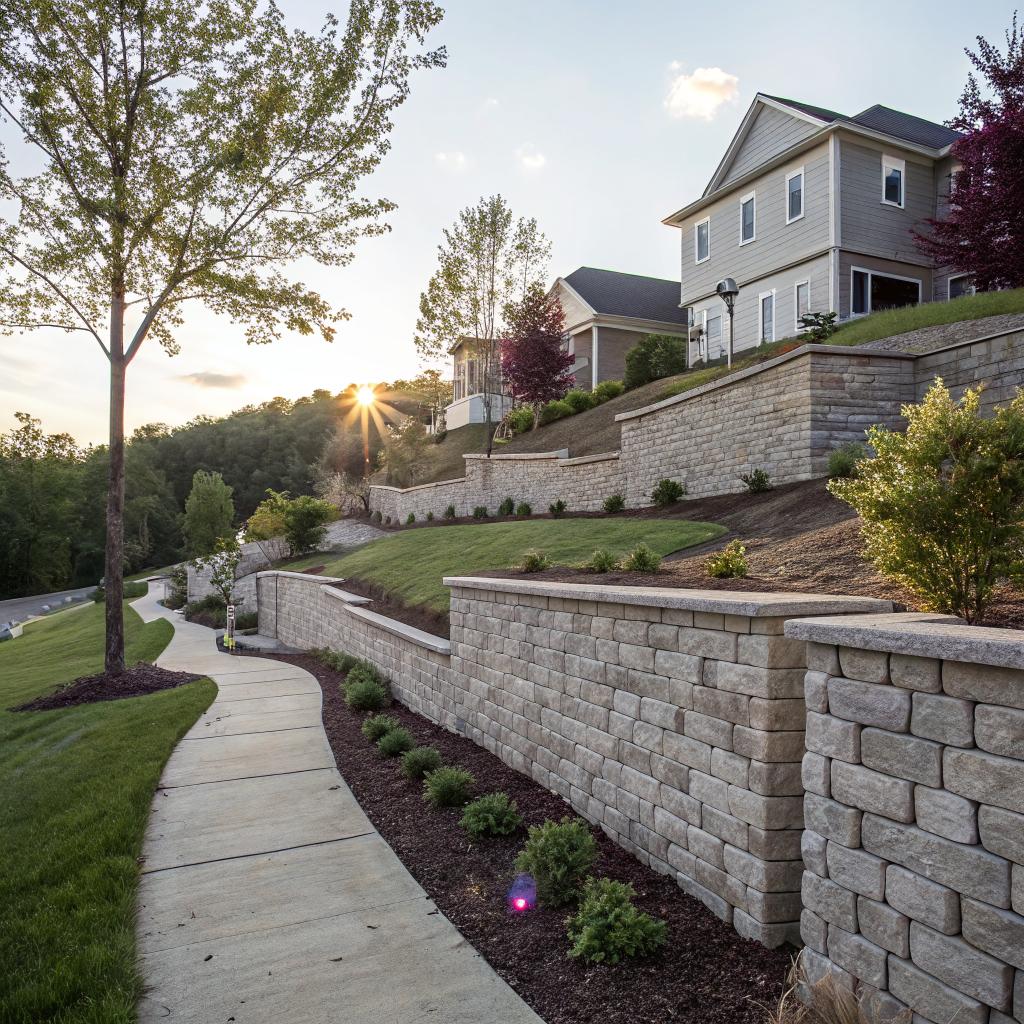
What if I told you one of the most underrated growth levers for property value in Knoxville is a concrete block wall that no one talks about in pitch decks or investor updates?
The short answer is this: if you own or develop property on a slope in East Tennessee and you care about long term growth, you should treat retaining wall installation Knoxville TN the same way you treat cloud infrastructure or security in a software company. It is not decoration. It is risk control wrapped in a revenue asset. Done right, it protects you from erosion, stabilizes your land, opens up more usable space, and can quietly boost resale or rental numbers for years without more spend.
That is the precise answer. Now the longer, more honest version.
Why investors and tech-minded owners should care about retaining walls
If you spend your day thinking about CAC, LTV, funding rounds, and growth, a retaining wall can feel too “offline” to matter.
I used to think about it like that. Dirt is dirt, right? Then a friend of mine in Knoxville had a townhouse deal where the back lot looked fine on photos. Slight slope, some trees, nothing dramatic. No one paid much attention. After one very wet spring, part of the slope started sliding. Insurance covered only part of it. The repair and emergency wall install wiped out a big chunk of the expected profit.
That is when it clicked for me. Land is physical infrastructure. If it fails, your projections fall apart.
Treat the ground around your project like you treat the backend of your product: boring, unseen, but if it fails, everything above it is at risk.
For Knoxville in particular, this matters because:
– The city has plenty of hilly neighborhoods.
– Intense rain events are more common than many pro formas assume.
– More infill development and backyard projects are pushing structures closer to slopes.
So while a retaining wall feels like a construction detail, it actually sits at the intersection of risk, growth, and long term value.
What a retaining wall really does for a growing property portfolio
Most people think of retaining walls as something that keeps dirt in place. That is true, but it is incomplete.
Here is a more “business” way to look at it.
| Function | Impact on growth | Example in Knoxville |
|---|---|---|
| Soil stabilization | Reduces risk of slope failure and emergency repairs | Steep backyard in Fountain City stays intact during heavy rain |
| Land expansion | Turns unusable slope into usable square footage | Terraced yard in West Knoxville fits patio plus small office shed |
| Water management | Lowers chance of foundation issues and drainage disputes | Wall with drain behind a duplex in Bearden controls runoff |
| Visual structure | Improves curb appeal and perceived quality | Stacked stone front wall on a Northshore flip raises buyer interest |
| Zoning and grading support | Makes approvals smoother for new builds or additions | Engineered wall on a split lot in South Knoxville helps pass review |
If you are used to building tech products, think of three layers:
– Foundation: the soil and grades
– Infrastructure: retaining walls, drains, footers
– Application: house, patio, driveway, outdoor office
Most people skip straight to “application”. New deck, outdoor kitchen, maybe a prefab backyard office. It looks good on Instagram. Then five years later the deck posts start leaning, and no one remembers that the slope was never stabilized.
Retaining walls rarely make listings go viral, but they quietly support higher rents, smoother inspections, and fewer surprise capital calls.
Smart growth in a physical city
Smart growth is not just for software
If you hang around tech circles, “smart growth” usually means something like:
– Grow fast but with a clear path to profit
– Build durable systems, not one-off hacks
– Reduce fragile single points of failure
Now apply that thinking to property in Knoxville.
Knoxville is growing, but not at the pace of Austin or Miami. That can be a strength. You have a bit more time to plan. You can think in 10 or 20 year windows, not 3 year hype cycles.
In that longer view, a cracked retaining wall that fails during a record rain is not just a repair. It can be:
– A blocked driveway
– A lawsuit from a downhill neighbor
– A lost tenant who does not want to live near a construction zone
That is not smart growth. That is growth that looked cheap on day one and expensive five years in.
Smart growth for a physical asset in Knoxville sounds more like:
Spend steady money early on the boring, structural work so higher yield projects have a stable base later.
Retaining walls sit squarely in that category.
Where retaining walls show up in real project math
Let me walk through a simple example.
Say you own or want to buy a small rental in North Knoxville with a deep, sloped backyard. Without a wall, you have:
– 1,200 square feet inside
– A steep, mostly unused backyard
– Limited space for patio or storage
With a properly engineered retaining wall and some grading, you might gain:
– A flat patio area
– Room for a small shed or tiny backyard office
– Safer access for stairs or path
Does that matter to your revenue? Often yes.
– The unit becomes more attractive to tenants who work from home.
– You can market “private flat backyard and patio” instead of “sloped yard”.
– Turnover can drop because the space is more livable.
You may not charge hundreds more per month just because of a wall, but you might:
– Reduce vacancy
– Reduce damage from poor drainage
– Pass inspections more smoothly when you refinance
Over a 10 year hold, small gains like that add up.
Knoxville terrain and what it does to your risk profile
Why hills and rain change the equation
If you were building on flat dry land, you could probably think about retaining walls only in special cases.
Knoxville is not that.
The region has:
– Rolling hills
– Clay-heavy soils in many areas
– Periods of heavy rain and stormwater stress
Clay soils are tricky. They can swell and contract. Water can pool instead of draining. If that happens behind a wall that was built without proper drainage, pressure builds. Over time, blocks start to bulge or tilt.
So you get this pattern:
1. Simple wall built as a weekend project.
2. First big storm season loads it with water pressure.
3. Small cracks or bulges appear.
4. Few years later, partial failure or total rebuild.
Paying twice is not smart growth. It is like writing your codebase once in a rush, then doing a full rewrite just when you start to find product market fit.
If your property is in older parts of Knoxville with older walls, it might be worth a visit with a more critical eye. Look for:
– Leaning or bulging sections
– Standing water near the base
– Cracks that follow a pattern, not just hairline
You do not need to panic about every small crack, but you also should not pretend it does not matter.
Types of retaining walls you will see in Knoxville
You do not need to become a structural engineer. It still helps to know the basic types of walls, so conversations with contractors are less vague.
| Type of wall | Common use | Pros | Cons |
|---|---|---|---|
| Segmental block wall | Residential yards, driveways | Modular, good appearance, repairable in sections | Needs correct base and drainage, can fail if built like a simple stack |
| Concrete poured wall | Higher walls, tight spaces | Strong, continuous surface, can double as structure | More prep, higher upfront cost, repair can be harder |
| Timber wall | Small, temporary, low-height areas | Lower cost, quicker install | Wood can rot, shorter lifespan, not ideal for taller slopes |
| Natural stone wall | High-end or historic look | Strong visual effect, long life if built well | Higher material and labor cost, needs skilled crew |
When you are planning for “smart growth”, the key question is not just “what is cheapest now” but “what wall type supports my likely 10 year plan for this property”.
Understanding cost, ROI, and timing
What does a retaining wall actually cost in Knoxville
Numbers move with material prices and labor. Still, you can think in rough ranges.
For a typical residential retaining wall in Knoxville:
– Short landscape wall, 2 to 3 feet: lower four figures, sometimes a bit more if access is tight.
– Medium height wall, 3 to 6 feet, with drainage: mid to higher four figures, possibly into low five figures if long.
– Taller or engineered wall, 6 feet and up: often five figures, especially if engineering and permits are needed.
If access is tough, if there is demolition, or if heavy equipment cannot get in easily, the number climbs.
What I often see people skip is the cost of doing nothing. No line item for that on a bid sheet, but it is real:
– Water damage to foundations
– Erosion that encroaches on fences or outbuildings
– Loss of useable yard that future buyers could have used
It is a bit like ignoring database backups because no one sees them on the homepage. Until the day you need them.
Where the return shows up
The return on a retaining wall is not usually a neat “build for 10k, flip for 25k more” story. Sometimes that happens, but I would not build your plan on it.
The return more often shows up in softer, but still real, ways:
- Lower chance of catastrophic failure that hits your capital reserves
- Better tenant satisfaction when outdoor space is actually usable
- Better inspection reports when you refinance or sell
- More flexible use of outdoor space for future features
Think of it like investing in security for a SaaS product. Hard to attribute every dollar of revenue to that effort, but very easy to see the disaster when it is missing.
If you want something more concrete, you can build a simple table for yourself:
| Item | Low estimate | High estimate |
|---|---|---|
| Wall install cost | $8,000 | $15,000 |
| Extra monthly rent from better outdoor space | $50 | $150 |
| Reduced vacancy per year | 0.5 month | 1 month |
| Avoided major repair over 10 years | $5,000 | $20,000 |
Run your own numbers. If you hold for 10 years, the math often leans toward “do it right once”.
How tech-style thinking actually helps you pick the right contractor
Treat wall construction like hiring for a critical engineering role
If you run or invest in tech, you already have a sense for how painful a bad hire can be for a core role.
Retaining wall work is similar. A bad crew can give you something that looks fine in photos and fails under stress.
Instead of shopping by lowest bid, you can apply some of the same thinking you use when reviewing vendors or partners.
Here are questions that help:
- Do they talk about drainage as much as they talk about the blocks or face material?
- Can they explain, in plain words, how they build the base and manage water?
- Will they pull permits where needed, or do they suggest “skipping that to save time”?
- Do they have examples of past walls in Knoxville that have gone through heavy rain seasons?
- Do they recommend an engineer for taller or more complex walls?
If the conversation is only about color and height, that is a red flag. Face material is the UI. Structure and drainage are the core system.
A good retaining wall contractor in Knoxville sounds a bit like a good backend engineer: slightly obsessed with what you will never see.
Red flags that a retaining wall might fail early
If you already have a wall on a property you own or want to buy, you can do a quick visual check. It will not replace a professional review, but it can guide your decisions.
Watch out for:
- Noticeable lean outwards, even a few degrees over a long run
- Bulging sections where soil pressure may be higher
- Water stains or algae on the face from constant dampness
- Large cracks in poured concrete, especially diagonal ones
- Soil washing out through gaps between blocks
If you see more than one of those, factor repair or rebuild into your acquisition budget. Do not assume you can just push that out forever.
Integrating retaining walls into a broader property growth plan
Think in stages, not in one-off tasks
A habit from product work that carries well into land and building is staged planning.
You do not need to build every wall and terrace in year one. That can crush cash flow. You can still have a plan that respects the physics of your site.
A simple way to think about it:
1. Stabilize
2. Prepare for next uses
3. Refine
Under “stabilize”, you focus on:
– Walls that protect existing structures
– Drainage that keeps foundations dry
– Fixing clear erosion issues
Under “prepare”, you look at:
– Walls that create future flat pads for sheds, offices, or parking
– Routing water in a way that supports future improvements
Under “refine”, you handle:
– Visual upgrades that help with resale
– Hardscaping that ties the space together
This kind of phasing helps avoid the trap of adding a pretty patio on unstable ground, then tearing it up again to fix a wall a few years later.
Retaining walls and outdoor workspaces
Since many readers here work in tech or related fields, I want to touch on one pattern I see more of in Knoxville: backyard offices and converted sheds.
Those small buildings often land near a slope because the flatter parts of the yard are taken. That setup can work very well if you think about the wall and the office as one system.
Points to think through:
– Does the wall create a stable platform with enough setback for the office?
– Is there a plan for how runoff from the office roof will interact with the wall?
– Can you run power and data lines without cutting into the stability of the wall?
Skipping that thinking can leave you with small but annoying problems like water pooling under the office or erosion at the edges of the platform. Those annoyances lower the real quality of that “extra workspace” that you might be counting on as a revenue driver.
Local context: Knoxville codes, neighbors, and real life frictions
Permits and height limits
I will not walk through every line of local code, but there are some patterns in many cities, Knoxville included:
– Short landscape walls under a certain height may not need a permit.
– Taller walls, or walls supporting a structure or driveway, often do.
– Some walls need a stamped plan from an engineer.
If a contractor brushes all of this off and says “no one checks”, that is something to think about.
Another piece people forget: stacked walls. Two short walls near each other can act like one taller wall from a structural view. Inspectors sometimes treat them that way.
Talking with a contractor who understands local practice and is not casual about the rules can save you trouble later when you want to refinance or sell.
Neighbors and shared slopes
Many Knoxville lots share slopes. Your wall might hold back soil that affects both properties.
That means:
– Poorly built work can damage your neighbor’s yard.
– Good work can quietly protect both.
From a growth mindset, neighbor complaints and disputes hurt more than most spreadsheets show. They can slow projects, delay approvals, and create friction when you want an easement or agreement later.
It can be worth the small extra effort to:
– Share basic plans with downhill neighbors.
– Clarify who owns which part of a shared wall.
– Keep a simple folder of photos and any permits.
That is not about being nice for its own sake. It is about lowering the chance of conflict clouding a future sale or expansion.
Balancing aesthetics and structure for long term gain
When looks matter to the bottom line
Some walls are hidden behind trees or houses. There, function rules.
Others are right up front, next to drives or entries. For those, appearance does influence revenue. People respond to what they see first.
If you plan to sell to owner occupants or higher end renters, the visual feel of the wall can shift the perceived quality of the entire property. Plain concrete might be fine. Face blocks that match the house might be better. Natural stone might be best in certain neighborhoods.
The trick is not to choose purely on looks. You want a structure that suits the load first. Then a finish that suits the market.
A good looking retaining wall that fails is just a short-lived marketing banner. A solid wall with thought-out design is a quiet profit center.
Materials and their tradeoffs
Here is a simple view you can keep in mind when talking through options.
| Material | Lifespan potential | Visual impact | Typical use case |
|---|---|---|---|
| Concrete block with face | Long, if drainage is correct | Clean, modern or classic depending on block | Most residential and light commercial jobs |
| Poured concrete | Long | Plain unless dressed or veneered | Where space is tight or load is higher |
| Timber | Short to medium | Casual, rustic | Small projects where long life is not key |
| Natural stone | Very long if done well | Strong, often high-end | Feature areas, front yards, custom builds |
You do not need to fall in love with any one material. You just need to pick what matches your growth plan and your risk tolerance.
Practical steps if you are planning growth around a slope
Simple process you can follow
If your property or target property in Knoxville has slopes and you want to plan around them, here is a basic process that blends construction with growth thinking.
- Walk the site after a rain if you can. Notice where water flows and stands.
- List your 5 to 10 year goals for the property: more units, higher rents, sale, or steady hold.
- Mark where walls might be needed to protect current structures.
- Mark where walls might create new flat areas that support your goals.
- Talk with at least two contractors who can discuss both structure and drainage.
- Ask what should happen first to avoid rework later.
- Phase the work so that high risk and high leverage walls come earliest.
This is not glamorous work. But if you are serious about smart growth in a real city with real soil and rain, it quietly supports everything above it.
Common questions on retaining walls and smart growth in Knoxville
Q: Do I really need a retaining wall, or can I just grade the slope?
A: Sometimes grading alone is enough, especially for gentle slopes with good natural drainage. If the soil is steep, eroding, or sits close to structures, grading without support can fail over time. A local pro who works in Knoxville clay can often give a clear opinion after a site visit. If a slope already shows signs of movement or roots are exposed, skipping a wall can be risky.
Q: How high can a retaining wall be before I need an engineer?
A: Many cities set a height limit where anything above it needs engineering. The exact number can change, and stacked walls may count as one. For modest home projects in Knoxville, your contractor should know the current rules. For anything that supports a driveway, structure, or public area, I would rather pay for an engineer than guess, even if the city did not require one.
Q: Is a cheaper timber wall good enough for a rental?
A: It can be, for a low wall or for a period of time. Timber will not last as long as concrete or stone, especially in wet or termite heavy areas. If the wall is small and the property is not a long term hold, timber might fit your plan. If you plan to hold the property for 15 to 20 years or more, a more durable material tends to be a better match.
Q: What is the biggest mistake owners make with retaining walls?
A: In my view, two stand out. First, treating walls as decoration and ignoring drainage and base work. Second, waiting until the wall looks obviously bad before acting. By the time blocks lean or soil washes out, damage behind the wall may be larger and more expensive to fix.
Q: How does this tie back to “smart growth” for someone focused on tech and capital?
A: Smart growth is about building systems that do not collapse under stress. For a digital product, that is servers, code, and people. For property in Knoxville, that is soil, water, and structure. Retaining walls are part of that base. They may not show up in your pitch deck, but if they fail at the wrong time, the story you tell investors and buyers gets a lot harder to defend.
So the real question is: are you planning your physical sites with the same clarity and discipline that you bring to your software and funding plans, or are you still treating the ground under your assets as an afterthought?