
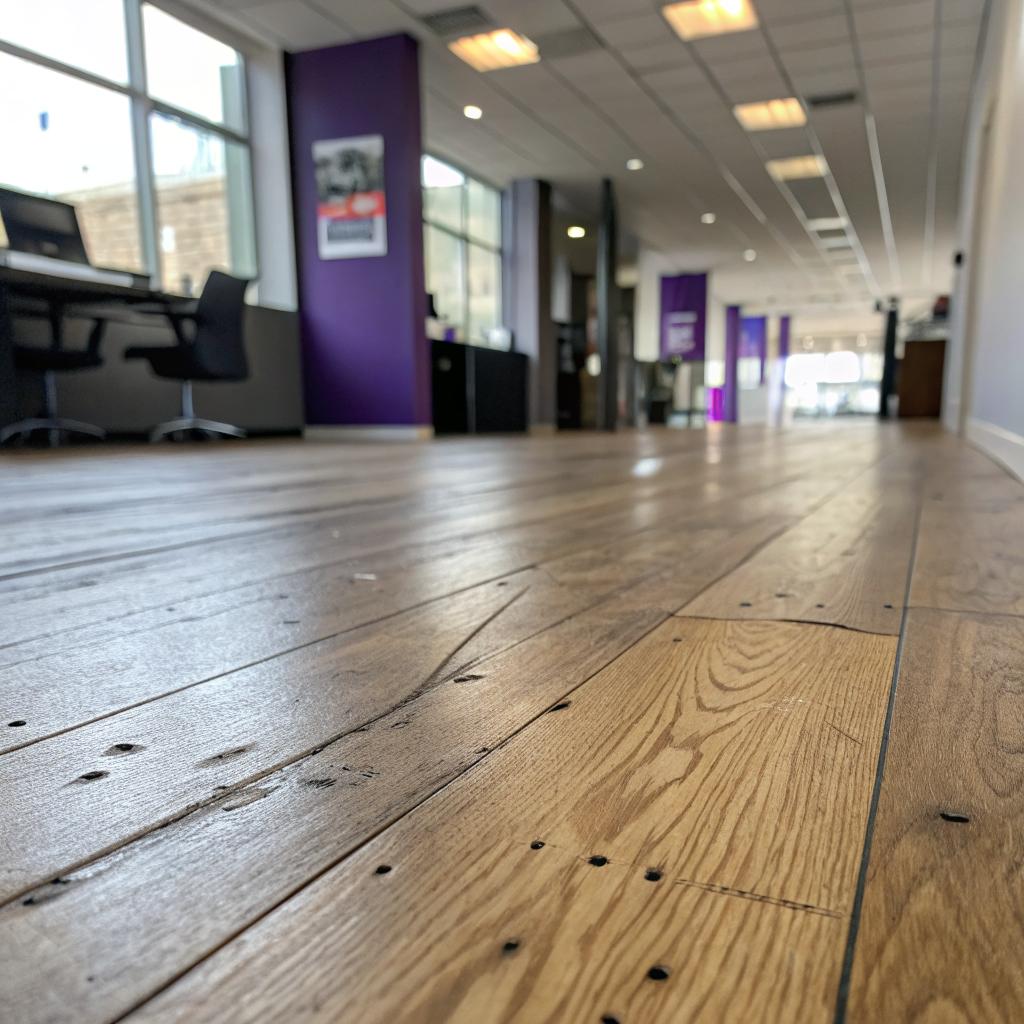
What if I told you one of the fastest ways to lift your office ROI in Denver is sitting right under your feet, quietly scuffed, dull, and ignored?
The short answer: when companies invest in wood floor refinishing Denver, they usually see higher lease rates, better employee retention, stronger client perception, and lower long term flooring costs. All of that rolls up into higher returns on every dollar you already spend on rent, payroll, and sales. It is not magic. It is just the compound effect of better space quality on core business numbers.
Now, that sounds a bit neat and tidy. Real life is messier. Some offices will see clear gains. Others will treat it like a cosmetic upgrade and never track it. So I want to walk through where the ROI actually comes from, how to think about it in a more analytical way, and where it ties back into technology, growth, and funding conversations that you, or your investors, probably already have.
How better floors affect real business numbers
Refinishing hardwood sounds like a “nice to have” item that an office manager sneaks in when the CEO is traveling. But if you step back and look at it like a CFO or a founder planning a Series B round, it touches several measurable areas:
- Lease rates and asset value
- Employee productivity and retention
- Client trust and sales velocity
- Maintenance and replacement costs
- Brand and hiring, especially for tech talent
Let me break that down in more practical terms, and I will try not to romanticize wood grain or anything like that.
1. ROI from higher lease rates and office asset value
If you own your building or plan to, refinishing your floors has a very simple story: you can usually charge more rent for the same square footage.
In Denver, commercial brokers will often tell you there is a premium for “move in ready” space with visible quality surfaces. Floors are one of the first things people see when they step out of the elevator. Old, yellowed, scratched floors instantly say “dated.” Tenants that work in tech, finance, or professional services usually do not want that.
So the question is not “are shiny floors nicer.” The question is: what rent delta do upgraded floors support compared to the cost of refinishing?
A conservative scenario: if refinishing costs 4 to 6 dollars per square foot and helps you raise rent by even 0.50 dollars per square foot per year, payback can land well under 3 years, sometimes closer to 18 months.
Here is a simple example for a 10,000 square foot office:
| Item | Before refinishing | After refinishing |
|---|---|---|
| Rent per sq ft / year | $24 | $24.75 |
| Total annual rent | $240,000 | $247,500 |
| Annual rent increase | $7,500 | |
| Refinishing cost (one time) | $50,000 (at $5/sq ft) | |
| Simple payback period | 6.7 years | |
That 6 to 7 year payback looks long if you are thinking like a short term tenant. It looks very normal if:
- You own the building and think in 10 to 15 year cycles
- You plan to sell and want cleaner inspection reports and photos
- You are chasing better quality tenants willing to sign longer leases
And this is still a cautious scenario. Many owners under invest in finishes, then complain about “price sensitive” tenants. Sometimes the tenant profile follows the space, not the other way around.
2. ROI hidden in employee retention and productivity
This part is more fuzzy but, strangely, often more powerful.
Most tech leaders already accept that office layout, lighting, and noise levels affect productivity and mental health. Floors fold into that, even though they are easy to ignore when you stare at screens all day.
Refinished floors do a few things at once:
- Change brightness by reflecting more light
- Reduce micro dust if old finish is flaking
- Make the place feel cared for, which signals respect
Some of that sounds soft. But retention is absolutely not soft.
If your average cost to replace a knowledge worker is 20,000 to 50,000 dollars in recruiting, onboarding, and lost output, even a 1 or 2 percent drop in turnover has real financial weight.
Imagine a 100 person Denver office:
| Metric | Conservative value |
|---|---|
| Average fully loaded salary | $110,000 |
| Annual turnover | 15 people (15%) |
| Replacement cost per person | $25,000 |
| Total yearly replacement cost | $375,000 |
If investing in workspace quality, including floor refinishing, helps you trim that to 14 people instead of 15, you save about 25,000 dollars per year. That single headcount covers half the cost of refinishing a decent sized floor every few years.
Can I prove that one less person quit solely because of shinier floors? No. That is where the ambiguity lives. People leave for many reasons.
But when companies do investment rounds and talk about “culture” to justify valuations, they rarely connect it to physical upkeep. Yet employees notice cheap carpet, peeling finishes, and stained surfaces very quickly. They might not complain, but they interpret it.
3. Client perception, close rates, and deal sizes
If your office is purely remote and no customers ever visit, this section might not apply. If you run sales meetings, investor pitches, or board sessions in your space, it matters.
When a client steps into your office, they build a mental model in seconds. You know this because you do the same in other people’s offices. You notice:
- Lighting and smell
- Cleanliness
- Noise level
- Condition of visible surfaces, especially floors and conference tables
Refinished hardwood tells a subtle story: we care about detail, we maintain assets, we think long term. Worn, scratched, half finished floors tell another story: we cut corners on things that are not in the slideshow.
Is that fair? Maybe not. But people buy on trust, not fairness.
Even a tiny increase in close rate or average deal size compounds across a full pipeline. A one percentage point lift in close rate on a 10 million dollar annual pipeline is 100,000 dollars in new revenue.
Will refinishing alone create that lift? Again, probably not by itself. But if you already spend heavily on CRM tools, marketing automation, and sales coaching, ignoring the basic physical context those deals close in feels odd.
You fine tune funnel stages in software. Floors are part of the real world funnel.
4. Maintenance, cleaning, and the boring cost side
There is also the quiet, less glamorous side: ongoing maintenance costs.
New or freshly refinished hardwood is easier to clean. Dirt does not grip into tiny surface cracks. Cleaning staff can work faster, which matters over hundreds of nights each year.
Here is a simple comparison for a 10,000 square foot space:
| Item | Old, worn floors | Refinished floors |
|---|---|---|
| Cleaning time per night | 4 hours | 3.5 hours |
| Hourly cleaning rate | $30 | $30 |
| Nightly cleaning cost | $120 | $105 |
| Annual cleaning cost (5 nights/week, 50 weeks) | $30,000 | $26,250 |
| Annual savings | $3,750 | |
These numbers are just an example, but the pattern is common. Slightly smoother, better sealed surfaces shorten cleaning routes. Over years, you also delay major replacements because the wood stays protected.
For founders and CFOs who obsess over SaaS license creep and cloud spend, ignoring physical opex leaks like this seems inconsistent.
5. Tenant mix and funding conversations
If you are on the ownership side, investors care about your tenant profile almost as much as they care about square footage.
Anchoring your space with tech and professional service tenants that raise money and grow headcount changes your risk profile. Those tenants look for:
- Good natural light
- Solid connectivity and infrastructure
- Quality finishes, especially in shared areas
Floors do not cause venture funding, to be clear. But they do support a kind of company that raises funding more often.
From a fundraising narrative angle, physical space also appears in pitch decks more than people admit. I have sat in meetings where investors asked founders to share photos of their office to get a sense of culture and “how they think.”
If your hardwood floors are dull and patchy in those photos, but your deck claims you care deeply about detail and quality, there is a small disconnect.
How to think about refinishing as an ROI project, not decor
Most teams handle this like a one off facilities decision. Someone collects a few quotes. Someone else picks the cheapest one. People complain about fumes for a week and then move on.
If you treat it more like a capital project with a business case, your odds of seeing real ROI go up.
Map floors to business objectives
Before you even ask for quotes, write down what you want the floors to achieve for the business. It sounds overkill, but it shapes your choices.
Some targets could be:
- Increase rent by X dollars per square foot on renewal
- Support a shift to higher paying tenants
- Reduce annual maintenance costs by Y percent
- Improve office environment to support hybrid work
Then, match finish choices and timing to those goals.
If your main goal is tenant upgrades, public areas and conference rooms matter more than storage areas. If staff comfort is central, focus on where they spend the most continuous time, like open workspaces.
Look at lifecycle costs, not just upfront quotes
This is where many budgets go wrong. A cheaper refinishing job can cost more in the long run.
Some cost drivers across the life of the floor:
- Quality of sanding and prep work
- Type of finish and expected durability
- Ventilation planning to reduce downtime
- Future touch up strategies
A more durable finish system might reduce the need for full refinishing cycles, turning a 5 year schedule into 7 or 8. Over 20 years, that can remove an entire refinishing cycle.
If you run DCF models for software investments but treat floor work with a simple “what is the lowest bid” mindset, you lose money quietly.
Weigh disruption vs speed
Refinishing creates short term disruption. You cannot pretend otherwise. There will be noise, smells, and sometimes temporary relocation of teams.
The question is how that disruption compares to ongoing drag from an uninspiring space.
You can:
- Schedule work over weekends and nights
- Phase it by area, starting with least occupied sections
- Pair it with planned remote weeks or company offsites
I have seen teams push off floor work for years because “it will disrupt operations.” Meanwhile, they quietly accept constant daily disruption from a drab, inconsistent office that makes everyone a bit more tired and less proud.
That tradeoff deserves more honest discussion at the leadership level.
Denver specific angles that affect ROI
The Denver market has a few quirks that change the math on wood floor refinishing.
1. Urban vs suburban tenant expectations
Central Denver offices that compete with newer tech friendly spaces need every small advantage. Tenants there compare you against other polished sites with open ceilings, glass, and yes, refined hardwood floors.
Suburban sites can get away with a little more wear, but only up to a point. Many younger firms in places like Greenwood Village or the Denver Tech Center are trying to attract the same talent pool. They look at the full experience, not just parking availability.
2. Climate and wood movement
Denver’s dry climate and seasonal shifts can be hard on wood. Planks can shrink slightly, joints might become more visible, and finishes can dull a bit faster in heavy sunlight.
This is one of those subtle engineering type issues that tech minded leaders usually enjoy, but rarely think about for their office.
A good refinishing plan in Denver will consider:
- Humidity control in the HVAC system
- Sun exposure patterns during the year
- Traffic patterns near windows and entries
Ignoring those points can shorten the life of a refinish cycle. Paying attention can lengthen it, which improves your ROI without any fancy spreadsheets.
3. Competition and post pandemic office decisions
Many companies in Denver are still figuring out their long term office strategy. Hybrid, fully in person, or something else. Some are trimming space, others are consolidating.
If you are trying to convince staff to come in 3 days a week instead of 1, you have to make the office feel meaningfully better than their home setup.
Screens and coffee machines are part of that. So is the basic feel of the floor under their feet. It affects acoustics, perceived cleanliness, and mood. Staff might say they care only about flexible policy, but when they actually show up, the space either feels welcoming or mildly disappointing.
Think of refinished hardwood less as “fancy flooring” and more as a quiet partner for your hybrid work policy. The nicer the office, the easier it is to defend bringing people together on purpose.
How to measure ROI from refinishing in a practical way
One of the real problems here is that most companies never track whether the project “worked.” So it turns into anecdote instead of data.
You can change that with a few simple steps.
1. Capture baseline metrics before work starts
Even small, imperfect datasets are better than nothing. Before you refinish, record:
- Current rent per square foot (if applicable)
- Current vacancy rate or sublease status
- Current turnover rate in the office
- Office usage data from access cards or Wi Fi connections
- Staff satisfaction scores from quick surveys
You probably track some of these already in HR or operations systems. Just tag the data with dates so you can compare later.
2. Run a simple before / after comparison
Six to twelve months after refinishing, look back.
You are not going to prove causation with scientific certainty, but you can notice trends like:
- Higher office attendance on voluntary days
- Faster lease up of vacant floors
- Slightly better candidate response during onsite interviews
You can also attach rough financial values to these patterns.
For example, if your voluntary office days went from 1.4 days per person per week to 2.1, and you believe collaboration improves shipping speed or reduces error rates, then that extra presence has value. Again, not perfectly measurable, but not worthless either.
3. Combine qualitative and quantitative data
Do not ignore comments just because they are subjective. Ask staff and tenants questions like:
- “How would you rate the look and feel of our office floors now compared to last year?”
- “Do you feel more comfortable bringing clients into the office?”
- “Does the physical environment help or hurt your focus?”
Overlay their responses with your numbers. If rent went up, turnover went down, and people report feeling better in the office, the story becomes stronger.
It is not perfect science, but business decisions rarely are.
Practical considerations when planning refinishing in Denver
If you have decided to treat floor refinishing as a real business lever rather than a last minute line item, a few practical points can help.
Timing around growth and funding rounds
There are windows where the impact of refinishing is more visible to the outside world.
Some examples:
- Before hosting investor days or board meetings
- As part of a brand refresh or rebrand
- When moving from seed to Series A or from Series B to C
- Right before recording office tours or photo shoots for recruiting
If you time the work there, it plugs directly into your story about maturity, quality, and seriousness.
You do not need to make a big deal out of it. You can simply let clean visuals and a grounded, well kept feel speak for themselves.
Balancing sustainability and cost
Some teams avoid refinishing because they worry about environmental impact or want to swap flooring types completely.
Refinishing existing hardwood can actually stack well with sustainability goals:
- You keep the existing material instead of sending it to landfill
- You extend the lifespan of the floor by many years
- You avoid the embodied carbon of new materials and logistics
From a tech or growth company perspective, this also helps align your physical space with any ESG story you share in investor reports.
If you are going to talk about efficiency and resource awareness in your data centers, keeping your floors in use for longer instead of replacing them prematurely is a small but consistent step.
Where the tech mindset fits into refinishing decisions
You might wonder why a site that talks about business, technology, growth, and funding should care about wood floors at all. That is a fair question.
I think the connection lives in two places.
1. Treating physical space with the same analytical care as digital tools
In tech companies, teams obsess over:
- Conversion rates
- User experience
- Churn and retention
- Lifetime value
Physical space touches those same metrics, but we rarely give it the same structured attention.
Your office floor is part of:
- User experience for employees who “use” your company every day
- Conversion paths for candidates who visit for interviews
- Churn risk for both staff and clients who feel your company slipping
Applying basic product thinking to your space changes the conversation. You start to see refinishing not as a vanity spend, but as UX improvement for your physical product: the office.
2. Sending consistent signals to investors and partners
Investors do not usually back companies because their floors look good. They back them because they trust the team’s judgment and discipline.
When a company claims to be meticulous about code quality but ignores peeling finishes and stained surfaces in its own base, some investors notice. Maybe not all, but those who have built companies before often do.
The same way you clean up your Git repos and metrics dashboard before a funding round, it is reasonable to clean up the literal ground people walk on when they visit.
It does not prove that you are a good steward of capital. Yet it hints that you understand the visible and invisible details that build trust.
Common objections and honest responses
I have heard a few recurring pushbacks whenever floor refinishing comes up in business discussions.
“Our team is mostly remote, so why bother?”
If less than 10 percent of your workforce uses the office and no clients ever visit, then yes, refinishing might be low priority. In that case, waiting is probably fine.
But many “remote first” teams still:
- Hold offsites and planning sessions in person
- Host investors and key partners occasionally
- Bring in candidates for final stage interviews
If your office is now a “flagship” rather than a daily workspace, the quality bar arguably needs to be even higher. People see it less often, but when they do, they form quick, strong impressions.
“We prefer to invest in software and automation, not decor.”
This is where I think some leaders are slightly off.
Refinishing is not in the same category as decorative art or trendy furniture. It is more like infrastructure. It protects a physical asset and cuts long term costs.
I agree you should not starve product or engineering just to refinish floors. But if you have reached the stage where you are optimizing cloud spend to shave a few percent off your run rate, then ignoring a whole category of physical costs feels inconsistent.
“We will just replace the floors at some point, why refinish now?”
Replacement is sometimes logical if:
- The wood is structurally damaged
- Previous work sanded it too thin
- You plan a full layout change anyway
But full replacement is usually more disruptive and expensive than refinishing. You pay for new materials, more labor, and longer downtime.
If the boards are fundamentally sound, refinishing can reset the surface at a lower cost. From an ROI lens, that tends to win unless there is a strategic reason to switch material types.
Putting it all together
By now, you probably see that wood floor refinishing in a Denver office is not just about looks. It cuts across finance, HR, sales, and even fundraising narratives.
To make it concrete, here is a simple summary table for a mid sized 15,000 square foot office:
| Impact area | Possible effect of refinishing | Example annual value |
|---|---|---|
| Rent / asset value | 0.50 dollars per sq ft higher rent | $7,500 |
| Employee retention | 1 fewer departure per year | $25,000 |
| Cleaning and maintenance | 12.5 percent lower cleaning time | $3,000 |
| Client perception | 1 extra medium sized deal closed | $30,000+ |
| Total rough annual effect | $65,000+ |
If refinishing that space costs 60,000 to 75,000 dollars every 6 to 8 years, the payback math looks quite healthy. Not perfect, not guaranteed, but hard to ignore if you care about ROI.
The quiet reality is that many offices are bleeding small amounts of money every day through tired, under cared for space that drags down energy, trust, and perceived value.
So the real question is not “are refinished hardwood floors nice to have.” The question is:
Are you willing to treat your physical office with the same seriousness and curiosity that you apply to your tools, metrics, and growth plans?
If your honest answer is yes, then planning a thoughtful refinishing project in Denver is not just an aesthetic upgrade. It is one more piece of the ROI puzzle, hiding in plain sight under your feet.