
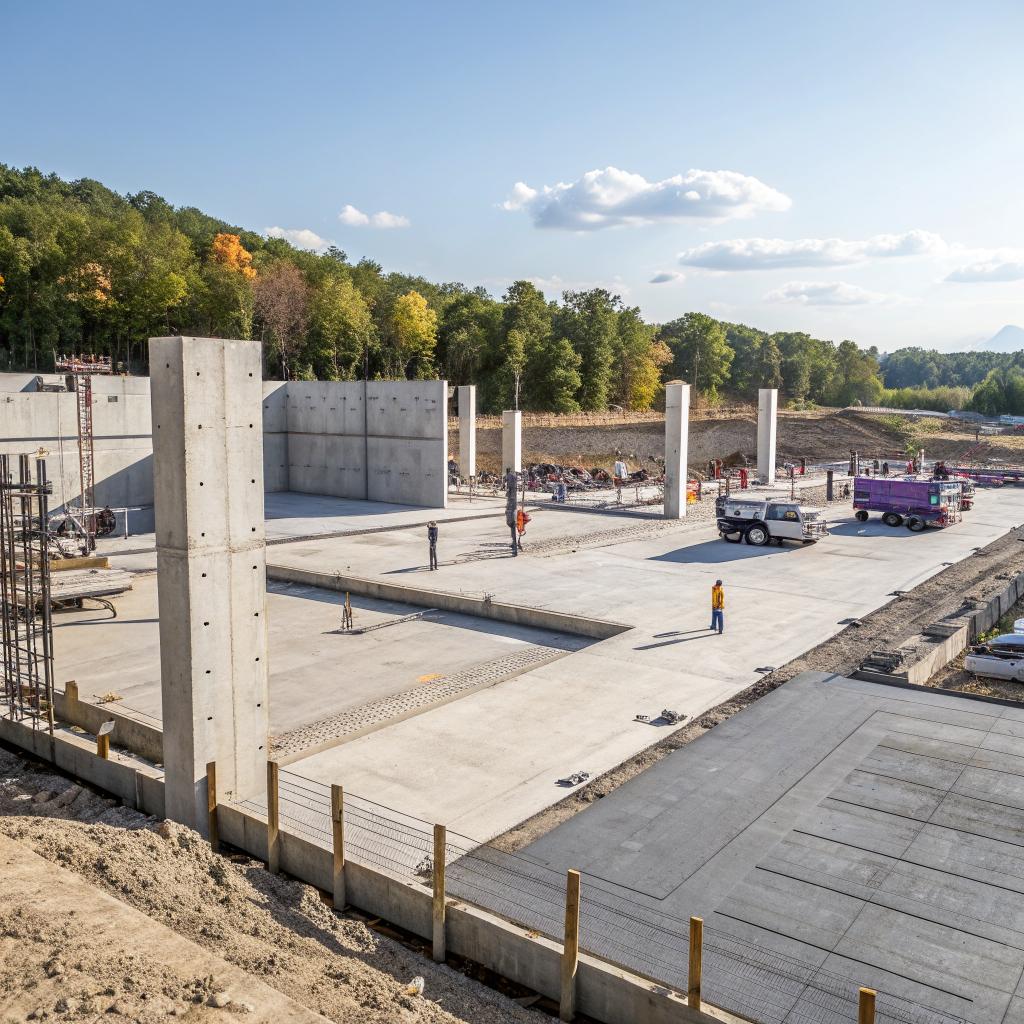
What if I told you that a big driver of proptech growth in Middle Tennessee is not an app, not a marketplace, not a data platform, but a local concrete crew pouring patios and fixing foundations?
The short answer is this: when local contractors like Franklin TN Concrete Works (Visit website here) take concrete quality, timing, and documentation seriously, they quietly make real estate data cleaner, project timelines shorter, and proptech products more reliable. Proptech tools look smart on the surface, but they only work if the physical asset is stable, measurable, and predictable. High quality concrete work is one of the hidden ways that happens.
It sounds a bit strange at first. Concrete and software do not seem like they have much to talk about.
But if you look at how property technology actually earns money, you start running into concrete pretty fast. You run into foundations, slabs, drainage, patios, and driveways. You run into variance between what is on the plan and what ends up in the ground. That gap is where a lot of profit disappears.
When that gap shrinks, proptech margins look better. When it widens, everyone scrambles.
Why concrete suddenly matters to proptech people
If you work on the business side of tech, you probably care about a few predictable things:
- Customer acquisition costs
- Churn and retention
- Payback period on sales and marketing
- Gross margin and unit economics
Concrete looks like a construction topic, but in property tech it quietly touches each of those.
Let me map this out in blunt terms. A proptech product that touches any part of:
- Home search and valuation
- Property inspection or due diligence
- Maintenance and repair workflows
- Construction project management
- Insurance or lending for residential property
depends on the same boring facts:
Concrete quality affects structural risk, long term maintenance cost, and perceived property value more than most glossy design features do.
If you misread that risk, your models are off. If your inspections miss foundation issues, your warranty reserves are off. If your repair vendors are slow or inconsistent, your NPS is off.
So when a local operator like Franklin TN Concrete Works starts to standardize the way concrete is poured, recorded, and maintained, it is not just “better construction.” It becomes shared infrastructure for a whole local proptech stack.
You may not care how the slab is poured. You do care if:
- A lender downgrades a loan book because of recurring foundation problems
- A single-family rental fund has to replace patios across a portfolio three years early
- Your operations team spends hours chasing incomplete photos and invoices from random contractors
That is where this crosses into growth, funding, and scale questions.
Where physical work meets digital property streams
One simple way to think about proptech is to split it into three layers:
| Layer | What it does | Concrete’s role |
|---|---|---|
| Asset layer | The actual property, its structure, and defects | Foundation, slabs, patios, driveways, drainage |
| Data layer | Inspections, condition reports, CAD/BIM, valuations | Recorded thickness, mix, cracks, repairs, photos |
| Application layer | Portals, underwriting tools, marketplaces, ops tools | Uses condition data to price, schedule, and forecast |
Most pitch decks focus on the application layer because that is where the user interaction lives. That is also where investors tend to look first.
But the whole stack is only as good as the connection between asset and data. Concrete work in Franklin is one of those ties. It is not glamorous, yet it controls:
- How often condition events occur (cracks, settlement, water intrusion)
- How predictable those events are
- How clearly they are documented and time stamped
If your app “manages property risk,” but you do not have a handle on who is pouring, repairing, and documenting concrete, you are partially guessing.
That is a harsh line, but I think it is fair.
Once a local contractor gets used to:
- Taking consistent before/after photos
- Labeling projects with property IDs, not just addresses
- Logging mix type, thickness, and cure times
- Uploading invoices and warranties in structured formats
they stop being a simple vendor. They become a data source.
This is where Franklin TN Concrete Works starts to feel like infrastructure for proptech instead of just a construction name on a yard sign.
How Franklin concrete work changes local unit economics
Let me walk through a few concrete examples. No pun intended, I just realized it reads that way.
1. Lower surprise capex for investors and owners
Imagine you manage a fund of single family rentals across Franklin and nearby cities. Your model relies on:
- Stable maintenance cost per door
- Low vacancy
- Predictable capital events every 7 to 10 years
If 20 percent of your homes need early foundation repair or patio replacement because of poor initial concrete work, your cash flows slip.
Now imagine a different scenario. On the acquisitions side, your proptech tools pull not just public data, but also a private feed that includes:
- Date and details of recent slab work
- Any past foundation repair, with method and depth
- Photos of cracks filled or piers installed
That feed exists because local contractors poured the slab and then logged those details. Franklin TN Concrete Works already operates in that region, so a serious investor or proptech platform can either:
- Partner and pull structured reports
- Standardize all their concrete work with a data requirement
Either way, capex forecasting improves. Mispriced assets show up earlier. Deals that looked attractive on paper can be rejected before due diligence eats budget.
Clean, recent, verifiable concrete and foundation data narrows the gap between “underwritten return” and “real return” more than a fresh coat of paint ever will.
If you are modeling returns for LPs or a corporate buyer, that gap is what they will grill you about.
2. Reduced churn for maintenance and warranty platforms
Many proptech companies sell “peace of mind” products:
- Home maintenance subscriptions
- Home warranties and extended coverage
- Landlord maintenance packages
Churn spikes when:
- Claims get denied due to unclear prior work
- Repairs drag on because contractors are unresponsive
- Repairs fail and need to be repeated
Concrete work is a classic source of angry calls. A patio heaves and water runs toward the house. A hairline crack in the foundation becomes a visible seam and a buyer freaks out.
When platforms route concrete jobs to a consistent, local provider who already understands their documentation and timing needs, complaints shrink.
So if Franklin TN Concrete Works:
- Responds inside defined windows
- Uploads before and after evidence
- Confirms root cause, not just patches the symptom
your maintenance product looks stronger than it really is. Nothing changed in the app. The claims logic is the same. You just reduced variability on the field side, which shows up in your retention chart.
If you care about lifetime value, this is not a side issue, it is central.
3. More believable property data for banks and insurers
There is a quiet tug of war between proptech platforms and traditional risk carriers.
Apps want to say: “Our data and models let us underwrite homes smarter.”
Banks and insurers say: “We will believe you when claim patterns and losses match your promise.”
Concrete shows up here in three ways:
- Slab and foundation quality as a predictor of claim frequency
- Drainage patterns that affect water intrusion and mold
- Surface conditions that affect trip and fall liability
If you can walk into a meeting with an underwriter and say:
“In this region, 80 percent of our homes use contractors who record mix, thickness, and crack repair data. Where Franklin TN Concrete Works has touched the slab or patio, our water intrusion claims are 30 percent lower over 5 years.”
that is not just a nice story. That is a pricing argument.
Do I know the exact percentage? No, and I would be suspicious of anyone who claims they do today. But this is the direction things are moving. As field work becomes more standardized and observable, it feeds risk models.
For a proptech founder, that can turn into:
- Better terms from insurers
- Cheaper capital for lending products
- Higher attach rates on add-on coverage
which is where growth and funding discussions usually land.
What makes a concrete contractor “proptech ready”
Not every local crew is ready to plug into modern property tech. Some are great at pouring slabs but allergic to process, documentation, or software.
If you are building or scaling a proptech product around property condition, I think you should quietly profile your field vendors against a few traits.
Operational traits that matter
- Predictable scheduling
Weather gets in the way, but a serious crew can still commit to windows, proactive updates, and honest delays. Your app cannot promise 3 day turnaround if the crew ignores texts. - Basic digital literacy
They do not need to write code. They do need to send photos, fill forms, and use a portal or simple app without constant handholding. - Documentation habit
Before and after photos, mix tickets, permit numbers, and inspection signoffs make future data valuable. Without those, you have anecdotes, not records. - Willingness to standardize
The crew is open to repeating the same photo angles, naming projects with property IDs, and logging work in a consistent way.
Franklin TN Concrete Works is interesting in this context because they operate in a region where:
- New construction volume has been strong
- Investors and SFR operators are active
- Local proptech startups and national platforms are testing ideas
So the gap between “traditional concrete work” and “proptech ready concrete work” is smaller than in many markets. There is pressure, but also opportunity.
Data traits that quietly add value
I am not talking about AI predictions or anything fancy. Just basic data habits that compound:
- Geo accuracy
Correct address, GPS tag, and clear relation to units or lots, not vague neighborhood names. - Time stamps
Pour date, cure period, and repair dates recorded in a consistent format. - Scope clarity
Distinction between cosmetic crack repair and structural work. That line matters to engineers, insurers, buyers, and models. - Material detail
Mix type, reinforcement approach, and any soil stabilization or drainage work included.
Once one contractor in a region starts sending this kind of detail, others either follow or lose volume from serious buyers and property operators.
That is one way a company like Franklin TN Concrete Works can indirectly “power” proptech growth: by raising the floor on how field work is described and captured.
How concrete quality shapes valuation and exit outcomes
This part often gets underestimated in decks. A fair amount of enterprise value in proptech businesses rests on how believable their property data is.
For marketplaces and iBuyers
If you run a marketplace or an iBuyer model, you live or die on:
- Acquisition price accuracy
- Renovation cost accuracy
- Hold time and resale value
Let me give a quick comparison. Two homes look similar:
| Item | House A | House B |
|---|---|---|
| Year built | 2015 | 2015 |
| Square feet | 2,400 | 2,380 |
| Visible condition | Good | Good |
| Concrete data | Original builder, no repairs logged | Documented patio and slab work by a known local crew, with photos and engineering notes |
If your models treat these two the same, you ignore real risk.
House A might be fine. Or it might hide drainage issues and slab movement that show up only after heavy rain. House B at least has a trail. You know where to call if issues appear. You may even know the soil treatment used.
In a competitive market, your bid strategy can shift:
- Pay slightly more for houses with clean concrete and foundation histories
- Bid conservatively on homes with no record or with repeated patch work
Over thousands of deals, that difference compounds. A local contractor who reliably logs and shares their concrete work, across many homes, gives you that signal.
For SaaS and B2B proptech platforms
If you sell to property managers, REITs, or lenders, a good chunk of your value story rests on:
- Better decisions
- Better risk control
- Better process predictability
All three rely on ground truth.
Having a network of “known good” field vendors like Franklin TN Concrete Works in target regions makes your demo screenshots more than just UI. When you show a timeline of a property’s history, you can back it up with:
- Real projects completed on time
- Documented structural and concrete work
- Reduced incident rates after those projects
Investors will ask how much of your data is self reported versus third party confirmed. They may not phrase it that way, but that is what they mean when they probe data quality and defensibility.
If your answer includes real relationships with field operators, you are in a stronger position during later rounds or strategic talks.
Local markets, local dirt, local concrete
One tempting mistake is to treat all markets as the same. From a pure software view, that is attractive: one codebase, many regions.
Concrete does not care about your slide deck. It cares about:
- Soil type
- Freeze/thaw cycles
- Water tables
- Local building practices and enforcement
Franklin and the surrounding Middle Tennessee area have a mix of clay soils, slope variation, and rapid development. That combination can stress foundations and slabs if people cut corners.
So a crew that understands local ground conditions is not just a vendor. They are a local knowledge node.
If you try to run a national proptech play and you ignore that, you will ship features that assume all slabs behave like the ones in your first test market. They will not.
Working with a local operator like Franklin TN Concrete Works can help you refine:
- How you tag risk in different micro areas
- How you set inspection checklists for that region
- How you price long term maintenance reserves
That might feel too granular. It is not. If you are modeling thousands of homes, small structural differences turn into millions of dollars over a portfolio life.
Where the money really moves: timelines and friction
So far, I have talked a lot about risk and data. There is a more direct cash effect from solid concrete work in a real estate workflow: time.
Speed between contract and closing
Delays that hit “clear to close” often trace back to inspection issues. Here is a simple chain:
- Home goes under contract
- Inspection flags foundation or patio issues
- Everyone scrambles to find a contractor
- Schedule delays, unclear bids, nervous buyers
If your proptech tool claims to shorten time to close, but the physical trades still operate on voicemail and vague promises, your main value claim is fragile.
Using a standing relationship with a local crew who:
- Responds quickly to inspection reports
- Can prioritize time sensitive jobs
- Provides clear, written scopes and photos
can cut days or weeks from that process. That flows directly into:
- Higher close rates on your platform
- Lower fallout from buyer anxiety
- Fewer rescheduled movers, appraisers, and cleaners
All of which help you when you pitch “shorter deal cycles” to partners or capital providers.
Speed between acquisition and rent ready
Investors running SFR or small multifamily love to track “days to rent ready” after acquiring a property.
Concrete work affects that when:
- Driveways or steps are unsafe
- Water pooling risks interior damage
- City inspectors flag issues during permit checks
If Franklin TN Concrete Works can slot these repairs into predictable slots, and if your software integrates scheduling and confirmation, you can present a cleaner story:
“For properties in the Franklin cluster that required concrete or foundation work, median days to rent ready were 18 instead of 27, because our field partner confirmed scopes inside 24 hours and scheduled work inside 3 days.”
Again, I am making up numbers to show the structure, not reporting real stats. But that is the kind of metric that both LPs and strategic buyers understand quickly.
You probably spend months refining your funnel analytics. It makes sense to put similar care into your field work timelines, and concrete is a good place to start because its failures are visible and hard to ignore.
What proptech founders can do differently with contractors
At this point, you might be thinking: “Fine, concrete matters. What am I supposed to do about it from a product or growth seat?”
Here are a few practical steps.
1. Treat top contractors as design partners, not just vendors
Invite one or two local concrete providers into your early product conversations. Pay them for their time. Ask:
- What data is easy for them to collect during a job
- What slows them down or annoys them about current portals
- What photos they already take for their own records
You will probably find that with small tweaks, you can get 80 percent of the property condition data you want without adding much friction for them.
It is tempting to design your workflow from your laptop. That usually produces forms that feel neat but do not match real jobsites. A 20 minute chat on the tailgate of a truck will change your UI more than a week of internal debate.
2. Build trust before asking for structure
If you walk into a contractor relationship and immediately push detailed data rules, you will get resistance.
If you:
- Pay on time
- Send them repeat volume
- Protect them from unreasonable customers
then ask for small steps:
- Two extra photos per job
- One extra field in their invoice
- A shared job naming convention
you are much more likely to get cooperation. This is less about tech and more about basic working relationships, but it shapes the quality of your data, so it belongs in your growth playbook.
Questions investors might ask you about concrete and field work
If you are raising or planning to raise, someone on the other side of the table will ask about:
- Defensibility of your data
- Reliability of your field operations
- Unit economics by region
Here are a few questions you should be ready to answer, and how concrete fits into those answers.
Q: “How do you know your property condition data is accurate?”
A weak answer relies only on user self reporting and public records.
A stronger answer includes:
- Verified field work from a network of trained local contractors
- Standard photo sets and time stamps
- Patterns of repair events that match expected life cycles
If you can say “In Franklin we work with one primary concrete partner for structural surfaces, and our incident rate after their work is X percent lower than baseline,” you sound more serious.
Q: “What parts of your operation are hardest to scale?”
A common reply is “sales” or “customer support.” Field operations are just as tricky.
You can be honest and say:
- Reliable, data friendly concrete and foundation work is not evenly available in all markets
- You are piloting tighter relationships in places like Franklin and will expand that playbook
Investors do not expect you to have perfect coverage everywhere. They do expect you to know where your current quality actually comes from.
Q: “Why do your retention and NPS look stronger in some regions than others?”
If your best numbers cluster around markets where you happen to work with crews like Franklin TN Concrete Works, that is not a coincidence.
Explain that:
- Faster and clearer structural work reduces customer anxiety
- Good documentation reduces disputes and denied claims
- Property managers and owners in those markets stay longer because big repairs feel more controlled
That story is much more grounded than “Customers in that region just love tech more.”
Is local concrete work really that strategic?
I can imagine a skeptic asking: “Are we overthinking this? It is just concrete.”
That reaction makes some sense. Proptech decks tend to orbit software, data, and network effects, not patio installers.
But if you strip away buzzwords and look at where money is gained or lost in property businesses, you keep running into material facts in the ground. Concrete is one of the first you meet and one of the last you forget when it goes wrong.
Franklin TN Concrete Works is not writing your underwriting models or designing your app. They are doing something more basic:
They are shaping how predictable, inspectable, and trustworthy the physical side of your product is, property by property, slab by slab.
If you are serious about growth, funding, and long term value in proptech, the question is not “Do we care about concrete?” It is:
Q: How can we turn local concrete and foundation work into a quiet advantage in our product and business model?
And the honest answer is usually:
- By picking the right local partners
- By treating them as part of our data pipeline, not just a cost line
- By learning from markets like Franklin where that connection is already starting to form