
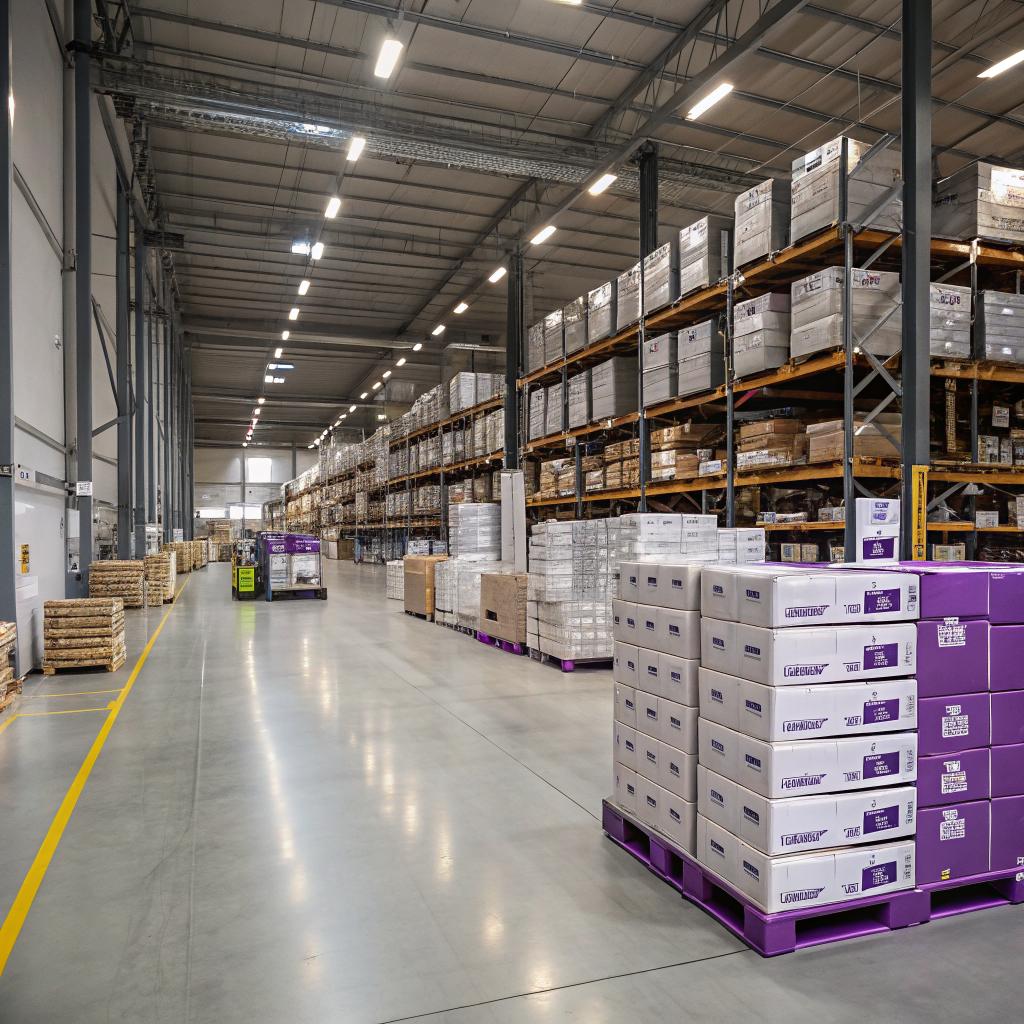
What if I told you that for many growing tech brands, profit is not lost on ads or engineering, but on shipping labels, storage fees, and returns that quietly eat margins every single day?
The short answer is that a focused third party logistics partner, like Ideal Fulfillment 3PL, can take over your storage, pick and pack, shipping, and returns in a structured way so your team can focus on product, customers, and growth. If you want to Learn More about what that looks like in practice, you can check their site here: Learn More. The rest of this article walks through how to tell if a 3PL like that is a good fit, what to ask, and how it connects to funding, burn, and the business side of technology.
Why tech brands eventually outgrow DIY fulfillment
There is a pattern that repeats itself in hardware and direct to consumer tech.
You start with a great device, or maybe a smart accessory. A few beta units ship from a garage or a co working space. You print labels at midnight. It is scrappy. It feels lean.
Then a product review hits, or a TikTok blows up, or a B2B deal lands.
Orders jump from 10 a week to 500 a day. Suddenly:
- Customer support tickets are about missing packages, not product feedback
- Founders are comparing carrier rates instead of planning the next version
- Your warehouse is whatever corner of office space you can still walk through
At that point, you have three options:
1. Keep fulfillment in house and hire warehouse staff.
2. Build your own small warehouse operation in stages.
3. Work with a 3PL that already has the buildings, staff, and systems.
People sometimes wait too long, because shipping feels “basic.” It is not. It is an entire business model on its own.
If your top people are thinking about box sizes instead of product direction, you are paying a hidden tax on growth.
I have seen teams try to hide from this by “just pushing through the holiday rush.” That usually ends with churned customers and stressed staff in January.
Tech leaders care about growth rate, CAC, LTV, and runway. A good 3PL decision sits right in the middle of all of that.
What makes Ideal Fulfillment 3PL interesting for tech brands
A lot of 3PLs look the same from the outside. Pallets, racks, forklifts, tracking numbers. Boring on purpose.
What matters for a growing tech brand is not whether they can store boxes. It is how well they can handle the messy, specific parts of your product and your channel mix.
When you look at a partner like Ideal Fulfillment 3PL, there are a few areas that matter more than the brochure phrases.
1. Handling complex products, not just T shirts
Tech products are rarely one item in a plain box. Even a simple consumer device often needs:
- Multiple SKUs in one kit (device, cable, charger, accessories)
- Version control for hardware revisions and firmware numbers
- Lot or batch tracking for compliance or recalls
- Warranty cards, printed inserts, or QR code materials
Many tech brands think “we will just send everything pre packed” and skip asking about this. Then a last minute bundle or promo arrives, and the 3PL cannot support it.
A 3PL that is used to kitting and assembly work can handle:
- Assembling starter kits on demand
- Packing limited edition bundles for launches
- Swapping inserts for region or channel rules
That sounds minor, but it changes how quickly you can test new offers and react to sales feedback.
If your 3PL can change a bundle in a day, your marketing tests can move at the speed of your ideas, not at the speed of manual rework.
2. Supporting both DTC and wholesale without friction
Most tech brands now sell through at least two channels:
- Direct to consumer through Shopify, Amazon, or another cart
- Wholesale or retail partners, from boutiques to big box
Each channel has its own rules:
| Channel | What it expects from your logistics |
|---|---|
| DTC (Shopify, Amazon, etc.) | Fast pick and pack, branded packaging, low error rate, support for gift notes and returns. |
| Small retailers | Carton labels, simple terms, some flexibility on order sizes. |
| Big box / distributors | Strict routing guides, EDI, pallet labels, ASN, penalties if you mess up. |
Tech teams sometimes underestimate how much process goes into “big box ready” shipping. A 3PL that already does this can save months of trial and error.
If Ideal Fulfillment 3PL, or any 3PL you are considering, is already working with retailers your investors respect, that is a quiet but strong signal.
3. The software must not fight your stack
No one in your company wants another clunky dashboard that does not talk to anything.
When you check a 3PL, try to look at their integration story in a practical way:
- Do they connect cleanly with your ecommerce platform?
- Do they support your marketplace tools?
- Can your finance team pull clean data for revenue recognition?
- Is inventory data accurate enough to trust for pre orders?
You do not need a perfect API. You need data that is correct and on time.
Ask to see a live demo that shows:
- How an order flows from your site into their system
- How tracking flows back to the customer
- How inventory counts update across channels
If that takes 10 screens and three exports, that is a red flag.
4. Flexible storage and shipping for real growth curves
Growth rarely happens in a straight line. You might:
- Run a crowdfunding launch
- Ship little for months while you debug hardware
- Then explode on one major retail deal
A 3PL needs to handle spikes without punishing you during the slow months.
Watch for:
- Minimum monthly order volumes that jump too fast
- Storage models that punish you for a few slow months
- Poor support for seasonal or campaign based inventory
The best 3PL agreements feel boring during quiet months and like a safety net during crazy ones.
I know “boring” is not a word tech founders are supposed to like, but in logistics, boring is good. Stable is good. Predictable is very good.
How Ideal Fulfillment 3PL fits into your funding and growth story
A lot of 3PL talk focuses on operations. That matters, of course, but you are probably reading this because you care about growth, funding, and the business engine behind your product.
So let us tie it back to numbers that show up in investor decks.
Impact on gross margin and unit economics
Every physical tech product has two financial layers:
- Contribution margin before logistics
- Contribution margin after logistics
The gap between the two can be surprising.
Think about one unit of a smart home device:
| Item | Cost per unit |
|---|---|
| Manufacturing and components | $35.00 |
| Packaging | $2.00 |
| Shipping from factory to 3PL | $1.50 |
| In house handling (rough estimate) | $4.00 |
| Last mile shipping (average) | $7.50 |
If you sell for $99, and your fully loaded costs are around $50, your gross margin looks good.
If a 3PL like Ideal Fulfillment charges you, say:
- $1.50 for pick and pack
- $1.00 for storage and misc per unit
- Better carrier rates that save you $2 on postage
Then your logistics part per unit might drop by $3 or so. Multiply by 50,000 units per year and you are talking about six figures on margin that you can put toward product or marketing.
Is every 3PL partnership that clean? No. But the lever is real, and investors understand it.
Effect on burn and headcount planning
When you run your own warehouse, even a small one, you sign up for:
- Leases
- Warehouse staff
- Equipment
- Insurance
- Software licenses and support
It becomes a fixed cost structure that does not really care if your orders are up or down this month.
3PL costs scale more with use. That can actually be helpful for early and mid stage companies where cash is tight.
You are basically trading:
- Upfront investments and fixed payroll
- For per order fees and more variable cost lines
Some founders dislike that because it feels like “giving margin away.” But from a cash perspective, it can extend your runway and keep headcount focused on building and selling, not on managing forklifts.
Ask yourself a simple question: would you rather hire 3 more warehouse staff or 3 more engineers and account managers?
Influence on valuation story
Investors in tech often ask operational questions only when something is broken. That is their bias.
You can use that bias for you.
If you can say:
- “We ship from a 3PL partner that handles X, Y, Z type of brands”
- “Our error rate is under 0.5 percent of orders”
- “Our logistics cost per order is flat since we passed 10,000 orders a month”
You look more investable. Not because logistics is glamorous, but because predictable logistics signal that you can scale without catching fire.
That is not magic. It just means you were early and careful about the partners you picked.
How to tell if Ideal Fulfillment 3PL is the right size and shape for you
No 3PL is right for every tech company. Some are too small, some are too general, some are very good in one niche and poor in another.
If you are thinking about Ideal Fulfillment or a similar partner, here are practical checks that go beyond the brochure.
1. Match between your product and their experience
Ask blunt questions such as:
- What tech or hardware clients do you currently support?
- What is your experience with fragile devices, batteries, or regulatory labeling?
- Can you share examples of launch spikes you handled for similar products?
Pay attention to whether they talk in vague terms or concrete process.
If they can explain:
- How they handle serialized inventory
- How they manage RMA and testing for returns
- How they track lots and batches for safety reasons
Then they probably work with products that live closer to tech than to apparel.
2. Location strategy vs your customer base
If your main buyers are in the western United States, a 3PL in California can cut shipping times and costs. If your customer base is more global, you will want to ask about:
- Access to West Coast and port routes for imports
- Connections to other warehouses or partners in other regions
- Customs and export support for your main countries
It does not need to be perfect. But there must be a clear story for how your inventory reaches your buyers without ugly surprises.
3. Transparency of fees and structure
3PL pricing can be confusing, sometimes on purpose. You want simple, even if it looks slightly more expensive at first glance.
Ask for a sample invoice based on your projected volumes. Look for:
- Receiving fees
- Storage costs (per pallet, per bin, or per cubic foot)
- Pick and pack fees
- Packaging material charges
- Special project or kitting charges
- Account management or minimum fees
If you cannot explain the billing model back to them in your own words, you will hate month three.
4. Service levels and “who owns the mistake” rules
Things will go wrong. Packages will be lost. Labels will be printed wrong. That is normal.
The real question is: who pays for what, and how fast do they fix it.
Some points to be clear about:
- What is their promised order processing time?
- What is their accuracy target, and what happens if they miss it?
- How do they handle late shipments for promo or launch deadlines?
Ask for real examples, not just policy documents.
You are not buying perfection from a 3PL, you are buying how they behave when something breaks.
5. Cultural fit with your team
This is a bit soft, but it matters more than people admit.
Do they answer questions clearly? Are they open when they do not know something? Do they seem to understand that your product is more than just “units per pallet”?
If their team feels distant and annoyed on every call, you will get slow responses in crunch time.
Some tension is fine. Logistics people think in constraints, tech people often think in possibilities. The mix is healthy as long as communication is direct and practical.
Where Ideal Fulfillment 3PL can help with complexity: kitting, assembly, and returns
Most tech brands underestimate how much complexity comes from little variations in what ships out of the warehouse.
That is where kitting, assembly, and returns support become really interesting.
Kitting and assembly for tech products
Say you sell:
- A core smart device
- Optional sensors
- Add on cables and chargers
You might want:
- Starter kits for new customers
- Upgrade kits for existing customers
- Gift bundles during holidays
You can pre assemble all of those at the factory, but you lose flexibility. If demand changes, you are stuck with the wrong packs on the wrong pallets.
A 3PL with strong kitting and assembly support can:
- Store components separately
- Assemble kits as orders come in
- Change kit definitions quickly as you learn
That is useful for direct sales, of course, but it is also handy for:
- Special retail channel bundles
- Influencer or PR packages
- B2B deployments with custom contents
You keep your production runs simpler while your offers stay flexible.
Handling returns and exchanges without chaos
Tech returns are messy. Customers send back:
- Fully working devices they did not understand
- Units with real faults
- Boxes with missing parts, scratched items, or mixed SKUs
If you manage this in house, it often becomes a pile in a corner that someone “will sort later.”
A good 3PL process for returns should:
- Receive and scan returned units
- Grade them (new, like new, used, scrap)
- Route them based on your rules (restock, refurbish, recycle)
You get:
- Cleaner inventory numbers
- Better recovery of value from returns
- Less support time wasted on “where is this device”
Returns also impact your perceived quality. If your 3PL helps you find root causes in return patterns, you get more than logistics, you get product feedback.
Managing special projects and launches
There are always edge cases:
- A surprise feature release with a printed insert
- A holiday kit that needs special wrapping
- A last minute co marketing bundle with another brand
Ask Ideal Fulfillment or any 3PL you review:
- How they scope and price one time projects
- What notice they need before big launch changes
- Who on their side owns those special cases
If you get vague or slow answers, that might bite you when the next launch window appears.
Practical steps to decide if now is the time to move to Ideal Fulfillment 3PL
Not every company needs a 3PL right away. Some move too early and pay for capacity they do not use.
So how do you know it is the right moment?
Signs you are ready for a 3PL
You probably want to move when three or more of these fit your situation:
- Your leadership team spends weekly time on shipping problems
- Your error or return rate is above 2 to 3 percent of orders because of packing or labeling
- You are turning down partnerships because you “cannot handle volume yet”
- Your office looks more like a storage space than a workspace
- You are about to close funding that is meant to push growth, and you worry your current setup will break
If you only have occasional spikes once or twice a year, and no major channel asks, you might be fine staying smaller for now. A 3PL is not a badge of honor, it is a tool.
How to run a simple 3PL evaluation process
Instead of having endless calls, you can run a short, focused review in 3 or 4 weeks.
1. Map your current and near future needs
Write down, in one page:
- Your current order volume and rough forecast
- Your product types and SKUs
- Channels you sell through now and within 12 to 18 months
- Special needs like kitting, international, returns
2. Shortlist 3PLs that match your size
Avoid very small and very huge players unless there is a clear reason. Mid sized partners often give more attention.
3. Share the same brief with each candidate
Ask them to respond with:
- How they would handle your situation
- Rough pricing based on what you shared
- Example clients with similar profiles
4. Visit or request a live walkthrough
If possible, see the warehouse. If not, at least see a full video tour and a live dashboard demo.
5. Run the numbers with finance
Compare:
- Your current real logistics cost per order, fully loaded
- Projected cost per order with each 3PL, including all fees
6. Decide with clear “go” and “no go” criteria
For example:
- Cost per order must not be higher than X after 12 months
- Error rate must target below Y percent
- They must support your key channels today
If Ideal Fulfillment 3PL meets those, and you feel you can work with the team, that is a strong case.
Planning the actual move
The transition itself is where many brands get burned. The risk is not theoretical. Orders that fall between the old and the new systems hurt trust.
A realistic transition plan will include:
- Overlap time where both your old setup and the 3PL are active
- Clear cutover dates by region or channel
- Buffer stock to handle delays while inventory is in transit
- Incremental routing, starting with one market or product line
You also need to test:
- 1 or 2 weeks of “shadow operations” where the 3PL processes test orders
- Full validation of tracking, notifications, and refunds
- Support flows for logistics related tickets
Do not treat the first day of live orders as a test. That is the exam.
Questions tech founders often ask about Ideal Fulfillment 3PL and similar partners
Is a 3PL only for big companies?
No. A many thousand order per month business can already benefit from a 3PL, especially if your product is complex or your channels are diverse.
If you only ship a few hundred orders a month and have simple products, you can probably stay in house and keep things lean for a while.
Will we lose control of the customer experience?
You do hand over the physical handling part. But you keep control through:
- The packaging designs you provide
- The shipping rules you set
- The service levels you request in your agreement
If you worry about losing control, the solution is not to avoid a 3PL. It is to write clear standards and inspect them regularly.
What if our volumes drop, will they drop us?
That depends on the partner and the contract. Some 3PLs are patient with tech brands whose volume is lumpy. Others are not.
Ask about their track record with clients that went through rough patches. It is better to know their stance early.
Can we move away later if we grow past them?
Yes, but it is not a trivial change. Any 3PL move takes planning. The right question is whether the partner has enough headroom to grow with you for the next few years.
If they handle clients that are 5 to 10 times your size today, that is usually a healthy sign.
What is the single biggest sign that Ideal Fulfillment 3PL or any 3PL is working well for us?
A simple one: logistics should fade into the background of your leadership meetings.
You still watch numbers and quality, but shipping is no longer topic number one. Your team spends more time on product, growth, and customers.
If you reach that point, then the 3PL choice, whether it is Ideal Fulfillment 3PL or another, did its job.