
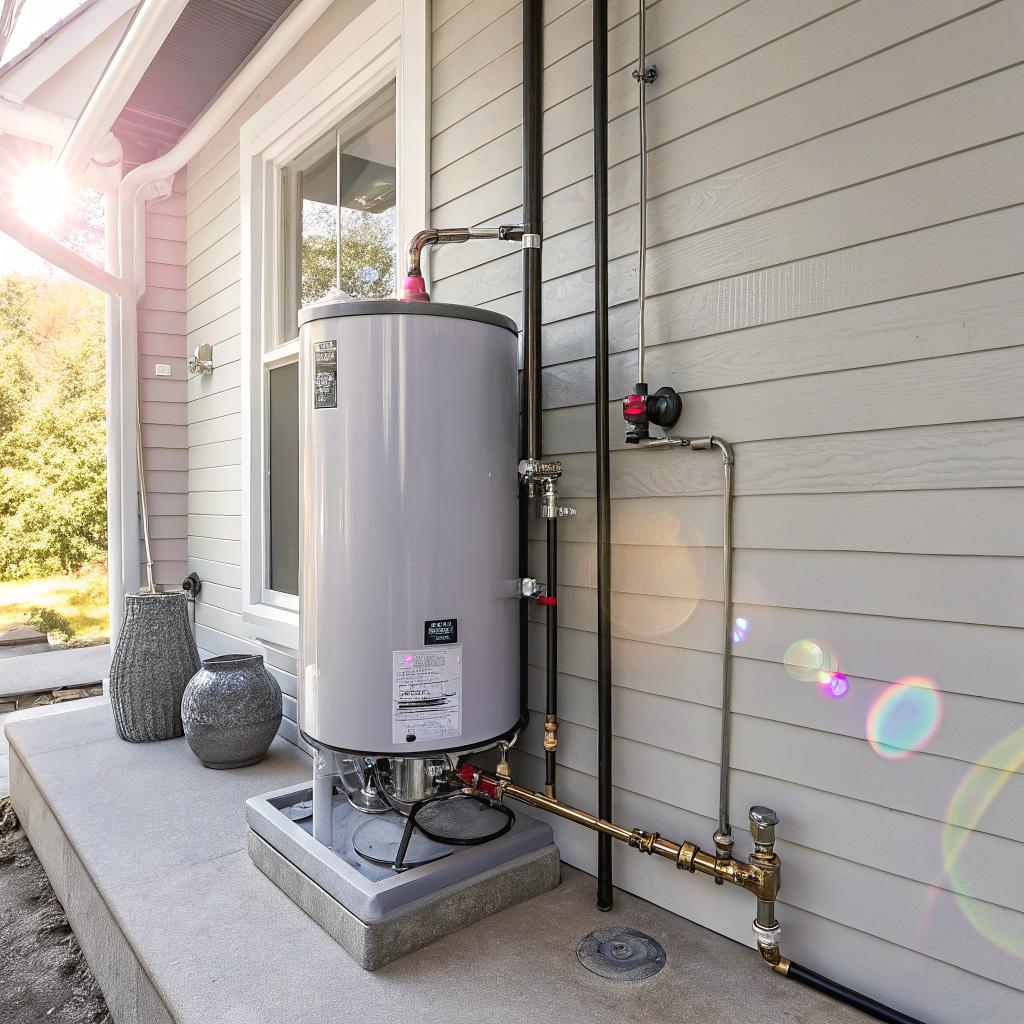
What if I told you that a boring piece of equipment in your building, the water heater, can quietly erase 5 to 15 percent of your operating costs each year? Not by buying a new shiny model, but by fixing and managing the one you already have in a smarter way. For many Aurora businesses, smart water heater repair is giving better returns than some marketing campaigns or software tools.
Here is the short answer: if you treat water heater repair in Aurora as a data and uptime problem instead of a “call a plumber when it breaks” problem, you spend less on energy, avoid emergency downtime, cut damage from leaks, and extend asset life. That adds up to real numbers on a P&L, not just peace of mind.
I know it sounds a bit odd to put water heaters in the same conversation as growth and tech, but stay with me. The same thinking you use for SaaS tools, cloud spend, or logistics also works here: measure, predict, and act before things fail.
Why water heaters quietly drain profit in growing businesses
Most founders and operations leaders I talk to have a rough handle on rent, payroll, software, and maybe supply costs. Very few have any idea what their hot water actually costs per year or how often their heater drifts out of spec.
You might see water heaters as a facility detail. The problem is that the detail has a compounding effect.
Unplanned water heater failure does not just mean “cold water for a day”. It means lost revenue, overtime labor, refunds, and in some cases property damage or insurance claims.
Think about a few scenarios:
– A restaurant in Aurora loses hot water at 6 pm on a Friday. Health rules may force it to close, staff is already on site, food is prepped, and the owner still pays wages.
– A small manufacturing shop loses hot water for cleaning or process steps. Production slows, deadlines slip, contracts get stressed.
– A gym or spa runs out of hot water in the morning rush. Members cancel or demand credits, reviews suffer.
These are not rare “black swan” events. Many are predictable, or at least preventable, with smarter repair and monitoring.
The traditional repair model is built on chaos
Most businesses still use a very simple model: wait until someone complains that water is cold or there is a leak, then call for repair. It feels normal. It also pushes you into the worst possible timing and pricing:
– You pay premium rates for urgent visits.
– You get hit by overtime charges when things break at night or on weekends.
– You lose revenue during downtime, often at peak hours.
– You replace units earlier than needed because no one can risk another breakdown.
This is the “reactive tax” on your water heater. Technology-first businesses work hard to remove this kind of randomness from software and logistics. It makes sense to do the same for basic physical infrastructure.
What “smart” water heater repair actually means
Smart repair sounds like a marketing phrase, but under it there are some fairly simple practices and tools. It is not about overcomplicating things. It is about acting earlier and with more information.
Here is what tends to define a smarter approach:
- Using data and simple monitoring to know how your heater behaves over time
- Planning repair windows the same way you plan product releases or warehouse work
- Standardizing the way you maintain units across multiple locations
- Seeing the heater as an asset with a lifecycle, not as a sunk cost in a closet
At first, this might feel too formal for “just a water heater”. After you compare the numbers, it starts to feel more like basic hygiene for any growing business.
Key cost levers smart repair can pull
There are a few main places where smarter repair affects cost. You can think through them one by one and see where your business sits today.
Smart repair pays off in four main areas: energy use, emergency calls, lifetime of the equipment, and impact on revenue when something fails.
Let us break that down in practical terms.
| Cost area | Reactive approach | Smart repair approach | Typical impact |
|---|---|---|---|
| Energy use | No tune ups, no monitoring | Regular checks, settings adjusted | 5–20% drop in energy spend for hot water |
| Emergency service | Frequent urgent calls | Most work done in planned windows | 30–70% fewer emergencies |
| Asset life | Replace every 8–10 years or after failure | Push to 12–15 years where safe | 20–40% lower annual replacement cost |
| Revenue impact | Failures during peak hours | Issues caught during low demand periods | Fewer closures, less comped work |
These ranges are broad, but you can already see why finance or operations people should care. Let us go deeper into each one.
Energy savings: how repair work affects your utility bill
Water heaters are not static. Over time they gather sediment, thermostats drift, valves stick, burners or elements work harder than they should. All that waste shows up in your gas or electric bill.
Why sediment and miscalibration raise costs
Some straight mechanics here:
– Sediment in the tank acts like insulation between the burner and the water.
– The heater has to run longer cycles to reach the same temperature.
– Longer cycles mean more fuel or electricity.
– If the thermostat is wrong, it can overheat water and then cool it down again, which also wastes energy.
This is simple physics, not magic. But because the rise in cost is gradual, many businesses never notice. They just assume “energy is more expensive this year” and move on.
Regular repair and tune up work focuses on exactly these issues:
- Flushing the tank to remove sediment
- Checking and adjusting thermostat settings
- Inspecting burners or elements for wear and carbon build up
- Making small changes to match real use patterns
A quick example with rough numbers
I will use round numbers because they are easier to think about.
Say a mid sized restaurant in Aurora spends 9,000 dollars per year on gas. About 30 percent of that could relate to hot water production. That is 2,700 dollars per year.
If smart repair and tuning can cut 10 percent of that, you save 270 dollars a year. Over 10 years, if pricing is stable, that is 2,700 dollars. In reality, energy costs trend upward, so the savings grow.
Now compare that with spending a few hundred dollars per year on proactive service. This is the same logic many of you use when debating automation tools or choosing better servers. You trade a predictable minor cost for lower long term spend and fewer bad days.
Emergency calls vs planned repair: the “tech debt” of facilities
In software, tech debt builds when you skip small fixes and pay later with bigger outages. Facilities have a similar pattern.
Every time you delay minor water heater work, you are rolling the dice on a more expensive emergency visit later, likely at a time that hurts the business most.
Reactive work often looks cheaper at first because you do not see a line item until something breaks. The true cost only becomes clear if you track all the side effects.
What you really pay for emergency repair
Emergency water heater repair sometimes includes:
– Higher hourly rate for same day or late night response
– Travel time when the tech has to reroute from another job
– Overtime pay boundaries if work runs long
– Premium pricing for parts that have to be sourced fast
There are also costs that do not show up on the invoice:
– Lost revenue from having to close or limit service
– Refunds or discounts for upset customers
– Staff hours wasted while they wait for hot water
– Brand damage in a local market that is already crowded
Let us say a sudden failure forces a 4 hour closure. Labor is paid, utilities still run, and customers walk away. Now this one incident can cost more than a whole year of regular service.
It looks a lot like letting backlog of bugs accumulate until a production outage breaks your app during a heavy traffic day. No one plans for it, but everyone pays.
Extending asset life and timing replacements better
A water heater is a capital asset, even if the line item was not massive. The way you care for it has a strong effect on how often you need to replace it.
What smart repair does for lifespan
Most commercial water heaters have a “typical” life range. For example, 8 to 12 years. Many units die on the lower side of that range because of neglect.
With predictable repair, you can often:
– Slow corrosion by managing anode rods and water chemistry.
– Reduce stress on key parts with correct temperature and pressure settings.
– Catch small leaks before they damage other components.
– Replace wear parts early, so the core unit stays solid.
If you push a heater from a 9 year life to 13 years without raising risk, you change the annual cost picture.
Imagine a 6,000 dollar commercial unit:
– Replaced every 9 years: 6,000 / 9 = about 667 dollars per year
– Replaced every 13 years: 6,000 / 13 = about 462 dollars per year
You save about 200 dollars per year, for each unit, just by extending its lifespan. If you run several locations, that stacks up very fast.
Better timing of replacements
Smart repair also gives you better information to pick your timing. You do not have to wait for a dramatic failure.
Instead, you:
– Track performance and repair history.
– See when the unit starts needing more frequent fixes.
– Plan replacement in a slow season or during a scheduled renovation.
This is similar to how you might plan a database migration or hardware refresh. You take control of the schedule, instead of letting it control you.
You also gain leverage in purchasing, because you can get multiple quotes and plan around supplier lead times instead of begging for the only unit available that day.
Smart repair as risk management, not just cost control
For businesses in Aurora that depend on foot traffic and local trust, hot water is part of basic reliability. Customers might not notice when it works. They absolutely notice when it fails.
Hot water failure is one of those physical problems that can jump, very fast, into online reviews, health inspections, and landlord relationships.
From a risk and growth point of view, there are a few angles here.
Reputation and customer churn
Think about a gym where the showers run cold two mornings in a row.
– People arrive before work.
– They build their routine around your service.
– Then they stand under a cold shower, once, twice.
How many of those people start looking at another gym down the road? In a city the size of Aurora, they likely have options.
A smart repair program does not make you immune to all issues, but it strongly reduces the chance of repeated failures. One bad day is a glitch. Three in a month looks like the company does not care.
Compliance and health rules
Restaurants, clinics, care homes, and some manufacturers have hot water requirements tied to health and safety rules. Failure can mean:
– Immediate closure until the issue is fixed
– Fines
– Poor inspection scores that show up on public sites
For a growing brand, this is more than a small hiccup. It can affect contract bids, partnership talks, or even investor views, especially if the business is in a regulated niche.
Smart repair, with documentation of service and monitoring, supports your compliance story. It also gives you something to show inspectors or landlords if questions come up.
Where “smart” meets actual technology
So far I have talked mostly about process and planning. There is also a real technology piece here, though it does not need to be fancy.
Simple monitoring tools
You can use basic sensors and internet connected controllers to watch a few key data points:
– Outlet water temperature
– Inlet and outlet pressure
– Runtime and cycling patterns
– Leak detection around the tank
These do not have to tie into a huge building management system. Smaller, cloud linked devices can send alerts to a phone or a simple dashboard.
From a business side of tech, this is similar to adding basic monitoring to your servers or app:
– You see issues early.
– You identify patterns, like running too hot at certain times.
– You run small experiments, like lowering temperature at night, and measure impact.
Even a simple text alert when temperature drops below a set point can give you a couple of hours of warning before customers feel anything. That is enough to call your repair partner and plan.
Data you can actually use
The value is not in having “IoT” on a slide deck. It is in the way you can use the data over time:
- Compare energy use before and after maintenance work.
- Spot units or locations with abnormal patterns.
- Build a basic forecast for when you will likely need replacements.
This kind of low level operational data can feed into bigger decisions:
– When you pitch a new location, you can estimate facility costs more accurately.
– When you negotiate with a landlord, you can show real numbers on utility use.
– When you plan capital spending, you can set aside funds for water heater upgrades at the right time.
If your company already manages other tech metrics, this fits nicely into that mindset.
How Aurora context changes the equation
Local context matters more for water heaters than for many other systems.
Altitude and climate effects
Aurora sits at higher altitude, which affects how gas burners work. Combustion behavior is not the same as at sea level. Poorly tuned burners can:
– Waste gas
– Create more soot and carbon deposits
– Shorten the life of components
Cold winters put extra load on heaters as inlet water temp drops. Each degree of difference means more work for the system. If your repair partner understands these local factors, they can tune units to run cleaner and cheaper.
Real estate mix and growth
Aurora has a lot of strip malls, mixed use spaces, and shared buildings. Many growing businesses are tenants rather than owners.
That creates questions like:
– Who is responsible for water heater repair?
– Who pays for smart monitoring gear?
– How are emergency calls handled after hours?
If you run multiple locations, you might have different answers at each site. A smart strategy is to map this clearly, and try to standardize as much as your leases allow.
You can also use good repair records as a way to negotiate with landlords. For example, you might argue for shared cost on smart equipment that protects their building from water damage.
Smart repair as part of scaling operations
The site where this article appears focuses on growth, funding, and scaling. So where does water heater repair fit into that bigger picture?
I would say it sits in the same bucket as modern accounting tools or basic cybersecurity. It is one of those areas that investors and partners quietly hope you have under control.
Signals investors look for
When investors look at an operation heavy business, they do not just read revenue and margins. They also look for signals that the team runs the “boring” parts well.
Smart water heater repair can touch a few of those signals:
– Predictable cost structure
– Low exposure to unexpected shutdowns
– Justified capital spending plans
– Evidence of good vendor management
It may never appear on a pitch slide, and I do not think it should, but it can influence internal confidence. A facility that runs without constant crises feels more investable than one that is often in emergency mode.
Standard playbooks across locations
When you add locations, problems that were “once in a while” at one site start to happen every week across the network. That includes utilities and water heaters.
A practical approach is to build a small playbook:
- Standard checklists for monthly and quarterly heater checks
- Common settings for temperature ranges per type of business
- Clear rules on when to call for repair vs replace
- Preferred vendors who know your style of operation
This does not need to be complex. In fact, it should be easy to follow. The value is that managers at each site do not invent their own random approach. Over time, that consistency lowers your overall cost and risk.
How to start making your water heater repair smarter
If you are reading this and thinking “we have never even looked at our heater schedule,” that is quite normal. The good news is you do not need a full overhaul on day one.
Here is a simple sequence that I have seen work:
1. Map what you have right now
Collect these details for each location:
– Type of water heater (tank, tankless, gas, electric, commercial, etc.)
– Age and model
– Last known repair or service date
– Any known issues or complaints from staff
You can do this in a simple spreadsheet. No special software needed.
2. Estimate the financial exposure
Work with whoever handles your books to get rough numbers on:
– Annual gas or electric costs for each site
– Revenue per hour for peak times
– Cost of one hour of downtime, even just as an estimate
You are not trying to be perfect. You just want to see the scale.
3. Talk to a repair partner about proactive work
Take your map and numbers to a repair provider who already works in Aurora. Ask focused questions:
– What are the top 3 failures you see for units like ours?
– How often do you recommend planned service?
– What would a basic proactive plan cost per year for each unit?
– How does that compare to typical emergency calls you see?
If the answers are vague or full of buzzwords, that is a red flag. You want clear, practical advice grounded in local experience.
4. Decide on simple monitoring, not fancy systems
Based on your heater type and budget, choose:
– No monitoring, just better scheduling, or
– Simple sensors for temperature and leaks, with alerts
Avoid overbuilding at first. You can always add more data points later if the basic setup proves useful.
5. Track results for one year
Over a 12 month period, track:
– Number of emergency calls for heaters
– Amount spent on planned service
– Any noticeable change in energy use
– Any closures or major incidents related to water heaters
This gives you your own data. Then you do not have to rely on industry averages or sales claims. You can decide if the smarter approach earns its place in your cost structure.
Common questions from growth focused owners
I often hear similar questions from founders and managers who are deep in product or sales and do not want to get lost in facilities talk. Let me answer a few of them straight.
Is this really worth my time compared to other projects?
In many businesses, yes, but not every single one.
If hot water is central to your service, like food, health, or hygiene, it is worth some attention. If you rarely use hot water beyond a bathroom sink, the gains may be smaller.
The nice part is that once set up, smart repair does not need a lot of your time. It becomes part of normal operations.
Do I need some big “smart building” platform?
No. In fact, those systems can be overkill for small and mid sized companies.
Start by getting your repair process under control. If your building already has a central system, you can plug into it. If not, simple devices and a good repair partner are enough.
What if my landlord controls the heaters?
Then your job is different. You cannot force changes, but you can:
– Document problems and their impact on your business.
– Offer to share costs for better service if it protects both sides.
– Use lease renewals or expansions as a moment to negotiate smarter plans.
Sometimes, landlords welcome a tenant who wants to manage risk and cost in a calm, data based way. It can make their property more stable and reduce their own repair bills.
How do I know if my repair partner is actually “smart” about this?
You can listen for a few signals:
– They ask about your business hours and peak times.
– They keep records of service and share them with you.
– They talk about preventing failures, not just fixing them.
– They are clear about costs and timing, and do not push new equipment without reason.
If everything is on a last minute basis and no one talks about the future, you probably do not have the right partner.
Where do I start this week, not next year?
If you want a simple first move:
Pick your highest revenue location in Aurora, find out exactly what water heater it uses and when it was last serviced, then schedule a planned checkup at a low impact time. Ask for clear notes and use that as your baseline.
From there, you can decide how far you want to take the “smart” approach, based on your own numbers, not theory.