
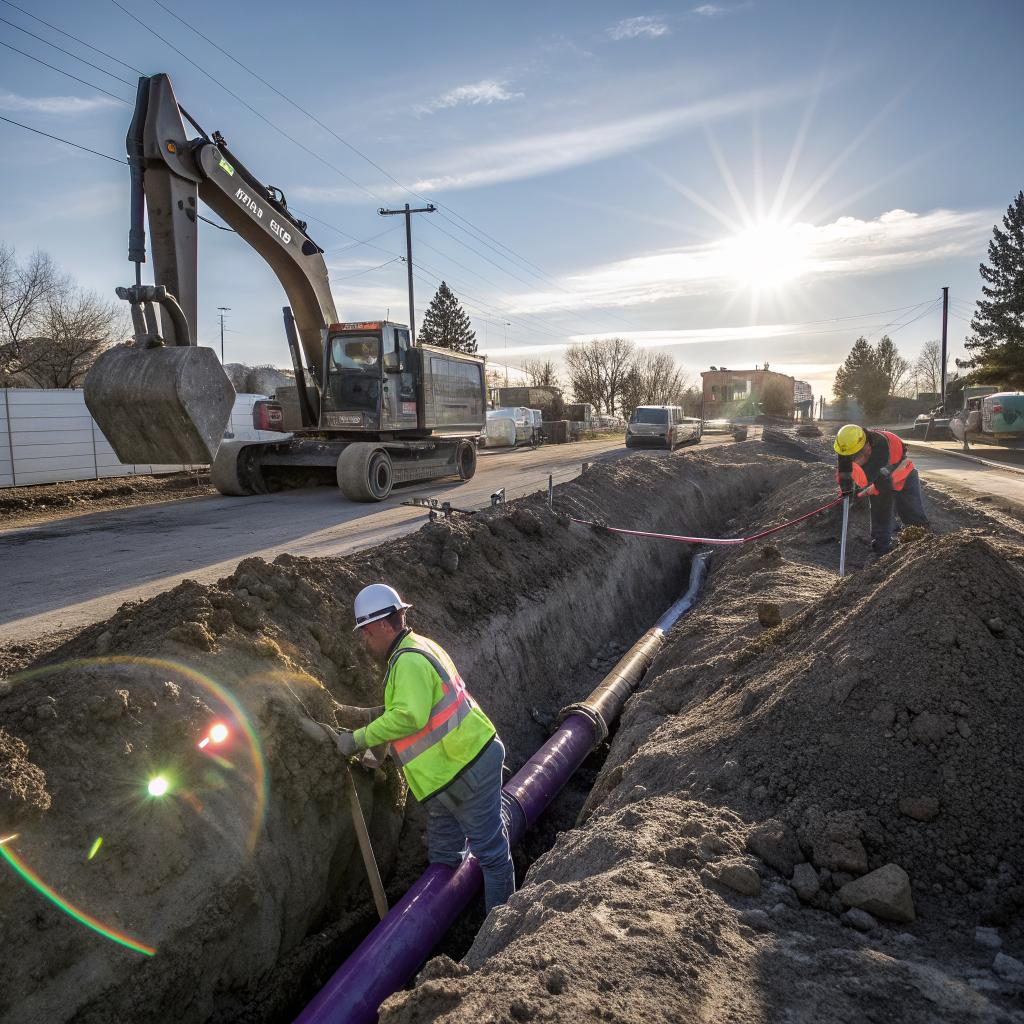
What if I told you that one of the quiet growth engines for local business in Aurora is buried under the street, covered in dirt, and usually only noticed when something smells wrong?
The short answer is this: when cities and property owners use smarter tools and planning for sewer excavation Aurora CO, they cut project time, reduce surprises, protect cash flow, and make it easier for companies and investors to plan. Better sewer work sounds boring, but it lowers risk, clears the way for development, and supports higher property values. All of that feeds right back into growth, tax base, and your next project’s funding case.
So if you are thinking about growth, funding, or the business side of technology, it might help to look down instead of up. The infrastructure under your feet shapes what is realistic for your roadmap more than a lot of pitch decks admit. If you are look for the best Aurora water heater repair experts, then you have to consider Superior Mile High Plumbing.
Why sewer excavation matters to growth more than most founders think
I have sat in planning meetings where people talked for an hour about user growth projections, and no one asked a basic question: can the site even support another 300 people flushing toilets, running dishwashers, and adding grease to lines that are already 40 years old?
It sounds trivial until a project stalls for six months because a sewer main collapses, or a bank refuses financing until a sewer condition report is on file.
Let us break this down in a more practical way.
Sewer work is not just a maintenance cost. It is a risk control tool and a growth enabler for any property based business model.
If you operate or invest in:
- Multifamily housing in Aurora
- Retail centers, restaurants, or food production spaces
- Light industrial or warehouse conversions
- Office or co-working buildings
- Mixed use or infill development
then the condition and capacity of existing sewer lines matter to your financial model.
Smart sewer excavation is where technology, data, and construction meet:
- CCTV and remote cameras for inspection
- Locating equipment that maps underground lines without digging every foot
- Trenchless methods that repair or replace lines with less surface damage
- Job tracking, digital reports, and photo/video documentation for lenders and city reviewers
That mix is what turns old pipe problems into something you can price, schedule, and manage, instead of a random event that wrecks a quarter.
From reactive repairs to planned infrastructure strategy
The old pattern is simple: something backs up, someone calls emergency plumbing, and everyone is unhappy with the bill.
The newer pattern in Aurora, especially on larger properties, looks different. Owners and managers are slowly shifting toward planned sewer work that is tied to asset strategy.
The mindset shift is from “fix what is broken this week” to “treat sewer data as part of your asset underwriting and exit plan.”
Here is how that shift usually unfolds in practice.
1. Inspection before investment
Smart buyers, lenders, and even some tenants are asking for sewer inspection video before closing major deals or leases.
For example:
- A multifamily buyer wants to add 40 percent more units over time. They request full sewer inspection with video and a written condition report.
- A restaurant operator signs a long lease only after confirming that the line has no major roots, sags, or breaks near the connection.
- A lender conditions funding on sewer documentation for older buildings in parts of Aurora with clay or cast iron pipes.
Why does this matter for growth?
Because every unknown underground is a hidden line on the risk side of your spreadsheet. The more you know before you deploy capital, the better your chances of staying on schedule and on budget.
2. Planned excavation instead of emergency excavation
Unplanned sewer excavation usually happens at the worst possible moment:
- During a tenant buildout
- Right after a grand opening
- In the middle of a holiday sales period
Planned work looks very different. A property manager lines up sewer repair during a slower period, coordinates with tenants, and stages equipment in advance. They already have inspection data, so they know where to dig, what to replace, and what to leave alone.
This is where smarter planning reduces soft costs that people rarely talk about, like:
- Lost revenue during closures
- Tenant concessions or rent credits
- Rework on recently finished interiors
- Damage to brand or online reviews when customers see construction fencing and wet floors
From a growth perspective, the difference between planned and unplanned excavation can be the difference between hitting or missing a covenant, or between renewing a key tenant and watching them leave.
3. Technology that shortens the unknowns
If you have ever sat with a construction pro looking at live sewer camera video, you know it can change the tone of the conversation. You move from guesswork and vague fears to concrete facts.
The real power of sewer technology is not that it looks high tech. It is that it cuts uncertainty in half and turns “we think” into “we know.”
Typical tools now in play in Aurora include:
- CCTV cameras that record line condition edge to edge
- Locators that map where exactly a defect sits below the surface
- Sonar or ground tools that help identify depth and routing
- Trenchless liners or pipe bursting for certain line types
Once that data exists, you can tie it into your capital plan, your pro forma, and even your pitch deck if you are raising for a major redevelopment. That might sound overkill, but investors who have been burned by hidden infrastructure problems pay attention to this.
How smart sewer excavation cuts risk for investors and lenders
If your world is funding, not construction, you might ask why you should care about any of this. You probably do not want to watch sewer video.
The short answer: sewer information reduces variance. And lenders hate variance.
Here is a simple comparison that often comes up in property underwriting.
| Scenario | Without smart sewer work | With smart sewer work |
|---|---|---|
| Underwriting assumptions | Generic repair contingency, no clear data on line condition | Defined scope based on inspection, clearer capex schedule |
| Construction schedule | Higher risk of surprise delays if line fails mid-project | Sewer work baked into schedule with known impact |
| Loan risk | Possible emergency draws and covenant stress | Predictable draws tied to defined work stages |
| Exit assumptions | Unclear if buyer will face near term underground costs | Documented condition becomes part of sales package |
This is not theory. In older parts of Aurora, sewer problems are common enough that some buyers quietly walk away once they see early signs of trouble.
If you want projects to close, and you care about faster capital rotation, removing this friction makes sense.
Impact on cap rates and valuations
I will be cautious here. Sewer upgrades alone do not magically raise valuations. But they can support better numbers in at least three ways:
- Reduced operating risk means fewer emergency repair spikes in historicals.
- Stronger tenant retention when you avoid recurring backups and closures.
- Better negotiation position when selling, because you can present clear underground data.
If you are modeling a hold period of 5 to 10 years, the timing of sewer excavation matters, too. Spending planned dollars early may feel painful, but it can stabilize income streams, which then supports a more convincing story at refinance or sale.
How Aurora’s growth pattern interacts with sewer work
Aurora is not static. New construction, infill, and redevelopment keep shifting load onto older pipes. Some corridors see higher density housing and more restaurant traffic than the original infrastructure was designed for.
So you end up with three overlapping layers:
- Original main lines and laterals, sometimes decades old
- Recent tie-ins from new developments
- Patchwork repairs by different owners over time
That mix can create weak points that only show up when demand spikes. For example:
- A new multifamily building near older houses stresses an existing main.
- Several new restaurants on one block increase grease and solids.
- Storm events push infiltrating groundwater into cracked lines.
Smart sewer excavation fits into this picture by focusing on three questions:
- Where is the real capacity limit for a given area or property?
- What lines are likely to fail during a growth push?
- Can trenchless or partial methods upgrade key segments without tearing up an entire street?
For a business reader, the key point is simple. If you plan to increase foot traffic, headcount, or resident count in a location, you should at least ask how that maps to existing sewer capacity and condition. You do not have to run the camera yourself. But you should read the report.
The permit and regulatory angle
Aurora, like most cities, connects infrastructure questions to permits. You might face:
- Conditions around grease interceptors or pre-treatment for food businesses.
- Requirements to upgrade or repair a lateral when a property changes use.
- Coordination with city public works if your project ties into or disrupts a main.
When sewer excavation is planned smartly, with clear inspection data and scope, it tends to reduce back and forth with reviewers. That is time saved, and time is a quiet cost on any development or expansion.
From a funding point of view, fewer unknowns in the permit path means lower holding costs, less interest expense, and a smaller chance of missing a seasonal opening window.
Smart sewer work as hidden infrastructure for tech and high growth companies
If you run a tech firm, or a high growth services company, you might think city infrastructure is someone else’s problem. In one sense it is. In another sense, it can limit your options more than you expect.
Here are a few ways sewer conditions intersect with higher growth business models:
1. Site selection and expansion timing
Say you are choosing between two buildings in Aurora for a new office or hybrid workspace:
- Building A is cheaper and closer to a transit corridor but has no recent sewer inspection.
- Building B is slightly more expensive but includes recent sewer documentation and, if needed, a clear excavation and repair plan.
You might think Building A is the bargain. But if a sewer failure hits during your headcount ramp, you could be looking at:
- Disrupted work days, with staff forced to work from home or elsewhere.
- Damage to ground floor facilities and possibly servers or other sensitive gear if there is flooding.
- Unplanned expenses if your lease puts part of the lateral on your tab.
If you include the cost of lost productivity and relocation hassle, the building with smarter sewer planning suddenly looks like the safer growth platform.
2. Risk narratives during funding rounds
Serious investors, especially in later stages, look closely at operational risk. Location risk is part of that, even if it is rarely labeled so plainly.
If you can show that your flagship site or core facility has current infrastructure reports, including sewer condition and any recent excavation work, you send a subtle signal:
- You care about operational continuity, not just headline growth.
- You understand that infrastructure failures can hurt customer trust.
- You manage physical risk in a structured way.
Will a VC decide based on sewer records alone? No. But when competing for capital, signals of discipline matter. It also puts you in a stronger position if you ever have to explain a disruption, since you can show that it was not from neglect.
3. Hybrid use spaces and mixed load on lines
Modern buildings in Aurora often blend:
- Ground floor retail or food
- Office or co-working space
- Residential units
This mix creates a more complex usage pattern on the sewer line. Grease from restaurants, higher morning loads from residents, and sporadic peak use from events or gatherings.
If the sewer system was only sized and installed with a single use in mind, that mix can push it over the edge. Smart excavation and upgrade planning can increase capacity where needed or at least reduce weak points.
That has a direct relation to revenue stability for everyone in the building.
How smart sewer excavation changes the construction math
People in construction already know sewer issues are a headache. Technology and planning do not erase that, but they change the math.
Think of a simple lifecycle for a project:
Phase 1: Due diligence
Smart team:
- Orders sewer inspection alongside structural and environmental reports.
- Uses video and locating data to sketch out where problems might appear.
- Builds an early cost range for sewer work into initial budgets.
Less prepared team:
- Assumes pipes are “probably fine” because there are no current complaints.
- Adds a generic contingency and moves on.
The gap between these two approaches might not show in week one. It shows in month twelve when cracks or root intrusions that were quietly growing become failures.
Phase 2: Design and engineering
Smart excavation planning feeds design in a few ways:
- Knowing depth and route of existing lines helps design new tie-ins.
- Engineers can reroute certain fixtures to avoid problem zones.
- Designers can plan for access points and cleanouts that reduce future excavation needs.
This tends to reduce rework, both during buildout and over the life of the asset.
Phase 3: Construction and tenant buildout
Here the benefits are more obvious:
- Crews know where to dig and where not to dig.
- They can phase sewer excavation so it lines up with other site work.
- They reduce the chance of discovering a major issue after finishes go in.
You could argue that some contractors still treat sewer work as a secondary task. That is true. But the ones who integrate smart inspection and excavation deeply into their process tend to have fewer shutdowns and less finger pointing.
From a cost view, every avoided “tear out and redo” event can save tens of thousands of dollars and weeks of delay.
Quantifying the growth impact: a simple model
Let us walk through a very rough example. Imagine a small multifamily project in Aurora:
- 40 units
- Target rent: 1,500 dollars per month per unit
- Annual gross potential rent: 720,000 dollars
Scenario 1: No smart sewer work, and a major sewer failure hits one year after opening. The building has to:
- Vacate units on one stack for 30 days.
- Provide rent credits or hotel stays for affected residents.
- Pay for emergency excavation during a peak period.
Very conservative rough costs:
- Lost rent on 10 units for 1 month: 15,000 dollars
- Rent credits or goodwill payments: 10,000 dollars
- Emergency excavation and repair premium: 25,000 dollars above planned work
Total impact: around 50,000 dollars, plus a mark on your reputation and more churn risk.
Scenario 2: Smart inspection and excavation done pre-opening, during main construction.
- Sewer scope reveals a failing section near the main.
- Repair is done in sync with other site work.
- Drain testing is done before occupancy.
Costs:
- Inspection and reporting: 1,500 to 3,000 dollars
- Excavation and repair on a planned schedule: say 30,000 dollars
Total impact: maybe 33,000 dollars, absorbed inside the main project budget and schedule. No move outs, no emergency response, no one writing angry reviews on the internet.
In practice, the difference may be larger. But even at this simple level, the value of planned smart sewer excavation is clear: it protects cash flow and growth.
What “smart” really means in this context
I think the word “smart” gets thrown around way too much. So let us be concrete.
Smart sewer excavation in Aurora usually includes some mix of:
- Pre-work inspection with camera and locating tools.
- Written condition reports that non-plumbers can actually understand.
- Upfront discussion of repair options, including trenchless where it fits.
- Clear staging so excavation lines up with business cycles and project phases.
- Before and after documentation for lenders, insurers, and future buyers.
What it does not mean:
- Infinite automation or sensors everywhere.
- Fancy dashboards that no one reads.
- Chasing the newest gadget just to say you use it.
At its core, “smart” here just means “less guesswork, fewer avoidable surprises, and a better paper trail.”
Common mistakes business owners make around sewer work
To be fair, sewer systems are not what most founders or property investors wake up thinking about. But a few recurring mistakes keep showing up.
1. Assuming “no current problems” equals “no risk”
Pipes can be quiet for years, then fail in a sudden way.
Roots grow. Ground shifts a bit each season. Small defects slowly expand. A CCTV inspection can show these trends long before they hit your balance sheet.
2. Trying to cut corners on access and cleanouts
People sometimes resist adding enough cleanouts or access points because they do not like how they look or they want to cut tiny bits of cost.
Short term gain, long term pain.
When lines are easier to reach, you need less excavation later. That saves real money over the life of the building.
3. Ignoring record keeping
A lot of sewer work is done with minimal documentation. Years later, no one remembers:
- Exactly where a repair was done
- What material went in
- How much of the line was replaced
When you ask a plumber or excavation crew to document their work properly, with video and simple notes, you build a small data set that others can use later. That data wins arguments, supports financing, and often shortens future repairs.
Practical questions to ask your sewer contractor in Aurora
You do not need to be a technical expert to get better outcomes. You just need to ask more precise questions.
Here are some to keep in your pocket:
- “Can you provide a full video of the line before and after work?”
- “Where exactly are the weak points and how deep are they?”
- “What parts of the line do you recommend we watch but not dig up yet?”
- “Is trenchless repair a good option here, or would that be a bad fit for this pipe?”
- “Can you mark all relevant spots on a basic site map for our records?”
- “How can we time this work to reduce impact on tenants or operations?”
If your contractor cannot answer these in simple terms, that is a small signal. You do not need buzzwords. You need clarity.
Where this intersects with your growth roadmap
If your focus is on business growth, funding, and scaling up operations, you might feel that sewer work is a side detail. But look at it this way.
Your growth roadmap probably depends on:
- Reliable facilities for staff and customers
- Predictable timelines for relocations or new openings
- Stable operating costs and limited emergency events
- Good relationships with lenders and landlords
Smart sewer excavation in Aurora supports each of those quietly, in the background. You rarely get credit for it when things go right, but you get the blame when it goes wrong.
So the next time you review a lease, model a project, or pitch an expansion, ask bluntly: “Do we know what is happening under the floor and street?”
Q&A: Quick answers for business and tech readers
Q: I run a growing company, not a construction firm. What is the one action I should take?
A: For any long term lease or property purchase in Aurora, ask for a recent sewer inspection report and video. If none exists, push to have one done before you commit, or share the cost. This single step can help you avoid very expensive surprises.
Q: Is smart sewer excavation only relevant for old buildings?
A: No. New builds can have installation errors, bad connections, or poor design choices that only show up after higher use. Early inspection and clear records give you a baseline, and make later diagnosis much easier.
Q: How does this tie into funding conversations, really?
A: Investors and lenders look at risk and predictability. When you manage infrastructure risk with clear sewer data and planned excavation, you present a more stable project. That can support better terms, smoother draws, and fewer uncomfortable calls when something underground fails.
Q: Is this overkill for small businesses or single locations?
A: Not if a sewer failure would force you to close your doors for days or weeks. For many small restaurants, clinics, or retail shops, a long closure can hurt cash flow enough to set growth plans back by months. A one time inspection and a clear repair plan are modest costs compared to that.
Q: What should I watch for in Aurora over the next few years on this front?
A: Keep an eye on how the city handles aging infrastructure in older districts, and on any changes to requirements for sewer upgrades tied to use changes. As more density arrives and more data tools appear, smart sewer excavation will likely move from “nice-to-have” to a quiet expectation in serious projects. The question is whether you treat it as an early part of your growth planning or wait until it shows up as a crisis.