
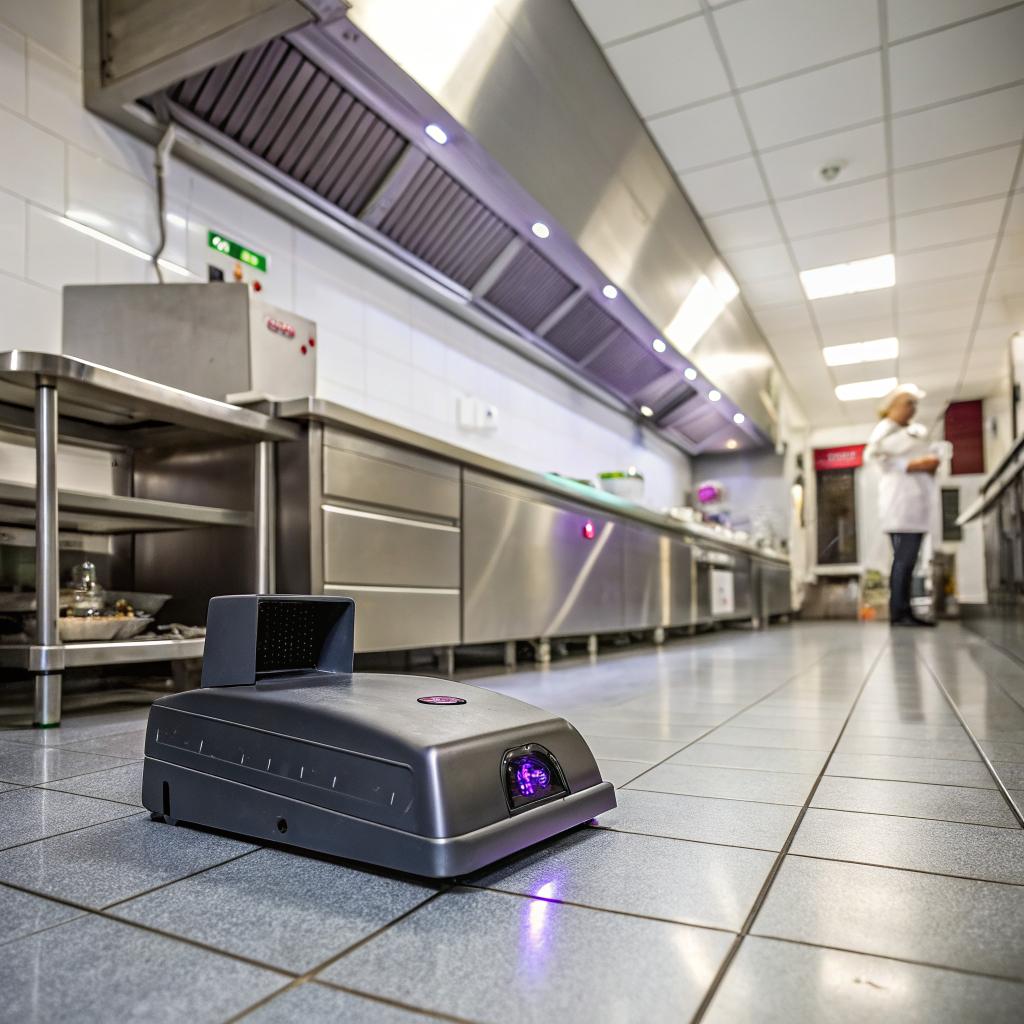
What if I told you that a handful of mice in your warehouse can erase the profit from an entire product line, and you would not see it on a simple P&L report?
The short answer is this: smart, tech assisted rodent control in Southlake protects profits by reducing hidden losses from product damage, contamination, downtime, bad reviews, and brand risk, while giving you clean data you can plan around. Instead of reacting when someone spots droppings, you use sensors, trend reports, and targeted service to keep rodents from ever reaching a level that hurts your margins. If you run a local warehouse, food business, or any operation that touches inventory or customers, a serious approach to rodent control Southlake is a direct line item in your risk and growth strategy, not a side expense.
That sounds a little dramatic, I know. Mice and rats are not exactly a hot topic on tech and growth blogs. But if you run numbers for any physical business, rodents are a quiet line of loss. They eat packaging, contaminate pallets, trigger shutdowns, and even scare investors if they end up in health inspection reports.
You do not see it on a nice dashboard at first. You feel it later, when shrink goes up a few points or a key client quietly looks for a different supplier. That is where smart rodent control starts to look less like a cost and more like an operational tool that protects profit. Visit https://www.southlakepestcontrolcompany.com/ for more information.
How rodents quietly eat into profit margins
Before talking about sensors and smart traps, it helps to be very clear about where the money goes. Rodents do not just nibble. They create a weird mix of direct and indirect damage that accountants often categorize in different buckets.
Here is how that usually shows up in a business:
- Damaged goods and write offs
- Contamination and health code issues
- Production downtime and rescheduling
- Reputation hits and customer churn
- Regulatory penalties or forced closures
- Fire and infrastructure risk from gnawed cables
If you look at each one separately, they might seem small. A few boxes lost here, a minor delay there, a 3 star review from a frustrated customer. But they stack.
Rodent activity rarely appears as one big obvious loss. It drips through your operation in small ways that add up to real margin pressure.
In Southlake, the pattern is pretty consistent for local businesses:
– Restaurants see more surprise health inspection issues during hot and very wet seasons.
– Warehouses and e commerce operators see spikes in damage claims in older buildings, especially near loading docks.
– Medical and office buildings get more service calls after renovations, when walls and ceilings are opened and rodents look for new paths.
None of that is new or glamorous. What changed over the last few years is how much of this you can measure and predict, instead of guessing.
Where “smart” comes in for rodent control
When people hear “smart pest control” they sometimes imagine something overbuilt or expensive, with buzzwords. The reality is a mix of small, practical tools that add up.
Sensors, smart traps, and real data
Modern rodent control setups in Southlake often use some version of:
- Digital monitoring stations that ping when a trap activates
- Sensors that detect movement or heat in key zones
- Simple software dashboards that show activity by location and time
Instead of a technician guessing where the activity might be worst, they get a map over time. You get one too, if you want. You can see that your loading dock shows more hits on nights before trash pickup, or that one particular storage aisle has increased activity in August and September.
This data feeds decisions like:
– Where should we add more sealing or exclusion work?
– Which zones need more frequent inspections?
– When does rodent pressure spike over the year, and how should staffing or cleaning adjust?
The shift is from “call when we see a mouse” to “we have an activity index by zone and we know where our risk is rising before it spills into operations.”
That is where the profit protection really sits. If you know your risk before you see physical damage, you have time to act without disrupting production or service.
From quarterly spray to ongoing risk management
Traditional pest control has often been something like: a technician walks the site once a month or once a quarter, places bait, sprays perimeter, checks a few traps, fills out a paper form, and leaves.
For a home, that might be fine. For a business with inventory, staff, and brand at stake, that approach can be a bit blunt.
Smart rodent control tends to look more like:
- Initial risk audit and mapping of hot zones
- Installation of targeted monitors and traps
- Remote alerts and activity logs
- Service visits that respond to real data, not just a schedule
- Reports you can link with your own loss or safety logs
At first glance, it might sound more complex. In practice, most owners and managers appreciate that it reduces surprises. It also pairs better with how modern businesses already think about risk: data, monitoring, and continuous improvement.
How this connects to growth and funding conversations
You might be wondering why any of this belongs on a site about growth, funding, or tech in business. The link is not immediately obvious, and that is fair.
If you look at how investors evaluate physical businesses, whether that is a multi unit restaurant group, a DTC brand with a warehouse, or a medical facility, they tend to look beyond revenue and margin. They look at risk discipline. They ask questions like:
– How predictable are your operations?
– Where could a small issue trigger a shutdown?
– How resilient is your supply chain and facility setup?
Rodent control is only one factor of many, but it feeds into:
| Area | Rodent risk example | Impact on growth/funding story |
|---|---|---|
| Operational continuity | Health inspector finds droppings in kitchen | Forced closure for cleaning, loss of revenue, bad PR |
| Brand and reviews | Customer posts photo of rodent near dining area | Negative online reviews, higher churn, more spend on marketing to replace lost trust |
| Insurance and compliance | Rodent chews wiring, causes small fire | Insurance claim, higher premiums, questions from lenders or investors about facility management |
| Unit economics | Increased product loss from gnawed packaging in storage | Higher COGS, weaker margins across locations, affects valuation multiples |
If you have a clear rodent control strategy with data, the story you tell in a pitch deck or board meeting changes from “we handle issues when they pop up” to something more credible like:
We monitor and manage rodent risk across sites using digital traps and activity mapping, which keeps compliance findings near zero and protects our unit economics.
That sounds modest, but it separates you from a surprising number of operators who hope for the best and scramble later.
Southlake specific challenges that affect profit
Southlake has its own mix of local factors. Urban development, construction, drainage patterns, and seasonal weather all change how rodents behave.
A few recurring issues I have heard from owners in the area:
Construction and nearby development
When new buildings go up, rodents get pushed from one place to another. They look for the nearest safe spot with food and shelter. If your property is older, or has gaps in loading docks, service doors, or roof lines, you are an easy next stop.
That creates sudden, sharp spikes in activity that do not match your internal changes. You did not change your process, but nearby construction woke up a hidden population.
Without monitoring, you notice this spike only when you see droppings or damaged product. By then, some losses are already baked in.
Weather swings and seasonal behavior
Rodents in North Texas respond strongly to:
– Heavy rains that flood burrows and push them indoors
– Sudden cold snaps, when they look for warmth and closer food sources
– Hot summers, when trash and outside storage can attract them quickly
These shifts are predictable on a calendar, but the exact impact on your building is not, unless you have history and data.
Smart rodent control providers track your activity across seasons and across similar facilities, so you are not guessing. Over time, this becomes a small but real planning input. For example, you might:
– Add extra inspections to your pre holiday inventory build in November.
– Tighten trash handling and dock procedures in peak summer.
– Budget exclusion repairs in quarters with less revenue sensitivity.
None of this is fancy. It just links local conditions to your financial reality, through a lens that most owners ignore until they get burned.
Turning rodent control into a profit protection plan
So how do you move from a basic contract to something that genuinely protects profit? You do not need to overcomplicate it. But you do need a more structured view.
Here is a simple way to think about it that I have seen work in Southlake businesses.
1. Quantify your current cost of rodent risk
Most owners guess here and usually underestimate. A more honest pass might look like:
- Inventory loss: Pull reports on write offs linked to contamination, gnawing, or unexplained damage.
- Service issues: Note any shutdowns, deep cleaning days, or failed inspections tied to rodents.
- Reputation hits: Look for reviews or complaints that mention rodents or cleanliness concerns.
- Maintenance: Add costs of repairing wiring, insulation, or fixtures damaged by chewing.
Even rough numbers are better than “we had a few mice last winter.”
You might find that the combined impact is equal to a few percent of revenue. For a multi million dollar location, that is not trivial. That is also before considering what a single bad incident could do.
2. Decide your risk tolerance like you do with tech or security
Many companies are comfortable talking about cyber risk. They have firewalls, MFA, backups, the usual stack. They decide what level of risk is acceptable and spend against that.
Rodent risk is less glamorous, but the logic is similar. Ask yourself:
– Are we comfortable with any visible rodent activity in our public or production areas?
– What level of inventory loss is acceptable from this cause?
– How much downtime can we absorb if we are forced to close for a day or two for cleaning?
If your answer is “none,” then the decision on smart control is mostly financial. If your current losses and risk exposure are higher than the cost of a more advanced program, the math is simple.
3. Build rodent control into your standard operating playbook
You can have the best digital traps in the world and still lose money if your basic routines are loose.
Smart providers in Southlake that work with higher growth businesses often help with:
- Dock and receiving procedures, so incoming shipments do not carry rodents inside.
- Trash and waste routines, to cut attraction points.
- Staff training, so early signs are reported and addressed.
- Documentation, so you have proof of effort during inspections or audits.
That sounds like a lot, but in practice it can be a few short checklists and quick training sessions. The key is that rodent control is not just “call the pest company.” It becomes a small but formal part of how your operation runs.
Where tech helps Southlake businesses stand out
If two businesses in the same category both pitch an expansion or funding round, the one that shows better control over physical risks has an edge. Rodent control is one piece of that.
A few tech related angles worth pointing out:
Integrating with your existing systems
More advanced rodent monitoring tools can feed into:
– Facility management software
– Safety and compliance systems
– Custom dashboards that leadership already reviews
That means you can see pest activity alongside other physical metrics, like HVAC issues or production line downtime.
You do not have to go that far. Many owners are happy with a simple monthly report. But if you are already building a serious operations stack, it is an easy add.
Creating a cleaner audit trail
Investors, insurers, and regulators like clean records.
Smart rodent solutions tend to log:
– Trap activations and response times
– Inspection results by zone
– Corrective actions taken and when
When someone asks “How do you manage health and safety risk in your facilities?” you can show, not just tell.
In a funding or sale process, being able to open a folder of clear pest and sanitation records is not flashy, but it reduces friction, questions, and sometimes even the discount buyers ask for.
I know that sounds like a small detail. But many deals slow down over missing or messy documentation in exactly these areas.
Choosing a rodent control partner in Southlake with a profit mindset
A common question owners have is: “Do I really need a smart system, or is a regular service enough?”
Sometimes a simple contract is fine, especially for small offices with limited food or inventory. But if your profit depends heavily on physical stock, protected brand, and operational uptime, your vendor choice matters.
You might look for:
Questions to ask potential providers
- What monitoring technology do you use for rodents in commercial settings?
- Can you show a sample monthly or quarterly report for a business similar to mine?
- How do you decide where to place traps and sensors?
- How do you track and respond to activity spikes between regular visits?
- What is your process when we have a serious incident, such as a sighting in a customer area?
- Can your system grow with us if we add more locations?
Pay attention not only to the tools, but to how they think about cost and risk. If a provider only talks about catching mice, and never links that to product loss, downtime, or compliance, they might not be set up to protect your profit in a structured way.
Examples of profit protection in practice
Sometimes this all sounds abstract until you see how it plays out in real scenarios. I will give a few examples based on common Southlake cases. These are simplified, but the numbers are realistic enough.
Example 1: Local restaurant group
A group with 3 locations in the area had:
– Seasonal rodent sightings in outdoor seating areas
– A few health inspection notes per year about droppings in back storage
– Occasional social media comments about “seeing something move” near the patio
Each incident meant:
– Emergency cleanings
– Discounted meals
– Extra staff stress
– A slow drip of bad perception
After shifting to a smarter rodent plan:
– Sensors and digital traps were placed near dumpsters, roof lines, and storage.
– Activity data showed clear patterns around certain trash pickup days and wind directions.
– The group adjusted trash handling and added physical exclusion work around a specific wall gap.
They did not erase rodents from the world, but they reduced:
– Visible sightings to near zero
– Health inspection notes for rodent activity down to none over two years
– Staff time lost dealing with small panics
Financially, the direct savings might have been a few tens of thousands over a couple of years. The bigger win was fewer bad reviews and a smoother path when they later presented numbers to potential partners for a new location.
Example 2: E commerce warehouse
A warehouse holding inventory for several small brands noticed:
– Rising claims for “damaged packaging” during certain months
– Irregular signs of rodents in one part of the facility
– Pressure from brands who wanted stronger guarantees about storage conditions
They installed smart monitoring:
– Activity showed a cluster near one older dock door and along a ceiling conduit.
– They discovered small gaps in the dock seal and some insulation damage along the pipes.
After repairs and a revised monitoring layout, claims related to damage dropped. The brands involved felt safer and were more willing to scale inventory volume there.
The warehouse also used the pest reports as part of their pitch when talking to new brand clients, which gave them a slight advantage against competing storage options that could not document their pest controls as clearly.
Why this matters more as you scale
If you run one small shop, a rodent sighting is painful but probably survivable. If you operate a chain of locations, or a large facility that ships across the country, one weak spot can damage all of them.
Growth often means:
– More inventory in more places
– More staff who can miss or forget basic routines
– More regulators paying attention
– More customers with cameras and social media accounts
At that point, hoping that your basic contract will catch everything is optimistic. Smart rodent control is not a silver bullet, but it gives you:
– Earlier warnings
– Better focus on problem zones
– A clearer story to tell customers, partners, and investors
You might think this is all a bit much for mice and rats. I get that. I used to think of pest control as a simple checkbox too. Then I started hearing stories from owners who lost key accounts over a single contamination incident, or who had to delay a product launch because a facility failed an audit.
Compared with those costs, paying for monitoring and serious exclusion work starts to look reasonable.
Common questions owners in Southlake ask about smart rodent control
Q: Is smart rodent control really more cost effective than a basic contract?
A: For a small office with no inventory or food, sometimes not. A standard service can be enough. For restaurants, warehouses, food production, medical facilities, and retail with storerooms, smarter control tends to pay off. The key is to compare the total cost of rodent related losses and downtime against the extra you pay for monitoring and better planning. Many find they already spend more in hidden losses than they would on an upgraded plan.
Q: Does this kind of system lock me into one vendor forever?
A: Some providers use proprietary hardware, but many use equipment that other trained companies can service too. It is worth asking upfront. You do not want to be stuck with a system that no one else in Southlake understands. Look for flexibility and clear data access, so you can keep your records even if you change providers later.
Q: Will my staff have to manage another dashboard or app?
A: Usually not much. In most setups, the pest control provider owns the tech and monitoring, and your team just receives key alerts or summary reports. If you want deeper integration with your systems, that is possible, but it is optional. The best setups feel almost invisible to staff, aside from smaller emergency calls and fewer creepy surprises.
Q: Can smart rodent control help with audits for food safety or medical standards?
A: Yes. Auditors like to see that you have an active program, records, and a pattern of improvement. Digital logs and clear reports help. They show that you monitor risks, respond to issues, and track results. That can reduce findings and make your audits less stressful.
Q: What is the first step if I want to treat rodent control as profit protection instead of a chore?
A: Start by estimating your current cost from rodent related issues, even roughly. Then talk to a local Southlake provider who can perform a risk audit and show you what a smart setup might look like in your specific building. Ask them to connect the dots to product loss, downtime, and compliance, not just trap counts. From there, you can decide if the numbers make sense for your growth plans.