
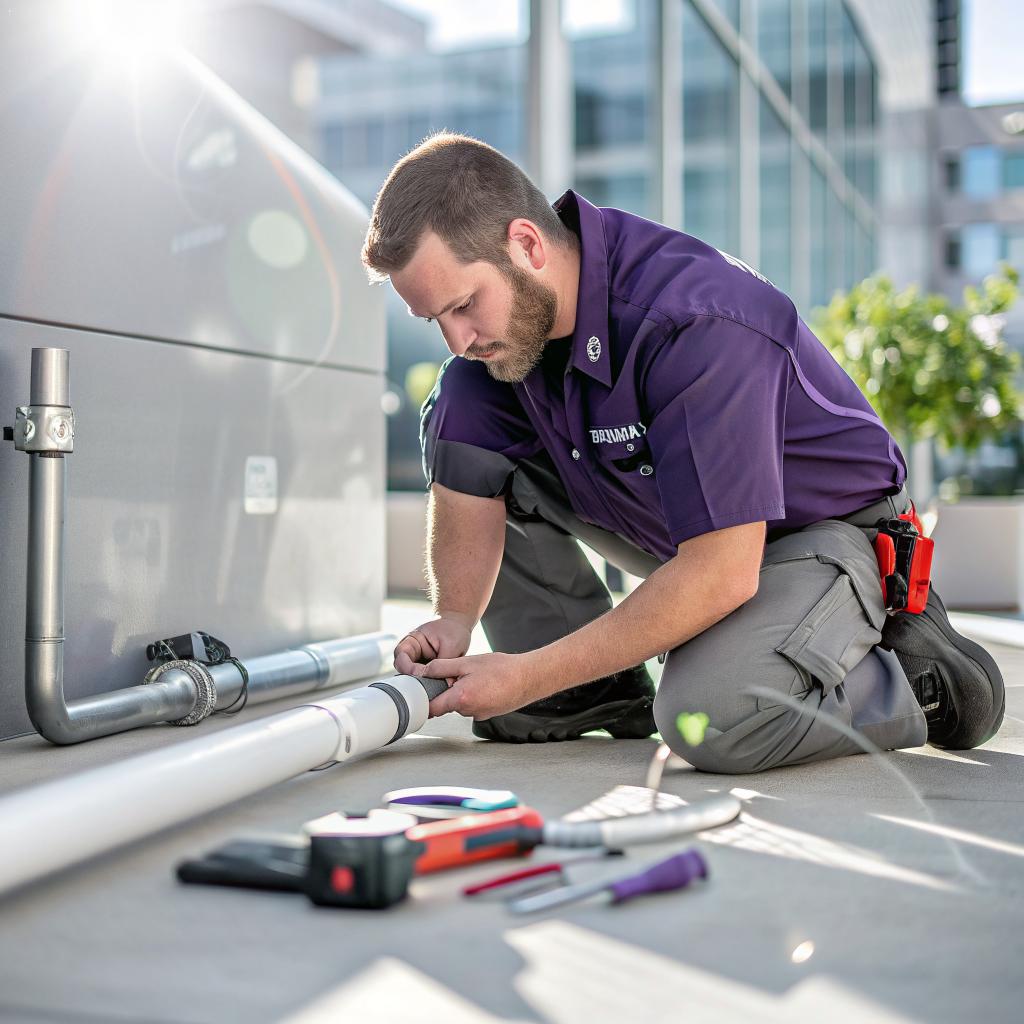
What if I told you one of the highest ROI decisions for a growing tech company in Eagle Mountain is not your next hire, not your next marketing experiment, but the plumber you have on speed dial?
Here is the short version: if your office, lab, or data-heavy workspace is in Eagle Mountain, you should already have trusted Eagle Mountain Plumbers contact saved, with a clear plan for water leaks, burst pipes, and sewer issues. You treat downtime, outages, and data loss as real business risks. Water damage belongs on that list too, not as a facility issue but as a direct threat to revenue and growth.
Once you accept that, the rest becomes pretty logical. You start to see plumbing as part of business continuity, not just a maintenance ticket someone opens when the restroom floods. And yes, that sounds slightly dramatic, but if you have ever watched water drip near a server rack, you already know this is not a “facility problem”. It is an “everything stops” problem.
Why tech offices and labs are fragile in the face of water
Most tech founders and operators think about risk in terms of:
- Cloud outages
- Ransomware or security breaches
- Key staff leaving
- Funding delays
Very few think: “Our growth plan depends on a functioning plumbing system in Eagle Mountain.”
That sounds odd, but only until you do a quick mental inventory of what sits in your physical space:
- Laptops everywhere
- Network switches and routers in not-so-perfect closets
- Maybe a small server room or network cabinet
- Battery backups on the floor
- Test benches, electronics, or lab gear
- Shared office space wiring and plumbing you did not design
Water + electronics is not a theoretical risk. A single broken fitting above a networking closet can quietly drip for hours before anyone notices. By the time you do, the damage is not just the ceiling. It is data, downtime, missed demos, and blown hardware.
If you count downtime in dollars, then plumbing is part of your risk model, not just part of your building.
Most landlords do not think in those terms. They care about walls and floors. You care about systems, releases, and customers. That gap is where tech businesses get hurt.
The hidden cost: downtime that does not look like “plumbing”
A burst pipe at 3 a.m. is obvious. Water everywhere, alarms going off, panic.
The more common, and frankly more annoying, version is softer:
- A slow leak near a telecom room
- Backed up drain that knocks out a bathroom and part of the floor
- Water seeping near an access panel with low-voltage cabling
No flooding, just enough disruption that:
- A team has to be moved to another part of the building
- Access to certain rooms is blocked
- Cleaning crews and temp fixes show up
You might not call that a crisis, but if you are in the middle of a release, or hosting a customer workshop, or running a time-sensitive test, those “small” interruptions land hard.
Tech businesses rarely lose money in one huge dramatic moment. They lose it in dozens of small interruptions that slow teams down.
Plumbing issues are classic for that. They creep into the calendar when you least expect it. Fixing that is less about heroics and more about preparation.
From facility problem to business risk: reframing plumbing in a tech context
If you treat plumbing as “the landlord’s thing”, you will react too slowly. If you treat it as a business risk, you start to plan around it.
Here is a simple way to reframe it for a tech company in Eagle Mountain:
| Typical view | More realistic tech-business view |
|---|---|
| “A leak is a building maintenance issue.” | “A leak is a downtime and data risk that touches customers and revenue.” |
| “The landlord will handle plumbing problems.” | “The landlord’s timeline might not match our release schedule. We need our own backup.” |
| “We only need a plumber when something is broken.” | “We need a plumber in our business continuity plan, with mapped priorities and response times.” |
| “Restrooms and kitchen are low priority.” | “If restrooms are down, staff morale and on-site work drop fast. That hurts delivery.” |
Once you see plumbing as part of your risk map, putting an emergency Eagle Mountain plumber in your vendor stack feels as normal as picking a cloud provider.
How plumbing connects to funding and growth conversations
This might sound like a stretch at first, but it ties back more cleanly than people expect.
When you talk to investors or board members about growth, you talk about:
- Reliable delivery
- Customer trust
- Predictable operations
- Strong retention
Nobody is asking you about your drain lines. Fair.
But if you have a critical customer visit, or a funding pitch onsite, and half the office is blocked off with fans, wet carpets, and a “restroom out of order” sign, that hits perception. People do not always say it out loud, yet they judge operational maturity with all their senses.
Investors rarely ask about plumbing, but they do notice chaos, smells, and improvised fixes in your office.
Also, from a burn rate perspective, every unplanned day where key people cannot work in the normal space has a cost. It is not dramatic enough for a board slide, but if you track it, it adds up over a year.
If you are trying to extend runway, one of the simplest levers is preventing stupid, preventable downtime. Water damage is very often in that bucket.
What “emergency plumbing” actually means for a tech company
Some tech leaders picture an emergency plumber as someone who only shows up for catastrophic floods. That is part of it, but not the whole story.
For a growing tech business in Eagle Mountain, “emergency” looks like a few distinct categories:
1. Active leaks near sensitive equipment
This is the obvious one. Pipes or fittings above:
- Server closets
- Network racks
- Conference rooms with AV gear
- Labs or test benches
If you are serious about uptime, you cannot just throw down towels and hope for the best. You need someone who can:
- Shut off the right valves
- Stabilize the situation fast
- Give you a short, clear status: “You can safely power back on” or “Move this gear now”
A good emergency plumber will understand that the gear under those pipes is not generic office furniture.
2. Sewer backups and restrooms out of service
It is not glamorous, but it is real. If half your office loses working restrooms, people go home. Remote work softens the impact, but not entirely, especially if your team has:
- Hardware labs
- On-prem systems
- Secure work that must stay on site
Sewer issues can also create health concerns that your HR team cannot ignore. A fast response is not just about comfort. It touches compliance, safety, and insurance.
3. Kitchen and break area failures
This one feels minor until you watch morale tank.
A flooded kitchen, no running water, or persistent smells from a slow leak can turn a productive space into a place people avoid. Hybrid teams have choices. If the office feels unpleasant or messy, more people will default to working from home, which can break some of the collaboration you are trying to build with on-site presence.
Again, this connects to investor and leadership questions around culture and retention more than people admit in formal documents.
4. New build-outs and fast growth
If your tech company is growing, you might be:
- Taking over a larger suite
- Reconfiguring floors
- Splitting space with another company
Each change comes with plumbing implications that sometimes get glossed over in the rush to move in:
- New bathrooms added or reconfigured
- Kitchen moved closer to wiring or network closets
- Walls opened and pipes rerouted
This is where involving a plumber early is smarter than calling in a panic later. If your emergency plumbing contact already knows your layout, their response time and effectiveness during an incident will be much better.
Building a practical emergency plumbing plan for your tech office
If you treat this like any other risk, you start to see a simple plan forming. It does not need to be complicated or stuck in a binder nobody reads.
Here is a structure that tends to work well for tech businesses.
Map your physical risk zones
Print (or at least export) a floor plan and mark:
- All known water sources: restrooms, kitchens, janitor closets, HVAC units with condensate lines, water heaters
- All sensitive tech zones: server rooms, network closets, AV hubs, labs, test benches, battery storage
- Overlaps or near overlaps between the two
If you do not have a floor plan, walk the space with someone from operations or facilities and sketch it.
You are essentially asking: “Where would water hurt us the most in terms of downtime and data?”
That short exercise alone often changes how leaders think about their space.
Document shutoff points in plain language
Many offices have a vague idea of where the main water shutoff is. Fewer have it written down in a way a stressed engineer can follow at 2 a.m.
Write it in simple steps:
- Where is the main shutoff?
- Are there floor or suite level shutoffs?
- Who has keys or codes for access?
- Are there areas where you should not shut water off without landlord consent?
Store this in:
- Your incident runbook or internal wiki
- A printed page near the main entrance or security desk
And then, this is where many teams fail: walk one or two people through it physically. Muscle memory counts more than a nice document.
Pre-select your emergency plumber and set expectations
Do not wait for a crisis to Google plumbers. By then, you will pick whoever answers first, not the one who actually fits your needs.
When you evaluate a plumbing partner for your Eagle Mountain tech office, ask them:
- How fast can you realistically get to our location, day and night?
- Do you handle commercial spaces with tech equipment nearby?
- Are you comfortable coordinating with our landlord or property manager?
- Can you share examples of offices or labs you have worked with?
You are not looking for a marketing pitch. You are looking for clear answers and calm confidence. I would personally be skeptical of anyone promising miracles. Plumbing reality is messy. You want honesty about what they can and cannot do.
Once you pick someone, write a short expectation list:
- Primary and backup contact numbers
- Preferred contact method for emergencies (phone, text, both)
- Your building access rules and after-hours procedures
Connect plumbing plans with your regular incident process
Most mature tech teams have some form of incident response, even if informal:
- Slack channel where incidents are discussed
- On-call engineer rotation
- Templates for customer updates
Tie plumbing into that. For example:
- If a leak affects the server room, it should trigger the same kind of alert as infrastructure issues.
- If office access is reduced, someone should consider schedule changes for on-site work.
- If gear is powered down, treat it as an incident with owner, timeline, and follow up.
That way, “plumbing problem” does not stay a vague, off-to-the-side facility note. It becomes a concrete incident with a clear owner, just like any other outage.
What early-stage vs later-stage tech companies should do differently
Not every tech business in Eagle Mountain has the same needs. A 5 person startup in a shared coworking space is not the same as a 120 person hardware-heavy team with multiple floors.
Still, both benefit from thinking ahead. The level of detail is what changes.
For very small or early-stage teams
If you are in a shared space or a small suite:
- Learn the building’s emergency plumbing process. Who do you call first?
- Figure out where your critical gear is relative to water sources.
- Whenever possible, keep network gear and backup batteries off the floor and away from overhead pipes.
- Have a simple, written contact sequence: building manager, landlord, emergency plumber if allowed.
You might not control everything, especially in coworking environments, but you can still control how fast you react and where you place your equipment.
For growing teams in dedicated office space
Here the risk increases, but so does what you can control.
Practical steps:
- Add plumbing and water damage to your risk register along with outages and security incidents.
- Run a short tabletop exercise: “What if a pipe bursts above the server room on a Monday morning?”
- Clarify who has decision power to shut off water if the landlord is not reachable.
- Line up your emergency plumber and share that info across operations, IT, and office managers.
This might sound excessive for something like plumbing, but it is cheaper to talk through it once than to improvise during a crisis.
For larger or more complex tech environments
Once you have:
- On-site labs
- Multiple floors
- Non-trivial customer installations in your office
You might want to go a step further:
- Have your emergency plumber do a walkthrough of your space once per year.
- Ask for feedback: “Where are our worst water-related risks?”
- Budget for preventive fixes: replacing aging valves, relocating pipes above mission-critical zones, adding shutoffs.
It is not glamorous, but small adjustments can reduce the chance of a major blowup. Moving one pipe run a couple of meters away from your main rack can be the difference between a wet ceiling and a total outage.
Insurance, contracts, and what your CFO should care about
Finance and operations leaders usually think in terms of numbers first. Plumbing feels like a facilities line item, but it touches more than that.
How plumbing incidents show up in financials
Plumbing or water damage can appear as:
- Insurance deductibles
- Emergency repair invoices
- Replacement costs for hardware
- Short-term relocation of staff or equipment
There is also soft cost:
- People blocked from doing focused work
- Delayed releases
- Customer calls pushed out
You probably will not log “lost opportunity due to plumbing” as a formal line item, but if you track incident-related downtime, it belongs in the same mental space as system outages.
Lease and landlord considerations
I think many tech founders sign leases without fully reading the plumbing and water damage sections. It is dry reading, and lawyers handle most of it.
Still, a few questions matter:
- Who is responsible for plumbing inside your actual suite versus the building core?
- What is the process for emergency repairs out of hours?
- Are you allowed to call your own plumber, or must you use a designated vendor?
- If your equipment is damaged by building plumbing, what is covered and what is on you?
If you already signed the lease, at least get a one-page summary in plain language so your operations team is not reading legal text during a flood.
Insurance fine print worth checking
I am not an insurance expert, but there are a few patterns I keep seeing:
- Some policies treat “sudden burst pipe” differently from “slow leak over time”.
- Damage to tenant improvements is often covered differently from damage to contents like servers and laptops.
- There can be special conditions for sewer backups.
If your office holds critical equipment, it is worth asking your broker a blunt question:
“Walk me through what happens if a pipe in our ceiling bursts above our server room and fries our hardware. What is covered, and what is not?”
That one conversation can save a lot of surprises later.
Simple physical changes that reduce water risk in tech spaces
Not everything needs a contractor or a full build-out. Some changes are trivial and still reduce your exposure.
Raise and relocate equipment where possible
Even if you cannot rebuild the office, you can often:
- Move power strips and UPS units off the floor onto shelves or wall mounts.
- Avoid placing racks directly under obvious pipe runs when there is any choice.
- Store spare hardware and components in sealed bins, not cardboard on the floor.
This is not about perfection. It is about buying yourself time if water appears where you do not expect it.
Label key areas for first responders and plumbers
In a real emergency, the plumber or maintenance team will not know your internal jargon. They need clear signs.
Label:
- “Server room – keep dry”
- “Network closet – critical equipment”
- “Lab area – water sensitive gear”
You are making it easy for anyone walking in cold to understand where water cannot go. That sounds trivial, but it helps new building staff, fire crews, and emergency plumbers operate faster and with fewer mistakes.
Integrate water detection where it matters most
If your budget allows, simple water sensors are cheap compared to the cost of a hardware failure.
Consider placing sensors:
- Under raised floors used for cabling or HVAC
- Near water heaters or condensate drains close to equipment
- At the lowest point of rooms that matter most
Tie them into your existing alert system if you can. The earlier you know about a leak, the more choices you have.
A quick look at real-world scenarios
Sometimes it helps to see practical examples. These are simplified, but they match patterns many tech businesses have seen.
Scenario 1: The Monday morning ceiling drip
A small Eagle Mountain software company comes in on Monday. There is a slow drip from the ceiling near their network closet. The carpet is damp, but not soaked.
Normal reaction:
- Put a trash can under the drip.
- Email the landlord.
- Carry on with the day.
Better reaction from a business standpoint:
- Call the landlord and your emergency plumber in parallel.
- Move any non-essential gear out of the affected area immediately.
- Document the situation with photos for insurance and later review.
By treating it like a possible incident, you avoid the scenario where the drip suddenly becomes a flow during a customer call.
Scenario 2: Restroom backup during a key onsite workshop
A data analytics company hosts a two-day workshop with an important client. Halfway through day one, a restroom backup closes the only bathrooms on their floor.
Quick improvisation:
- Send people to another floor’s restroom if possible.
- Apologize and continue.
What better preparation would have looked like:
- Having the emergency plumber’s number in the office manager’s phone.
- Pre-checking restrooms before the workshop starts.
- Agreeing on a simple script for clients: calm, honest, and solution focused.
The actual plumbing repair might not be faster, but the response appears organized rather than chaotic, which affects client trust.
Scenario 3: Overnight burst above the lab
A hardware-focused team has a small lab with test rigs. Overnight, a pipe above the space bursts. The building alarm goes off, and security calls the listed contact.
With no plan:
- The on-call engineer is confused, drives in, and spends time figuring out shutoffs.
- They do not know who to call for actual repairs.
- By the time a plumber arrives, water has run longer than needed.
With a basic plan:
- The on-call contact already has the shutoff instructions and emergency plumber details.
- Water is stopped sooner, and the lab gear is either protected or moved.
- The next day is still rough, but limited to cleanup and checks instead of full rebuild.
None of this is glamorous work, but this is how companies quietly protect their progress and their runway.
Connecting plumbing readiness to your growth story
Tech people often see these topics as low status. It feels more exciting to talk about architecture, fundraising, AI, or product strategy. Plumbing sounds dull.
But there is a pattern among resilient companies: they take boring risks seriously before those risks become stories.
A few questions to ask yourself, honestly:
- If a water issue took part of your office offline tomorrow, who would make the first three calls?
- Do those people know where the shutoffs are and who your emergency plumber is?
- Is your most sensitive gear in the safest practical place, or just where it was easiest to plug in?
If you struggle to answer, that is not a sign you have failed. It just means you have some simple wins available that protect your growth more than another meeting about roadmaps.
The boring parts of your operation are often where your real resilience lives.
Q & A: Common questions tech leaders ask about emergency plumbing
Q: We are mostly remote. Do we still need to care about emergency plumbers?
A: Yes, but the level of urgency is different. If your physical office only holds a few hot desks and no critical gear, then a plumbing issue is more about comfort and occasional disruption. You still want the landlord process clear, and a basic contact handy, but you do not need a detailed plan. If you store any unique equipment or run labs from that space, the risk rises again, even with a remote culture.
Q: Should our emergency plumber be involved in office design from the start?
A: For new or heavily remodeled Eagle Mountain offices, involving a plumber early can prevent bad layouts, like placing a key rack under major water lines. For smaller tweaks, it might be overkill, but at least get advice before you place critical equipment. Think of a short walkthrough as insurance against awkward surprises.
Q: How do we explain this priority to a board that only cares about growth metrics?
A: Frame it in terms of downtime and reputational risk. One afternoon lost to a preventable water incident is not just “plumbing trouble”. It is delayed releases, missed sales calls, and frustrated staff. Show that your emergency plumbing plan costs very little compared to a single day of team downtime. That usually lands well with financially minded people.
Q: Is this something the CTO should own, or the COO, or facilities?
A: The exact title matters less than the clarity. Usually, operations or facilities own the relationship with the plumber, while technical leaders define the critical zones that must be protected. What you want is a clear owner, not a debate over whose department it sits under.
Q: How often should we review our plumbing and water risk setup?
A: At least once a year, or any time you move gear, expand the office, or change how the space is used. A 10 minute review can catch new risks you created unintentionally, like running new cables near a condensate line or adding a makeshift rack in a risky spot.
If you walked through your office right now, what is the one water-related weak point you would fix first?