
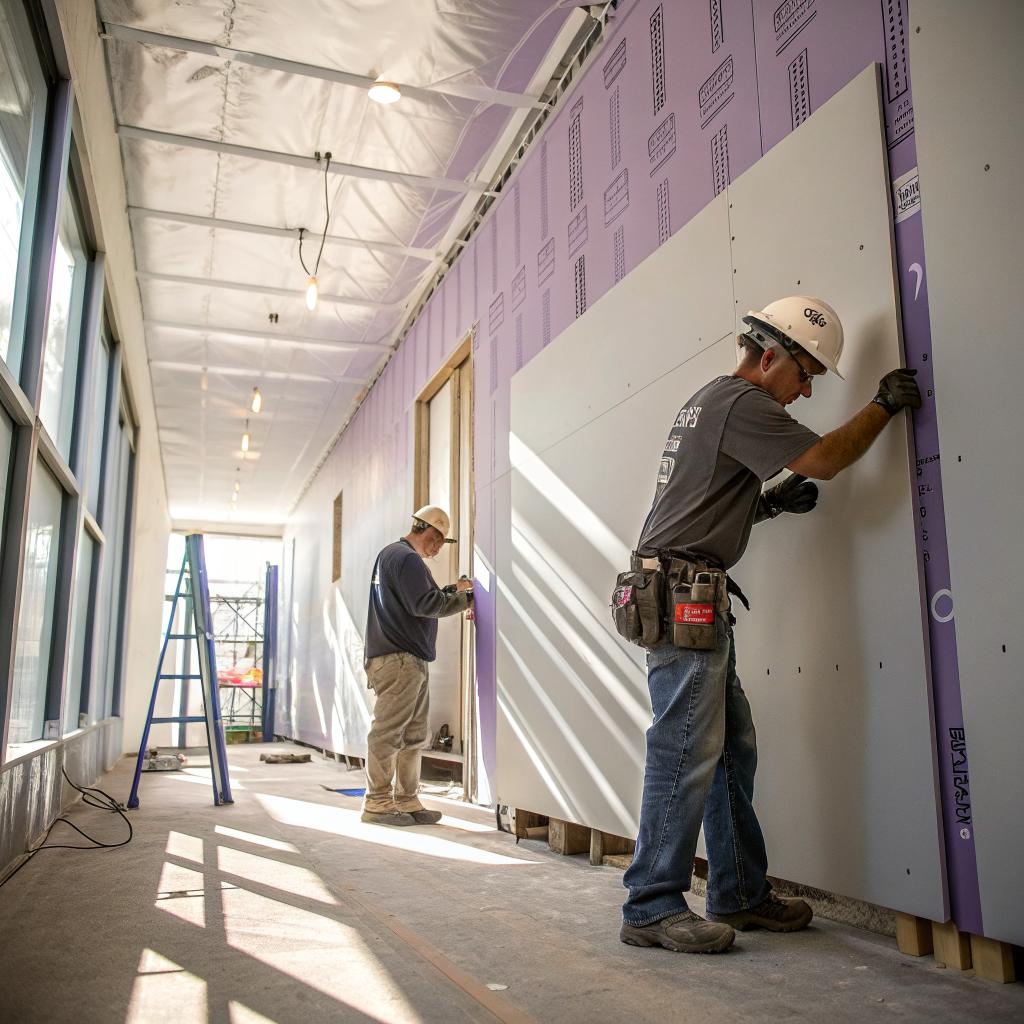
What if I told you that one of the quiet drivers of smart growth in Asheville is not a new app or a funding round, but something as ordinary as drywall hanging?
The short answer is this: consistent, professional drywall hanging Asheville NC speeds up build cycles, stabilizes project budgets, and reduces long term maintenance risk. That combination helps property investors, tech founders with office plans, and even remote-first teams make faster, safer decisions about where and how to grow. Drywall is not just a wall finish. It is a timing tool, a risk filter, and in many ways a physical indicator of how serious a city is about controlled, sustainable growth.
Now let me unpack that slowly, and tie it into funding, growth, and the business side of technology, because I know on the surface it sounds a bit strange.
Why drywall even belongs in a conversation about smart growth
If you work in tech or finance, you probably care more about runway, churn, and acquisition cost than gypsum boards and joint compound.
But look at your real costs over a 5 to 10 year plan. Where people sit, meet, test hardware, store inventory, or host clients affects:
- how fast you can grow headcount
- how soon you can open a new office or lab
- how much capital gets locked into fit outs instead of into product
- how predictable your future maintenance budget is
Drywall is part of the invisible infrastructure that decides those numbers.
Stable, repeatable construction processes are as important to smart growth as stable, repeatable deployment processes are to software.
You cannot scale a SaaS product on a pile of ad‑hoc bash scripts. In the same way, a growing regional tech hub cannot build reliable capacity on improvised interior construction. Drywall hanging is one of those repeatable, boring processes that, if handled well, removes chaos and keeps projects on a schedule investors can understand.
So when we talk about “drywall hanging Asheville NC,” we are really talking about three connected questions:
1. How fast can you turn a shell into revenue generating space?
2. How much risk is baked into the walls?
3. How much of your attention does real estate quietly steal from core work?
Drywall as a timing and cash flow tool
Tech founders talk about time to market. Developers talk about cycle time. Property developers talk about time to occupancy. Drywall sits right in the middle of that path from idea to usable square footage.
Why timing around drywall matters more than it seems
On a typical commercial or mixed use building, drywall hanging happens after framing, rough electrical, and plumbing. It is the point where a “project” starts to look like a real, almost finished space.
If drywall is late, everything behind it stacks up:
- inspections slide
- finish trades like painting and flooring wait
- FF&E vendors push their delivery windows
- your operations or tech team keeps paying for temporary space
Think of a startup planning to move from a small shared office into a new floor in Asheville. They budgeted rent at the new place starting in March, built hiring plans around that, and scheduled a product launch party there in April.
Drywall delays in January that push completion into May are not just a construction annoyance. They ripple into:
- two or three extra months of double rent
- delayed team moves and onboarding
- event changes and maybe lost marketing chances
The boring reliability of drywall work decides whether a project line in your Gantt chart is a guess or a real date you can share with investors and employees.
For lenders and investors, this matters because construction loans often convert based on completion milestones. Drywall is usually one of those major checkpoints. Reliable drywall hanging shortens the gap between drawdowns, occupancy, and revenue. That is real cash flow, not theory.
Drywall, budgets, and the myth of small line items
On any commercial budget sheet, drywall is a line somewhere under “interiors.” It may look small next to land costs or structural work. But if you are building at scale across multiple sites, those “small” lines compound.
A slight material waste rate, small rework percentages, and minor measurement mistakes can add up across:
- multi‑tenant offices
- co‑working buildouts
- light industrial or warehouse conversions
For example, if one project drifts 3 percent over budget on drywall due to poor planning, it feels manageable. Run that pattern across 10 sites and you have a problem that you now have to explain on a board slide deck.
Smart growth is in the habits, not the heroic fixes. Drywall hanging is a habit heavy step. You want predictable crews, known material sources, and a tight feedback loop on:
- square footage estimates
- waste percentages
- schedule variance
That is exactly the sort of thing people on the business side of tech already track in software delivery. It just happens here in physical space instead of cloud dashboards.
How drywall quality affects long term operating costs
Once the office is open and the space feels “done,” most people forget about the walls. Until they crack, leak, mold, or fail acoustically.
From a growth and funding view, this is where short term cost cutting around drywall can quietly damage your operating model.
Maintenance, reputation, and distraction
If you run a tech company or a fund, every time someone on your team has to deal with a facilities issue, they are not working on product, deals, or support.
Poor drywall work leads to:
- visible joints and nail pops
- cracks after small building movement
- moisture damage near poorly sealed bathrooms or kitchens
- sound transfer between rooms
These are not just aesthetic problems.
Repeated maintenance tickets add to:
- direct costs for repair crews
- indirect costs from room downtime
- soft costs like distraction and frustration
I once visited a small dev shop in a growing mountain town. They had a new office that looked nice at first. Within one year, they were patching cracks and repainting several interior walls, because the original drywall work rushed through seasonal humidity swings.
No one wrote “drywall rework” into their pitch deck as a risk factor. Yet there it was, pulling hours away from leadership and pushing planned improvements back.
Cheap, rushed drywall does not just save money, it borrows against your future focus, and the interest rate is usually higher than founders expect.
For anyone funding multiple projects, patterns here start to matter. If you can standardize drywall hanging quality and process across sites, your maintenance curves flatten. That gives you more predictable OPEX, which lenders and buyers pay attention to when valuing a portfolio.
Acoustics, privacy, and serious companies
If you tour office space with a potential investor or candidate and they can clearly hear the team next door through the walls, it raises doubts. Not always conscious, but they are there.
Acoustic performance often comes down to:
- how studs are spaced
- what drywall thickness is used
- whether insulation and resilient channels are applied correctly
- care around outlet boxes and penetrations
For teams working on sensitive data, hardware prototypes, or confidential deals, sound control is not a nice extra. It is a basic requirement.
Strong drywall hanging practice in Asheville can support more serious use cases:
- small data rooms that stay quiet and protected
- VC offices where calls cannot be heard next door
- medical tech offices that must meet privacy expectations
You do not need to over‑engineer every wall. But if you treat drywall as a technical system, and not just a visual finish, you get better environments for knowledge work. That, in turn, makes it easier to attract better teams and build trust with partners.
Why Asheville is a good place to study this
Asheville sits at an interesting point. It is not a massive metro, but it is not a tiny town either. It has tourism, remote workers, a growing local tech presence, and a tight housing and commercial market.
That mix turns “small” construction choices into strategic ones.
Growth pressure and local constraints
The city has a few basic facts that affect drywall work and, indirectly, business growth:
- Limited flat land, so more renovations and infill projects
- Older buildings that need interior upgrades
- Seasonal humidity shifts that affect building materials
- Steady stream of people moving in, including tech workers
Renovations and adaptive reuse mean many projects are not clean new shells. They are old retail spaces turned into coworking, mills turned into offices, or houses converted to small hybrid offices.
Drywall hanging in that context is less plug‑and‑play and more like surgery. Framing is not always square. Existing utilities are in odd places. Moisture history is uncertain.
Builders and property owners who take drywall seriously in Asheville gain an edge:
- they can turn unconventional spaces into stable, comfortable workplaces
- they can offer quieter, better finished units to tenants willing to pay more
- they can handle more complex projects without constant callbacks
For tech workers arriving from bigger cities, this difference matters. People who have worked in solid, well‑built offices have a low tolerance for walls that crack after one heating season.
The quality of something as simple as drywall becomes part of the broader story a city tells about how serious it is about long term growth.
Drywall and the “product” of a city
If you think of a city as selling “capacity for good work” to companies and founders, then its product feels a bit like:
| City Feature | Impact on Work | Connection to Drywall |
|---|---|---|
| Available modern office / flex space | Where teams can sit and grow | Drywall defines and finishes most of that space |
| Reliability of buildouts | Confidence in expansion timing | Drywall schedule and quality signal execution strength |
| Perceived quality of environment | Talent attraction and retention | Flat walls, sound control, clean finishes, low rework |
| Total cost of occupancy over years | Budget predictability and runway | Less maintenance and fewer surprises behind walls |
If you are building a portfolio of companies or properties in one region, you start to care about how solid the “product” of that city is. Drywall is a surprisingly clear, visible indicator of that solidity.
How smarter drywall practices support smarter funding and planning
Now let us tie this back into the business side more directly. If you are an investor, founder, or operator, how does drywall hanging connect to smarter growth decisions?
Better cost modeling and due diligence
When you assess a potential office move or a multi‑property investment in Asheville, you usually look at:
- purchase or lease price
- TI (tenant improvement) costs
- expected buildout timeline
- estimated maintenance profile
Drywall hanging sits inside TI costs and timeline. But it also gives you clues about:
- overall build discipline on the project
- attention to moisture, structural movement, and acoustics
- probability of early failures inside the envelope
If you walk a project in Asheville and see:
- uneven butt joints
- inconsistent screw patterns
- poor corner bead alignment
- thin or patchy taping and mud work
you are not just seeing sloppy drywall. You may be seeing a pattern of rushed work that extends into plumbing, electrical, or waterproofing. That is due diligence input.
On the other hand, clean, consistent drywall work suggests:
- better supervision on site
- more reliable subs and suppliers
- a greater chance that hidden systems were treated with the same care
When you layer that view on top of your financial model, you can:
- adjust contingency reserves for maintenance
- slightly shift your discount rates for project risk
- decide which buildings or developers to back again
This sounds narrow, but over a portfolio of projects it adds up.
Faster iteration on space, like software
Tech teams are used to iterating on products, not offices. But in practice, workplaces change often:
- new teams form and need enclosed spaces
- headcount grows and open areas need re‑thinking
- acquisitions create new layout needs
When drywall is installed with future change in mind, you can move faster:
- walls laid out in modular grids
- accessible chases for cabling and HVAC
- documentation of framing and stud locations
It sounds dull, but a well documented set of wall layouts with photos of studs and utility paths lets you reconfigure an office with fewer surprises.
That flexibility makes it easier to treat office space like a product feature you can update, instead of as a fixed cost you put up with for years.
Smart drywall hanging in Asheville can mean:
- clean removal points
- predictable rehang times
- less risk of damaging underlying systems during changes
For growing companies, the practical outcome is simple: you can change the way your workspace supports your product, without getting stuck in long, unpredictable construction loops every time.
Drywall hanging as a quiet local cluster
If you zoom out, drywall work in Asheville is part of a larger local network: framers, electricians, HVAC installers, painters, inspectors, and material distributors.
Why consistent drywall capacity matters to tech growth
A city can attract a startup that just needs laptops and coffee. But once hardware labs, data centers, or serious R&D show up, they need better physical space. Quickly.
That depends on:
- enough skilled trades to handle demand
- predictable scheduling capacity
- standard quality that does not require micro‑managing
Drywall hanging is one of the trades that scales with construction volume. If Asheville grows fast but drywall capacity lags, you get longer queues and more rushed jobs.
For a founder choosing between cities, this might seem distant. But slow buildouts can delay product testing labs, field support centers, or customer demo spaces.
Investors who look closely at regions sometimes track:
- permitting timelines
- inspection backlogs
- availability of specific trades
Drywall is usually not the first one they ask about, yet it shapes almost every interior project.
If you want a city where complex companies can grow, you also want a city where someone can frame and hang 50,000 square feet of drywall without drama, month after month.
That consistency gives business builders room to plan more ambitious space needs without fearing local construction chaos.
Practical questions founders and investors should ask about drywall
So if you are not a builder, how do you bring drywall into your decision making without turning into a construction manager?
Questions during site selection or lease talks
When you evaluate a new office or a building project in Asheville, you can ask:
- “Who handled the drywall hanging on this project?”
- “Do you have any records of change orders tied to drywall work?”
- “Have there been any recurring issues with cracks, moisture, or sound complaints?”
- “How long did the interior buildout take, from framing start to paint?”
You do not need perfect answers, but patterns matter. Projects with multiple drywall related change orders or long overruns may hint at problems.
On new builds, you can also explore:
- “What wall assemblies are used between offices and meeting rooms?”
- “How is sound control handled around conference spaces and phone rooms?”
- “Can we review sample sections or detail drawings?”
This signals to developers and landlords that you care about actual performance, not just paint color.
Questions when budgeting for buildouts
If you are planning a custom buildout, especially for a growing tech team, you might push for clarity on:
- per square foot drywall costs, broken down by labor and material
- expected waste rates and how they are tracked
- schedule assumptions linked to drywall, including drying times
- how many crews will be on site and how they are sequenced
You might not get perfect transparency. Some builders will resist sharing too much detail. But even a partial view can help you estimate how sensitive your schedule is to this one step.
For more specialized spaces like labs or podcast rooms, you should also ask:
- “What sound transmission class (STC) are we actually aiming for in these walls?”
- “What is the moisture resistance rating where we have water or high humidity?”
This moves the conversation from “we will hang drywall” to “we will deliver walls that do what your company needs.”
Examples of drywall decisions affecting smart growth in Asheville
It may help to walk through a few simple scenarios. These are blended from real patterns, but simplified.
A mid‑size SaaS company choosing Asheville for a regional hub
A 60 person SaaS firm plans to open a second office for customer success and some engineering. They are choosing between Asheville and a larger city.
They run projections:
- Lease rates
- Talent costs
- Travel time
- Buildout budgets
During due diligence, they learn that one building they are considering in Asheville has:
- recent interior work with frequent drywall punch list items
- tenant complaints about sound between rooms
- delays caused by rework where drywall had to be opened for missed wiring
Another building, with a different general contractor and drywall crew, shows:
- predictable completion history
- documented wall assemblies with STC ratings
- lower reported maintenance issues over three years
Even if rental rates are similar, that second building offers a clearer growth path, fewer distractions, and more stable costs. Their eventual choice quietly rests on quality of interior execution, including drywall.
A local accelerator upgrading its space
An Asheville accelerator decides to renovate its floor to add more focus rooms and event space for startups. The board wants a quick, cheap build.
If they accept the cheapest drywall bid with aggressive schedule promises, they might end up with:
- thin walls that leak sound, making mentoring sessions awkward
- cracks within a year that look tired to visiting investors
- repair cycles that interrupt programming
If they instead work with a drywall team that has slightly higher initial costs but offers:
- better layout advice for future reconfiguration
- documented stud maps
- thoughtful acoustic assembly choices
they create a more stable, flexible hub for the companies they back. That supports smarter regional growth without flashy tech at all.
Drywall, data, and the way forward
Since this is for people who like data, it is fair to ask: can drywall performance be measured in a way that helps business decisions?
I think yes, at least to a useful degree, if developers, property managers, and even larger tenants track a few simple metrics:
- Number of drywall related maintenance tickets per 10,000 square feet per year
- Average cost of those tickets
- Time from framing start to paint ready per project
- Variance between planned and actual drywall completion dates
- Number of drywall related change orders per project
Over a few years across multiple sites, patterns emerge. You can see which suppliers and drywall teams consistently hit schedules, which building types cause problems, and how much early savings correlate with later costs.
This sort of basic tracking supports:
- better underwriting for property deals
- more realistic budgets for future buildouts
- clearer expectations with landlords or partners
Nothing fancy. Just honest records tied to specific work.
If you are an operator in Asheville, you might not have all this data yet. But even starting simple logs for your own spaces can help.
You do not need complex analytics to see that fewer cracks, fewer sound complaints, and fewer wet‑wall surprises mean calmer operations and better use of capital.
Common questions about drywall and smart growth in Asheville
Q: Is drywall quality really worth my attention when I have bigger strategic problems?
A: It depends on your role and scale. If you are a solo founder working from home, probably not. If you are signing multi‑year leases, building out thousands of square feet, or managing a portfolio of properties, then yes, drywall enters the picture. It affects schedule reliability, maintenance load, acoustic quality, and even how serious your space feels to guests. You do not need to obsess over it, but ignoring it entirely can lead to surprises that you wish you had caught earlier.
Q: How can a non‑construction person quickly judge drywall work when touring a space?
A: Look for simple things. Stand at an angle to the wall and check for waves or visible joints. Check corners for clean, straight lines. Clap your hands or talk loudly in a room and listen to how the sound behaves. Tap lightly where you suspect studs and see if the surface feels consistent. None of this is perfect, but your eyes and ears can tell you if something feels off. If you already feel problems before moving in, they tend to get worse with time, not better.
Q: What is one practical step I can take on my next project in Asheville to make drywall work for smart growth, not against it?
A: Write drywall into the early planning conversation. Ask your architect or builder to explain the wall types they are proposing, what performance they expect from them, and how that matches your actual work needs, from privacy to future changes. Get this into the drawings and scope before pricing starts. That way you are not fighting acoustics or repair bills years later. It is a small shift, but it nudges every future decision a bit closer to smart, not rushed.