
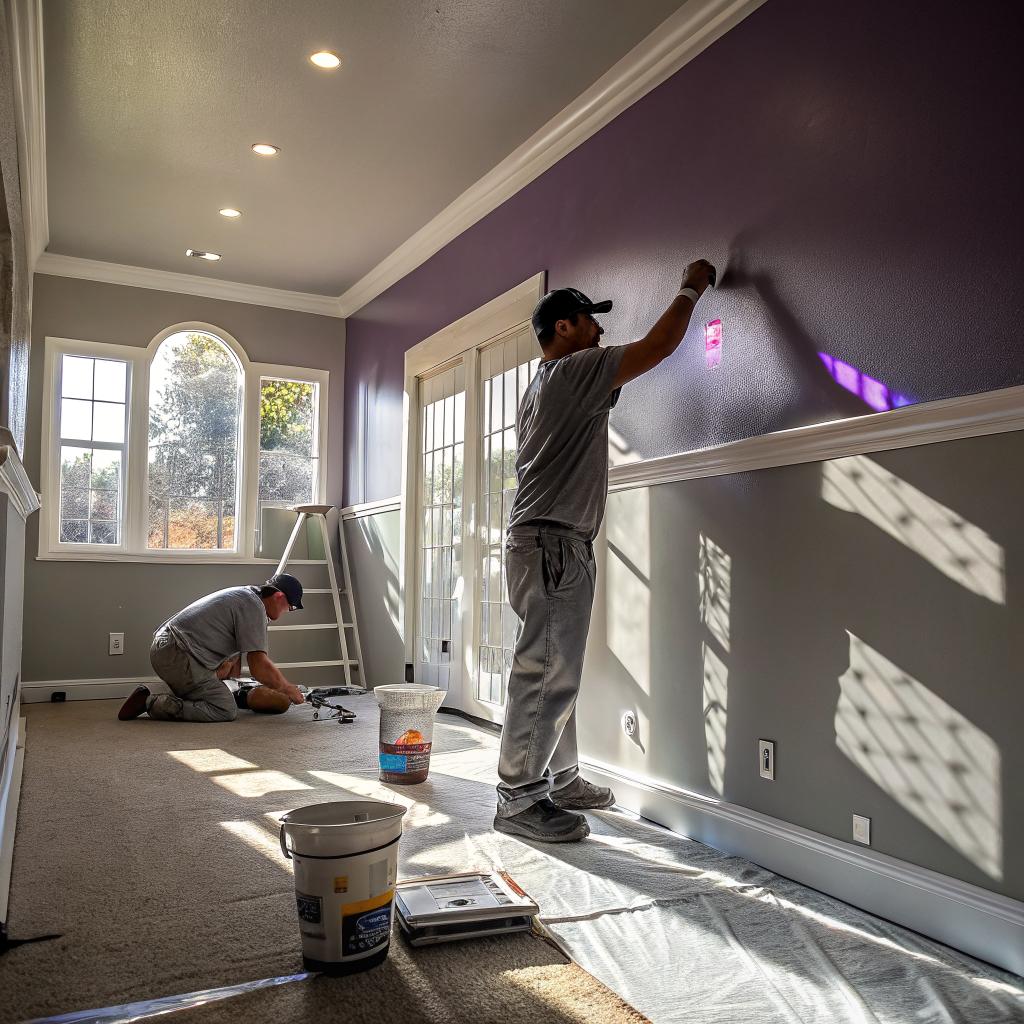
What if I told you that the interior painting company quietly repainting living rooms in Colorado Springs can, with the right setup, earn margins that look closer to a SaaS reseller than a local trade?
Here is the short version: interior painters scale profit by acting less like solo contractors and more like small, data-aware service firms. They do it by standardizing estimates, tightening labor planning, raising prices on the right jobs, tracking numbers weekly, and using simple tech instead of guesswork. In Colorado Springs, where seasonality and local housing patterns are pretty predictable, that mix can turn a three-person crew into a very healthy business.
If you want to see what this looks like in practice, many interior house painters Colorado Springs use a simple playbook that blends field operations with basic business discipline. Nothing fancy. Just consistent.
Why profit, not revenue, is the real metric
A lot of painting businesses brag about being “booked out for months.”
That sounds good. It also hides a problem: packed schedules with thin margins. You can have crews working full time and still feel broke.
The companies that grow in a stable way track profit per crew per week, not just total sales.
Profit scales when each crew-day is sold at the right price, for the right kind of job, and with tight control of labor and materials.
Compare two interior jobs:
| Job type | Revenue | Direct costs (labor + materials) | Gross profit | Comments |
|---|---|---|---|---|
| Small condo repaint | $1,200 | $900 | $300 | 1.5 days, lots of travel, fussy details |
| Mid-size family home | $4,800 | $2,400 | $2,400 | 3 days, same crew, fewer interruptions |
The first job “fills the calendar.” The second pays the overhead.
Owners that think like tech founders quietly select for the second kind of job. They do not say that on their website, but their pricing and process push them there.
So the core question is not “How do I get more jobs?” but “How do I sell more of the profitable jobs and automate the rest?”
How interior painting becomes a predictable machine
Let us walk through the main levers. None of them are complicated, but keeping them all working together is where the skill is.
1. Use tech to make estimates boring and repeatable
Most small painters still estimate by feel. They walk the house, look around, throw out a number, and hope it covers the surprises.
That works for a one-person shop. It collapses when you have three or four crews.
Growth-focused owners build an estimating system that anyone on the team can use. It does not need to be fancy. A spreadsheet or a simple quoting app is enough if it is used the same way every time.
A basic interior estimate system in Colorado Springs might standardize:
- Price per square foot of wall and ceiling
- Price per door, window, and baseboard length
- Premiums for vaulted ceilings or tricky stairwells
- Separate line items for repairs and texture work
Then they overlay local realities:
- Older homes near the center often have more prep and repairs
- Newer builds on the north or east side tend to be faster repaints
- Higher elevation or colder pockets can affect drying time and scheduling
The goal is not perfect precision. The goal is consistent pricing that matches your known production rate.
If you know that a three-person crew reliably paints 800 to 1,000 square feet of wall surface per day, you can price with confidence and protect your margins.
This feels a bit like what SaaS teams do with “unit economics.” They know the cost to serve one user and work back from there. Good painting companies do the same with one room.
For readers used to tech metrics, you can think in terms of:
- Customer acquisition cost: ad spend and sales time per booked job
- Customer lifetime value: repeat work and referrals over 3 to 5 years
- Gross margin per job: revenue minus labor minus paint and sundries
Once those numbers are visible, guessing starts to disappear.
2. Raise prices on the jobs that should carry the company
Many owners worry that if they raise prices, the phone will stop ringing.
That is usually wrong. What often happens is this: the cheap, stressful jobs fall away first, and the higher value ones stay.
For interior painting in Colorado Springs, there are quiet price levers that most customers accept:
- Premium for color changes that need extra coats
- Higher rate for quick turnaround work
- Premium for working around furniture instead of empty homes
- Much higher rate for detailed trim, cabinets, and railings
The key is to separate:
- Commodity work like repainting builder beige with similar light colors
- Specialized work like cabinet refinishing or complex color schemes
You do not need high margins on every wall. But you do want high margins on the complex parts that stress your crew and schedule.
Painting owners who borrow from tech pricing will tend to:
- Keep a simple, clear base package that is easy to say yes to
- Offer add-ons that many customers will pick, which carry stronger margins
For example:
| Service | Customer view | Owner view |
|---|---|---|
| Standard interior repaint | “Basic freshen up” | Baseline revenue, stable margin |
| Color consulting session | “Help choosing colors” | High hourly rate, almost no materials |
| Cabinet painting upgrade | “Kitchen makeover without remodel” | High margin, skilled labor, boosts average ticket |
| Premium paint upgrade | “Better washability and durability” | Small cost increase, noticeable price lift |
Profit scales faster when you raise average job value than when you only chase more jobs at the same price.
This runs against the reflex to say yes to everything. Saying no to low-value work feels risky at first, then strangely relaxing.
3. Treat crews like pods in a service startup
People in tech talk about “pods” all the time. Painting companies rarely use that word, but the best ones behave as if they do.
They structure work around stable, semi-autonomous crews that:
- Have a clear leader responsible for customer satisfaction and site decisions
- Know their weekly production target (square feet, rooms, or revenue)
- Follow the same prep, paint, and cleanup checklist on every job
In Colorado Springs, seasonality and weather add complexity. Snow, sudden storms, and shorter daylight in winter can hurt productivity. Owners who scale profit plan around that, not fight it every week.
A simple pattern looks like this:
- Spring and summer: load up on larger full-house repaints and more complex projects
- Fall: mix mid-size jobs with interior-only work that is less sensitive to weather
- Winter: focus heavily on interiors, repeat clients, and smaller projects near home base
Crew structure changes by season too. Some owners keep core full-time staff and layer in seasonal helpers when demand peaks. Others keep crews smaller all year but increase prices in high-demand months.
Whichever route they pick, the math is clear: each crew must hit a weekly profit number, not just a weekly revenue number. A simple way to track it is:
| Metric per crew per week | Target |
|---|---|
| Billable days | 4 to 4.5 (rest is travel, materials, weather, admin) |
| Revenue | $8,000 to $12,000, depending on crew size |
| Gross profit | 40% to 50% after labor and materials |
Owners who hit those numbers week after week tend to grow in a stable way. Those who do not, often work just as hard, with less to show for it.
4. Use simple software to control chaos, not to look fancy
Painting companies do not need complex tech stacks. In fact, trying to copy software firms too literally can waste time.
What actually helps profit is boring:
- Calendar and scheduling that all crews see in real time
- Shared notes for each job: colors, products used, customer quirks
- Photo documentation of before and after work
- Digital contracts and payments
Some owners use specialized painting CRM tools. Others stick with a mix of:
- Google Calendar or Outlook
- Spreadsheets with templates
- Simple quoting or invoicing apps
- Shared photo folders
The trick is not the tool. It is that the information is complete and current.
This matters more in a city like Colorado Springs than it might seem. Traffic can be uneven near I-25. Weather can change fast in neighborhoods closer to the mountains. Having jobs and crew locations mapped clearly saves real money.
If you are used to SaaS metrics, this is not far from managing a field service team. The same logic applies: fewer surprises, clearer routing, and less context switching.
5. Think like a portfolio manager about job mix
Most painters book jobs in the order the calls come in. This feels fair. It is also not always smart.
Owners who scale profit treat their schedule like a portfolio. They want a balanced mix of:
- Fast, predictable jobs that keep cash flowing
- Larger, higher-margin jobs that carry overhead
- Strategic jobs in target neighborhoods that lead to more work nearby
Here is one way a month might be planned for a two-crew interior-focused company:
| Job type | Count in month | Avg revenue | Role |
|---|---|---|---|
| Small room refresh | 6 | $600 | Fill gaps, keep referrals alive |
| Mid-size full interior | 8 | $4,000 | Core revenue driver |
| Large high-end home | 2 | $10,000 | Margin booster, portfolio piece |
| Cabinet projects | 3 | $3,500 | High-margin specialties |
If the month fills up with too many small jobs, they raise the price on those or limit bookings. If high-end work is lacking, they might adjust ads or focus follow-ups on past customers in those segments.
This is not very different from a SaaS sales leader shaping pipeline by deal size and segment, instead of taking everything in the same way.
6. Protect the brand where it matters, ignore where it does not
Painting is trust-heavy. People let strangers into their homes. They care more about feeling safe, clear, and respected than about the name on the van.
Smart owners invest in brand signals that reduce sales friction:
- Clean, consistent uniforms and vehicles
- On-time arrivals and clear communication about schedule changes
- Written scopes that match what actually happens on site
- Photos that show real local jobs, not stock images
At the same time, they do not obsess over polish where it does not increase profit:
- They might keep the website simple but fast and clear
- They usually skip complicated social media campaigns that do not convert
- They focus reviews on Google and a few targeted places, not everywhere
For a customer, the business looks stable and professional without screaming “corporate.” For the owner, this balance keeps overhead in check.
From a tech-business point of view, this is a nice example of focusing brand spend on conversion, not vanity.
7. Build repeatable “micro funnels” inside neighborhoods
Here is where Colorado Springs itself matters.
The city is full of distinct clusters:
- Older neighborhoods with long-term residents who might repaint every 7 to 10 years
- Newer developments where interiors feel dated after 5 years
- Areas with more rentals and turnovers where speed matters more than high-end finish
Painting companies can quietly build small, local growth loops:
- Do a strong job for one neighbor
- Leave simple, tasteful door hangers for the surrounding homes
- Ask for a Google review and a photo or two
- Target very small online ads to that radius using before-and-after photos
Over time, you get little pockets where the brand is known. Travel time falls. Estimates become more accurate because house layouts are similar. Each new job costs less to sell and serve.
That is exactly what tech companies look for when they talk about reducing customer acquisition cost. The mechanics are different, but the idea is the same.
8. Manage cash like a boring, serious operator
Profit on paper is nice. Cash in the bank pays crews.
Painting has some ugly cash traps:
- Buying too much paint at once “to get a deal”
- Letting receivables drift out for weeks
- Starting big jobs without a clear deposit and draw schedule
Colorado Springs adds one more factor: weather swings can stall work. If a prior exterior-heavy season went badly, some owners lean too heavily on winter interiors just to catch up.
Owners who scale profit treat cash rules as non-negotiable:
- Clear deposits before scheduling larger jobs
- Progress payments tied to obvious milestones
- Small credit lines used sparingly, not to patch poor pricing
Some even build “off-season funds” during peak months. That lets them keep core staff through slower periods rather than hiring and firing constantly, which is both expensive and rough on culture.
9. Hire and train for consistency, not heroics
In tech, there is a lot of talk about “10x engineers.” In painting, the idea of “10x painters” is misleading.
You do not want a hero who can save every job. You want a crew where average performance is predictably good.
That usually means:
- Clear training on prep work, masking, and cleanup
- Simple standards for cut lines, coverage, and finish
- Regular walk-throughs by the crew lead with a checklist
It sounds basic, and in a way it is. But the effect on profit is not.
Rework kills margins. Having to go back to fix missed spots or sloppy lines turns a profitable job into a break-even or worse. A little extra time on the first pass is cheaper than sending a crew back across town.
Owners who treat quality as a system, not a talent, tend to sleep better. That mindset should feel familiar to anyone who has worked in product or DevOps. Stable processes beat occasional heroics.
10. Track only the numbers that change decisions
Some business owners drown in dashboards. Painting companies are at risk of the opposite: no numbers at all.
There is a middle ground that works well. Here are metrics that usually matter:
- Leads per week (by source: referrals, ads, search, repeat customers)
- Booked jobs per week and the conversion rate from estimates
- Average job size in revenue
- Gross margin per job and per crew-week
- On-time completion rate vs schedule
Owners do not need to watch all of this daily. A short, honest review every week or two is enough to guide changes.
For example:
- If average job size shrinks for several weeks, raise minimum project sizes or upsell more
- If ad-sourced leads convert poorly, rethink that channel
- If margins are fine but crews are working long hours, look at pricing against actual production rates
This is standard thinking in SaaS or online services. It is still strangely rare in local trades, which is partly why the ones who do it stand out.
11. Handle seasonality with planning, not drama
Colorado Springs has real seasons. That affects painting more than many customers realize.
Interior-focused companies have an advantage here. They can treat bad-weather periods as a feature.
Some approaches that keep profit intact:
- Offer off-season interior packages at clear, stable pricing
- Push scheduling for interior work during late fall to avoid winter gaps
- Use slower weeks for training, process cleanup, and equipment maintenance
Owners who ride the waves calmly tend to negotiate better paint prices, keep staff longer, and avoid panic discounts when the phone slows down.
People in tech might see a parallel with managing product seasonality or subscription renewals. The ones who plan for it do fine. The ones who react suddenly often cut the wrong things at the wrong time.
12. What this all means if you are a tech or finance person looking at trades
If you are reading this from the perspective of software, venture, or growth consulting, interior painting probably sounds simple. Maybe even too simple.
I think that view misses something.
Painting has many of the same structural traits as a small B2B service:
- Acquisition cost that must be recouped in margin
- Unit economics at the level of a job and a crew-week
- Repeat work and referrals that behave like “retention”
- A mix of commodity and premium services inside one brand
The difference is that mistakes are visible on walls instead of in dashboards.
You can oversell, underprice, or ignore data in both contexts. The result is the same: busy teams, thin profit, tired owners.
Painting businesses that borrow carefully from tech thinking, without pretending to be tech companies, tend to grow steadily. They do not always look impressive on social media. They do tend to buy their buildings and pay their people on time.
Q & A: Common questions about profit for interior painters in Colorado Springs
How much profit margin can an interior painting company really reach?
For interior-focused companies with solid processes, gross margins in the 40 to 50 percent range are very realistic. Net margins after overhead depend on how heavy the office and marketing spend is. A lean operator might sit in the 15 to 25 percent net range in good years. It is not automatic, but it is reachable.
Is it better to niche only on interiors or keep doing exteriors too?
There is no single right answer. In a place like Colorado Springs, a lot of owners stick with a mix, using exteriors in warmer months and interiors all year. Pure interior specialists can have very clean processes and less weather risk, but might give up some revenue in peak outdoor season. The key is to pick a mix you can staff and schedule without chaos.
How much tech does a painting company really need to grow?
Less than many people think. A shared calendar, a basic CRM or spreadsheet, a simple way to send estimates and invoices, and photo storage cover most needs. The hard part is getting everyone to use the same system every day. That discipline matters more than adding one more app.
What is the fastest way for a small painter to raise profit without growing headcount?
Three moves tend to work quickly:
- Raise prices on small, complex jobs that are draining time
- Introduce one or two high-margin add-ons, like cabinet work or premium paint tiers
- Clean up scheduling to cut empty travel time between jobs
Most owners find at least 10 to 20 percent profit improvement there before touching volume.
Is this level of process overkill for a local trade?
For some owners, yes. If someone just wants a modest one-crew business and a simple life, heavy tracking might feel like a burden. For owners who think in terms of systems, numbers, and growth, these habits are not overkill at all. They are the difference between a job that never really ends and a business that can be handed off, sold, or calmly managed from a distance.