
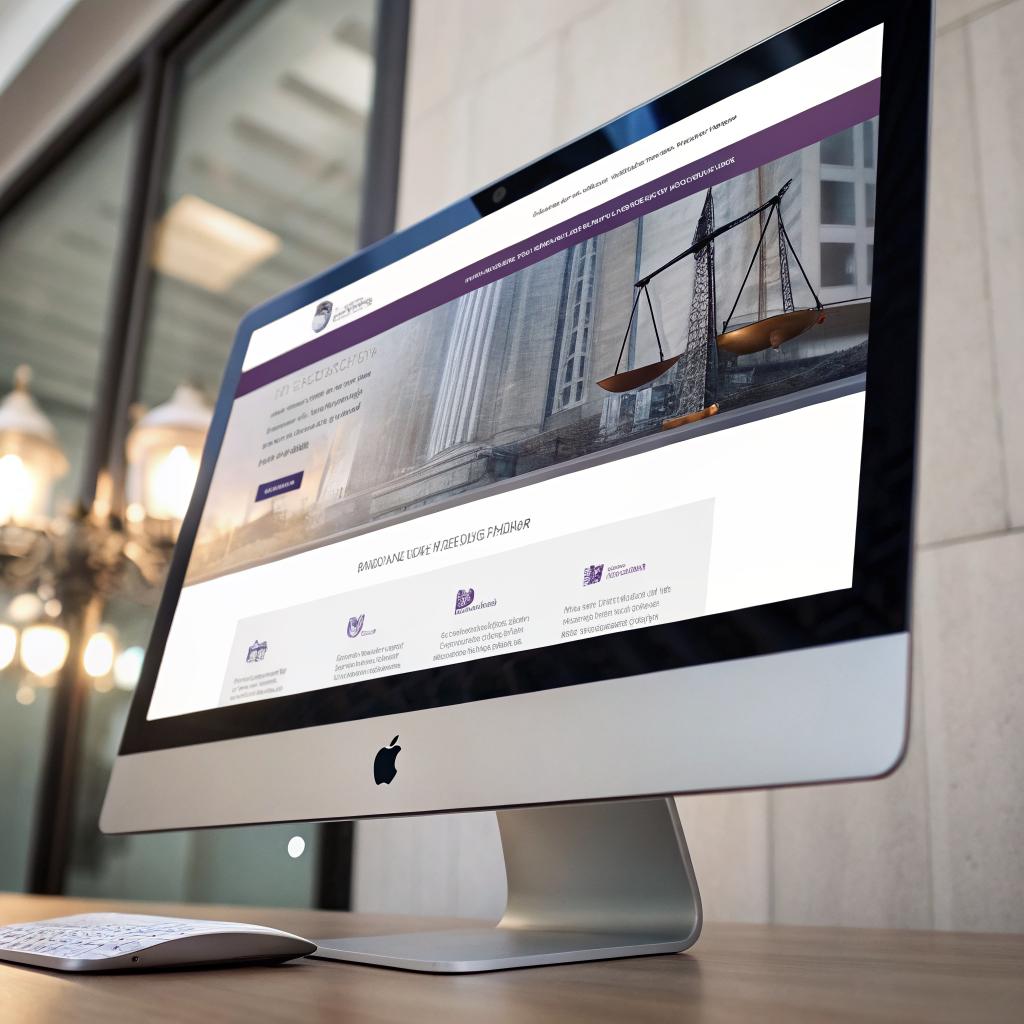
What if I told you that for many law firms, the website quietly closes more clients at scale than any individual partner ever will?
Not because it is fancy or full of buzzwords, but because it is built to do one simple thing: make a stranger feel safe enough to reach out. A good law firm website does not just look trustworthy. It behaves in a trustworthy way, every hour of every day, in a way no human team can fully match. The short answer is this: if you want to scale trust and clients, design your website like a disciplined, measurable business asset, not a digital brochure. Treat it like a silent senior partner that handles first impressions, qualification, education, and follow up, while your lawyers keep doing actual legal work.
Now, let us unpack how that works in practice, and why it matters if you care about growth, margins, and repeatable acquisition.
Why trust is the real “unit of scale” for a law firm website
If you think about what actually grows a law firm, it is not just traffic or impressions. It is a series of micro-commitments that add up to trust.
Someone hears your firm name, or they search for something frightening like “nursing home abuse” or “business litigation risk.” They land on your website. In a few seconds, they decide:
– Do these people handle problems like mine?
– Do they look competent?
– Can I afford them, or at least talk to them?
– Will they treat me like a number?
If your website gives the right answers, that person moves one step closer to becoming a client. If it hesitates, or confuses, or feels generic, they close the tab and move on.
A law firm does not scale trust by talking more. It scales trust by making it easier and safer for people to move from stranger to client with less friction and more clarity.
That is the core job of your site. Everything else is secondary.
Traffic is not the main problem
Many firms think they have a traffic problem when they really have a conversion and trust problem.
I have seen small regional firms get only a few thousand visitors a month but close a surprising number of cases from that traffic because their site:
– Speaks clearly to one kind of client
– Shows real results, not vague claims
– Makes it very easy to start a conversation
And I have also seen bigger firms pour money into ads and SEO while their site leaks potential clients at every step.
So if you care about growth and scale, you should care less about “how many visitors” and more about “how many visitors leave feeling understood and confident enough to contact us.”
Design your website like a client onboarding machine
If you run a tech company, you think in funnels, cohorts, conversion rates, and retention. Law firms often do not. They think in referrals, reputation, and personal relationships.
Those are still crucial. But your website can be the bridge between those personal relationships and a more predictable growth model.
Here are the basics of that machine.
Stage 1: Make the first 5 seconds carry most of the work
A new visitor should be able to answer three questions within a few seconds of landing on your home page or a practice page.
- Who is this firm for?
- What specific problems do they handle?
- What is the next safe step I can take?
If your hero section is a stock photo, a generic headline, and a vague slogan about “justice” or “fighting for your rights,” you lose those seconds. A more useful hero looks something like:
– A clear description of the client: “We help families protect their loved ones in nursing homes”
– A straight statement of the issue: “Handling bed sores, falls, and neglect cases across Illinois”
– A visible action: “Call for a free case review” or “Send us your case details”
No drama. No hype. Just clarity.
Your homepage should read like the first 30 seconds of a calm phone call, not like a banner at a conference.
Stage 2: Treat practice pages like landing pages, not filing cabinets
Many firms dump a long list of practice areas into a menu and call it a day. From a business growth view, that is wasteful.
Every practice page should act like its own focused landing page that can:
– Catch long-tail search queries
– Speak to a narrow type of visitor
– Convert that visitor into an inquiry
Think of a practice page as a mini-site focused on one specific problem. For example:
| Page type | Goal | What a strong version includes |
|---|---|---|
| General personal injury page | Broad awareness | Short overview, high-level list of case types, internal links to more detailed pages |
| “Nursing home neglect” page | Educate and qualify | Clear list of signs of neglect, damages, process explanation, FAQs |
| “Bed sores legal claims” page | Intent to act | Causes, standards of care, case examples, direct call to contact, intake form |
Notice how each level is narrower and more practical. As the topic gets more specific, the visitor tends to be closer to taking action.
Stage 3: Give visitors a safe, low-friction way to raise their hand
You scale clients when you increase the number of meaningful conversations per month without burning out your partners or intake staff.
That means you should make the first step small and clear.
This could be:
– A short contact form that only asks for name, contact, and a simple description
– A “schedule a call” widget that ties into your calendar
– A phone number with live answering during set hours and clear expectations
The key is to remove extra steps. No PDF downloads. No long forms up front asking for every detail of the case. Start small and qualify later.
Many firms underuse automation here. You do not need anything fancy, but you can have:
– A simple thank you page that explains what happens next
– An automatic email that repeats the same and sets expectations
– A simple internal workflow so that no lead falls through the cracks
The point is not to replace human contact. It is to make sure the path to that contact is predictable.
Trust signals that actually move the needle
Most law firm websites throw a handful of badges, logos, and “Super Lawyer” icons at the visitor and hope that is enough.
Some of that helps. Some of it is just visual noise.
What actually builds trust at scale is not a single badge. It is a consistent pattern of proof.
Client stories told in a grounded way
You do not need epic case studies. You need short, clear client stories that answer the two questions most prospects have:
– “Have you helped someone in my situation?”
– “What happened for them?”
Good client stories are specific but careful. They protect privacy, avoid promising results, and focus on the journey.
For example:
– “Family noticed repeated bed sores on their mother in a facility in Chicago. We investigated, filed a claim, and helped get financial recovery for care in a safer home.”
No big adjectives. Just a real path.
Plain language around results and process
A large part of trust comes from predictability. People want to know what happens after they click “submit” or pick up the phone.
You can build that predictability right into your pages:
– A short “What to expect” section: first call, case review, next steps
– A visual timeline with 3 to 5 stages of a typical case
– A brief, honest note on fees and how you charge
Clear process explanations do not scare away serious clients. They filter out mismatched ones and bring in people who are ready to work with you.
Credentials that actually matter to your audience
Bar admissions, years in practice, and relevant associations still matter. But they work better when presented in context.
For example, instead of a long list of all bar memberships, you might highlight:
– “20+ years focusing on nursing home cases”
– “Tried over 50 elder neglect cases to verdict”
– “Licensed in Illinois and federal courts”
Then support that with some real human details. A short bio with a headshot that looks like an actual person, not a stock photo persona.
Social proof that looks human, not staged
Reviews can help a lot, but only if they look real. That means:
– A mix of short and long reviews
– Some that mention specific situations
– A rating summary that is honest
If you only show perfect 5-star reviews with generic praise, it starts to feel polished in the wrong way.
It is fine if some reviews mention small problems, as long as the overall pattern is positive. That is how real life looks.
Building a growth loop: from visitor to client to referrer
A website can do more than bring in new matters. It can also help you create a flywheel between marketing, service, and referrals.
Capture intent at the right depth
Not everyone who visits your site is ready to book a consultation. Some are just trying to understand if they even have a case, or how the process works.
You can serve them with resources that match their level of intent:
- High intent: clear “Talk to a lawyer” buttons, short forms, phone numbers
- Medium intent: case evaluation checklists, FAQ sections, process outlines
- Low intent: blog posts, basic explainers, simple definitions of terms
The trick is to never trap a low-intent visitor into a heavy contact flow. Let them learn. Over time, some of them come back ready.
Educate to reduce future friction
One quiet benefit of a well built site is that it educates clients before they speak with you. That shortens calls, improves the quality of questions, and reduces tension later.
For example, imagine someone reads a clear page about how long a typical nursing home case might last and what evidence matters. When they call you, they do not expect a miracle in 2 weeks. They are less likely to complain when things take months.
This is not only good for operations. It is good for margins. Better educated clients use less unbilled time and fewer emergency calls.
Turn happy clients into ongoing advocates
Your site can also support referral flow from past clients.
Some simple ways:
– A page that explains how referrals work at your firm
– A thank you email template that points people back to a feedback or review page
– Articles that past clients might want to share with friends facing similar issues
This is where law and the “business side of tech” start to overlap. Many SaaS companies obsess over referral loops, shareability, and retention. Law firms have the same opportunity, just in a more sensitive context.
Measurement: how to treat the website like a growth experiment
If you come from tech or VC backed companies, you would not accept a product that runs for a year without numbers. Yet many firms run their sites like that.
You do not need complex dashboards, but you need enough to answer basic questions.
Metrics that matter for a law firm site
Here is a simple table of useful numbers that a partner or marketing lead can review monthly.
| Metric | What it tells you | Why it matters |
|---|---|---|
| Unique visitors | How many people came to the site | Top of funnel volume, trend over time |
| Contact form submissions | How many people requested contact | Raw demand |
| Consultations booked | How many moved to a real conversation | Signal of qualified interest |
| Matters opened from web leads | How many became clients | Revenue impact |
| Close rate (web leads to clients) | Quality of leads and intake | Helps see if you have a traffic or conversion problem |
Once you track these, you can start asking practical questions.
– Did a new practice page change the type or number of leads?
– Does adding a clearer call to action on mobile lift contacts?
– Do visitors from certain content pieces convert more often?
None of this is fancy. But it turns your website from a costs-only item into something you can tune.
A/B testing, but sane
If you come from SaaS, you might think about aggressive A/B testing. For many firms, that is overkill.
You can still borrow the mindset, in a lightweight way:
– Change one thing per key page at a time
– Give it enough time and traffic to matter
– Compare leads and quality before and after
For example:
– Shorten the contact form and watch lead volume and quality
– Swap a generic hero headline for a specific one and track calls
– Move testimonials closer to the call to action
The goal is not to chase tiny percentage gains. It is to find obvious blockers and remove them.
How design signals trust, even to non-lawyers
People judge quickly. Before they read a word, they feel whether your site looks current, cared for, and coherent.
Visual design that grows with the firm
You do not need a fancy design system. You do need consistency.
– One or two main colors, used in a stable way
– A single primary font for text that is easy to read
– Clear spacing around content, not cramped blocks
This sounds basic, but I still see firms with three different button styles and five different fonts on the same page. It sends a subtle message that details slip through.
From a “growth and scale” view, clean design also makes it easier to add new practice areas, content, and tools without the site falling apart.
Mobile first, not mobile later
A large share of legal searches now happen on phones. If your site looks fine on a monitor but clumsy on mobile, you are quietly losing clients.
Key things to check yourself:
– Can you read the main text on a phone without zooming?
– Is the call button obvious and easy to tap?
– Do forms work smoothly with a thumb?
There is also a direct SEO effect here. Search engines care a lot about mobile usability. It affects your visibility, which in turn affects growth.
Accessibility is not just compliance
Accessible sites are more usable for everyone. Screen readers, contrast, keyboard navigation, alt text for images. These sound technical, but they have a clear business side.
– You avoid some legal risk yourself
– You widen your potential audience
– You show that you care about users who often feel unseen
And honestly, if you are a firm that handles vulnerable clients, a site that does not lock out people with impairments seems part of the work, not an extra.
Content as a compounding asset, not an afterthought
Many law firm blogs are graveyards. One post from three years ago about a new case. Another about a firm event.
From a growth angle, that is a missed opportunity.
Write for the questions people actually type
Strong legal content usually comes from listening.
What do your clients ask on every first call?
– “How long does a nursing home case take?”
– “What if I signed something at the facility?”
– “What if my loved one does not want to complain?”
Each of those questions can become a piece of content.
Format them simply:
– State the question as a heading
– Answer in plain language
– Mention any key variations
– Show what the person can do next
No legal jargon unless you explain it. No long background on case law unless the reader gains something practical from it.
Balance SEO and honesty
Here is where law and growth in tech sometimes clash. You can stuff pages with keywords and generic content to try to rank. But serious clients and good referrers see through it.
There is often a tension here. You want traffic, but you also want to keep your brand clean.
I think it is better to target fewer topics with real depth than to chase every long-tail phrase with thin content. Search engines keep getting better at recognizing useful writing. So do humans.
Keep publishing cadence realistic
Some firms aim for a weekly blog, then give up after three posts. I think it is better to pick a lighter, sustainable rhythm.
– One good article per month, tied to real questions
– One new or updated practice subpage per quarter
– Occasional news items when something meaningful happens
Over a couple of years, you end up with a library that works like a quiet marketing team in the background.
Where tech-style growth tactics do and do not fit a law firm
If you read about startup growth, you see ideas like funnels, retargeting, drip sequences, and product-led growth. Some of these adapt well to law. Some do not.
What usually fits well
- Simple remarketing to people who visited key practice pages but did not contact you
- Email follow up for warm leads who are not ready yet
- Clear analytics to know what sources bring the best clients
- Structured intake with CRMs so you do not lose track of cases
These things help you scale without losing the human core of the practice.
What can feel wrong or backfire
Some tactics common in SaaS feel off in a legal context:
– Aggressive popups pushing “limited time offers”
– Overly automated chatbots posing as humans
– Constant drip campaigns that feel like pressure
Law deals with grief, fear, money, and risk. You want growth, but you also want dignity.
There is a balance here, and firms sometimes misjudge it. If you come from a growth-heavy background, you might need to consciously pull back on some instincts.
Practical roadmap: how a firm can improve its website over 6 to 12 months
If your current site is okay but not great, you do not need a total rebuild tomorrow. You can treat it as a series of upgrades.
Here is one practical roadmap that fits many firms.
Phase 1: Clarity and basics (Month 1 to 2)
- Rewrite the homepage hero section for clarity on who you help and how
- Fix obvious design issues on mobile
- Shorten contact forms and test them yourself on phone and desktop
- Add or fix a simple “What to expect” explanation on your contact or consultation page
At this stage, you are not trying to grow traffic yet. You are raising the odds that current traffic converts.
Phase 2: Stronger practice pages (Month 3 to 6)
- Pick your top 2 or 3 practice areas by revenue or growth target
- Turn each into a focused landing-style page with:
- Clear problem description
- Common questions and answers
- Short client stories
- Visible calls to action
- Link from these pages to relevant blog content and back
You might see lead quality change here. Often, better practice pages attract more of the work you actually want.
Phase 3: Content and measurement (Month 6 to 12)
- Set up basic analytics and simple conversion tracking
- Agree internally on 10 to 20 core questions clients ask most
- Turn those into monthly articles or FAQ expansions
- Review metrics every month, adjust small things, keep a log of changes
This phase is less glamorous. It is where compounding effects start to appear.
Common mistakes that quietly block growth
It is easy for a firm to spend a lot on a redesign and still miss key points. Here are some patterns I see often.
1. Letting design overrule clarity
Beautiful photos, sliders, and animations that push real content below the fold. It looks nice but confuses visitors.
If design ever makes your main message or call to action harder to find, that design is working against your growth.
2. Writing from the firm’s view, not the client’s
Long paragraphs about the firm’s history. Awards. Affiliations. All on top, before the person sees how you can actually help them.
A simple test: read your homepage out loud and count how many times you say “we” before you say “you.” If the ratio is very skewed, that is a signal.
3. Hiding or confusing pricing signals
You might not want to show fees publicly. That is fine. But if people have zero sense of whether you do contingency, hourly, flat fees, or retainers, some will assume you are out of reach.
You can still speak in general terms:
– “We often work on a contingency basis in these cases”
– “We offer free initial consultations for X”
– “We will explain your options and fee structure before you decide”
4. Ignoring load speed and basic tech health
Slow sites lose visitors. It is blunt but true. If a page takes more than a few seconds to load on mobile, some people will just give up.
You do not need perfection. You do need:
– Compressed images
– No bloated plugins you do not use
– Hosting that is not the cheapest possible if it hurts performance
Q & A: Final practical checks for your firm
Q: If I only fix three things on our site this quarter, what should they be?
A:
I would start with:
1. Rewrite your homepage hero section to clearly say who you help and how.
2. Clean up your top practice page so it reads like a focused landing page with real questions and answers.
3. Test your contact flow end to end, on mobile and desktop, and remove any friction you find.
These three steps alone often make a noticeable difference.
Q: How do I know if we have a traffic problem or a conversion problem?
A:
Check two numbers over a month or two:
– Number of visitors
– Number of inquiries from the site
If you have very few visitors, you need more visibility and content. If you have a fair number of visitors but very few inquiries, you have a conversion and trust issue. Most firms, in my experience, underestimate how much they can gain by fixing the second before chasing the first.
Q: We rely heavily on referrals. Does the website still matter that much?
A:
Yes. Referred clients still look you up. Your site either confirms the positive impression or weakens it.
Think about it like this: your referral source does the warm introduction in the real world. Your site does the silent second introduction online. If those two stories match, people feel safe. If they do not, there is quiet friction you never see.
Q: How “salesy” should a law firm website be?
A:
Less than a SaaS site, more than a government brochure.
You want clear calls to action, visible phone numbers, and forms that work. You do not want countdown timers, fake scarcity, or pressure. If you are ever in doubt, imagine a close friend or family member in crisis visiting your site. Would they feel pushed, or guided?
If they would feel guided, you are probably in the right place.