
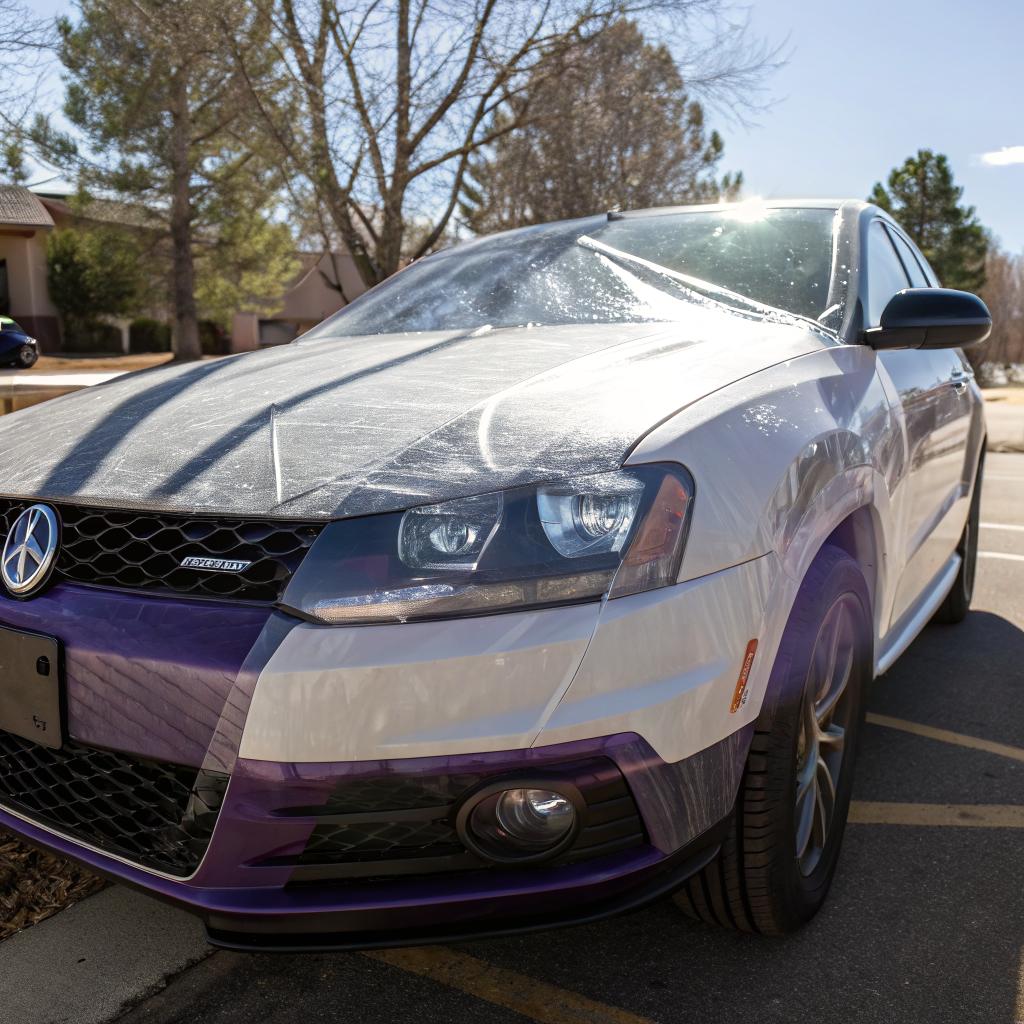
What if I told you one of the easiest ways to cut fleet repair costs is a clear plastic film that most drivers never notice?
That is basically what a clear car bra does for high-use vehicles in a city like Colorado Springs. A professionally installed clear car bra Colorado Springs protects fleet vehicles from rock chips, road debris, UV damage, and chemical stains, which reduces repainting and downtime and can even keep resale values higher. It sounds small, but on a fleet of 20, 50, or 100 vehicles, that small change can turn into a real line item on your P&L.
What a clear car bra actually is (and why fleet managers should care)
A clear car bra is a thick, transparent polyurethane film that goes on top of the paint. It usually covers the front bumper, leading edge of the hood, fenders, mirrors, sometimes headlights, and sometimes more.
The film takes the abuse so the paint does not.
For a personal car, that is about looks and pride. For a business, it becomes about cost, asset life, and predictable operations.
Colorado Springs is brutal on vehicle fronts:
– Sand and gravel from winter road treatment
– Rapid temperature swings
– High UV at altitude
– Frequent highway construction zones
If your vans or trucks are on I‑25 or Highway 24 all day, the front paint is basically under constant attack. Without some barrier, you get chips, then bubbling around those chips, then rust on steel panels or clear coat failure on aluminum ones.
Here is the simple version: repair shops make money off unprotected fleets.
From “nice to have” to line item in a budget
I talked to a small delivery operator who ran eight transit vans. He told me he used to budget bodywork as “random repairs” and never thought about it much. Then his bookkeeper pulled three years of data and it turned out chipped paint and bumper resprays cost more than all his new tires over that period.
That is the kind of quiet drain that looks small per event but big in aggregate.
Body damage from rock chips is rarely catastrophic. It is the slow, constant erosion of margin that fleet spreadsheets often hide.
Once you see it on paper, you start to ask different questions. Not “is the front of my van pretty” but “am I OK burning this cash every year when there is a fixed-cost alternative.”
How clear bras protect fleets in a high-impact environment
Here is where I disagree slightly with how most installers pitch this. They talk a lot about gloss and appearance. Fleets care more about predictability and cash flow.
So let us walk through how the film actually protects, in business terms.
1. Physical barrier against chips and scratches
This is the obvious one, but it is still the main value.
High-quality paint protection film (PPF) is:
– Around 6 to 8 mils thick
– Flexible but tough
– Designed to stretch and absorb an impact
When a small rock hits at highway speed, the film flexes and often self-heals minor marks. The paint under it usually stays intact.
For a single vehicle, that might mean “no chip this time.” For a fleet that does 20,000 to 40,000 miles per year per unit, it shifts the whole curve of damage.
Think about buses, shuttles, utility trucks, or service SUVs that follow gravel shoulders or new pavement. Every day is an impact test.
You cannot control what the road throws at your vehicles, but you can choose whether it hits paint or sacrificial film first.
2. Protection from UV and oxidation at altitude
Colorado Springs sits around 6,000 feet. Higher altitude means stronger UV. Stronger UV means faster fading and clear coat breakdown, especially on darker colors and reds.
The film blocks a lot of that UV from hitting the paint directly. The result is slower fading on the covered panels.
This matters when:
– You sell vehicles after 4 to 7 years
– You care if your logo wrap on the side looks clean next to the original paint on the hood
– You run mixed-age vehicles that still need a unified brand presence
Without protection, older units start to look tired long before their mechanical life ends. Then you face a decision you probably know too well:
Repaint and keep it longer, or accept lower resale and replace it sooner.
3. Resistance to chemicals, salt, and stains
Colorado winter treatment is rough on paint. You have:
– Mag chloride and road salt
– Sand and micro-gravel
– Slush that sticks to lower panels
Then in summer you get:
– Bug splatter that can etch clear coat
– Tree sap in residential routes
– Harsh detergents if your crew gets aggressive with washing
A clear bra creates a barrier against many of these. It is not perfect, but it is far better than bare paint.
If you run:
– Municipal or contractor trucks in winter conditions
– Airport or hotel shuttles that never get a day off
– Delivery vans that go in and out of neighborhoods all day
you know how fast front bumpers can look tired and patchy. That look eventually bleeds into brand impression, fair or not.
4. Self-healing properties reduce visible wear
Modern films often have a top coat that reacts to heat. Light swirl marks from washing and minor abrasions can disappear when warmed by the sun or hot water.
So you do not get the hazy, scratched look that older films had after a couple of years.
For fleets, this means you can still wash vehicles often without watching the protection layer degrade into something ugly. That keeps your staff from being tempted to “buff it” and accidentally damage paint.
What this protection means in actual business terms
Up to this point, that might sound like a car hobby discussion. From a business angle, we have to talk cost, lifetime, and impact on operations.
Cost model: film vs repeats of small bodywork
Let us build a simple comparison. These are rough numbers, your market will differ, but the pattern is what matters.
| Item | Without clear bra (per vehicle, over 5 years) | With clear bra (per vehicle, over 5 years) |
|---|---|---|
| Front-end repaint / chip repair | $900 to $1,800 (1 to 2 visits) | $0 to $400 (occasional touchups) |
| Lost use during body shop time | 2 to 5 days total | 0 to 1 day |
| Clear bra install | $0 | $700 to $1,500 once |
| Resale value impact from poor paint | $500 to $1,500 lower | $0 to maybe +$300 |
For one vehicle, the numbers can tilt either way depending on luck. Some trucks never get serious chips; others seem to live in gravel clouds.
Across 20, 50, or 100 units, the law of large numbers kicks in. The cost of damage stops being random and starts to form a pattern.
This is where a clear bra shines for operators who think in fleet math instead of single-vehicle math.
The real benefit is not that every truck becomes perfect. It is that your repair and downtime risk becomes more predictable across the whole fleet.
Impact on TCO and replacement cycles
Total cost of ownership for vehicles has a paint problem that many financial models ignore. Most spreadsheets focus on:
– Purchase price
– Fuel
– Maintenance
– Insurance
– Depreciation
Cosmetic damage sneaks into several of those buckets:
– Lower resale or auction value
– Higher downtime costs during repairs
– Sometimes higher insurance loss history if you keep claiming minor damage
By reducing front-end cosmetic damage, you tilt TCO in a few small ways at once:
– You can possibly run vehicles longer without them looking like old beaters
– You reduce the number of “surprise” body shop visits
– You protect more of the original paint, which buyers like
Is this going to rewrite your whole fleet strategy? No. But when margins are tight, small, controllable shifts matter more than random surprises.
Why Colorado Springs is a special case for fleet protection
This is where geography comes in. A fleet in coastal California does not face the same mix of threats as one in El Paso County.
Altitude and UV load
Higher UV intensity hits two things:
– Paint and clear coat
– Vinyl graphics and wraps
If your company invests in full or partial wraps, you probably want them to last the full vehicle life. When the hood and front bumper burn out early, you get mis-matched panels or expensive rewraps.
Clear film on leading edges helps the wrapped surfaces age closer to the rate of the rest of the vehicle. The color stays more consistent.
Rapid weather changes
Colorado Springs can swing from sun to snow in what feels like half a day. That means:
– Sand and de-icing chemicals in winter
– Sudden downpours that kick debris on highways
– Freeze-thaw cycles that produce more potholes and loose aggregate
This cycle is rough on exposed metal. Chips that might stay harmless in a milder climate can turn into rust spots faster here.
If you run:
– Government or utility fleets
– Construction support vehicles
– Last-mile delivery that operates year-round
then front-end protection is less of a “nice to have” and more of a form of environmental hardening for your rolling assets.
Mix of urban and mountain routes
Many Colorado Springs fleets split time between city streets and mountain or rural routes. That usually means:
– Gravel shoulders
– Work zones with fresh chip seal
– Steep grades where trucks throw rocks backward
Standard clear coat is not designed for that abuse over tens of thousands of miles. Film is.
How this connects to the business side of technology
If you manage growth, funding, or ops, you might be wondering why you should care about something as physical and non-tech as paint film.
Here is where it gets interesting.
Vehicles as physical nodes in a data system
When you think of your fleet as an operational network, each vehicle is a node that:
– Generates data: telematics, routes, fuel usage
– Delivers value: services, goods, technicians
– Carries your brand: logos, contact details, messaging
There is a lot of energy focused on the first two. Software, routing tools, fuel analytics, driver monitoring, all of that.
The third part, the physical presence, often gets deferred until “later.” But for customers, the vehicle is the interface they see.
If you raise money to expand market reach, your fleet is literally the moving billboard of that growth story. Beaten-up paint sends a different message than well-kept vehicles, no matter how good your backend system is.
Budgeting: capex, opex, and asset protection
Clear bras sit in an odd place between capital and operating cost. You might expense them as part of upfitting, or you might treat them like a maintenance item. Finance people sometimes argue about this.
What matters more is the ratio:
– Known upfront cost vs
– Harder to forecast future repair and appearance costs
Investors tend to like investments that trade variable, uncertain costs for a single, predictable one when it makes sense.
This is basically a micro-version of that. You are shifting some risk from “random road damage across 5 years” into “one planned film install at start-of-life.”
It is not glamorous, but it is a behavioral pattern you see in mature, process-focused companies.
Brand trust and sales conversations
This might sound subjective, and you should be skeptical about soft claims, but it does happen.
Sales and account teams often use the state of the fleet as social proof without calling it that. When a prospect walks past clean, consistent vehicles to tour your facility, it sets a tone.
If your trucks pull up with rock-chipped, peeling bumpers, and faded hood paint, the story in the customers head is not “they forgot to wax.” It is “if this is how they manage their assets, how do they manage my account.”
You can argue that it should not matter, but it does.
How to decide if clear bras make sense for your fleet
Not every business needs this. For some, it is a waste of money. For others, it is almost non-negotiable once you do the math honestly.
Step 1: Look at your last 3 years of bodywork
Pull real numbers. Not guesses.
- Total spent on front-end paint repairs, chip fixes, bumper resprays
- Average cost per incident
- Days out of service per repair
- Any rental or substitute vehicle costs
Then ask:
– How much of this was preventable front-end damage,
not collision?
– How often did this disrupt operations or schedules?
If the answer is “we barely spend anything on that,” then clear bras may be low priority. If you see consistent spend and disruption, keep going.
Step 2: Identify your highest exposure vehicles
Not every unit needs film.
Common high-exposure candidates:
- High-mileage highway runners (sales, regional service)
- Shuttles running to and from airports or tech parks
- Pickup trucks that live at construction sites
- Service vans with long hood lines and low bumpers
On low-mileage city units, the economics can be weaker. You do not have to buy a one-size-fits-all solution.
Step 3: Compare install costs vs expected life and resale
Talk to a few installers and get quotes:
– Partial front vs full front vs full body
– Warranty period
– Recommended replacement cycle
Then think about your own fleet plan:
– How long do you normally keep each vehicle?
– At what age does paint condition start to impact sale or auction value?
– How sensitive are your customers and staff to vehicle appearance?
If you rotate vehicles every 2 to 3 years, you might decide film is overkill. If you run them 7 to 10 years, the protective layer starts to look like a hedge against aging.
Step 4: Consider insurance and downtime patterns
Some fleets run minor cosmetic repairs through insurance. Others pay out of pocket to avoid premium hikes.
In both cases, the admin cost is non-trivial:
– Filing reports
– Scheduling repairs
– Handling temp vehicles
– Managing driver time
If clear bras cut those events by even 30 to 50 percent on your highest-risk units, the soft benefits in calm operations and freed-up staff time can rival the direct dollar savings.
Choosing the right coverage level and material
Not all film and not all coverage plans are equal. This is where technicians sometimes push for more coverage than you really need.
Common coverage packages
| Package | Typical panels covered | Best suited for |
|---|---|---|
| Partial front | Bumper, part of hood, mirror caps | Lower-mileage fleets, cost-sensitive operators |
| Full front | Full hood, full fenders, bumper, mirrors | Highway fleets, sales vehicles, branded units |
| Full body or extended | All painted surfaces, sometimes headlights | High-value vehicles, executive cars, specialty units |
Most working fleets find full front to be a useful middle ground. It protects the most abused areas without wrapping the whole vehicle.
Material quality and warranty
Key differences you should ask about:
– Film thickness
– UV resistance
– Self-healing topcoat or not
– Yellowing history over time
– Manufacturer warranty length
Cheaper films can save you money upfront but might:
– Yellow or haze in high UV
– Become brittle
– Lose clarity within a few years
On a fleet vehicle that already has to send the right message in front of customers, a yellow, peeling film is almost worse than chipped paint.
This is one of those cases where picking mid to high-grade film is usually smarter if the budget allows it.
Operational impacts: installation, downtime, and maintenance
Every fleet manager asks the same question: “How much time off the road are we talking about?”
Install timing and process
A typical install on a new vehicle:
– Prep and cleaning: 1 to 2 hours
– Film application: 2 to 6 hours depending on coverage
– Cure time before aggressive washing: a few days
In practice, many fleets schedule film install as part of the upfit process:
– Vehicle arrives from dealer
– Goes to upfitting for racks, decals, electronics
– Hits the film shop before or after decals, depending on design
– Then enters service
If you plan this early, you can fold install into the normal pre-service window and avoid extra downtime later.
What about existing vehicles?
Film can still go on used vehicles, but:
– Existing chips and scratches will still be there under the film
– Some correction or repaint may be needed first
– Dirty or oxidized paint needs extra prep
For mid-life vehicles where the front is still in decent shape, installing film can freeze their current condition and slow further aging. You just need to be honest about the current state so expectations are clear.
Care and cleaning
Maintenance is fairly simple:
– Avoid aggressive, stiff brushes in automated washes
– Use mild soaps instead of harsh solvents
– Do not pick at edges of the film
Your drivers do not have to change their behavior much, but your wash SOP might need a small update.
If anything, film tends to make cleaning easier, since bugs and grime do not bond to the surface as hard as they do on raw clear coat.
Common objections (and when they are valid)
Not every criticism of clear bras is wrong. Some are fair.
“Our vehicles get dented and scratched elsewhere anyway”
This is true for some operations. If your trucks live in tight yards, get side swiped by equipment, or haul materials that scratch beds and sides, then front-end film solves only a slice of your cosmetic issues.
In that case, it might be more practical to accept cosmetic wear as part of the brand image and focus your budget on safety or telematics.
“We plan to run vehicles into the ground”
If your policy is to use a vehicle until mechanics say “no more,” and resale value barely matters, then protecting paint for buyer perception may hold less value.
The counterpoint is that poor appearance can still affect:
– Customer perception
– Driver pride and behavior
– Regulator or partner impressions
But if your market is less sensitive to that, you might be right to skip film and accept the cosmetic decay.
“We lean on insurance for cosmetic repairs”
If your insurer is generous and your loss history is mild, you may feel covered already. The hidden cost here is:
– Admin time handling claims
– Driver downtime during repair
– Interruptions to routes
Sometimes fleets overuse insurance for small incidents and undercount the internal cost of each claim. It is worth walking through a few real events and measuring true impact, not just check size.
Practical example: tech-enabled service company in Colorado Springs
Imagine a mid-size managed IT services company that runs:
– 18 service vans
– 5 sales cars
– 3 shuttle vehicles for staff and events
They operate across Colorado Springs, Monument, Pueblo, and up to Denver for bigger clients.
Route data shows:
– Average 25,000 miles a year per van
– Frequent highway trips to data centers
– Regular winter travel in snow and slush
Before film, they were seeing:
– 1 to 2 front-end paint repairs per year across the fleet
– $1,000 average cost per repair
– Lost days of service on popular routes
They decide to trial full front clear bras on:
– 6 new vans entering service
– 3 existing shuttles after light paint correction
After 3 years, they review:
– No front-end repaints on those 9 units
– A few small film repairs at a couple hundred dollars total
– Higher resale offer on the first two vans sold with intact paint
They also notice something less obvious: customers keep commenting that their vans always look “new,” even when the plate tags are not.
Is that proof that clear bras paid for themselves? Not by itself. But combined with the elimination of some repairs and downtime, the financial picture starts to look one-sided.
Questions you might still have
Q: Is a clear car bra worth it for a small fleet of 5 or fewer vehicles?
A: Sometimes, but not always. If those 5 vehicles are:
– Customer facing
– High-mileage highway units
– Branded with expensive wraps
then yes, it can still be smart. If they are light-use pool cars with low exposure, the cost might not pencil out. Look at real past repair data instead of guessing.
Q: How long does the film usually last in Colorado Springs conditions?
A: Quality film often lasts 5 to 10 years, depending on brand, exposure, and care. At altitude with strong UV, expect the realistic useful window to be closer to the lower half of that range, especially on vehicles parked outside all day. Past 7 years, many fleets are cycling vehicles out anyway.
Q: Does a clear car bra affect sensors, cameras, or ADAS systems?
A: Good installers work around radar sensors, lidars, and certain cameras. Applying film on plain painted areas is usually fine, including around parking sensors, but you do not want to cover radar modules with unfamiliar material without checking manufacturer guidance. For most commercial vans and trucks, it is not an issue if you communicate clearly with the shop.
Q: What if the film gets damaged; do I have to replace everything?
A: Usually not. Installers can remove and reapply film on one panel, like the bumper or part of the hood. The rest of the coverage can stay. That localized repair is cheaper and faster than repainting, and you keep protection everywhere else intact.
Q: Would you recommend starting with the whole fleet at once or a pilot program?
A: If you are skeptical, a pilot is smarter. Pick a segment of your fleet that:
– Runs the highest miles
– Hits the worst roads
– Has visible rock chip history
Install clear bras on a subset, track body repairs and downtime over 18 to 24 months, and compare to similar vehicles without film. Let the data settle the argument instead of marketing claims or instinct.