
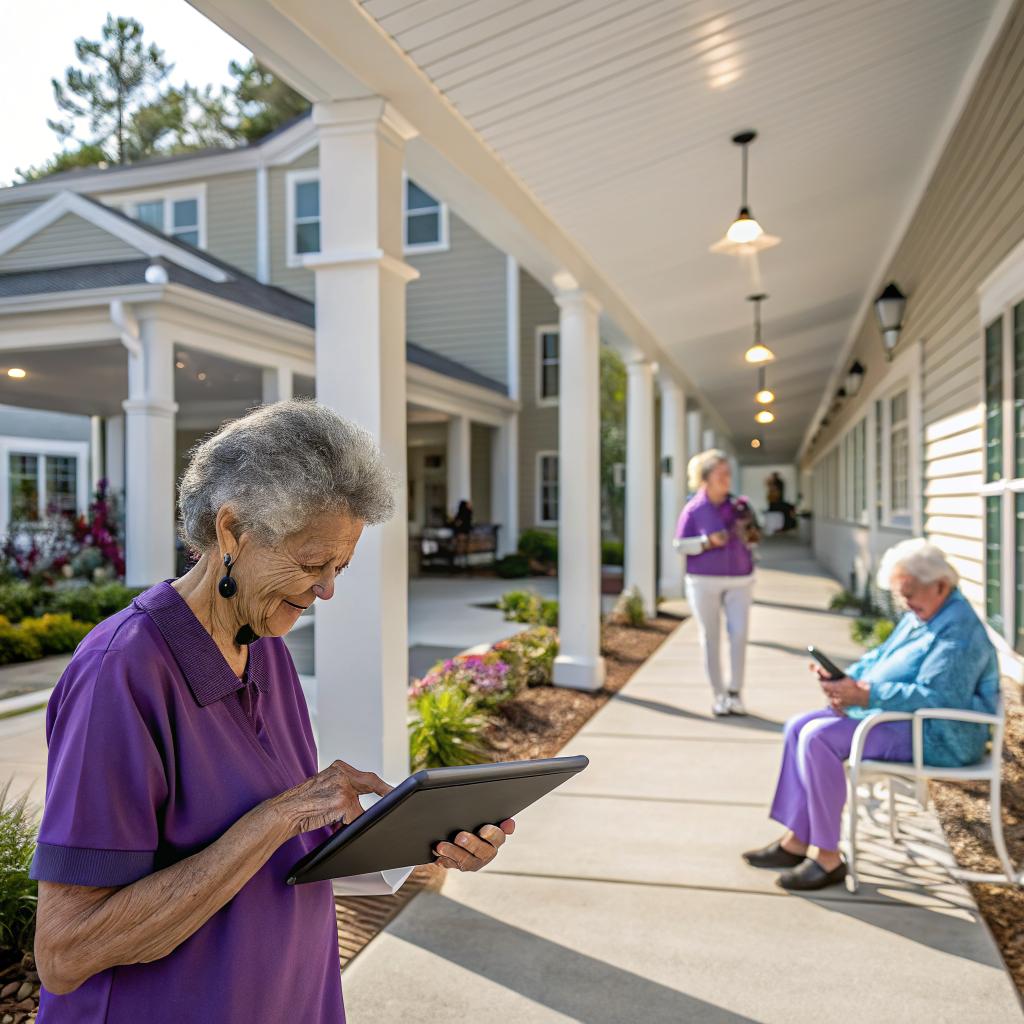
What if I told you that one of the fastest growing tech markets is not self driving cars or crypto, but software and sensors inside assisted living communities in small cities like Summerville, South Carolina?
The short answer is simple: senior communities that invest in the right mix of digital tools are seeing lower staffing costs, higher family satisfaction, stronger occupancy, and clearer revenue forecasts. In places like assisted living Summerville SC, tech is not replacing people. It is making every hour of staff time more valuable, every bed easier to fill, and every decision less of a guess.
From a business angle, that matters. Labor is tight. Regulations keep growing. Families compare places side by side online. Margins are under pressure. So owners and operators are turning to technology not because it is trendy, but because they need more predictable outcomes and cleaner data if they want to grow without burning out staff or sinking money into the wrong expansion.
Let me walk through what is actually happening on the ground in Summerville style communities, without buzzwords, and why people who care about tech, growth, and funding should pay attention.
How assisted living in Summerville is quietly becoming a data business
If you step into a modern senior community in Summerville, it may not look like a high tech facility at first. There are no robots at every corner. The Wi Fi might be average. The big change is behind the scenes.
Sensor platforms, eMAR systems, digital care plans, CRM tools, and billing software all feed a single story: who lives here, what they need, what it costs, and how stable that revenue is.
The most successful operators are starting to treat every apartment like a small subscription business with a health profile, churn risk, and lifetime value.
This is where tech shifts from nice to have to central to the model.
Where the money actually moves
You can think about assisted living revenue and cost in a simple way:
| Area | Key question | How tech affects it |
|---|---|---|
| Occupancy | How many apartments are filled, and at what rates? | CRM, online tours, digital marketing, referral tracking, pricing tools |
| Care costs | How much staff time is needed per resident? | Electronic care plans, scheduling, sensors, fall alerts |
| Length of stay | How long residents stay in the community? | Health monitoring, early risk flags, better communication with families |
| Regulatory risk | How often do mistakes trigger fines or lawsuits? | Audit trails, eMAR, incident reporting, training tools |
| Capex planning | When and where to expand or renovate? | Trend data by unit type, care level, and referral source |
None of this sounds very glamorous. But if you are an owner, lender, or investor, these are the levers that matter.
Why Summerville is an interesting test bed
Summerville is not New York. It is mid sized, with growing retirees, stable family networks, and more modest price points. That setting creates a few conditions:
– You cannot hide bad operations behind very high rates.
– Families talk, and they talk local.
– Staff is harder to replace, so retention has real cash impact.
– Small changes in average length of stay can make or break a project.
Tech tools in this context do not need to be fancy. They need to be reliable, clear, and easy enough that a tired night nurse will still use them at 3 a.m.
The core tech stack reshaping assisted living operations
Let us break down the main layers that are actually in play in assisted living in Summerville and similar markets.
1. Electronic health records and care management
Many operators used to track resident needs on paper or scattered files. That might sound unthinkable for a hospital, but it was common in senior living.
Now, more Summerville communities run on:
- Electronic health records tailored for long term care
- Digital care plans that tie tasks to resident conditions
- Medication management systems with eMAR
The business impact is pretty direct:
– Fewer missed medications or double dosed residents.
– Easier proof during state inspections.
– Faster onboarding when a new resident moves in with a complex medical history.
I talked to an operator (informally) who said their med error related incident reports dropped by about one third after switching to eMAR. They did not change staff. They just took away the guesswork.
When you watch a nurse tap through eMAR instead of flipping pages, you realize tech here is more about removing friction than adding features.
For an investor, that means lower risk of fines, fewer lawsuit claims, and a more defendable standard of care.
2. Sensors, fall detection, and real time activity data
This is the part that often feels a bit futuristic.
Many assisted living communities in Summerville now use some mix of:
- Bed and chair sensors that detect unusual patterns
- Wearable devices with call buttons or fall detection
- Motion sensors that flag long bathroom visits or no movement at usual times
It sounds invasive. And some residents do push back. But the pitch is simple: more independence with a safety net.
From a business angle, this does three things:
1. It lets communities safely care for higher acuity residents without matching them one to one with staff.
2. It creates data that can show families and regulators that the community takes risk seriously.
3. It supports pricing tiers based on actual care needs instead of vague labels.
There is a cost here. Sensors, platforms, and integrations are not cheap. But if one setup lets you add three or four higher care residents who would otherwise move to a nursing home, the revenue lift can be large compared to the monthly tech fee.
3. Staff scheduling, time tracking, and workload balancing
Labor is the largest line item. Many Summerville assisted living communities pay for staffing software not because they enjoy charts, but because schedule chaos is expensive.
Good scheduling tools:
– Match staffing levels to resident acuity and occupancy.
– Track overtime and agency use in real time.
– Help managers move staff between communities if they have multiple locations.
There is also a burnout angle. When staff see their daily task list, know which residents have heavier needs, and can log notes quickly, the shift feels more doable.
If you cut just 3 percent of unplanned overtime without hurting care, that alone can pay for your entire tech subscription in a mid sized building.
For people looking at the business side, clean labor data over two or three years also helps underwrite acquisitions or expansions. You can see if high overtime is a chronic problem or a fixable one.
4. Sales, marketing, and CRM for senior living
This is where Summerville operators sometimes lag behind. Many communities still rely on walk ins, hospital referrals, and local word of mouth.
But the ones growing faster are acting more like mid market SaaS companies than small care homes. They track:
- Lead sources by channel: web, phone, referral partners, events
- Conversion from tour to deposit to move in
- Reasons families say no, coded in a CRM
Paired with a decent website, virtual tour tools, and online review management, this data lets operators:
– Shift marketing spend to channels that actually convert.
– Tailor messages to adult children who are often the real decision makers.
– Forecast occupancy 60 to 180 days out with reasonable confidence.
If you care about funding, this is where lender and investor comfort grows. A Summerville project that can show a two year history of leads and conversion by apartment type tells a much clearer story than one that just waves at “strong community demand.”
5. Billing, pricing, and revenue management
Traditional assisted living billing was often a messy mix of base rent plus points or levels of care. Families hated surprises. Staff hated trying to explain the bill.
Modern systems connect care documentation to billing:
– Care staff record actual services provided.
– The system maps those services to the residents care tier.
– The billing system uses that data to justify fee changes.
You do not get a perfect match. Human judgment is still needed. But when the business can show that higher rates link to real staff time, it is easier to hold margins without feeling predatory.
Some operators in smaller markets are also testing dynamic price ranges by unit type. Not the kind of aggressive yield management you see in hotels, but enough to:
– Offer slightly lower rates for less popular views or layouts.
– Raise rates for high demand units when waitlists grow.
In a 60 to 100 unit community, that can shift revenue per available unit by a non trivial amount over a year.
Tech that improves family trust and resident experience
Investors often focus on numbers. Residents and families live the day to day reality. If the tech feels cold, the numbers will not hold.
Family apps and communication portals
Many Summerville communities now provide portals or apps for families to:
- See activity snapshots and photos
- Message staff without long phone tag
- Review billing statements and care plan updates
From a care view, this can sometimes feel like more work. You need to post updates, check messages, and respond.
From a business view, it reduces rumor, confusion, and last minute move outs because a family felt left in the dark.
I once sat with a friend while she opened her dads senior living app. She saw he had joined a chair yoga class and a craft session that day. It was a small thing, but it quieted her doubt that he was just sitting alone in his room.
That kind of quiet trust is hard to measure, but it affects referrals and how forgiving families are when something does go wrong.
Resident engagement tech
This area is still uneven. In Summerville style markets you might see:
– Smart TVs with shared calendars of events.
– Voice assistants for reminders and basic voice commands.
– Simple tablets with custom interfaces for games or video calls.
Does every resident want an app? No. Many do not. But giving options matters.
From a business standpoint, better engagement tools can:
– Support branding around active aging rather than just “care.”
– Attract younger seniors who move in earlier and stay longer.
– Reduce depression and isolation, which correlate with higher care needs.
Telehealth and remote clinical support
One of the more practical changes in recent years has been telehealth inside assisted living.
Instead of sending a resident out for every minor issue, communities can:
- Schedule virtual visits with primary care providers
- Get quick wound checks or medication consults by video
- Loop family into important talks without travel
For Summerville operators, the value shows up in lower transport costs, fewer late night hospital trips, and a reputation for coordination with local doctors.
For an investor, strong clinical partnerships and telehealth use can widen the community’s potential resident pool, because families with higher acuity loved ones feel more comfortable choosing assisted living over a nursing home when they see clinical support is present.
Where tech spend actually pays off in assisted living
If you sit in a boardroom, it is easy to sketch huge gains from digital tools. Reality is slower.
In real communities, you often see a mix: one or two tools that earn their keep, one that under delivers, and one that is barely used.
3 questions operators in Summerville are starting to ask before buying tech
- Does this reduce staff time or rework in a clear, measurable way?
- Does this help us fill or keep units occupied with the right residents?
- Does this reduce our risk in a way that an insurer, lender, or regulator would agree with?
If the answer is vague, they skip it. Or they should. Too many operators still buy tools because a vendor gave a good demo to the corporate office, then discover the nurses hate it.
The tools that stick are the ones that a tired caregiver will still open on a bad day, because it actually makes their job easier on that day.
From a growth and funding angle, two categories tend to give the clearest returns:
1. Core clinical and care tools: eMAR, care plans, incident reporting.
2. Occupancy and revenue tools: CRM, website, virtual tours, clear pricing.
The shiny resident gadgets are nice, but they rarely decide whether the community can service its debt.
How lenders and investors are starting to underwrite tech usage
Banks and equity partners are not usually experts in senior care software. But some are starting to ask sharper questions, for example:
– What care platform do you use, and how long have you been on it?
– Can you show two years of incident data by shift and acuity?
– How do you track and report med errors and follow up?
– What CRM do you use, and what is your tour to move in conversion rate?
Communities in Summerville that can answer clearly tend to secure better terms. Not because the brand sounds fancy, but because the data systems show that management actually knows what is happening inside the building.
It is similar to how lenders look at accounting systems in other sectors. Clean, consistent, and exportable data feels safer than spreadsheets patched together every quarter.
Challenges and limits of tech in assisted living Summerville style
I should be honest here. This is not some perfect digital fairy tale.
Change management is the hardest part
Most front line staff did not choose senior care because they love software. They chose it because they like working with people.
When corporate introduces:
– A new care app
– A shift scheduler
– A mandatory messaging portal
you often see pushback. Some of it is fair.
Training time is short. Shifts are busy. Old habits are deep.
Operators who get results usually:
– Pilot with one wing or one building first.
– Involve front line staff in picking or tweaking tools.
– Remove at least one old task for every new digital task they add.
If you just stack tech on top of already heavy work, it will fail, even if the business case looked solid on paper.
Privacy, dignity, and “constant monitoring”
Sensor tech in assisted living raises real questions:
– When does watching for safety become intrusive?
– Who owns the data about a residents movements and habits?
– What happens if that data leaks?
Families often want more insight. Residents sometimes want less.
Summerville operators who are doing this reasonably well usually:
– Explain clearly what is monitored and why.
– Give residents choices where possible.
– Focus on alerts for abnormal patterns rather than minute by minute tracking.
Is it perfect? No. And I do not think it ever will be. Aging, risk, and independence pull in different directions.
Vendor risk and integration mess
There is another practical headache: systems that do not talk to each other.
Many communities now juggle:
- One platform for care
- One for billing
- One for CRM
- One for HR and payroll
- Various sensor or safety systems
Each vendor promises that integration is simple. Then IT or the regional manager spends months on patches, exports, and upload routines.
From a business and growth perspective, I think this is an under rated risk. A Summerville operator with three communities and five core software platforms is already tangled. Scale that to ten buildings, and reporting can crumble.
Some owners are starting to favor fewer, broader suites over best of breed in every category. That can be a tradeoff: less perfect features, more stability.
Where growth and tech meet: expansion, new builds, and rollups
If you take a step back and look at Summerville and nearby markets, you see a pattern that finance people know well:
– Local owner operates one or two communities.
– Private equity or a regional group steps in with capital.
– They buy, upgrade, standardize, and scale.
Tech plays a few clear roles in that cycle.
Standardized platforms across multiple communities
When a group owns 5, 10, or 20 buildings, they often choose:
– One care and EHR system
– One CRM
– One scheduling platform
– One accounting system
They then enforce those choices across all locations, Summerville included.
The upside:
– Easier training and staff transfers.
– Comparable metrics across sites.
– Stronger negotiating power with vendors.
The risk:
– Local nuances get lost.
– Staff feel that tools are “corporate” and not suited to them.
From an investor angle, standardization usually wins, because it turns a loose set of properties into something closer to a coherent company with consistent reporting.
Using data to choose where and how to expand
Summerville style data can inform questions like:
– Should we add more one bedroom units or more studios?
– Are memory care units filling faster than general assisted living?
– Which referral sources produce the longest staying residents?
Over time, that shapes new developments in nearby towns. Instead of guessing, developers can point to three years of occupancy data and say, “This area can support another 40 units of this exact mix.”
It is not perfect forecasting. Health policy, local wages, and demographics still move in messy ways. But it is better than throwing darts.
Exit strategies and valuations
When a group that owns several Summerville type communities wants to sell or refinance, the buyer will look closely at:
| Area | Without strong tech/data | With strong tech/data |
|---|---|---|
| Occupancy trends | Basic averages, many gaps | Weekly or monthly history, by unit type and care level |
| Care quality | Anecdotes, survey quotes | Incident rates, response times, med error logs |
| Labor | Annual totals, rough overtime guess | Shift level hours, overtime, agency usage by month | Revenue quality | Totals by building | Breakdown by service tier, stay length, referral source |
More granular, credible data tends to support better pricing, or at least less discounting for uncertainty.
That is one reason why tech in assisted living is not just an operations topic. It is a capital markets topic.
What all this really means for residents and families
You might be thinking: this sounds like a spreadsheet view of aging. Where does dignity fit?
I had the same question. There is a real tension here.
On one hand, tech can reduce human contact. A fall alert replaces a staff member checking in. A portal replaces a phone call.
On the other hand, if tech removes wasted steps, staff might have more time to sit with residents instead of filling forms or hunting for charts.
I have seen both outcomes. Some communities flood staff with new systems and no relief, and the care feels colder. Others strip away manual work, and you notice more real conversation in the halls.
The difference is not the presence of tech, but the way leaders use it.
If a Summerville assisted living community uses software first to free up human care, not to squeeze every minute, residents can feel the change even if they never touch a tablet.
So the question I keep coming back to is this:
Can tech led growth in assisted living Summerville SC stay humane?
Short answer: yes, but only if owners and investors resist the urge to treat tech as a way to stretch staff to the limit.
The better path looks more balanced:
– Use data to staff more intelligently, not more thinly.
– Use monitoring to catch problems early, not to justify cutting visits.
– Use family portals to deepen trust, not to avoid hard calls.
If you are thinking about the business side of senior care technology, maybe ask yourself one practical question:
If you walked your own parent or partner through the front door of an assisted living community in Summerville, would the presence of all this tech make you breathe easier, or tense up?
If the answer is “easier,” that is probably a building where the tech stack and the business model are actually working together.