
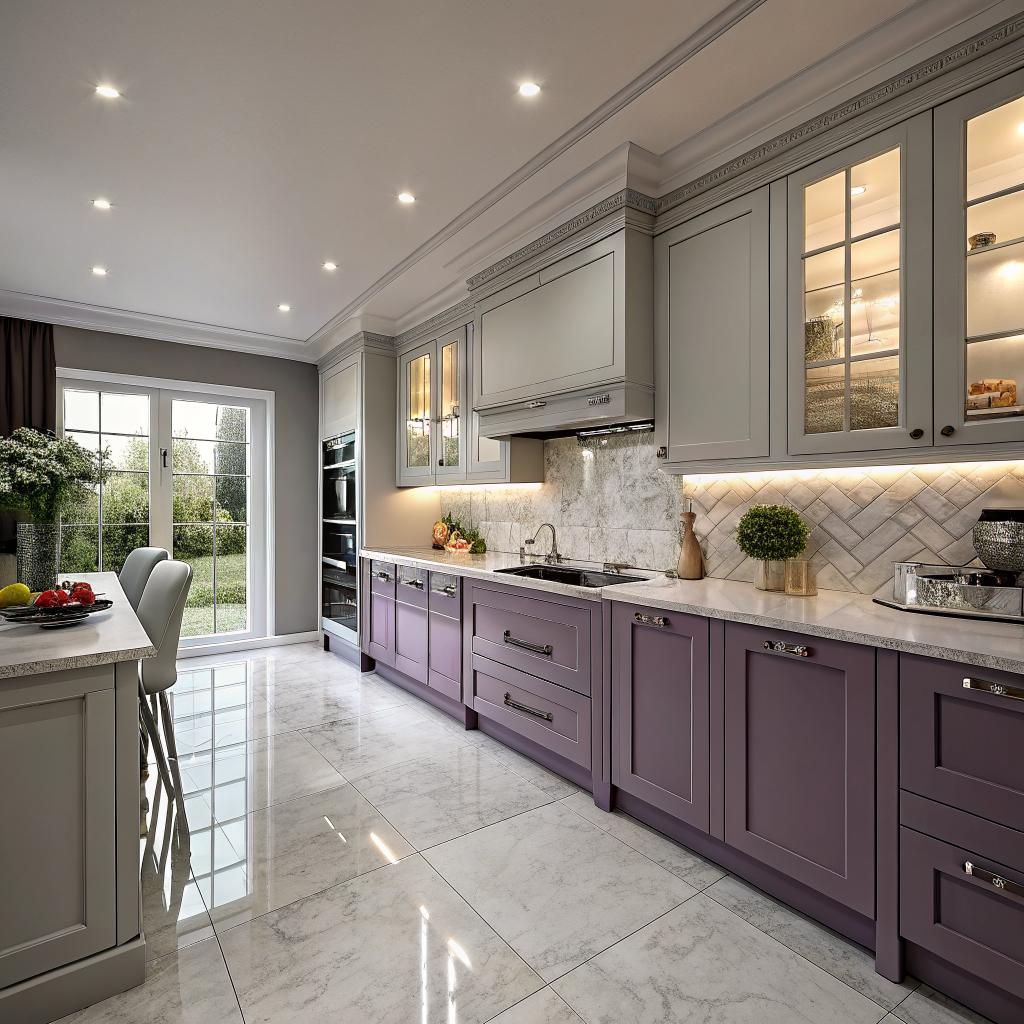
What if I told you that a mid-tier kitchen remodel in Kirkland can behave more like a tech investment than a sunk home expense, with a payback profile that sometimes looks closer to a SaaS feature launch than a granite-and-cabinets project?
Here is the short version: if you plan it like a product roadmap, treat the kitchen as a data and energy hub, and bake in smart infrastructure instead of one-off gadgets, kitchen remodeling Kirkland can improve resale value, lower ongoing utility costs, and even make your home more attractive as a long-term remote work base. The financial upside does not only come from what buyers see on listing photos. It comes from lower operating expenses, longer upgrade cycles, and flexibility for future tech you have not installed yet.
Now, if that sounds a bit abstract, let me walk through it in a way that matches how you probably think about product, funding, and growth, rather than paint colors and backsplash trends.
Why a kitchen remodel in Kirkland behaves like a tech project
People usually talk about kitchens emotionally. Family, food, gatherings, all that. Those things matter, of course, but if you are wired toward numbers and systems, you probably care more about:
- Capital outlay
- Payback period
- Risk of obsolescence
- Flexibility for future upgrades
In that sense, a kitchen is closer to infrastructure. You are provisioning power, data, storage, workflow, security. It just happens to involve sinks and ovens instead of servers.
In Kirkland, there are some local factors that tilt the math even more:
- Tech employer concentration and high average incomes
- Strong demand from buyers who expect smart features by default
- Energy costs that make efficiency gains meaningful over 8 to 12 years
- Remote and hybrid work patterns that push more life into the home
You can treat a remodel as a cost upgrade. Or you can treat it as an investment in a home that behaves more like a modern platform.
If you think of the kitchen as a platform, the cabinets and counters are the UI, but the wiring, data lines, power management, and layout are the backend.
I know that sounds almost too on-the-nose, but once you shift into that mindset, the tradeoffs become clearer.
Linking kitchen remodel spending to real returns
If you pitch this kind of project to yourself like you pitch a new product module, you probably want numbers, not vibes.
1. Resale and buyer pool effects
There is a lot of noisy data on home improvement ROI. Some sources quote 50 to 80 percent recovery of costs for minor kitchen projects. Reality depends on timing and micro-market. But in Kirkland, buyers skew tech-aware and tend to pay a premium for homes that feel current and connected.
The usual agents talk about “move-in ready”. What they really mean is “I do not need to spend the next year fixing this”. For a tech worker with a demanding job, that is worth money.
So if two homes look similar on paper:
- Same school zone
- Similar square footage
- Comparable yard
But one has:
- Smart, efficient appliances with 5+ year expected life
- Modern lighting, scene controls, and good wiring
- Clean, low-maintenance surfaces and good storage flow
You get:
- Higher sale price bandwidth
- Faster time to offer
- Less negotiation around “credits” for buyer upgrades
ROI on a remodel is not only about the final price gap. It is also about reducing discounts, concessions, and the time your capital is locked in a listing.
I think agents sometimes overstate the “wow factor” and understate the “no project backlog” factor. A tech worker moving from another city would rather pay for a finished, modern kitchen than spend nights and weekends managing trades.
2. Operating costs: energy, water, and maintenance
The second leg of the return story is ongoing costs. Here, the kitchen pulls more weight than most rooms.
Consider a basic before-and-after comparison for a 15 year old kitchen vs a modernized one in Kirkland.
| Area | Old setup | Updated, tech-aware setup | Effect over 10 years |
|---|---|---|---|
| Refrigerator | Legacy unit, poor insulation, no smart monitoring | High-efficiency, connected, better temp control | Lower power use, fewer food losses from temp issues |
| Lighting | Halogen or CFL, switches only | LED, dimmable, scene control, presence sensors | Lower consumption, better comfort, less bulb waste |
| Faucets & dishwasher | Higher-flow, no leak detection | Low-flow, sensors, optional leak sensors on lines | Lower water bill, lower risk of water damage |
| Ventilation | Noisy hood, limited capture | Smart multi-speed hood, possible make-up air | Cleaner air, fewer residue issues, better comfort |
None of these line items is magic. But accumulated over 8 to 12 years, they are not trivial. On a 6 figure kitchen, shaving 20 to 30 percent off energy and maintenance in the core systems helps the math. It is not the only argument, but it is not window dressing either.
3. Remote work and the “home as HQ” trend
Something has shifted quietly. The kitchen is no longer only for cooking; it is also a hub between work and home life. In many homes, it is:
- Where you take calls while making coffee
- Where kids do homework on a counter while you monitor dashboards
- Where you run smart home controls
So a remodel becomes a chance to treat the kitchen like a mixed-use zone.
I know some people think that is overkill, but if you spend 10 to 12 hours a day at home, the difference between a clumsy layout and a smooth one has a real effect on your daily bandwidth and even stress levels.
Tech infrastructure that makes a Kirkland kitchen “investment grade”
Let me be blunt: a Wi-Fi fridge alone does not make your remodel savvy. In fact, chasing shiny gadgets can hurt your long-term return because those are usually the first things to feel old.
The core play is infrastructure.
1. Power planning and electrical capacity
Kirkland homes span several build eras. Many older houses do not have wiring that really matches modern electric loads, especially if you want things like:
- Induction cooking
- High-powered dishwashers
- Dedicated circuits for undercounter appliances
- Future EV charging in the garage
When you open walls for a kitchen remodel, that is the brief moment when upgrading the “backbone” is relatively cheap. Once everything is closed and tiled, you are stuck.
Key moves that tilt the project toward investment rather than decor:
- Upgrade the subpanel or at least reserve capacity for future loads
- Pull extra circuits for flexible plug locations and undercabinet power
- Plan for at least one 240V circuit at or near the kitchen for future gear
- Place outlets where countertop devices and charging stations will realistically live
This is similar to over-specing your data infra a bit when you know growth is coming. Overdoing it is wasteful. But leaving no headroom is worse.
2. Networking and smart home backbone
A strangely common miss: people spend on smart appliances, but forget about robust connectivity.
For a tech-aware kitchen, consider these as non-negotiable:
- Hardwired ethernet runs to at least one or two spots near the kitchen, even if you cover them with blank plates for now
- Conduit paths that let you pull new cables without ripping everything open
- A central low-voltage zone for hubs, smart lighting bridges, and routers
From there you can layer:
- Smart switches that still work manually if the hub fails
- Presence and contact sensors that support security and lighting logic
- Voice-assistant integration if you like hands-free operation when cooking
The goal is to make the kitchen “smart ready” but not hostage to any one vendor or protocol.
You do not know which smart platform will win the next 10 years. So design the physical wiring to be agnostic. Think of it like writing clean interfaces between services so you can swap implementations later.
3. Appliance strategy: platform, not collection
A common error is to treat every device as a separate purchase decision: “Which fridge”, “Which oven”, and so on. That can produce a weird tech soup of apps and logins.
A more investment-minded approach:
- Decide your tolerance for lock-in. Are you comfortable with a single brand family for most gear, or do you prefer mixing?
- Weigh energy ratings and repair track record over flashy screen features.
- Target a 10 year useful life with planned mid-life maintenance.
Think of your appliance suite as a small ecosystem. Minimal mental overhead, predictable support, stable integrations. You would not build your stack out of five unrelated analytics tools if you could avoid it. Treat your kitchen the same way.
Design decisions that support tech and value
So far this sounds very wiring-heavy. But layout and material choices are just as linked to value, and not only in terms of pretty photos.
1. Workflow and zoning
In the software world you talk about flows. In the kitchen world it is similar, just with more crumbs.
You want to reduce friction in common tasks:
- Making coffee while someone else cooks without collisions
- Kids grabbing snacks without crossing the hot zone
- Moving from fridge to prep to cook in one smooth arc
Popular terms like “work triangle” can be helpful, but real life is messier. You might need a secondary work zone for a partner. Or a small, quiet corner that doubles as a laptop surface.
When a remodel nails this, buyers and appraisers might not articulate why, but they sense that the kitchen “works”. Time saved each day is subtle, but over years it matters.
2. Surfaces and maintenance profile
On the investment side, one quiet killer is maintenance.
Porous, high-maintenance surfaces increase:
- Cleaning time
- Stain and damage risk
- Resealing and repair cycles
Harder, more stable surfaces:
- Age more gracefully
- Look closer to new at resale time
- Handle tech clutter better, from chargers to screens
Choosing the right surfaces is less about being fancy and more about holding value over time with minimal input. The same way you prefer predictable infrastructure over fragile hacks in a codebase.
3. Lighting as a system, not a fixture purchase
Lighting might be the least glamorous spreadsheet line in a remodel bid, but it shapes the experience more than people expect.
Think in layers:
- Task lighting on counters and cooking areas
- Ambient lighting that works well on screen during a video call from the kitchen table
- Accent lighting that makes the space feel warm in the evening
If you tie these layers to simple scenes:
- “Early work” for those 6:30 AM calls
- “Dinner” for family time
- “Late snack” for low-level navigation
You end up using the tech daily, which is the only way it ever justifies its cost. No one gets good value from a scene controller that is never touched.
The Kirkland context: why location changes the calculus
A remodel in Kirkland is not the same as one in a random suburb with fewer tech companies. The local buyer profile shifts several things in a way that you can lean into.
1. Tech literacy and expectations
Many buyers in Kirkland either work in tech or are adjacent to it. That has pros and cons.
Pros:
- They understand the value of clean wiring and future-proofing.
- They often notice brand choices for appliances and fixtures.
- They are comfortable controlling systems from phones or voice.
Cons:
- They may be skeptical of “gimmicky” smart features.
- They are more likely to ask “What happens when this vendor sunsets?”
So if your remodel includes tech elements, be ready for questions. For example:
- “Is this lighting tied to a cloud account or does it work locally?”
- “Can this induction cooktop run at the same time as the oven without tripping a breaker?”
I am not saying you must answer like an engineer. But choices should be defensible in simple terms.
2. Pricing bands and renovation risk
At certain price brackets, buyers in Kirkland almost assume the kitchen is updated.
If you are competing in those bands with a dated, low-tech kitchen, you are not just losing a bit of shine. You are inviting:
- Discount requests for “required” future remodeling
- Longer days on market
- Lowball offers from investors who see a project, not a home
That creates a slightly uncomfortable truth:
If you hold a home in Kirkland long enough, skipping a kitchen remodel can itself be a riskier financial decision than doing a well-planned, tech-aware update.
Of course, the right timing and scope still matter. Throwing money at marble does not fix a bad floor plan.
Planning the remodel like a product roadmap
If all this sounds like a lot, it might help to think in phases. This mirrors how you might roll out features in a product rather than trying to ship everything on day one.
Phase 1: Infrastructure and layout
Non-negotiables in this phase:
- Confirm electrical capacity and upgrade if needed.
- Plan plumbing and ventilation with a 10 year view.
- Decide on the basic layout and traffic patterns.
- Run low-voltage conduits and network where it will matter later.
Spending here is less visible but protects you from expensive rework. It is like writing solid internal APIs before you build flashy UI layers.
Phase 2: Core appliances and surfaces
Next, focus on things that are both functional and visible:
- Range or cooktop and oven
- Fridge and dishwasher
- Sinks and faucets with practical features
- Countertops, cabinets, and flooring with good durability
You can adjust brand and finish level to match your budget. But the long-term effect of picking durable, easy-to-care-for materials is bigger than, say, splurging on a niche built-in espresso unit.
Phase 3: Smart integrations and “nice-to-have” features
Once the backbone and main gear are in place, then you can layer on controls and smaller touches:
- Scene-based lighting controls
- Voice and phone integration for appliances and shades
- Leak sensors, smoke integration, and notifications
- Counter outlets with USB-C or future-proof power options
The difference now is that these features sit on a stable base. If one vendor sunsets a service, you still have a working kitchen. Replacing a hub is annoying but manageable.
Common mistakes that hurt the “investment” argument
It is easy to misstep and turn a promising project into a money sink. A few patterns appear often.
1. Chasing trends instead of buyer profiles
Short-lived design trends look tempting on social feeds, but in practice:
- A very strong style can limit your buyer pool.
- Overly custom features can age faster than neutral ones.
- Unusual layouts that fit one family’s habits might confuse others.
You do not need to go bland, but consider whether a choice will seem odd to a buyer five to seven years from now.
2. Overloading gadgets without planning support
People sometimes stack up gadgets:
- Wi-Fi fridge
- Smart oven
- Smart dishwasher
- Smart faucet
But they ignore:
- Network reliability
- Local control backup
- Security basics
So they end up with four apps, spotty connectivity, and frustration. A buyer with a tech background will see this as ongoing maintenance headache, not a bonus.
3. Underestimating project management
Here is where business thinking helps. A remodel is not just design and labor. It is coordination across:
- Permits and inspections
- Scheduling of subs in the right order
- Lead times for appliances and materials
- Budget control and change orders
If you would not run a software project without clear ownership, budget tracking, and risk planning, it makes little sense to wing it on a six figure home project.
Often, the quiet value of a good remodeler is project management, not just carpentry skill. That is where overruns are avoided, or at least limited.
Modeling the numbers for your situation
Let us bring this back to math. You might want some structure to estimate whether a remodel is worth it for you.
Basic inputs to consider
At a simple level, you can build a rough model with:
- Total project cost (all-in, with a 10 to 15 percent buffer)
- Expected hold period (years you plan to keep the home)
- Realistic resale value lift compared to similar homes without upgrades
- Energy and maintenance savings per year
A quick table example:
| Variable | Conservative case | Moderate case |
|---|---|---|
| Total spend | $80,000 | $120,000 |
| Hold period | 7 years | 10 years |
| Resale value lift | $50,000 | $90,000 |
| Energy & maintenance savings | $700/year | $1,200/year |
From that:
- Conservative: $50,000 resale lift + $4,900 savings = $54,900 vs $80,000 spend
- Moderate: $90,000 resale lift + $12,000 savings = $102,000 vs $120,000 spend
On pure cash, you might “lose” some money, break even, or come out slightly ahead, depending on the scenario. But that view ignores:
- Quality of life for 7 to 10 years
- Reduced headaches at resale
- Faster sale and lower holding risk if you need to move quickly
In other words, a kitchen remodel can aim to be at least value-preserving financially, while delivering daily benefits that do not show up on a spreadsheet but matter a great deal.
If a remodel is likely to preserve most of its cost in future value and savings, then your “real cost” is the gap between those numbers and the lifestyle benefit you receive along the way.
You might disagree with that framing if you are a strict numbers person, but homes are not stocks. They are closer to mixed-use assets.
Q&A: Honest answers to tricky questions
Is a tech-heavy kitchen remodel in Kirkland always worth it?
No. If your time horizon is short, or if the house has bigger structural issues, a kitchen might not be the first place to put money. Foundation, roof, and major systems come before smart faucets.
The remodel makes the most sense when:
- You plan to stay at least 5 years.
- The rest of the home is in sound condition.
- The current kitchen is significantly behind market expectations.
Should I prioritize energy features or smart gadgets?
Energy features usually win. Better appliances, insulation where possible near the kitchen, and proper ventilation give you predictable returns. Smart gadgets are worth it when:
- They sit on good wiring and network.
- They add clear daily convenience.
- They work even if the cloud service disappears.
If you must pick, fund the boring stuff first.
How much “future proofing” is realistic?
You cannot guess every device that will exist in 15 years. But you can:
- Overbuild wiring and conduit modestly.
- Leave service access to key runs.
- Choose open or widely adopted standards where you can.
Perfect foresight is not possible, and chasing it can waste money. Aim for reasonable flexibility instead.
Do buyers actually pay more for smart features, or do they just expect them?
In a market like Kirkland, many buyers treat baseline modern features as table stakes. They might not say “I will pay X more for this smart oven”. Instead, they walk away faster from homes that feel dated or difficult to modernize.
So while you might not get a line-item premium for every tech feature, together they shift the home from “project” to “ready”. That position is worth money, even if it shows up more as reduced discounting and faster offers than as a clear add-on number.
What is one thing people almost always regret not doing?
Extra power and low-voltage runs. Once walls are closed, adding circuits or data lines becomes expensive and messy. During a remodel, your marginal cost to add capacity is much lower.
If you remember only one technical takeaway from this long answer, let it be this: spend a bit more on the invisible backbone, and keep your gadgets modest. Your future self, or your buyer, will thank you.