
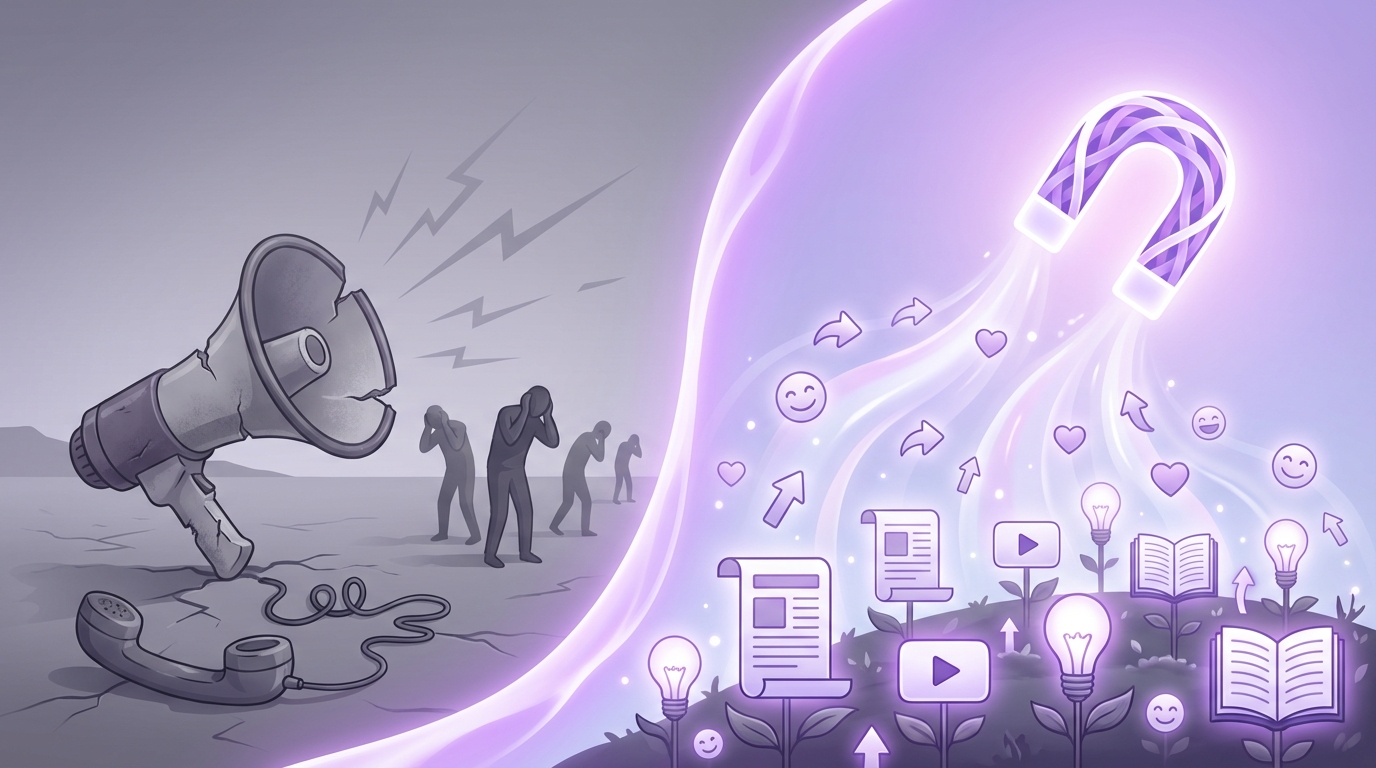
“Cold calls burn trust. Content compounds it. The market now rewards whoever owns the search box, not the phone book.”
The data is blunt: inbound content programs are producing 3 to 5 times more qualified opportunities per dollar than classic outbound calling in most B2B tech segments, especially for deals under 100k ACV. Sales teams still call, but the growth engines investors fund are now driven by search intent, authority content, and email capture, not phone blitzes. The shift is not about marketing trends. It is about CAC, payback period, and predictability.
Inbound is winning because it changes the math. When buyers discover you through a search query, a LinkedIn post, or a newsletter, they come in with context and some level of trust. That shortens the education cycle and lowers acquisition cost. Outbound cold calling still wins in some high-ticket or narrow markets, but the surface area for that playbook is shrinking. In SaaS, cloud tools, and B2B services, the companies that control organic demand have better margins and better funding conversations.
Investors look for repeatable growth. They track acquisition cost, retention, and sales efficiency. A cold calling engine usually produces spikes: sprints, call blitzes, and monthly dials-to-meetings reports. An inbound engine behaves like a compounding asset. Content published months ago keeps ranking, keeps pulling in search traffic, and keeps feeding your pipeline while your SDR team sleeps. The trend is not clear in every vertical yet, but the direction is visible across most software markets: the phone is becoming a closer tool, not a first-contact tool.
Outbound will not disappear. Large enterprise deals still start at conferences, intros, or targeted outbound. But the blind cold call to a cold list is losing share. The reason is simple: buyer behavior has moved. When someone hears about a product, they Google it, they check review sites, they scan LinkedIn. If your content does not control that journey, your competitor’s content will. The business value of inbound sits in this simple loop: presence where the buyer looks, proof that you understand their problem, and a clear path to trial or demo.
Sales leaders often defend cold calling because it feels controllable. You can add more numbers to a dialer. You can hire more SDRs. But the hidden cost sits in burnout, low connect rates, and weak brand perception. On the other side, a single high-performing guide, calculator, or benchmark report can feed thousands of leads per year with no extra variable cost. The financial markets reward the second model because it scales content cost across a larger revenue base and improves margin over time.
Inbound vs. Outbound: What You Are Really Paying For
The inbound vs. outbound debate is not about tactics first. It is about what kind of asset your marketing spend creates.
Outbound cold calling spends cash for attention right now. Once the calls stop, the pipeline collapses. Inbound content spends cash to create assets that keep working after the first publish date.
“Companies with a strong inbound program report up to 61 percent lower cost per lead than those that rely heavily on outbound.”
Different sources show different percentages, but the direction repeats in most industry reports. Outbound can still produce large deals, but the lead cost and time to close usually trend higher, especially in crowded tech categories.
From a business angle, you are buying three things:
1. Awareness
2. Trust
3. Conversion paths
Outbound cold calling buys a small slice of awareness, almost no trust, and a rushed conversion attempt. Most calls end before trust can start. The buyer did not raise a hand. They did not come to you.
Inbound content buys awareness through search and distribution, builds trust by teaching, and sets up clear conversion steps across several visits. By the time someone fills your “Request a demo” form, they often have read multiple pages and shared your article with a colleague. That multi-touch path matters.
Why Cold Calling Lost Its Edge
Cold calling once worked because attention was cheap and buyer inboxes were less crowded. The phone was a priority channel. Now buyers live inside Zoom, Slack, Teams, and full calendars. Unplanned calls feel like interruptions, not help.
Three structural shifts hurt cold calling:
1. Mobile behavior. Decision makers screen unknown numbers. Many never pick them up.
2. Information access. Buyers research vendors on their own time. They do not wait for a rep to pitch them.
3. Compliance and filters. Spam labeling, call blocking, and regional regulations raise friction.
“Average connect rates for B2B cold calling have dropped into the low single digits in many sales orgs, with some teams reporting 1 to 2 percent actual conversations per dialed number.”
That math forces bigger SDR teams or aggressive automation, which raises cost and lowers brand quality at the same time. The more you push quantity, the less every contact feels valued.
Inbound flips the order. Instead of you chasing them, buyers find you while they face a problem. That timing is where ROI improves. The same hour of effort that goes into a call script, if moved into a strong content piece, can impact hundreds of buyers a month instead of a few dozen cold numbers.
What Inbound Content Really Does For Revenue
Inbound marketing often gets framed as “blogging” or “getting traffic.” That framing misses why investors care. Traffic is a vanity metric. Revenue predictability is not.
Inbound content does three key jobs for a tech business:
1. Captures intent
2. Shapes narrative
3. Lowers selling cost
Capturing Intent: Where the Money Starts
Search queries reveal buyer intent. When someone types “SOC 2 compliance for startups” or “best time tracking for agencies” into Google, they tell you both the problem and sometimes the segment.
If your site owns that query with a clear, useful piece of content, you get first shot at the relationship. This is not just a vanity ranking. It changes your revenue pipe.
Think of intent levels like this:
| Intent Type | Example Query | Buyer Stage | Business Value |
|---|---|---|---|
| Problem aware | “reduce churn in SaaS” | Early research | Brand awareness + retargeting pool |
| Solution aware | “customer success playbook B2B” | Middle of funnel | Lead capture via guides, webinars |
| Product aware | “Gainsight vs Catalyst comparison” | Late stage | High-intent demo requests and trials |
Cold calling tries to create intent by interrupting someone who did not search for anything at that moment. That is a harder conversion path and burns more sales time.
Shaping Narrative: Pre-selling Before Sales Joins
Inbound content lets you control the story around your category and your product before a rep joins the conversation. When your content covers use cases, ROI cases, implementation concerns, and pricing expectations, you reduce the work your sales team has to do on calls.
“High-growth SaaS companies often report that prospects who consumed 3 or more content pieces converted at 2x the rate of those who came in cold from outbound.”
The buyer lands on your blog, sees honest talks about tradeoffs, reads real numbers, and begins to trust your voice. By the time they talk to a rep, the call is less about “Who are you” and more about “How can this work in my stack.”
This shift matters for margins. Fewer calls are needed to close each account. Fewer reps can handle more pipeline per head. That is the kind of sales efficiency that supports stronger valuations.
Lowering Selling Cost Over Time
Cold calling costs scale linearly. To double output, you usually double dials, which means more reps or longer hours. Inbound content does not behave that way. One article can pull 500 visitors a month at launch, then 5,000 a month a year later if it ranks, gets links, and stays updated.
From a finance view, that gives you:
– Lower marginal cost per lead year over year
– Better forecasting because traffic patterns stabilize
– A compounding library of sales support material
This is why many later-stage investors now ask detailed questions about organic channels and content programs. They know outbound alone rarely supports long-term margin improvement.
Cold Calling vs. Content: Comparing The Growth Math
To get clear on the tradeoff, compare a classic outbound model with an inbound-heavy model using rough numbers.
Example: Outbound-Heavy SaaS Engine
Assume:
– 4 SDRs making 80 dials per day
– 20 working days per month
– 2 percent connect rate
– 20 percent of connects become meetings
– 25 percent of meetings become opportunities
– 20 percent of opportunities close
Monthly pipeline math:
– 4 SDRs x 80 dials x 20 days = 6,400 dials
– 2 percent connect = 128 conversations
– 20 percent meetings = 25.6 meetings
– 25 percent opps = 6.4 opportunities
– 20 percent close = about 1.3 new customers
If each SDR costs 6,000 per month loaded (salary, tools, overhead), SDR engine cost is 24,000 per month for roughly 1 to 2 new customers. CAC from calling alone lands high, and that does not include marketing overhead to build lists or buy data.
Example: Inbound-Heavy SaaS Engine
Now look at a content-led model from year 2 onward.
Assume:
– 1 content lead (7,000 per month loaded)
– 1 SEO/content writer (5,000 per month)
– 3,000 organic visitors per month after year 1
– 2 percent visitor-to-lead conversion on gated offers
– 20 percent lead-to-opportunity conversion
– 25 percent opportunity close rate
Monthly pipeline math:
– 3,000 visitors
– 2 percent leads = 60 leads
– 20 percent opps = 12 opportunities
– 25 percent close = 3 new customers
Team cost: around 12,000 per month for the content engine plus some software spend. CAC is lower per customer and tends to fall as traffic grows without proportional headcount jumps.
These are simplified numbers. Real funnels vary. But the direction shows why more capital is flowing toward inbound-heavy models in B2B tech, especially once a company passes early product-market fit.
Pricing Models: Cold Calling vs. Content Investment
From a budgeting view, you can look at outbound vs. inbound as two pricing models for attention.
| Model | Cost Type | Time To Impact | Asset Longevity | Risk Profile |
|---|---|---|---|---|
| Cold calling | High variable, heavy labor | Fast but shallow | Ends when dials stop | High dependence on reps |
| Inbound content | Front-loaded, lower variable | Slower start, compounding | Months or years with updates | High dependence on search and brand |
VCs and growth equity funds tend to favor models where spend creates assets, not just short-term activity. That is why strong content programs score well in due diligence. They show that each marketing dollar creates something that can serve thousands of buyers, not only the handful who pick up a phone.
Inbound Content That Replaces Cold Calls
Not all content drives revenue. Many teams publish lightweight articles that never rank, never get shared, and never help sales. To replace a cold calling program, content has to act like a salesperson on the page.
Categories Of Content That Produce Pipeline
Three content types tend to generate strong business value for tech companies.
1. Problem-and-solution guides
These pieces mirror the first part of a sales call. They define the problem, explain cost, and show solution types.
Example: “How to cut cloud spend by 30 percent without hurting performance.”
2. Comparison and “vs” pages
These pages catch buyers late in the journey who are already choosing between vendors.
Example: “Rippling vs Gusto: Which payroll tool fits a 50-person startup.”
3. ROI and calculator content
These assets help buyers make a case internally. Finance and leadership teams use them.
Example: “ROI calculator: What manual QA costs your engineering team each sprint.”
“Some B2B brands report that ‘vs’ and pricing pages drive more late-stage pipeline than all generic blog posts combined.”
When you build a library focused on these categories, you give buyers the exact material a rep would share in a call, but on their own schedule. That is how inbound starts to replace cold introductions.
The Editor’s Lens: Writing Like A Sales Call, Not Like A Textbook
Strong inbound content does three things in the first 300 to 500 words:
– Names the business problem in concrete terms
– Quantifies the impact in real numbers or ranges
– Shows the reader what they will gain by reading
Cold calling scripts often open with features or company intros. Good content flips that. The first question in a sales conversation is “What is hurting your numbers right now.” The first paragraph of your article should mirror that, in writing.
Text should read like a human talking. Short sentences. Clear verbs. Direct statements. Minor imperfections help. If your content sounds like a polished corporate brochure, readers tune out. If it sounds like a real operator walked them through a decision, they stay.
How To Shift Budget From Cold Calling To Content
Stopping cold calling overnight rarely works. SDR teams still support account-based outbound, referrals, and partner-led plays. But many growth-stage companies are rebalancing spend over 12 to 24 months.
Step 1: Audit What Actually Creates Revenue
You need hard data before you touch budgets. Look at the previous four quarters. For every new customer above a certain ACV threshold, ask:
– What was the first touch?
– What were the last 3 touches before closed-won?
– How many content pieces did they view?
– How many live calls did they have?
Most CRMs can show basic touch paths. The picture rarely matches internal stories. Many teams find that content touches appear in over half of won deals, even when outbound started the first meeting. That gives you leverage to argue for more content investment.
Step 2: Reassign SDR Energy To Warm Inbound
You do not need to fire your SDR team. Instead, shift their charter:
– Less time dialing cold lists
– More time on fast responses to inbound demo requests
– Personalized follow-up for high-intent content readers
– Light research and tailored sequences for named accounts
This change increases close rates from inbound leads and shows sales leadership that inbound is not “marketing’s project” but a shared revenue engine.
Step 3: Build A Content Roadmap Tied To Revenue Metrics
Investors care about clear logic. A content roadmap should not be built around what is fun to write. It should follow revenue.
A practical model:
1. Extract your top 20 closed-won deals from the past year.
2. For each, list the core problem they talked about in discovery.
3. Group those problems into themes.
4. Produce cornerstone pieces around each theme, then supporting posts.
This keeps your content grounded in actual buying triggers. You are not guessing what people care about. You are replaying real sales conversations at scale.
Feature Comparison: Inbound vs. Outbound For A Tech Startup
Here is a side-by-side view framed for a founder or revenue leader.
| Feature | Inbound Content | Outbound Cold Calling |
|---|---|---|
| Speed to first lead | Slower; weeks to months | Faster; days to first calls |
| Lead quality | Higher on average; self-selected intent | Mixed; many unqualified contacts |
| Brand perception | Trusted advisor role | Risk of annoyance or fatigue |
| Scalability | Content serves many at once | Limited by rep time |
| CAC trend over time | Often decreases with scale | Often flat or rising |
| Dependence on individual reps | Lower; content outlives staff changes | High; turnover hurts pipeline |
| Forecast reliability | Improves with traffic history | Depends on rep activity and morale |
This comparison is why many CFOs now argue for content spend even when sales leadership is cautious. The financial profile of inbound aligns better with long-term margin targets and exit valuations.
What Investors Ask About Your Inbound Engine
Growth and late-stage investors rarely ask how many dials your SDR team can make. They ask questions like:
– What percentage of new ARR starts as inbound?
– What are your top 10 organic traffic pages and how do they convert?
– How stable is your search traffic across algorithm changes?
– How quickly can you produce and update content that responds to market shifts?
“During diligence, investors look for proof that your growth is not rented from ads or outbound alone, but anchored in owned channels like search and email.”
Content is one of the few assets you fully own. Algorithms change, but a strong email list and a respected content library keep you less exposed. This lowers perceived risk and can affect valuation multiples.
When Outbound Still Matters
Stopping cold calling does not mean stopping outbound thinking. For certain market segments, direct outreach still supports growth.
Cases where outbound remains strong:
– Small total addressable market with clear named accounts
– High-ticket enterprise deals where personal contact is expected
– New categories where no one is searching for you yet
In these settings, inbound and outbound work together. Content warms the ground. Outbound gives a human face at the right moment.
The smart move is not “Inbound good, outbound bad.” The smart move is “Stop wasting money on random calling. Use content to create gravity, then use outbound to guide the highest-value prospects through the last mile.”
Building A Content Machine That Sales Respects
Many founders have been burned by content programs that produced little. The mistake was not content itself, but content disconnected from revenue and sales.
To make content feel as direct as cold calling, you need tight loops:
– Sales brings real objections and questions to marketing.
– Marketing turns those into articles, scripts, and guides.
– Sales uses those assets live in calls and emails.
– Data from those interactions feeds back into content planning.
When you run that loop, your blog reads less like a magazine and more like a transcript of your best discovery calls. That is what buyers respond to.
You do not need poetic language. You need clear stories. “We worked with a 40-person dev team, they used manual releases, they lost 20 hours a week, after rollout they got that back and shipped faster.” Numbers, context, outcome.
Stop Cold Calling, Start Content Marketing: What The Shift Looks Like In Practice
In practice, the shift looks like this over 12 to 24 months:
– Month 0 to 3: Cut pure cold calling dials by 20 to 30 percent. Reassign that time to warm inbound and follow-ups to content-engaged leads.
– Month 3 to 9: Publish core content weekly, focused on real problems and high-intent searches. Start to see early ranking and email list growth.
– Month 9 to 18: Organic traffic reaches a meaningful portion of total site visits. Inbound leads feed consistent pipeline. SDR role rebrands toward “inbound sales development.”
– Month 18 to 24: You can model revenue from organic with some confidence. Budget shifts more permanently. Cold calling becomes a focused tactic for named accounts, not a mass strategy.
By the end of that window, your phone activity is still alive but used with intention. Sales calls happen when the buyer has context and curiosity, not confusion and resistance. Content has taken over the heavy lifting of first contact, education, and trust building.
The market rewards this model with lower CAC, better retention, and more predictable growth lines. Tech buyers have already voted with their search bars and inbox behavior. The companies that follow that vote will own the next cycle of growth.