
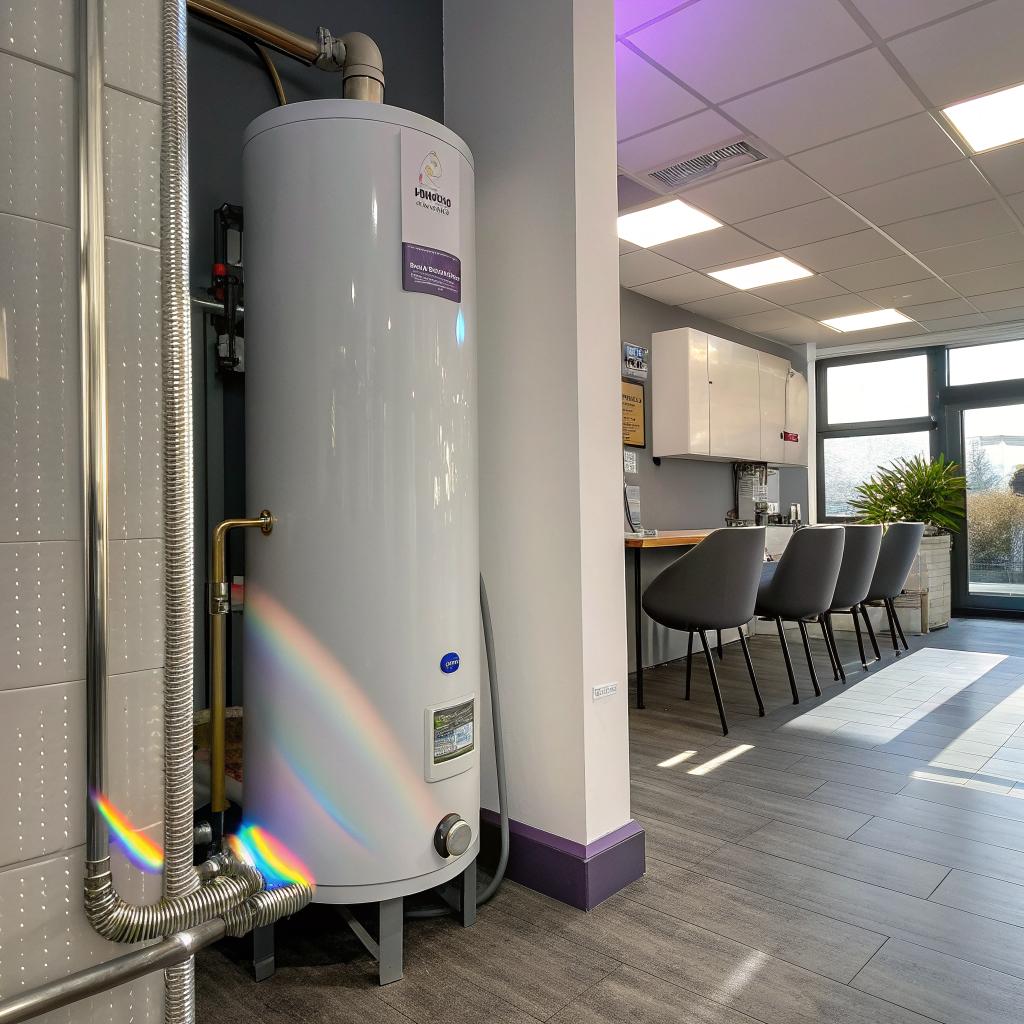
What if I told you that one of the most predictable ways to wreck a growing office is not bad hiring, not poor fundraising timing, but a failing water heater during a busy week?
The short answer: if your office in Aurora is adding headcount, floors, or hybrid shifts, you should treat hot water as infrastructure, not as a utility bill line item. That usually means planning a commercial-grade upgrade or water heater installation Aurora before you absolutely need it. Pick capacity based on growth, add smart controls for monitoring, and connect it to your broader facilities data so you are not guessing during your next expansion.
Once you look at it through a growth lens, hot water becomes less about comfort and more about resilience and cost control. And no, this is not only about bathrooms. It touches cleaning, food service, wellness, energy spend, even your landlord relationship.
Let me walk through how that plays out in real offices that are trying to scale in a predictable way, without turning into professional firefighters for every facility incident that pops up.
Why growing offices outgrow their old water heaters
Most offices inherit a water heater that was chosen for a smaller team and a simpler way of working. Then the business changes.
You hire more people. You add showers to attract talent. You bring in dishwashers for real dishes instead of disposable cups. Maybe you add a small lab or workshop that needs steady hot water.
At that point, the original sizing math is wrong.
The first business question is not “What heater is cheapest?” but “How many people and fixtures will we be serving over the next 3 to 5 years?”
You can think of it in three rough buckets:
- Headcount growth and usage patterns
- Building constraints and local codes
- Energy and maintenance cost over time
If your office is in Aurora, you also care about winter performance, because incoming water is colder for a good part of the year. That alone can change the type and size of system that makes sense.
And here is the part people do not like to hear: waiting until the current heater fails usually costs more than planning a replacement on your own schedule. You pay rush premiums, eat downtime, and you have zero time to compare options.
Headcount, fixtures, and real usage patterns
Growth rarely looks smooth. You do not simply add 3 people every month forever. You win a round of funding, open a new team, or move to a bigger floor.
Hot water usage tends to jump in chunks too:
- New bathrooms added per floor
- Showers for bike commuters or people who work out at lunch
- Kitchen upgrades, espresso machines, dishwashers
- Any light manufacturing, lab sinks, or test areas
If you are trying to make sense of this, a simple projection helps. Take your current average daily occupancy, then add what you expect after your next hiring wave. Consider any planned facility changes in the next 2 to 3 years.
Now ask yourself two questions:
1. If everyone arrived at the office early on a cold January morning and used the bathrooms at once, would we run out of hot water?
2. Would we even know we were close to the limit, or would we only find out the hard way?
Most companies find out through complaints. That is a late and noisy signal. There is a better way that looks more like capacity planning in software.
Thinking about water like you think about servers
If you work on the business side of technology, you are used to planning for peak loads. You overbuild server capacity for product launches or campaigns. You monitor usage, not just uptime. You do not wait for total failure to add more nodes.
You can treat water heating in a similar way.
The question is not “Can the heater recover over a full day?” but “Can it handle 30 to 90 minutes of heavy usage without people noticing?”
Some offices make a rough mistake here. They assume that because the heater “seems fine most days,” it will handle the next hundred people. That is like saying a database that seems fine at 1,000 concurrent users will definitely be fine at 5,000.
You do not need perfect models. You just need an honest estimate of:
- Peak occupancy windows (arrivals, lunch, end of day)
- High-demand fixtures (showers, kitchens, high-flow faucets)
- Any compliance needs, like minimum hot water temperatures
This is usually enough for a commercial plumber or mechanical contractor to size equipment properly for where you are going, not where you were three years ago.
Types of water heaters that make sense for offices in Aurora
There are several ways to heat water in an office, and each has tradeoffs. Walking through them quickly can save you a lot of time.
| Type | How it works | Good for offices that… | Watch out for |
|---|---|---|---|
| Conventional tank (gas) | Big tank stores hot water, burner heats it | Have steady, predictable use and want lower upfront cost | Limited peak capacity, standby heat loss, needs space |
| Conventional tank (electric) | Electric elements heat stored water | Have no gas line or very small offices | Can be costly to run, slower recovery |
| Tankless (gas) | Heats water as it flows, no storage | Have fluctuating use and want to serve “endless” hot water at set flow | Needs correct sizing; several units for larger offices |
| Hybrid / heat pump | Uses heat pump plus backup electric elements | Want lower energy use over time and have space for the unit | Higher upfront cost; needs air volume and drainage |
| Boiler with indirect tank | Boiler heats a separate storage tank through a coil | Have existing boiler system or large multi-floor offices | More complex system; needs good design and controls |
In Aurora, gas is common for larger offices, especially where winters are long and incoming water is colder. That said, some newer buildings lean toward electric or hybrid for energy tracking or because of gas constraints.
The main takeaway: do not pick by brand first. Start with type and capacity that match your growth and building setup, then narrow down to specific models.
Planning for peak load in a smart way
Size too small and your team will complain. Size far too big and you burn money on equipment and energy you do not need.
So how do you get it roughly right?
Many property teams use demand factors tables and fixture counts from plumbing codes. That is useful, but you can layer some business context on top:
- Will you stay on one floor or spread to multiple floors?
- Are you adding wellness perks like showers and laundry for towels?
- Will you be on a shared hot water system with other tenants?
If your office doubles in headcount every 18 to 24 months, assume your water heaters should be ready to support at least the next full doubling, not just the next hiring quarter.
I realize that might sound conservative. That is by design. The cost difference between a system sized for 80 people and 120 people is often modest compared with the cost of upgrading again sooner than expected.
You can also use monitoring to tighten your guess over time, which brings us to the smart part of this.
Where “smart” actually matters in water heating for offices
There are many products that call themselves smart, but not all deliver value to a growing company. Still, a few features are practical.
Why your facilities dashboard should include hot water
If you already track HVAC performance, access control, or lighting usage, hot water is a natural next step. At minimum, monitoring helps you:
- Catch performance drops before people notice
- Measure recovery time after high usage periods
- Validate that set temperatures are actually maintained
- Track gas or electric use by heater instead of guessing
Tying this to your building automation system or a simple cloud dashboard is not only for huge campuses. Even a mid-size office can benefit, especially if no one from leadership is on-site every day.
On the business side, this data helps with:
- Budgeting energy use as you add headcount
- Supporting ESG or sustainability reporting
- Justifying upgrades with real performance data
It is one thing to say “the water heater is old.” It is another to show a chart where recovery time has doubled over two years and energy use climbed while service quality dropped.
Smart controls and remote alerts
If I had to pick only two “smart” pieces for an office water system, they would be:
- Remote temperature and performance monitoring
- Leak detection and automatic shutoff
These sound simple, but they solve very real problems:
- You get alerts if outlet temperature drops below safe or comfortable range
- You see if a heater runs constantly at odd hours, which might hint at leaks or failing components
- Leak sensors prevent slow, unnoticed water damage in mechanical rooms
Some teams go further, integrating alerts with Slack or other internal tools. You do not have to go that far if it feels like overkill. Even email alerts to a facilities address can save a lot of manual checking.
Load management and demand response
Another angle that tends to interest finance teams is demand management. If your office is large, or if you run some operations outside normal hours, you might be able to:
- Shift some water heating to off-peak times with storage tanks
- Avoid running all heaters at full power during the most expensive rate windows
- Work with your utility on any demand response programs
This becomes more relevant when you pair hybrid heat pump heaters with storage, or when you operate in a building that already cares about load balancing. Again, not every office needs this level of tuning, but it is there for teams that like to squeeze extra savings from infrastructure.
Choosing the right moment to replace your water heater
Waiting for failure is one choice. It is just rarely the best one.
For offices in growth mode, the better question is: what signals tell you replacement is the smart, boring, financially sane move?
Lifecycle thinking instead of emergency thinking
Most commercial water heaters have a life in the 8 to 15 year range, depending on type, maintenance, and usage. But age alone is not the whole story.
Some practical triggers:
- Unit is past mid-life and your office will grow by 30 percent or more in the next 2 years
- Repairs are becoming frequent or expensive
- You are renovating bathrooms or kitchens anyway
- You are renegotiating a lease and can roll upgrades into tenant improvements
This is where the business side of technology can push for a plan that facilities teams sometimes postpone. Upgrading during a broader project is often cheaper than a last-minute replacement on a random Tuesday.
Cost of downtime vs cost of replacement
It can be useful to do a simple back-of-envelope comparison.
| Factor | Planned replacement | Emergency failure |
|---|---|---|
| Equipment pricing | Room to compare quotes and models | Limited choice, often higher |
| Labor cost | Scheduled at normal rates | Rush, off-hours, or premium rates |
| Business impact | Work planned around short disruptions | Unplanned loss of showers, kitchens, or restrooms comfort |
| Tenant / employee experience | Communicated in advance | Complaints and frustration |
If your office has customer visits, on-site events, or important internal meetings, hot water outages can be more than a comfort issue. They can quietly damage perception, even if people do not say anything directly.
How to approach water heater replacement like a growth project
You can run a replacement project with the same structure you use for other business improvements.
Step 1: Clarify scope and horizon
Ask yourself and your team:
- What is our realistic headcount range over the next 3 to 5 years?
- Are we expecting to lease more space in this building or another?
- Do we need to support new types of water use, like showers or labs?
If your company often reorganizes or changes plans, aim for flexible capacity instead of over-tuning to one scenario. For example, two medium units that can each handle part of the load, instead of one large single point of failure.
Step 2: Gather real building constraints
Before you get your heart set on a type of system, check:
- Gas availability and sizing
- Electrical panel capacity and distances
- Vent routing for combustion heaters
- Space in mechanical rooms, ceiling height, and access paths
I have seen teams design a perfect theoretical system, then find out the heater cannot physically fit through the stairwell or elevator. It sounds trivial until you run into it.
Step 3: Decide ownership and responsibilities
In multi-tenant buildings, this is where some friction appears. Some questions matter here:
- Does the landlord own major plumbing equipment, or do you?
- Who pays for upgrades that benefit multiple tenants?
- What are the maintenance expectations in the lease?
On the business side, this is not just a facilities detail. It affects how you structure your cost models and your willingness to invest in smarter systems that may save money over several years.
Budgeting and ROI without overselling the tech
There is a temptation to pitch every facilities upgrade as something dramatic. Most of the time, a water heater project is more quiet than that. It pays back in fewer incidents, smoother operations, and predictable bills.
Still, there are some direct numbers you can look at.
Typical cost elements
Your budget will likely include:
- Equipment (tanks, tankless units, piping, valves, vents)
- Controls (sensors, monitoring, leak detection)
- Labor (removal, installation, permits, testing)
- Any electrical or gas upgrades
- Possible building finishes repair if walls or ceilings are opened
Then you can compare with:
- Current energy use from older, less efficient units
- Current maintenance and repair spend
- Estimated cost of an outage, even in rough terms
Seeing this laid out tends to calm internal debates. People may still argue over small details, but the basic logic becomes clear.
Energy savings vs reliability gains
Sometimes the numbers justify a more efficient system on energy savings alone. Sometimes they do not. In both cases, reliability and business continuity still matter.
The quiet value is that no one on your team has to think about hot water during crunch weeks, product launches, or board meetings.
If your finance team wants a clean payback period, you can provide a range and be transparent about where the assumptions are weak. For instance, predicting energy prices 10 years out is fuzzy. Predicting that a 12 year old heater will need more repairs, less so.
Coordinating with IT and security teams
It might sound odd to pull IT into a water heater project, but there are a couple of intersections.
Network-connected gear and security posture
Smart heaters, gateways, and building automation controllers often talk over IP networks. If these plug into your corporate network, your security team will care, and they should.
Questions to cover:
- Will devices be on a separate VLAN or network segment?
- How will remote access for vendors be handled?
- What happens if the monitoring platform goes down?
Even simple decisions, like using wired connections in mechanical rooms instead of unreliable Wi-Fi, can save headache later.
Data ownership and vendor lock-in
On the analytics side, who owns performance data? Can you export it and keep history if you change vendors? Is it in a format your internal tools can read?
For a lot of companies, this kind of data might seem minor compared with product or user data. Still, patterns in facilities performance can help long term, especially if you operate several offices.
Practical tips from real office scenarios
To make this less abstract, here are a few short patterns that come up often.
Scenario 1: The growing tech startup with showers
A 60 person company in Aurora wants to double headcount and add showers for commuters. The existing small gas tank heater already struggles on cold mornings.
A workable plan might be:
- Upgrade to a larger commercial gas tank or a set of tankless units sized for peak shower plus bathroom load
- Add simple monitoring for temperature and burner run-time
- Place leak sensors in the mechanical room tied to a shutoff valve
Here, the win is less drama when everyone decides to shower between 8:00 and 9:00, and fewer complaints about “lukewarm” water during hiring sprints.
Scenario 2: Multi-tenant building with shared systems
Your company leases one floor in a building where the landlord manages shared hot water for restrooms. But you are building a kitchen and a small lab on your floor.
The challenge is:
- You cannot easily change building-wide equipment
- You still need reliable hot water for your own fixtures
Possible approach:
- Use point-of-use heaters closely sized for your kitchen and lab
- Install local monitoring so you track just your systems
- Negotiate with the landlord around any building tie-ins and responsibilities
Here, alignment between your internal growth plans and the building services is more delicate. But you still have enough control to avoid surprises.
Scenario 3: Hybrid work and unpredictable office load
Hybrid work can make office usage unpredictable. Some days the office is half empty, others it feels like the whole company came in.
This pattern actually makes monitoring more helpful. You can see how often heaters approach their limits during “peak in-office” days and adjust expectations or systems over time.
In some cases, a slightly larger storage tank with good controls can handle those peaks without overbuilding for a maximum that only happens a few days per month.
Avoiding common mistakes with water heater replacement in growing offices
To keep this grounded, here are some of the missteps that pop up again and again.
Under-communicating with employees
People are more patient with short disruptions if they know what is going on. Some offices forget to say anything until someone tweets or posts in a company channel about cold water.
A simple plan works better:
- Share the planned work dates and likely impact
- Offer alternate bathrooms or facilities if possible
- Give a quick explanation of why the upgrade helps the team
You do not need a PR campaign. Just honest, plain communication.
Ignoring maintenance after a fancy upgrade
A new system with smart features still needs regular checks. If you skip flushing tanks, checking anode rods, inspecting vents, or verifying alarm functions, you slowly drift back toward risk.
A light maintenance schedule is enough:
- Annual professional inspection
- Periodic flushing and cleaning per manufacturer guidance
- Testing alarms and leak sensors
Some companies try to postpone this because they just spent money on the upgrade. That is a short term saving that usually backfires.
Not involving finance early enough
Water heater projects sometimes pop up as unplanned expenses, and that always causes friction. If you think replacement is coming in the next 12 to 24 months, bringing finance into the conversation early helps:
- Spread cost across budget cycles or negotiate landlord contributions
- Evaluate lease vs purchase if that is an option
- See where energy savings matter for long term planning
This way, facilities is not stuck trying to argue for money during a crisis, and finance sees it as part of an overall strategy, not a surprise demand.
Frequently asked questions about water heater replacement for smart offices
Q: When should a growing office in Aurora replace its water heater instead of repairing it?
A: If the heater is older than 8 to 10 years, serving more people than it was designed for, and repair costs are climbing, replacement is usually the smarter move. If your growth plans suggest a big headcount jump soon, that is an extra reason to upgrade before a major failure.
Q: Is tankless always better for offices that are scaling?
A: Not always. Tankless can work well for certain load patterns, but larger offices with high simultaneous demand may still be better served by storage systems or a mix of both. The right choice depends on gas or electric capacity, space, and how peaks look in your specific office.
Q: How “smart” should our water heating system be?
A: For most offices, remote monitoring, basic controls, and leak detection are enough. Full automation, advanced analytics, and integrations into complex platforms are useful if you have multiple locations or a facilities team that manages many systems. If you are a single-site office, focus on reliability first, data second.
Q: Who should own this project inside the company?
A: Usually facilities or operations leads the work, but they should coordinate with finance, IT, and in some cases HR or people teams. HR often has insight into how perks like showers are used and what employees expect, and IT cares about any network-connected equipment.
Q: How do we justify the cost to leadership that mostly cares about growth and runway?
A: Frame it as risk reduction and predictable cost for a basic building function. Share rough numbers for energy, past repairs, and what an outage might cost during a peak week. Present a 3 to 5 year view, not just this quarter. Leaders who care about smooth scaling usually understand that a small, well-timed infrastructure project can prevent bigger, more distracting problems later.
What is the one thing about your current office setup that would make you most nervous if it failed during your next big hiring wave?