
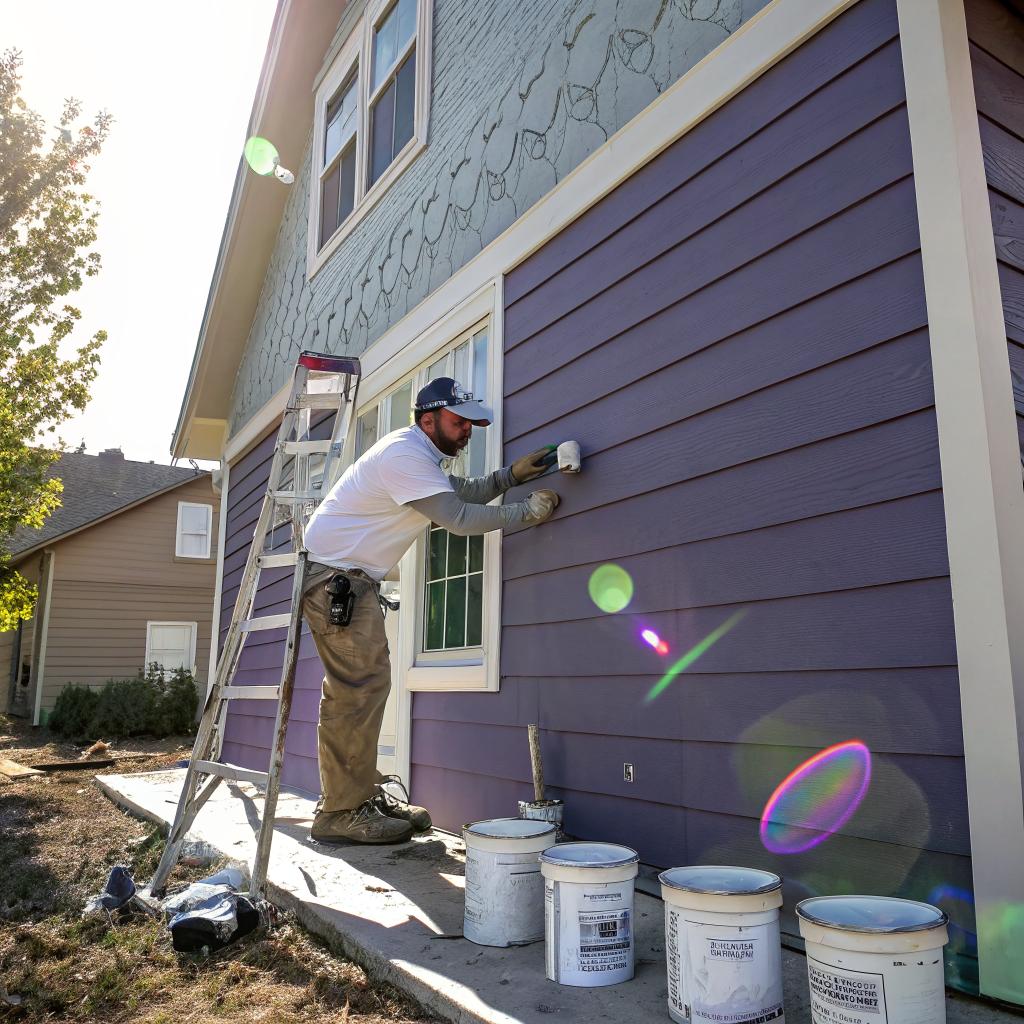
What if I told you the painters in Aurora who grow past 500k per year are usually not the ones with the best brush skills, but the ones who treat their company more like a tech startup than a trades business?
Here is the short answer: the smart ones borrow the mindset and systems from software and SaaS teams. They track numbers, they document processes, they treat leads like a product funnel, and they use simple tools to turn a local, messy service into something repeatable. The work still happens in a house or a building. But the business runs in a browser.
Here is where it gets interesting. You can see that pattern when you look at how the better painters Aurora CO approach scheduling, pricing, follow up, even hiring. It is less “my cousin knows a guy” and more “What is our lead cost this month and how many days out are we booked?” That kind of thing.
I want to walk through how that works in real life, not in theory. No hype, no magic growth hacks. Just what a serious owner does when they want to grow a local painting company without losing their mind.
Why a painting company starts to look like a tech business when it grows
On the surface, painting is simple: you meet a client, you price the job, you paint, you get paid.
At 1 or 2 crews, you can keep most of that in your head. You remember customer names, you text your guys the schedule, and you glance at your bank account to see how things are going. It works. Kind of.
Once you try to push past that, everything breaks at the same time:
- Jobs are mis-scheduled.
- Quotes are forgotten.
- Customers wait days for a response.
- You have no idea which advertising channel is wasting money.
This is where smart owners quietly switch from “painter with helpers” to “operator who happens to sell painting.” The mental model changes:
They stop asking “How do I sell more jobs next week?” and start asking “How do I build a system that books and delivers jobs without me touching every step?”
That is exactly what tech founders ask. They want code and processes that run without them.
Painting owners use tools instead of code. CRMs, shared calendars, simple automations, repeatable checklists for crews. Nothing fancy. But it is structured enough that a stranger could walk in and understand how the business works.
And there is one more connection to the tech world: margins. Local services can look boring next to software, yet a disciplined painting company can run 15 to 25 percent net profit with predictable local demand. For someone who likes both operations and people, that is not a bad “startup.”
The three phases most Aurora painting owners pass through
You see the same rough path again and again. Names and neighborhoods change, the pattern stays.
Phase 1: The owner does everything
Revenue is usually under 250k per year.
The owner:
- Runs estimates.
- Buys paint.
- Paints with the crew.
- Answers the phone in between ladder trips.
There is pride in this stage. You know every customer, you see the results instantly. But your ceiling is low. You cannot outwork time.
Smart owners in this stage start acting like they will not be in this stage for long:
They track every lead and every job in some kind of system, even if it is just a shared Google Sheet, so that when they move to phase 2, they already have “data” instead of random memories.
That is a small, but very tech-like move. You act like the company will grow, so you build around that future.
Phase 2: The owner runs crews
Revenue tends to sit somewhere from 250k to 700k.
Now you have:
- 2 to 4 crews in the field.
- An office day per week that turns into three days very quickly.
- The joy of payroll, taxes, and scheduling headaches.
This is where things can stall. Many painters stay stuck here for years. Busy, stressed, and not really making more personal income than when they did most of the work themselves.
The ones who move through this phase treat it almost like a product sprint. They keep asking:
- Where are we losing time or money this month?
- What can I document so I never have to explain it again?
- What part of this week annoyed me the most, and how do I design it out of the system?
It sounds very tech founder, but it fits. A company at this size has to be “debugged” constantly.
Phase 3: The owner runs a machine, not just a crew
Over 700k and into the low millions, the painting company looks different.
The owner:
- Does not personally run every estimate.
- Has a production manager or crew leader who owns field results.
- Uses numbers to make decisions about pricing, marketing, and hiring.
From the outside, it can look corporate. But from inside, when it is done well, it feels calmer than phase 2. You have structure.
Is every company meant to go here? No. Some owners are happiest at phase 1 or 2. The point is to choose, not just drift.
The tech-like backbone: simple systems that run the painting business
If you look behind the scenes of a growing Aurora painting company, you rarely find some secret trick. You find simple, boring systems that everybody follows.
Here are the backbone pieces that keep coming up.
1. Lead tracking that looks more like a sales pipeline than a notepad
This is the area where technology from SaaS sales fits local trades almost perfectly. Instead of a list of names in a notebook, you see a clear pipeline:
| Stage | What it means | Main owner action |
|---|---|---|
| New Lead | Form fill or call came in | Respond within 5 to 10 minutes when possible |
| Estimate Scheduled | Appointment on calendar | Confirm by text/email, send reminder |
| Estimate Sent | Proposal delivered | Follow up within 24 to 48 hours |
| Won | Client accepted | Collect deposit, schedule job |
| Lost | Client said no or went silent | Tag reason, keep for future campaigns |
Nothing complex. But the rules are clear.
Why does this matter?
Because in a local service company, speed to response is often more important than fancy branding. If you act like a SaaS team that chases every lead within minutes, you tend to book more work without spending more on ads.
The painters who win the most jobs are not always the cheapest or the friendliest; they are the ones who actually call back fast and send clear proposals.
Again, boring. But very real.
2. Scheduling like you are managing cloud servers, not human chaos
If you run 3 or 4 crews under the same roof, you start to feel a bit like a sysadmin. You balance load, you reduce downtime, you try not to have half your “capacity” idle on a sunny week in July.
Smart owners usually move away from paper calendars and scattered texts. They use:
- A shared digital calendar that every crew can see.
- Job details stored in one place: colors, materials, access instructions.
- Simple status tags: “Prep”, “In Progress”, “Walkthrough Scheduled”, “Complete”.
They also do something many small owners resist at first: they build in buffer.
They know that rain, change orders, and customer requests will throw things off. So they leave 0.5 to 1 day of flex around most larger projects. That way, when surprises hit, they shift the calendar a bit instead of collapsing the whole week.
The tech parallel is obvious. Capacity planning. Nothing fancy, just thinking ahead.
3. Standard operating procedures that feel like code you can run again
The phrase “SOPs” gets thrown around a lot, but painting actually benefits from them in a very concrete way.
For example, a simple SOP for “Interior repaint, occupied home, under 2500 sq ft” might cover:
- How to protect floors and furniture.
- Sequence: ceilings first, then walls, then trim.
- Minimum prep steps before first coat.
- Photo angles to send the office at start and end of day.
- How to handle change requests from the client.
A tech person would recognize this as reusable code. The crew “runs” the SOP for that job type. You get more consistent results without being there.
Is it perfect? No. People still get creative. They skip steps sometimes. But with something written and trained, you at least have a baseline. You are not re-inventing the process every week.
4. Tracking numbers without turning into a spreadsheet addict
Some owners fall into one of two traps:
- They track nothing and run on gut, then wonder why the bank balance swings wildly.
- They track everything, but never act on the data.
You do not need 40 metrics. You need a short list that tells you if the business is healthy.
Here is a simple table that many growing painting companies use:
| Metric | What it tells you | Typical target range |
|---|---|---|
| Lead volume per month | Top of funnel activity | Variable, but should be steady or rising vs last year |
| Close rate on estimates | Sales performance and pricing fit | 30% to 50% for residential, sometimes higher for repeat clients |
| Average job size | Revenue per project | Depends on niche, but you want it rising, not falling |
| Gross profit per job | How well you priced and managed labor/materials | 35% to 50% before overhead is common aim |
| Net profit per month | Actual money left after all costs | 15% to 25% over time for a healthy company |
You do not have to get these perfect. But if you are not watching them at all, you are flying blind.
Marketing like a local startup, not a random ad buyer
The tech world talks a lot about funnels, unit economics, and customer lifetime value. Local painting companies that grow past word of mouth usually converge on a similar idea, even if they do not use the same terms.
Channel choices: where do Aurora painting leads actually come from?
Realistically, most painting owners in Aurora who push volume balance 4 or 5 channels:
- Google search (maps and ads)
- Local SEO and reviews
- Referral and repeat clients
- Home service platforms (sometimes)
- Offline signs and neighbors seeing work in progress
People in tech like to talk about attribution models. In local trades, it is simpler: people call because they found you on Google, saw your yard sign, or heard about you from a neighbor.
Where the tech mindset helps is in treating each channel like a “campaign” with numbers.
For example:
| Channel | Monthly spend | Leads received | Jobs booked | Revenue from those jobs |
|---|---|---|---|---|
| Google Ads | $2,000 | 40 | 12 | $48,000 |
| Local SEO (content, photos, reviews) | $1,000 | 25 | 10 | $40,000 |
| Referrals | $300 (gifts, thank you notes) | 15 | 13 | $52,000 |
Is this exact? No. But you start to see patterns. Maybe your referral work is more profitable and less stressful than ad work. That can shape strategy.
A painting owner who tracks this for 6 to 12 months usually has a much easier time deciding where to spend the next marketing dollar than someone who is guessing based on vibes.
That is no different from a SaaS marketer looking at cost per trial and customer lifetime value.
Positioning: why should a homeowner pick you?
Many local services say the same things:
- High quality.
- Fair prices.
- Friendly team.
Most buyers now assume those as table stakes. To stand out, smarter painting companies pick a clear angle.
Some examples that show up in Aurora and similar markets:
- “We only do residential repaints, no new construction.” Customers feel safer when they are your main focus.
- “We do fast, clean jobs for people moving in or out.” Tied to deadlines and specific needs.
- “We specialize in exterior repaints that last through Colorado weather.” Strong angle for long term value.
The tech world calls this differentiation. In painting, it feels more like “Who exactly are we trying to be the obvious choice for?”
Interestingly, once a company commits to an angle, many other decisions become easier. Which photos to post, which blog content to create, which neighborhoods to target, which partnerships to chase.
Hiring and culture: treating crews like product teams
This is the part where many painting owners either grow or collapse. You cannot scale a local service business without people who care about their work at least a bit.
In tech, there is a lot of talk about “culture.” In painting, it often boils down to:
- Can I trust this crew in a customers home without me there?
- Will they show up when they said they would?
- Do they treat customers and each other with basic respect?
Still, there are a few specific practices from the tech world that carry over.
Hiring for attitude, training for skill (to a point)
Painting does require real skill. But for many residential jobs, you can build solid painters out of people who:
- Show up on time.
- Follow checklists.
- Care about details.
The problem is, if your company is chaotic, good people do not stay. So again, systems matter.
Owners who scale usually:
- Have clear roles: helper, painter, crew lead, estimator, office.
- Share pay ranges and growth paths instead of hiding them.
- Do at least some short training before sending a new hire alone to a job.
It is not fancy, but it signals that this is a real company, not a side gig.
Simple feedback loops, not endless complaints
In software, teams run retros: what went well, what went badly, what do we change next sprint.
A painting company can mirror this in a simpler way:
- Weekly or biweekly check in with leads: which job went sideways and why?
- Quick job review when something goes wrong: wrong color, poor prep, miscommunication.
- Visible changes after recurring problems: updated SOPs, new checklist items, new photo requirements.
Crews notice when the same problems repeat and nobody acts. That is where morale dies.
So the owner has to do what any decent product manager would do: listen, prioritize, fix. Not all at once, but steadily.
Pricing and profits: why undercharging hurts more than you think
Many trades owners start as technicians. Their first instinct is to beat the market on price to win jobs. It feels safe at the start.
Then overhead catches up:
- Insurance.
- Vehicles.
- Office staff.
- Software subscriptions.
Suddenly the margin that felt “fair” is gone.
Owners who treat their business more like a tech product do something different. They reverse engineer price from required margin.
A simple approach:
- Decide your target net profit percentage over a year, say 20%.
- Estimate your fixed overhead for the year: rent, insurance, admin payroll, tools, marketing.
- Decide how much owner pay you want above that profit.
- Work backward from a realistic number of jobs or crew capacity.
When you do this, you often find that your average job price needs to be higher than you feel comfortable with. That is where many owners hesitate.
But there is a quiet truth:
If you do not charge enough to run a healthy company, you cannot pay well, you cannot fix problems, and you cannot invest in systems. The business becomes stressful for everyone, including the customers.
So yes, tech-style thinking again: know your unit economics. In a local service company, a “unit” is probably a job or a crew day. You need to know, roughly, what each unit has to bring in.
Risk management: what painting companies can learn from tech about redundancy
When a SaaS product scales, teams think about uptime and redundancy. One server going down should not kill the service.
A growing painting business has similar weak spots:
- One key estimator knows all the pricing rules.
- One production lead manages the calendar in their head.
- Owner’s personal phone is the only number customers have.
Any one of those people getting sick can create chaos.
Owners who think long term start building small redundancies:
- Shared inbox and phone system instead of one person’s phone.
- Cross training: at least one backup for scheduling and for estimating.
- Job files stored in a central system, not a personal notebook.
Again, not glamorous. But important.
Tech stack: the “minimum viable” tools that actually help a painter in Aurora
There is a temptation to sign up for every new app. That rarely ends well.
From what I have seen, a practical painting company can do quite a lot with a lean stack:
Core tools that tend to pull their weight
- CRM or job management software to track leads, estimates, and jobs.
- Shared calendar (Google Calendar, for example) synced to phones.
- Cloud storage (Drive, Dropbox) for photos and job documents.
- Simple accounting tool with job costing capabilities.
- Review management tool or at least a clear process to request reviews.
Do you need custom software? Probably not, at least not for a while.
The nice part is that many of these tools connect with each other well enough for a small team. You do not need fancy integrations to get value. You mostly need discipline in using them every day.
Where tech-minded owners sometimes go too far
To be fair, some painting owners who love systems and software run into a different problem: they forget that this is still a human, messy business.
You can have:
- The cleanest CRM in Aurora.
- The fanciest dashboards.
- Perfectly labeled job photos.
And still lose customers if your crews rush prep or ignore small concerns on site.
There is a tension here. You want structure, but you do not want to treat people like replaceable lines of code.
That is where a bit of contradiction shows up:
- You want consistent SOPs, yet you need to trust crew leads to make judgment calls.
- You want clear pricing rules, yet odd projects will break your model.
- You want to automate communication, yet some situations demand a personal phone call.
If you have a tech background, you might lean too hard into automation and forget that some customers still need you to sit at their kitchen table and explain a bid.
So yes, borrow from tech. Just do not forget that paint smells, people spill things, and real houses are not neat spreadsheets.
A short Q&A to tie this back to your own business
Q: I run a small painting crew in Aurora. What is the first “tech style” habit I should adopt?
A: Start tracking every lead and every estimate in one place with clear stages. Do not overthink the tool. Even a spreadsheet beats a notepad. Within a month, you will see where leads slip away and where you are slow to respond.
Q: How much software is too much for a local painting company?
A: If your team spends more time clicking through screens than talking to customers or painting, you went too far. Keep your stack lean. If a tool does not either save real time or help you sell more jobs at good margins, question it.
Q: Do I have to grow to a big team for this to make sense?
A: No. These ideas help even if you want to stay at 2 or 3 crews. Clear systems and numbers reduce stress and let you choose your jobs better. Growth is an option, not an obligation.
Q: What is the biggest mistake you see when painters try to “scale” quickly?
A: They ramp up ads before they fix operations. So they bring in more leads than their messy system can handle. Response times slow down, job quality dips, reviews suffer. If you want to grow, first make sure your current jobs run smoothly and profitably. Then add fuel.
Q: If I am not a tech person at all, can I still run a “smart” painting business?
A: Yes. You do not need to code or love gadgets. You just need a willingness to write things down, follow your own rules, and look at a few key numbers every month. Think of it less as technology and more as good habits that happen to live inside simple tools.