
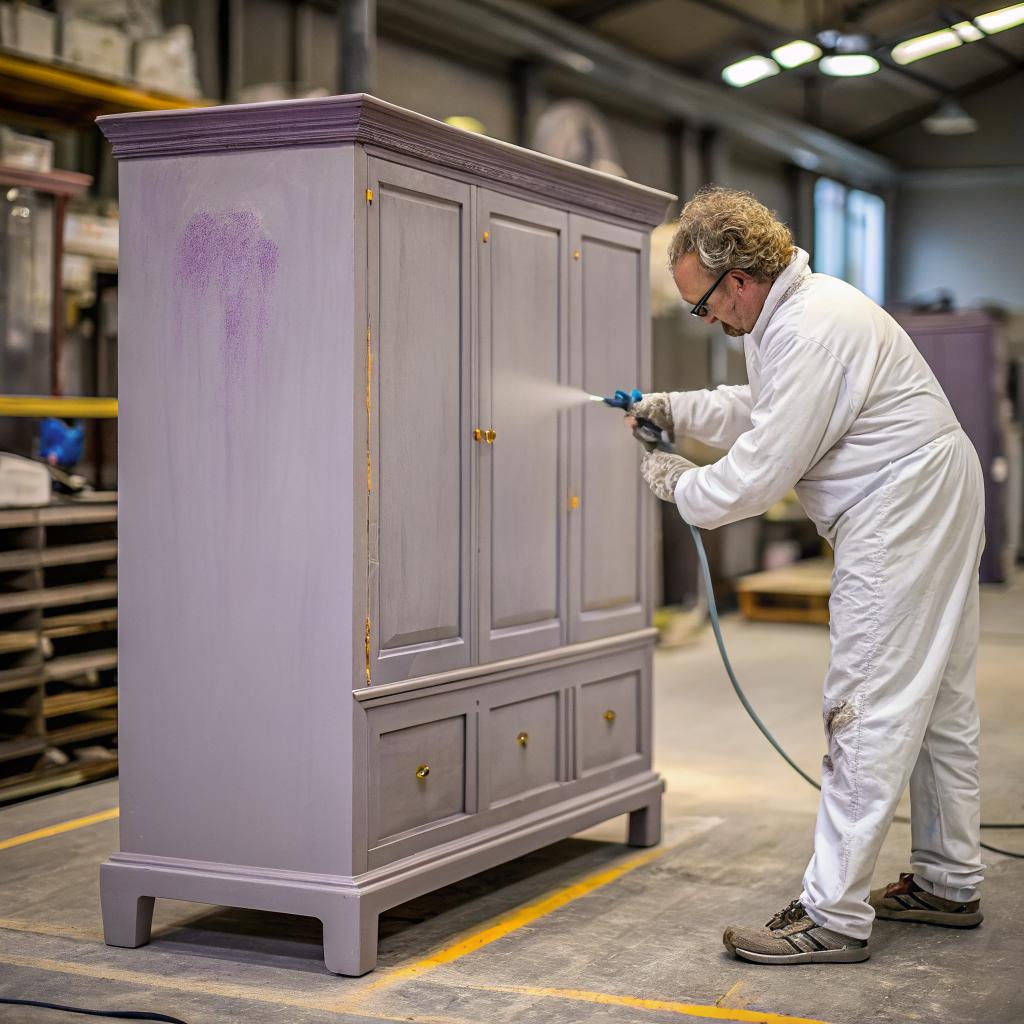
What if I told you that one of the most predictable, boring-sounding trades in home improvement is actually a pretty clean case study in how a small local business can grow in a systematic way?
Cabinet painting in Colorado Springs looks simple from the outside: sand, spray, get paid. The real answer to how these companies grow is much less glamorous. The ones that scale are the ones that treat painting like a repeatable production line, make scheduling almost automatic, keep marketing predictable, and track numbers like a SaaS founder would. If you want a shortcut: the cabinet companies that build systems around quoting, prep, logistics, and follow-up can add crews, expand profitably, and avoid chaos. The ones that rely on one talented painter and word of mouth tend to stall out.
Why cabinet painting is a weirdly good growth business
If you are used to reading about software or tech funding rounds, cabinet painting probably sounds very far away. Still, it checks a lot of the same boxes that investors look for in a service business.
It offers:
- High repeatability of the work
- Clear outcomes for the customer
- Reasonably high average ticket size
- Short cycle from quote to payment
And in a city like Colorado Springs, there is another factor. There is a mix of older homes with oak or maple cabinets, new builds with cheaper finishes, and a steady stream of people moving in and out. That mix keeps demand steady.
That is why you see companies like cabinet painting services in Colorado Springs quietly expanding their crews, routes, and marketing while still looking from the outside like just “some painters.”
The interesting question is not “can they grow?” The interesting question is “how do they grow without quality falling apart?”
The core engine: repeatable process, not magical painters
Many owners start out thinking the main bottleneck is finding the perfect painter.
Then they try to grow and realize the real bottleneck is everything around the painting.
The companies that scale are boringly good at process, not magically good at painting.
A simple cabinet job can touch:
- Lead intake
- On-site estimate
- Color consultation
- Scheduling and ordering
- Door and drawer removal
- Labeling and packing hardware
- Transport to spray shop (if they use one)
- Surface prep
- Priming and painting
- Reinstallation and touchups
- Final walk-through and payment
If each crew does this “their way,” scale stalls. Quality becomes inconsistent. Reviews get weird.
The ones that grow well usually end up with a process that looks closer to a mini manufacturing line than a traditional trade. Every job follows a similar path, with clear handoffs and checkpoints.
From craftsman mindset to production mindset
At 1 or 2 crews, an owner can keep everything in their head. They can bounce between jobs, answer every call, and personally fix problems.
At 4 or 5 crews, that stops working. Something breaks: scheduling, quality, or sanity.
So they have to shift the way they think:
Instead of asking “How do I get this job right?” they start asking “How do I make it hard for any crew to get this job wrong?”
That question pushes them to:
- Standardize materials and tools
- Document prep steps and dry times
- Define what “finished” means with photos and checklists
- Train for consistency, not for personal style
Is it less romantic than a master painter doing everything by feel? Yes.
Is it what lets a cabinet painting company grow beyond the owner? Also yes.
Why Colorado Springs is a special case
Colorado Springs is not New York or San Francisco. That matters.
The way cabinet painting companies scale in this city is influenced by some specific local factors:
Housing stock and style shifts
A big part of cabinet repainting is style cycles. Oak and honey-colored cabinets were common in homes built in the 1990s and 2000s. Many of those kitchens now look dated to buyers.
Color trends shift toward white, creams, light grays, and darker island accents. That means a lot of homeowners do the same mental math:
“Do I spend 30 to 60 thousand on a full kitchen remodel, or 3 to 8 thousand on repainting and maybe new hardware?”
For many middle-class homes in Colorado Springs, repainting becomes the logical mid-tier upgrade.
That creates:
- Predictable buyer demand in a certain price band
- Similar layouts and cabinets that repeat across subdivisions
- Opportunities to reuse pricing data from past projects
A smart cabinet company sees that and starts building packages and pricing models around typical home types in the area.
Climate and drying conditions
The dry air and altitude actually matter. Paint behaves differently in Colorado Springs than in, say, Houston.
Dry times are shorter. Overspray can travel farther if crews are not careful. Humidity swings between winter and summer affect curing.
The companies that scale here tend to adjust their process:
- Control temperature and air flow in shops and garages
- Use products that handle low humidity without flashing
- Set realistic timelines that match the local climate
That sounds minor, but if your production schedule is tight, a bad assumption about dry time can wreck a week.
Labor market and military presence
Colorado Springs has a mix of long-term residents, remote workers, and military families.
That affects both:
- Customer demand (more moves, faster updates)
- Labor supply (people used to structure and checklists)
Some companies quietly recruit former service members who are comfortable with standard operating procedures. They can plug into a structured painting system more quickly than someone used to improvising.
It is not magic. It is just a better fit for a process-heavy trade.
The tech stack that quietly runs a “simple” painting company
This is where it clicks more with readers who care about the business side of tech.
From the outside, a cabinet painting company looks low-tech. From the inside, the ones that scale usually build a practical tech stack.
Lead capture and quoting
At a very basic level, they need to:
- Capture leads from search, referrals, and ads
- Respond fast
- Quote accurately without endless back-and-forth
Many companies start with spreadsheets and email, then move toward tools like:
| Function | Simple approach | More mature approach |
|---|---|---|
| Lead capture | Website form to email | Form to CRM with auto-response and tagging |
| Scheduling estimates | Phone back-and-forth | Online booking link with calendar sync |
| Quoting | Manual itemized email | Template-based quotes with saved room types and prices |
The big unlock is when they realize how repeatable the jobs are. A 30 door kitchen in Briargate is not that different from a 30 door kitchen in Rockrimmon.
So they start to build pricing templates, ranges, and photo-based estimates. That reduces time per quote and increases response speed. Both help growth.
Scheduling and capacity planning
This is where many painting companies stall.
Jobs vary in size. Weather can interfere with exterior work, which pushes crews into interior jobs. Cabinet projects take up shop space as doors cure.
To grow, owners need to see:
- How many jobs each crew can handle per week
- Shop capacity for doors and drawers
- Drive time between jobs in Colorado Springs
Some use basic calendar tools. The more serious ones start to treat crews like “processors” in a simple system: each has a throughput and setup time.
They might not use that exact language, but they still ask:
“If one 3-person crew can finish X doors and boxes per week at a consistent quality, how many crews do I need to hit my revenue target this quarter?”
That way of thinking forces them to match marketing volume with production capacity. Which prevents the classic feast-and-famine cycle.
Job tracking and quality control
Once you have several crews, you cannot walk every job.
So you need a simple source of truth:
| What needs tracking | Why it matters for scale |
|---|---|
| Before and after photos | Proof of work, training, portfolio content |
| Color and product details | For touchups and repeat work, avoids confusion |
| Issues and callbacks | Find patterns and fix root causes |
| Actual hours per phase | Improves future estimates and crew planning |
Many companies use basic job management tools aimed at home services. It is not fancy. But if it is consistently used, it supports growth.
Marketing that keeps pace with production
You can think of the whole business as two machines:
- A machine that creates demand
- A machine that fulfills that demand
For cabinet painting in Colorado Springs, the demand side is not only about “getting more leads.” It is about getting the right kind of leads at the right volume.
Local search and intent
Homeowners searching for cabinet painting are not usually in a research phase for months. Many want quotes within days.
So ranking for local searches, running focused ads, and keeping reviews strong are all central to growth.
The pattern you often see:
- Rank and advertise for cabinet-specific terms, not broad painting terms
- Show real project photos so visitors can see style fit
- Make it painless to request a quote with 3 or 4 questions and photo upload
When that is in place, each extra crew you add has a reasonable chance of staying busy without a complete reinvention of marketing.
Referrals and reviews as growth levers
Cabinet projects last several days and involve being in the heart of the home. Homeowners either love the crew or hate the experience.
Which means:
- Referrals are strong when the process feels clean and respectful
- Bad reviews often focus on communication and schedule more than paint quality
Teams that want to scale treat each job as a future marketing asset. Not in a cheesy way. More in a “this is our future Google review and referral base” way.
So they:
- Set clear expectations about dust, noise, and kitchen access
- Explain what each day will look like
- Follow up quickly on small issues instead of arguing
That might sound like common sense. It is. But common sense at scale requires systems, not just good intentions.
Financial structure: how cabinet painting companies think about growth
You cannot talk seriously about growth without talking about numbers.
For cabinet painting, three metrics matter a lot:
- Average job value
- Gross margin per job
- Labor hours per cabinet opening
Average job value and job mix
The sweet spot for many Colorado Springs cabinet companies is mid-sized residential jobs: maybe 20 to 50 cabinet doors.
Too small, and travel and setup crush profit.
Too large, and the project ties up crews for too long, which can cause backlog problems.
So they run numbers. For example:
| Job type | Average revenue | Average days (1 crew) | Comment |
|---|---|---|---|
| Small condo kitchen | $1,800 | 1.5 | OK filler work, not ideal as core |
| Typical 3 bed home kitchen | $3,500 | 3 | Most stable and predictable |
| Large custom kitchen | $7,000+ | 5+ | Good margin, but higher risk and schedule impact |
These are example numbers, not exact, but the pattern is real.
Once owners see it, they might even start targeting their marketing toward that mid-range job size. That shapes growth more than people admit.
Margin and repeatability
Materials for cabinet painting are not cheap, but they are predictable. Labor is the real variable.
So the key question is:
“How many hours does it take us, on average, to take one cabinet from old finish to new finish with our process?”
If a company knows:
- Average hours per door
- Average hours for masking and boxes
- Average hours for prep and sanding
Then they can forecast margins in a more disciplined way.
When they do not know those numbers, they guess on estimates, underbid, and end up with stressed crews working late nights. That is not growth; that is survival.
Cash flow and seasonality in Colorado Springs
Exterior painting slows down in the cold months. Cabinet work does not rely on weather in the same way.
Many general painting companies add or grow their cabinet division to smooth revenue through winter. That creates an interesting pattern:
Some of the strongest cabinet painting brands in Colorado Springs started as a “winter filler” idea and then grew into a year-round focus once the owner saw the stability.
From a finance point of view, that:
- Reduces seasonal swings in cash flow
- Keeps crews employed year-round
- Supports fixed costs like shop rent and equipment
It is not glamorous. But stability can be more powerful than explosive growth for a local service company.
Operational details that separate growing companies from stuck ones
This is where the boring details control the growth story.
Shop vs on-site spraying
One big decision is whether to:
- Spray doors and drawers in a dedicated shop
- Spray everything on site in the garage or kitchen
Both can work, but they affect scale in different ways.
Shop approach:
- Requires a physical space and equipment
- Improves control over dust and climate
- Lets crews run multiple jobs in parallel (while one set of doors cures, another job can be prepped)
On-site approach:
- Lower overhead
- Less transport time
- More exposure to problems with weather or homeowner spaces
As companies grow, many move toward at least a small shop. Not out of vanity, but because it lets them set repeatable conditions for most of the finishing work.
Standardization of materials and colors
If each job uses different primers, topcoats, and application methods, training becomes painful.
Growing companies often:
- Pick 1 or 2 primer systems they trust on common cabinet woods
- Use the same spray equipment across crews
- Create a “standard palette” of popular colors to recommend first
Customers can still choose what they like, but steering most toward proven combinations reduces risk.
Training and the “second crew problem”
There is a strange stage where many owners feel stuck:
They have one strong crew. They are fully booked. They add a second crew. Quality drops, stress spikes, and they think “maybe I should just stay small.”
The problem is often not the talent of the second crew. It is the absence of:
- Written process for surface prep and masking
- Clear expectations around clean up and communication with homeowners
- Consistent onboarding and ride-alongs before sending a crew alone
Some owners react by deciding that only “unicorn” painters can work for them, which is not realistic at scale.
Others bite the bullet and spend time creating training days, checklists, and clear “do and do not” lists. That slows them down for a few weeks but makes 3rd, 4th, and 5th crews much easier to add.
Where tech-focused readers might see opportunity
If you like to think about growth, funding, and systems, cabinet painting can feel almost too simple. But that simplicity reveals gaps.
A few ideas where tech or process-minded people might see room:
Better quoting and visualization
Homeowners often struggle to picture how their existing cabinets will look in a new color.
There is room for:
- Simple augmented previews using phone photos
- Standard package pricing with configurable options
- Cleaner online flows to request a quote and get a realistic range instantly
None of this needs advanced AI. Just focused tools for a very narrow vertical.
Routing and schedule balancing
Crews drive across Colorado Springs on irregular routes. Jobs overrun or finish early. Gaps appear in schedules.
Even a basic tool that:
- Forecasts job completion probability based on history
- Suggests filler jobs or touchups based on geography
- Balances shop load from multiple crews
could improve profit and reduce idle time.
Standard operating procedures as software
Many painting companies keep their procedures in PDFs or in the owner’s head.
A simple internal “SOP app” with:
- Step-by-step flows per job type
- Embedded training clips
- Checklists that crews must complete on site
can turn a loosely run trade into a more predictable service.
For founders or product people looking at home services, cabinet painting is a narrow, defined use case where this thinking applies very cleanly.
Common failure patterns when cabinet painting companies try to scale
Not all growth goes well. Some patterns show up over and over.
Growing referrals faster than capacity
A company runs a successful local ad campaign, gets great reviews, and referrals spike.
They keep saying “yes” to everything.
Jobs push out. Communication slips. People feel ignored. Suddenly, the same growth that made them busy creates a wave of negative reviews.
The fix is straightforward but not easy: they need to say “no” or “not yet” more often, and match marketing throttle to crew capacity more aggressively.
Owner stuck in every decision
Some owners secretly like being the only one who can quote, solve problems, and smooth over issues. It feels safe.
But that choice caps growth. No tool or marketing trick can fix a company where the owner is required for every non-trivial task.
There is a point where they have to accept that:
Growth means some jobs will not be exactly how you would have done them, and you will survive that.
That shift is painful for people who care about their craft. It is also necessary if they want a business that is larger than themselves.
Ignoring data because “this is a hands-on trade”
You sometimes hear this line: “This is painting, not software. We just have to do good work.”
That sounds grounded, but it can be an excuse.
The reality is that simple tracking of hours per job, callback rates, and lead sources can transform a cabinet painting business from guessing to planning.
Rejecting any data or system thinking because “we work with our hands” is a way to leave money on the table and stress in the owner’s life.
What does all this mean if you are not a painter?
If you are reading this because you care about growth and tech, you might be wondering why any of this matters to you.
A few quick angles.
As an operator or founder
Cabinet painting is a clean example of:
- Standardizing a service around a repeatable workflow
- Using simple tech to coordinate people and jobs in the physical world
- Balancing demand generation with finite operational capacity
The same patterns show up in cleaning companies, landscaping, home repairs, and even some healthcare services.
If you can design processes and software that work in this environment, you can probably adapt them elsewhere.
As an investor or advisor
You might see opportunity in:
- Vertical-specific tools for trades like cabinet painting
- Roll-up plays that bring several local companies under one process and brand
- Training and enablement platforms focused on blue-collar operations
It is not as flashy as pure software, but the mechanics of growth and unit economics can be very attractive when done right.
As a homeowner
Even if you never start or fund a cabinet company, understanding how these businesses grow gives you a clearer lens:
- You can tell if a painter has real systems or just charm
- You can ask better questions about process and scheduling
- You can see why some quotes are higher but more reliable
Sometimes paying a bit more for a company that has clear capacity planning and quality control is simply less risky.
Questions people often ask about growth in cabinet painting
Q: Is there a hard ceiling on how big a cabinet painting company in Colorado Springs can get?
A: There is a practical ceiling tied to population, housing stock, and price bands, but it is higher than most owners think. Many stop growing because management complexity increases, not because demand is exhausted. Some expand into nearby cities once they stabilize operations locally.
Q: Do you need heavy software to run this at scale?
A: Not really. You need consistent tools more than complex ones. A basic CRM, scheduling tool, photo storage, and job management app can be enough. The bigger gap is usually discipline in using them, not the lack of advanced features.
Q: Is cabinet painting a good target for someone who comes from a tech or startup background?
A: Possibly, but only if you respect the physical and human side of the work. The process and data skills transfer well. At the same time, crews, dust, paints, and real homes do not behave like code. People who mix both perspectives tend to build the strongest companies.
What other local service trades do you think hide similar growth stories behind “simple” work?