
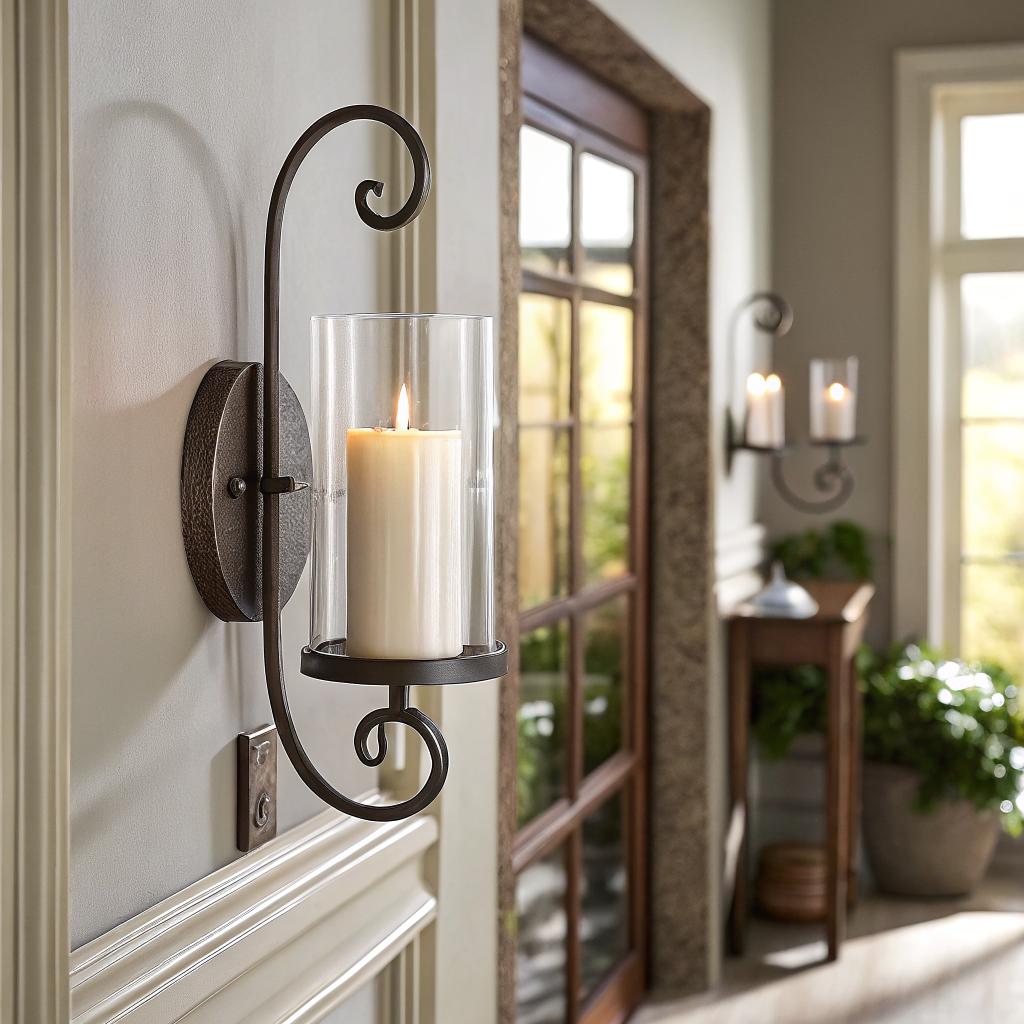
What if I told you that a twenty dollar wall light can quietly support a six figure sales cycle?
A simple, well placed Candle wall sconce will not close deals on its own, of course, but it can shape how investors read your pitch deck, how candidates judge your culture, and how clients feel about your pricing. In plain terms, it supports brand value by making your office feel intentional, confident, and memorable. That feeling affects how people trust your numbers, your product, and your leadership, which can show up later in better conversion, better talent, and better word of mouth.
It sounds a bit strange. Light and candles and brand equity. But keep reading for a moment before you dismiss it as interior design fluff for people who avoid spreadsheets.
You already know brand is more than logo and font. For companies that live in the world of tech, funding, and fast growth, brand is how people feel when they step into your office, sit in your waiting area, or join you in a meeting room. It is small signals stacked together. One of those signals is how you handle light.
Harsh overhead LED panels give a cheap, temporary feel. That does not match a company asking for a ten year partnership or a seed round that promises to change an industry. Wall sconces with candlelight, used with a bit of restraint, create a calmer, more deliberate space. That gap between “cheap” and “deliberate” is where brand value grows.
Why lighting affects brand value more than most pitch decks admit
Let us zoom out for a second.
Brand value, in a business sense, shows up in a few concrete areas:
- Perceived product value and pricing power
- Trust from investors and lenders
- Ability to attract strong candidates and senior hires
- Customer loyalty and referral rate
Now ask a simple question: where do these people make their first serious judgment about you? Not just your landing page. Often it is:
- The reception area when they visit your office
- The conference room where you run the funding meeting
- The boardroom where you walk through churn and runway
- The lounge or kitchen area where teams talk freely
All those spaces share one quiet input: lighting.
Fluorescent glare makes everything feel temporary and stressful. People read your product and your numbers through that feeling, even if they do not admit it. Warm, layered light does the opposite. It suggests care, patience, and focus.
Good lighting will not fix a weak product, but bad lighting can drag a strong brand down to “cheap and forgettable” in under five seconds.
Candle wall sconces are one tool in that wider lighting strategy. Not the only one, but a very specific one with a few strengths that LED strips and ceiling panels do not match.
What a candle wall sconce signals about your brand
1. You sweat details that do not scale in obvious ways
Investors love to say they care about “focus” and “unit economics”. Fair. But they also tend to fund teams that show taste. That word is rarely in the term sheet, yet you can feel it.
When a visitor notices a subtle line of candle sconces along a hallway or in a lounge, it sends an odd little signal: someone cared enough to think about this. Someone mapped the user journey not just inside the app, but inside the office.
That matters for tech and growth focused businesses because:
- It suggests founders will treat product and governance with the same care.
- It hints that leadership will treat customers and staff as humans, not just rows in a CRM.
- It supports a story of “we are building something long lasting, not just chasing a fast flip”.
I once visited a B2B SaaS company that had a brilliant financial model and a terrible office. Bright blue plastic chairs, sharp white LEDs, almost no decoration. It felt like a temporary discount clinic. Their churn numbers were fine, but every investor meeting in that space felt harsher than it needed to.
A year later, same deck, same product. New office with softer wall lighting, some art, and yes, candle sconces along the main corridor. One investor told me, privately, “They finally look like a company that will still be here in five years.” The numbers did not change. The environment did.
Sometimes brand value grows not from adding more features, but from removing distractions that make people question your seriousness.
2. You manage emotional states, not just tasks
Think about the emotional states you need to manage in a growing tech company:
- Nervous investors who sit through back-to-back pitch meetings
- Candidates who left stable jobs and feel uncertain
- Engineers who work long hours and face constant context shifts
- Customers who just came from a tough vendor meeting across town
Cold lighting keeps them alert, sure, but often also tense. Soft, indirect light from wall sconces and other sources helps people calm down just enough so they can think clearly. Not sleepy, just not on edge.
This matters in two concrete ways:
1. People remember how they felt in a space more than the exact words they heard.
2. Calm people make more measured decisions, which is what you want in long contracts and equity deals.
If your office feels like a waiting room at a budget clinic, do not be surprised when people treat your pricing and forecasts with the same low trust.
A row of candle sconces in a meeting room, combined with good ceiling lighting and natural light, creates zones. You can have one side of the room bright for notes and screens, and one side warmer for conversation. That subtle contrast keeps meetings readable and human.
3. You are willing to trade a tiny bit of “efficiency” for quality
Some founders push back here: “We care about growth and margins, not candle holders.”
I understand the concern. It can sound like a distraction from more serious metrics.
The counterpoint is simple. You are already spending money on office rent, desks, maybe an espresso machine. Lighting choices are not a huge extra cost compared to payroll. A few hundred or a couple of thousand dollars spread over years of use, during which you host dozens of investor visits and hundreds of client meetings, is not wild.
This does not mean you need to turn the office into a spa. It just means you accept that “good enough” lighting is not actually good enough when you operate in a market where perception affects funding and contract size.
Where candle wall sconces make the most brand impact
Placing sconces anywhere without a plan can look random. There are a few zones where they punch above their weight.
Reception and entry corridor
The first ten seconds set the tone. People walk in, scan the reception desk, glance at the seating, look at the walls.
If you use candle sconces here, keep them:
- At eye level or a little higher
- Spaced evenly along a corridor or around the seating area
- Paired with one main overhead source so the space is still bright enough for work
You want the candles to add depth and warmth, not to be the only light.
This entry experience helps with:
- Recruiting: candidates feel that someone cared about comfort.
- Clients: they sense a stable, confident company, not a scrappy corner office trying to look bigger than it is.
- Press and partners: they see visuals that photograph well, which helps media coverage.
Boardrooms and investor meeting rooms
This is where lighting can quietly support big numbers.
In a typical tech office, the boardroom has:
- One big table
- One huge screen
- Brutally bright overhead lights
That mix does not help long discussions about risk or runway.
Wall sconces, used with dimmable overheads, let you adjust the mood during different parts of the meeting.
For example:
| Meeting stage | Main goal | Lighting approach |
|---|---|---|
| Intro & small talk | Build rapport and lower tension | Overheads medium, candle sconces on to add warmth |
| Data review & live demo | Clarity and focus on screen | Overheads brighter, sconces dimmed or secondary |
| Negotiation & Q&A | Encourage honest, long conversation | Overheads slightly lowered, sconces on to keep room comfortable |
It might feel fussy, but people react to this without thinking. They talk more freely, listen more, and stay less fatigued, which is valuable when you are arguing for another round at a higher valuation.
Quiet zones, focus rooms, and library corners
Growth focused teams run hot. Sprints, war rooms, late night bug hunts. If every square meter of the office has the same bright light, there is no place for heads-down thinking.
A small corner with soft chairs, bookshelves, and candle sconces can be a reset zone. People can step away from their screens, think through a hard problem, then return. That small drop in stress can reduce mistakes and improve decision quality over time.
You do not need a full “wellness room”. A plain wall, two sconces, and two chairs can be enough.
Balancing candles with safety, policy, and modern tech
There is one obvious problem: real flames in an office. Some buildings or insurance policies do not like that at all.
You have a few options, and each one carries its own brand signal.
Real candles vs LED candles
Here is a simple comparison.
| Type | Pros | Cons | Best use |
|---|---|---|---|
| Real wax candles | Natural flame, gentle movement, very warm feel | Safety risk, smoke, mess, building rules, fire alarms | Private offices, rare events, controlled spaces |
| LED candles in sconces | Safe, low maintenance, timer controls, building friendly | Less authentic, some cheap models look fake | Daily use in corridors, lounges, meeting rooms |
Real candles can work for occasional events or private spaces, but for most offices LED options are more practical. The trick is to avoid the very cheap ones that flicker like broken bulbs.
Look for models with:
- Soft, irregular flicker patterns
- Warm color temperature, not cold white
- Remote or smart controls for easy on / off
There is a small irony here. Tech companies that discuss IoT and smart offices in their marketing often have the least thoughtful physical lighting. Using smart controlled candle sconces in meeting rooms is an easy way to show you actually use the technologies you talk about, without making a big speech about it.
Fire regulations and building rules
Some founders ignore this and light real candles until someone complains. That is not smart.
Talk to your building manager or landlord. Ask clear questions:
- Are real candles allowed at all?
- If yes, in which zones and under what conditions?
- Any special holders or shields required?
If the answer is no, switch to LED and move on. It is not a hill worth dying on.
Remember, you are not trying to build a medieval hall. You just want warm accents that support focus and comfort.
Brand consistency: candles, logo, product, culture
Candle sconces do not live in isolation. They work best when they support the rest of your brand.
Matching light to your core message
Ask yourself a blunt question: what feeling do you want your company to project?
- Calm and reliable, like long-term infrastructure?
- Warm and community oriented, like a member space?
- Sharp and analytical, like a high frequency trading desk?
Candlelight fits better with some of these than others.
If your brand is “cold precision at scale”, you might use candles carefully, maybe just in lounge areas, not main work zones. If your brand is “patient partner for complex workflows”, warm sconces in meeting rooms match that story.
What you want to avoid is visual conflict. For example:
- Neon colors, ultra bright screens everywhere, and then very ornate old-world candle sconces. That clash can feel like costume.
- Very minimal, bare concrete, and then fussy, gold framed sconces with dripping fake wax. That feels inconsistent.
Pick designs that feel like a quiet extension of your logo, typography, and product UI. Clean lines, simple metal, clear or frosted glass. Understated.
How this plays into funding and hiring narratives
Investors and senior hires often ask a simple, hidden question: “Would I want to spend years in this space with these people?”
Your office answers that before you say a word.
Candle sconces along a hallway used by both teams and visitors tell a quiet story about pace. They suggest you are not trying to burn everyone out under hard white light all day. For senior engineers, that matters. For experienced sales leaders who have sat in hundreds of bland conference rooms, it can be a refreshing signal.
No one will sign a term sheet because of candlelight. But, all else equal, people choose the environment that respects human limits over the one that ignores them.
Practical steps: how to test candle sconces in a growth-focused office
You might still feel skeptical. That is healthy. Interior choices often turn into money pits when people chase mood without a plan.
Here is a straightforward approach.
1. Start with one visible zone
Pick one of:
- Reception seating area
- Small meeting room used for client calls
- Quiet corner where staff already sit with laptops
Install two or four simple sconces. Use LED candles if real ones are an issue. Keep the design clean.
Run this “lighting experiment” for a few weeks. Pay attention to:
- Comments from visitors. Do they mention the room feels relaxed, calm, or “nice” without knowing why?
- Comments from staff. Do they choose that room more often for difficult calls or work?
- The tone of meetings. Does the conversation feel less rushed?
You do not need a complicated survey. Just listen.
2. Link the change to concrete goals
Make it a small internal project. For example:
- Goal: improve close rate for onsite sales demos by 5 percent over a quarter.
- Action: standardize the demo room, including new lighting with candle sconces.
- Check: compare pre-change vs post-change numbers, adjusting for normal variance.
Will lighting alone cause the shift? Probably not. But as part of a series of small improvements, it can help. The point is to treat brand environment like product: test, adjust, repeat.
3. Document with photos for remote audiences
Many tech and growth companies have hybrid or remote teams. Investors may not visit in person often.
Good photos of your office, including candle sconces in meeting rooms or lounges, help people feel the space through slides, websites, and update emails. They can soften an otherwise cold deck.
You can even add a short line in your quarterly update:
“Small thing: we upgraded lighting in our main meeting rooms to make long sessions more comfortable. Early feedback from the team and visiting clients is positive.”
That single sentence tells people you care about the daily environment, not just valuations. It hints at maturity. Some will ignore it. Some will quietly appreciate it.
Common mistakes to avoid with candle wall sconces
Not every use of candle sconces helps brand value. Some choices make spaces feel cheap or confused.
Too many fixtures in one view
If you crowd a wall with sconces, the space can feel like a themed restaurant. That pulls attention away from your product and numbers.
Use restraint:
- For a small room, two sconces are often enough.
- For a long corridor, space them out so they mark rhythm, not overload.
Overly decorative designs
Unless your company brand is explicitly old-world or luxury, heavy ornament, fake crystals, or very ornate metalwork will clash with most tech offices.
Pick simple shapes:
- Plain cylindrical glass
- Flat metal backplates
- Neutral colors like black, bronze, or brushed steel
Let the light do the work, not the fixture.
Ignoring maintenance
Dusty sconces, half-dead LED candles, crooked installations. All of these send a worse signal than having no sconces at all.
Assign maintenance to someone on the workplace or office team. Put simple checks on their weekly list:
- Are all candles working?
- Are the fixtures clean and straight?
- If real wax is used for events, are holders cleaned after?
If you cannot keep them tidy, scale back the number of sconces until you can.
How candle sconces compare with other branding investments
You have many ways to invest in brand value. Some are more complex than others. It helps to think in terms of cost, effort, and signal strength.
| Brand investment | Cost level | Setup effort | Signal to visitors |
|---|---|---|---|
| New logo & full rebrand | High | High (months) | Strong, but can feel surface level if space and culture lag |
| Office move to premium location | Very high | Very high (contracts, build-out) | Strong, but expensive and slow |
| Custom office furniture | Medium to high | Medium (design, logistics) | Good, but not always noticed by visitors |
| Lighting upgrade with candle sconces and related fixtures | Low to medium | Low to medium (ordering, installation) | Subtle but consistent, affects every meeting and visit |
From a growth perspective, candle sconces sit in that nice corner of “low cost, recurring impact.” They are not glamorous, but they quietly work every day.
What about remote-first or no-office companies?
If your team is fully remote, you might think this whole topic does not touch you. That is only partly true.
You still have moments where physical space matters:
- Quarterly offsites
- Investor days
- Customer workshops in rented venues
When you book those spaces, pay attention to lighting. If you can choose, pick venues with softer, layered light, or bring temporary wall sconces or candle holders where rules allow.
You can also think about how your team members light their own backgrounds for video calls. A founder with calm, soft lighting behind them feels different on a call than someone in harsh fluorescent glare. People will not say “Your lighting made me invest,” but it does affect trust and fatigue.
It might sound small next to burn rate discussions, but people still respond to human faces in human spaces, even through a screen.
Frequently asked questions about candle wall sconces and office brand value
Q: Can a candle wall sconce really affect investor or client decisions?
A: Not directly, at least not in a way you can measure with perfect precision. No investor approves a term sheet because of a candle. But they do react to how they feel in your meeting rooms. Lighting is one input among many that shape that feeling. If your product, numbers, and team are already solid, a well designed space with good lighting can help tip the emotional balance in your favor.
Q: Is this worth the cost for an early-stage startup?
A: If you are struggling to pay salaries, you should focus on revenue, not decor. If you already spend money on a basic office, a small amount reserved for lighting, including simple candle sconces, is reasonable. Think of it as part of the customer and investor experience budget, not as decoration for its own sake.
Q: What is a simple starting setup for most offices?
A: One practical starting point is:
- Two candle wall sconces in the main meeting room used for key calls and investor visits.
- Two to four sconces in the reception or waiting area.
- Warm LED candles in all of them, on timers.
From there, listen to feedback and watch how people use the space. If you notice more relaxed conversations, less visible tension, and more use of those rooms for serious work, you will know you are heading in the right direction.