
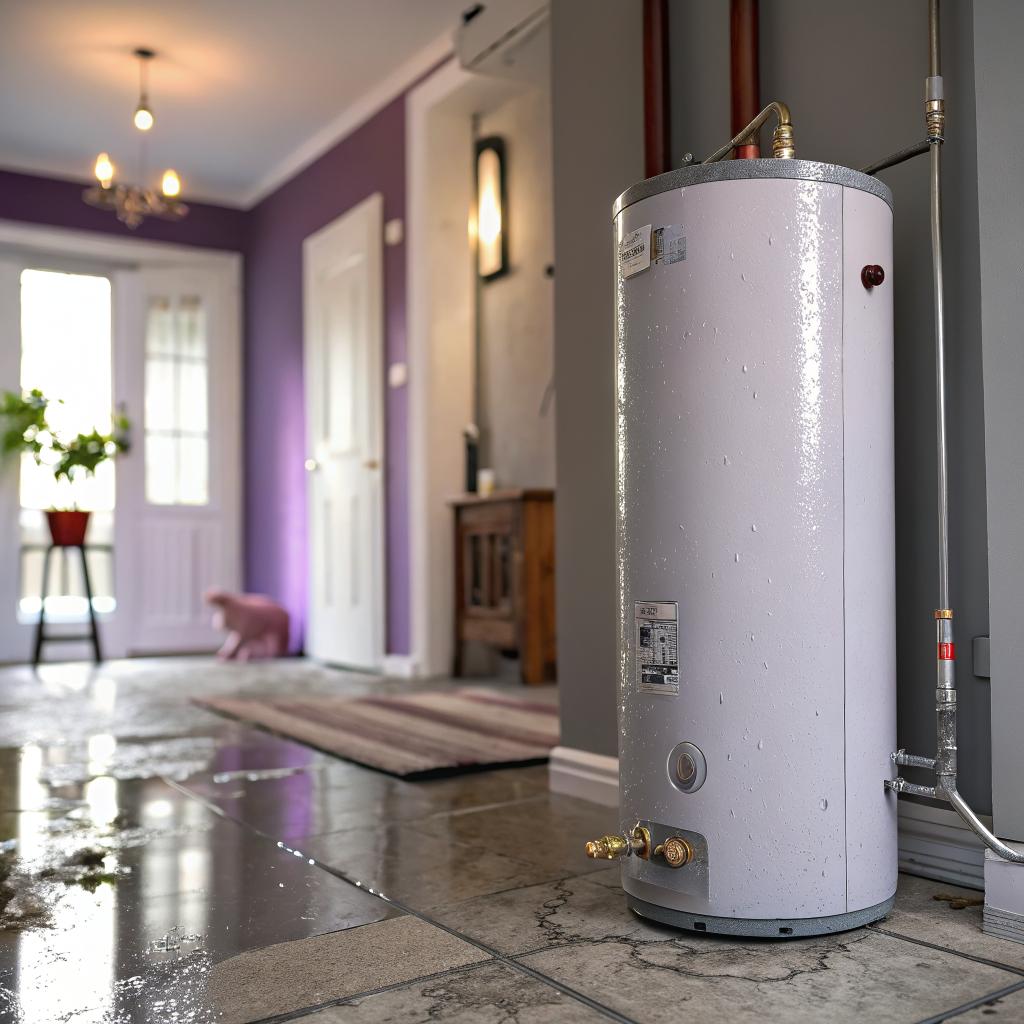
What if I told you that one of the fastest ways to cut operating costs in a small or mid-sized business in Aurora is hidden in the utility closet, not in your P&L spreadsheet?
Here is the short version: when you treat your commercial water heater as a strategic asset instead of a background appliance, and you get smart, data-minded emergency plumber Aurora instead of waiting for breakdowns, you lower utility bills, avoid emergency downtime, extend equipment life, and keep capital free for growth instead of surprise replacements. The numbers are usually not dramatic in any given week, but over a year or two, they matter a lot.
Why water heater repair even belongs in a growth conversation
Most founders and operators care about runway, margins, and revenue. Hot water sits in the “facilities” bucket, which you probably treat as a fixed cost.
That view is wrong.
Your water heater quietly affects:
- Monthly cash flow through gas or electric bills
- Risk of forced shutdowns or limited service
- Replacement timing and capital planning
- Insurance and liability exposure if there is a leak or safety issue
- Customer experience if hot water is part of service delivery
It is not glamorous, but it is predictable. And predictable is nice when everything else in the business feels chaotic.
Hot water is not a growth lever, but bad hot water is a slow financial leak that compounds over time.
This is why I think “smart” repair matters. Not just fixing things when they break, but pairing repairs with basic data, sensors, and a clear plan that looks at a 3 to 5 year horizon, not just today.
What “smart” water heater repair actually means
Let us avoid buzzwords for a second. When I say “smart,” I am not talking about some sci‑fi boiler that talks back to you.
For most Aurora businesses, smart repair usually includes three simple layers.
1. Condition monitoring instead of surprise breakdowns
At the basic level, this means:
- Regular inspections with actual data logged, not just a quick glance
- Installation of simple sensors where it makes sense, like leak detectors or temperature sensors
- Tracking inlet and outlet temperatures, recovery times, and error codes over time
If you have a restaurant that opens at 10am, you want to know if the heater is taking 45 minutes to reach target temperature instead of 15. That change is an early signal of sediment buildup or a failing part.
You do not need a full IoT setup, but a modest step above “wait until someone complains the water is cold” already changes the math.
2. Predictive maintenance, not crisis maintenance
Most operators know the phrase “planned maintenance” but treat it like an annual checkbox.
Predictive maintenance is a bit different. It uses the condition data to answer questions such as:
- Is gas usage creeping up month over month for the same level of demand?
- Is recovery time after peak usage slowly getting longer?
- Are certain error codes appearing more often, but then clearing?
If your plumber or facility team acts on these signals early, you often get:
Small, planned repairs during low-traffic hours are almost always cheaper than emergency service plus lost revenue during peak time.
Hitting a burner tune-up or anode replacement a bit early often prevents tank damage that would cost 10x more later.
3. Basic connectivity where it actually earns its keep
Not every business needs cloud dashboards, but some tech can pay off:
- Wi-Fi or local controllers that send alerts when temperatures drop outside target ranges
- Smart leak detectors that ping your phone or a monitoring service
- Simple energy monitoring plugs or sub-meters on electric heaters
This is not about gadgets for their own sake. It is about getting enough visibility that you catch issues before they escalate, and that you can show your plumber real data instead of vague complaints.
Where Aurora businesses burn money on hot water
Let me break down the main cost buckets, because it is easier to see where smart repair feeds into actual savings.
Energy waste from neglected heaters
A poorly maintained gas or electric water heater can use 20 to 40 percent more energy than it needs. That range looks wide, but conditions vary a lot between a small office and a busy gym.
Common causes:
- Thick sediment at the bottom of the tank that forces the heater to work harder
- Faulty thermostats causing overheating
- Heat loss from damaged insulation or hot pipes that are not insulated
- Short cycling due to bad control settings or failing sensors
In Aurora, where winters are long and cold, this shows up clearly in gas and electric bills.
Here is a simple comparison for a mid-size business using gas:
| Condition | Approx. monthly gas cost for hot water | Notes |
|---|---|---|
| Well-maintained heater | $300 | Annual flushing, tuned burner, proper settings |
| Neglected heater | $360 – $420 | Sediment buildup, wrong temperature, no tune-up |
| Failing heater | $450+ | Short cycling, frequent reheat, leaking hot water |
If you sit in that “neglected” band for two years, that is close to $1,500 to $3,000 in pure waste for just hot water. You would never tolerate that kind of avoidable loss in your paid ads, but facilities spending often goes unreviewed.
Hidden cost of downtime
Energy is the loud, visible cost. Downtime is the quiet one that often hurts more.
Picture this:
- Restaurant: no hot water, you might have to close or at least limit service for health rules.
- Salon or spa: customers cancel or demand refunds if you cannot provide warm services.
- Small manufacturing shop: some processes require hot water, so a shift slows or stops.
Now layer in timing. A heater that dies on a Saturday night during a busy service block hurts more than one that fails Tuesday at 2am.
Smart repair is less about fixing fancy hardware and more about choosing when you have the problem, not letting the problem choose you.
If your condition monitoring and predictive maintenance plan suggest high risk, you schedule the repair for off-hours. You keep revenue intact and pay standard rates instead of emergency call-out.
Shorter equipment life from ignoring small issues
Most commercial water heaters have an expected life of around 8 to 12 years, depending on water quality, usage, and model.
In real life I have seen:
- Heaters in Aurora that fail in 4 to 5 years because nobody flushed them or checked the anode
- Heaters that reached 15 years because the owner treated maintenance like an investment
Quick math:
| Scenario | Heater cost (installed) | Service life | Annualized cost |
|---|---|---|---|
| No smart repair | $7,000 | 5 years | $1,400 / year |
| Smart repair + maintenance | $7,000 | 10 years | $700 / year |
Even if you spend $300 to $500 per year on proactive repairs and maintenance, you still come out ahead. Plus you spread the replacement cost across more years, which matters for cash flow and planning.
How this connects to growth, funding, and your tech stack
You might be thinking, “This is just facilities. My investors want to hear about ARR, new features, or new locations.”
That is fair. Still, cost discipline in unglamorous areas is part of the story investors and lenders care about. It signals that you treat operational details seriously, not just pitch decks.
Freeing up cash for growth instead of emergencies
Every time a water heater fails unexpectedly, you tap:
- Cash reserves that could go to marketing or hiring
- Credit lines you would prefer to keep for strategic use
- Owner time and attention during the repair and cleanup
On the flip side, when you treat water heater repair as an ongoing, predictable project:
You convert random emergency costs into a planned, budgeted line item, which is exactly the kind of discipline finance people like to see.
Better yet, if your monitoring shows that a unit will not last more than one more winter, you can plan a replacement when:
- Cash flow is strong
- Interest rates for equipment financing are favorable
- Your team has time to oversee installation and switch-over
This is very boring. It is also how some operators quietly outperform others over time.
Connecting water heater data to your broader tech mindset
Many founders talk about being “data focused,” but only regarding sales funnels or user analytics. Facilities remain analog.
Here is a practical way to keep integrity between your words and operations:
- Track utility usage and maintenance events in the same reporting rhythm that you track revenue
- Set simple thresholds, such as “If gas use per unit revenue rises 15 percent for 2 months, investigate hot water and HVAC”
- Include water heater condition in any site-level risk score you share with your leadership team
This does not mean you need a fancy building management system. A shared spreadsheet, a few smartphone photos, and periodic meter readings already raise your level of insight.
For multi-site operations, this becomes more interesting. If one Aurora location has double the hot water energy cost per customer compared with another, that is a prompt to ask why. Different heater condition? Different usage patterns? Leaks?
Practical blueprint for smart water heater repair in Aurora
Let us make this concrete. Suppose you are running a small chain of coffee shops or clinics around Aurora. What would a “smart” approach look like over 12 months?
Step 1: Baseline your current situation
Before you fix anything, figure out where you are.
At minimum, gather:
- Age, model, and capacity of each water heater
- Recent repair history and any known quirks
- Monthly gas or electric bills for the past 12 months
- Any past incidents of service interruption due to hot water
Then ask:
- Which units are older than 7 to 8 years?
- Which locations have a higher utility cost per square foot or per customer?
- Where have you had more complaints related to hot water?
You might already see patterns that justify a closer look at certain sites.
Step 2: Build a light data layer around each heater
You do not have to become a sensor vendor. Focus on the few data points that matter:
- Outlet temperature during normal operation
- Time it takes to recover temperature after peak usage
- Gas or kWh draw during typical operation periods
- Any error codes or alarms
Practical ideas:
- Add a cheap temperature logger on the outlet pipe
- Install simple leak sensors near the base of the tank, especially on upper floors
- Ask your plumber to record combustion efficiency or similar readings during service
If you are already using building automation for HVAC, you might be able to plug into that system instead. But if not, low-tech is fine.
Step 3: Move from “call when broken” to “planned service visits”
If your current process is to wait until staff complain, that is your first cost driver.
Work with your plumber to set:
- A basic inspection and flushing schedule, often once or twice a year for heavy-use commercial tanks
- A checklist that includes checking anode rods, venting, temperature settings, and valves
- Preferred visit windows, such as early morning or between shifts
Ask them bluntly which parts fail most often in Aurora’s water conditions. Hard water, cold winters, and altitude can all play a part. Then decide which of those parts you should treat as planned replacements before they reach end of life.
Step 4: Tie repair choices to a simple financial rule
Here is where the business side comes in. Not every repair is worth doing. Some point you toward replacement instead.
You can use a rule of thumb:
- If a repair costs more than 30 to 40 percent of replacement cost and the heater is older than 7 years, seriously consider replacement.
- If a repair costs less than 20 percent of replacement and clearly extends life at least 2 seasons, it is usually worth doing.
This is not perfect, but it makes decisions faster. Your plumber and your accountant can refine the numbers based on your actual costs.
Step 5: Use Aurora’s conditions to your advantage
Aurora has some realities you cannot ignore:
- Cold winters mean longer recovery times and higher usage in some businesses
- Water quality affects scale and corrosion rates
- Some buildings have older plumbing layouts that strain equipment
Smart repair in this context might mean:
- Installing mixing valves so you can store water hotter while delivering safe temperatures, improving effective capacity without a bigger tank
- Adding or upgrading insulation on the tank and hot water lines, which is a one-time hardware cost for ongoing savings
- Checking combustion settings for altitude so your gas heater runs correctly
None of these steps scream “technology company,” but they respect the same logic: gather data, fix bottlenecks, and keep an eye on return on investment.
Case-style scenarios: what cost savings can look like
It might help to walk through a few simplified scenarios. These are not marketing stories, just typical patterns.
Scenario A: Small restaurant with a single gas heater
Facts:
- Seating: 50 customers
- One 80-gallon gas water heater, 9 years old
- Average gas cost: $400 per month in winter, $280 in summer
- Two unplanned outages in the past year, each during dinner service
Costs from outages:
- Lost revenue: around $2,000 per event
- Emergency plumber call: $450 per event
That is about $4,900 per year in total outage impact, plus higher energy usage from an aging, scaled heater.
With a smart repair approach:
- Baseline test shows heavy sediment and reduced burner performance
- Owner schedules a full flush, burner tune-up, and anode replacement during closed hours
- Total cost: $850
- Result: gas use for hot water drops about 20 percent, so maybe $70 per winter month and $40 per summer month saved
Rough annual savings:
- Energy: about $660 per year
- Avoided one outage: $2,450 saved (if predictive maintenance avoids even half the previous incidents)
Payback on smart repair is within months, not years.
Scenario B: Multi-site clinic group in Aurora
Facts:
- 5 locations, each with its own water heater
- Annual energy cost for hot water across sites: about $18,000
- Replacement budget is ad hoc and reactive, often using short-term credit
Smart repair plan:
- Install basic loggers and leak detectors across all sites
- Run annual inspections with one provider, who keeps a shared log
- Rank heaters by age and condition, then plan replacements over 3 years, not all at once
Benefits:
- Energy savings from better-tuned systems: suppose 15 percent, or about $2,700 per year
- Fewer middle-of-the-day breakdowns; even if they avoid two full replacements during peak operating hours, that may save $3,000 to $5,000 in disruption and premium labor.
- Ability to time replacements with lower workload seasons and better financing deals.
This is not transformational, but it quietly adds a few basis points to operating margin. For groups who care about valuation multiples, that matters.
Choosing the right repair partner for smarter decisions
The “smart” part does not only live in devices. It also lives in the plumber you choose.
Questions to ask a potential repair provider
You do not need a 40-point checklist, but you should ask questions like:
- How do you track the condition of our equipment over time? Do you keep service logs, and can we access them?
- Can you suggest a maintenance schedule based on our usage, not just a generic annual visit?
- What data do you capture during a visit, and can you share trends, not just invoices?
- How do you handle after-hours work so we can avoid downtime during peak business?
If they look surprised by these questions, they might still be stuck in the old “fix it when it breaks” world.
You do not need a plumber who markets themselves with big tech buzzwords. You do want one who speaks in terms of conditions, failure patterns, and cost over time.
Negotiating for predictability
Try to shift from pure time and materials work to some form of predictable arrangement where it makes sense.
For example:
- A flat rate for annual inspections and flushing, with clear pricing for common parts
- Priority scheduling windows that fit your operating hours
- Simple service level expectations for emergency calls, with known premiums
This reduces the variance in your facility costs and makes budgeting easier. Some providers may push back, but the conversation alone can tell you a lot about their approach.
When replacement beats repair for cost control
All this talk about repair may sound like I am against replacement. I am not. Some businesses cling to old heaters too long and pay for it every month.
Signals that it is time to replace, not repair
Look for patterns like:
- Multiple repairs in a 12 to 18 month window, each in the $400 to $800 range
- Noticeable hot water shortages during peak times, even after repairs
- Rust in hot water, which may indicate tank failure risk
- Age above 10 years on heavy-use commercial units
- Energy use that is clearly higher than what a new, more efficient unit would consume
If your smart repair data shows all of these, it is often cheaper over 3 to 5 years to plan a replacement. Then, once you have the new unit, you go right back to good monitoring and maintenance so you protect that investment from day one.
Common objections and honest responses
I hear a few recurring pushbacks about this whole topic. Some are valid, some less so.
“We are too small for this level of detail”
You might run a single small shop or studio and feel this is overkill. In some cases, I agree. If your annual hot water spending is below $1,000 and downtime cost is low, then your return might be modest.
Still, at least knowing:
- Age and general condition of the heater
- Basic maintenance history
- Rough energy usage trends
helps you avoid growing into large, hidden costs later.
“Our landlord handles it”
If you lease your space, you may not own the water heater. That changes the equation but does not make it irrelevant.
You should still:
- Understand who is responsible for repairs and replacements in your lease
- Estimate what downtime would cost you if the landlord is slow to act
- Ask for proof of recent maintenance if your business is very sensitive to hot water interruptions
If the landlord cuts corners, it is your customers and staff that feel the pain first.
“We already do annual maintenance; is that not enough?”
Maybe it is. But the key difference with “smart” repair is what you do with the results of that maintenance.
Do you:
- Track the readings and compare them year to year?
- Adjust replacement timelines based on actual condition, not just age?
- Use the data to tweak settings, insulation, or usage patterns?
If the answer is no, then you still have room to get more value from visits you are already paying for.
One last question to tie this back to growth
If you pitch your business as disciplined, tech aware, and focused on smart use of capital, does your back-of-house reality support that story?
You already instrument your software, your marketing, and your sales pipeline. Extending that mindset to something as simple as water heater repair in Aurora is not glamorous, but it is consistent.
Small, predictable savings from smart repair will not make headlines, but they quietly compound into a stronger, more resilient business that investors and lenders tend to trust more.
So here is a practical question for you to ask your team this week:
Q: What is the real cost of our hot water over the next 3 years, and what would we change if we treated the heater like a strategic asset instead of background noise?
If nobody can answer that yet, you have just found an easy place to start improving your cost structure.