
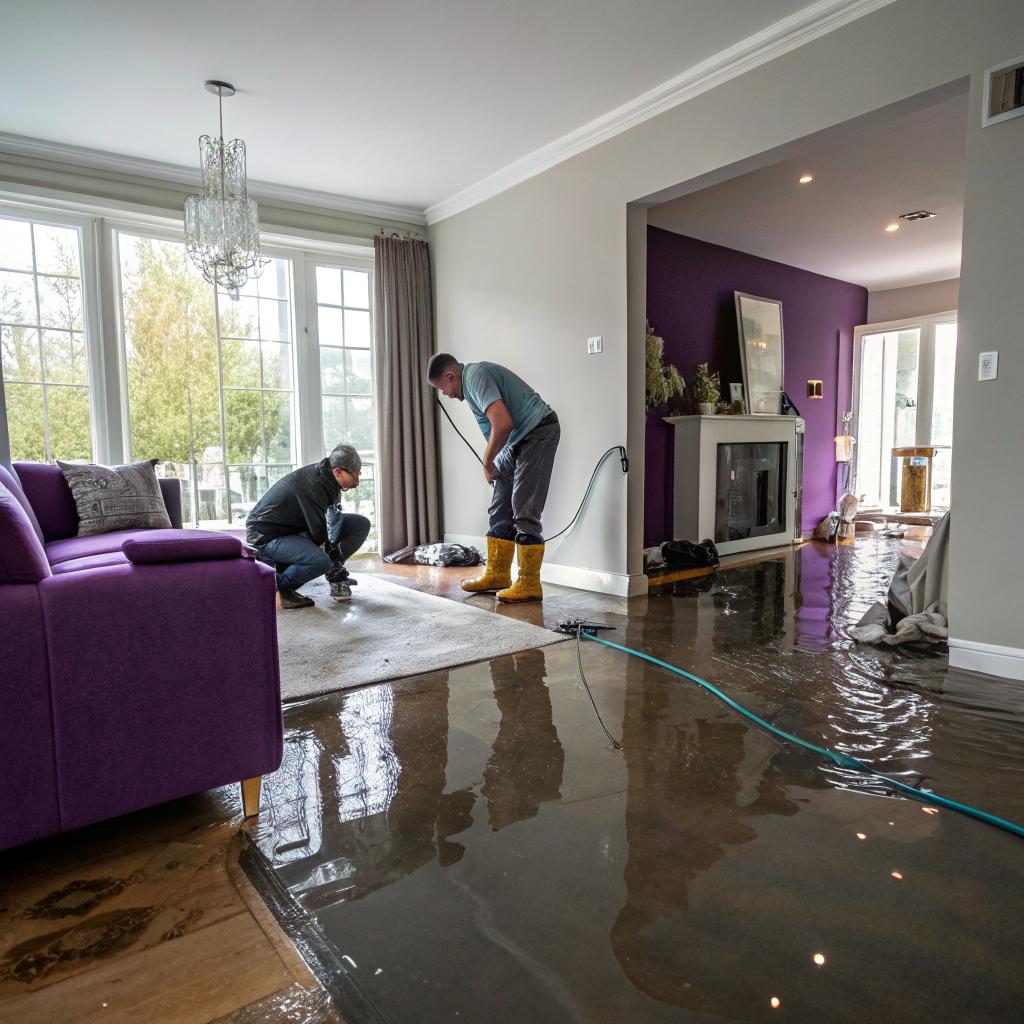
What if I told you that some Salt Lake companies quietly turn flooded offices into higher revenue, stronger retention, and better financing terms, instead of just a nasty insurance story?
They do it by treating Salt Lake water damage repair as a business project, not a maintenance chore. They move fast, get clean data, control the narrative with insurers and lenders, and use the repair window to upgrade infrastructure they already planned to improve. The ROI comes from reduced downtime, avoided churn, smarter capex, and slightly boring but real gains in insurance and financing conditions over the next few years.
It is not magic. It is process, numbers, and a bit of discipline when everyone is stressed and tired and just wants the carpets dry.
Why water damage is a business problem, not just a facilities problem
Most leaders treat water damage like a freak event. Something the facilities team and insurance adjuster will “handle.”
That approach burns money.
A serious leak or flood in Salt Lake hits your business on three fronts at once:
Water damage is not about wet drywall. It is about lost hours, lost trust, and hidden repair choices that affect your P&L for years.
You have:
1. Direct repair costs
2. Lost revenue or productivity
3. Future risk: mold, structural issues, and insurance history
If you only stare at line 1, you miss where the real money is.
Here is a simple way to look at it:
| Cost / Impact | Short term (0 to 30 days) | Medium term (1 to 12 months) | Long term (1 to 5 years) |
|---|---|---|---|
| Direct spend | Emergency drying, demo, repair | Upgrades and redesign | Maintenance, minor fixes |
| Revenue / operations | Downtime, relocations | Customer churn or recovery | Better layout, smoother workflow |
| Risk & insurance | Claim friction, disputes | Premium changes, exclusions | Asset value, underwriting view |
Smart firms have a simple rule: every significant physical incident gets treated like a measurable business project. That includes water.
The quiet ROI levers in Salt Lake water damage repair
Let me break down where the returns usually hide. They are not always dramatic, but they stack up.
1. Cutting downtime by treating it like a product launch
When a flood hits a floor or data room, many teams slip into a vague “we will be back soon” mode.
Better firms do almost the opposite. They act like they are shipping a new release.
- They assign an incident owner with authority, not just a facility contact.
- They set a target “back in revenue” date and track it daily.
- They create a simple status board for leaders and staff.
It sounds boring. It works.
Imagine you run a 40-person software team in a downtown Salt Lake office. Your space is partially flooded and half your staff needs to work remote for a week.
If your average fully loaded cost per employee is 60 dollars per hour, and you lose even 2 productive hours per person per day for 5 days, that is:
40 × 2 × 5 × 60 = 24,000 dollars in soft loss.
If better coordination cuts that loss by just 25 percent, you keep 6,000 dollars in value. That is before you touch customer-facing revenue.
Firms that track downtime by the hour make different decisions about contractors, weekend work, and temporary setups. That is where ROI starts.
A few habits that I have seen help:
- Pre-agree remote work playbooks. Who needs office access, who can move fully remote, what hardware can move quickly.
- Have a “minimum viable office” plan. One or two rooms that can be cleaned and powered first to bring back core teams.
- Track a simple metric: revenue-capable hours per day. Ask daily, “How many people can work at full strength today?”
You will not get this perfect. But when you treat time as the key resource, your repair choices start to look different. You might pay a bit more for weekend drying, but recover a full workday. The math is often in your favor.
2. Using the incident to justify needed upgrades
This part can sound a bit opportunistic, and I am not saying you should overbuild just because a pipe burst. Some teams go too far on that.
Still, a water incident exposes weaknesses you already had, like:
- Poor cabling and power layout that slows your tech team
- Old flooring or partitions that do not support flexible work
- Legacy server rooms that you wanted to shrink anyway
When walls are already open and flooring is already pulled, your marginal cost to improve is lower than during a fresh remodel.
Think of it as combining repairs with planned capex.
For example:
| Item | Standalone upgrade cost | Incremental cost during repair | Why it is cheaper now |
|---|---|---|---|
| New cabling / power layout | 12,000 dollars | 5,000 dollars | Walls already open, crew already there |
| Better floor plan for teams | 20,000 dollars | 8,000 dollars | Design and minor changes riding on existing work |
| Reducing on-prem hardware footprint | 10,000 dollars | 3,000 dollars | Consolidation timed with repair of server room |
You should not dump a five year upgrade wish list into one claim. That is usually a fight with insurers and creates noise.
But you can:
- Repair to pre-loss condition where coverage applies.
- Fund your own upgrades on top, taking advantage of open access and on-site trades.
This is where finance and facilities have to actually talk, instead of sending each other polite emails that nobody reads.
3. Turning documentation into future leverage
Many companies treat repair documentation like receipts: boring, necessary, forgotten.
That is a mistake.
If you are a growing firm, your physical risk history will show up in:
- Insurance pricing and terms
- Bank lending conversations
- Potential buyers doing diligence
Good water damage files are not paperwork. They are proof that you manage risk like an adult business, not like a teenager with a broken roof.
Helpful details to capture during Salt Lake water events:
- Timeline: when damage was found, when mitigation started, when you were back at full capacity.
- Costs: broken into mitigation, repair, and upgrades you chose to add.
- Impact on revenue: rough but honest estimates of delay, churn, or missed orders.
- Remedial steps: changes to plumbing, sensors, monitoring, floor use.
This data matters later.
When you renew insurance, you want to say something like:
– “We had one water event, contained within 24 hours, with full operations back in 3 days, plus permanent fixes.”
Instead of:
– “We had some water issues. I think it was fine in a week or two.”
Insurers and lenders will not use your exact phrasing, but your files will shape their view.
That is part of ROI, even if it shows up quietly as a 5 percent better price on a policy that is already in your automatic payments.
4. Negotiating with insurers like a business owner, not a victim
Here is where many teams go wrong. They treat the insurer as an enemy or as a parent. Both are bad.
If you want financial return from water repair, you need a clear claim strategy.
Again, this has limits. I am not telling you to game the system. But you should not drift either.
Common mistakes:
- Waiting too long to notify, then scrambling to rebuild the timeline from memory.
- Letting the adjuster set the entire agenda, while your own costs and risks are an afterthought.
- Under-documenting the business impact because it feels “soft.”
A more businesslike approach:
Treat your insurer as a financing partner with rules, not as Santa Claus or a villain. You are managing a joint financial incident.
A practical rhythm I have seen work:
1. Within hours: photo and video of affected areas, basic descriptions, stop further damage.
2. Day 1: initial notice to insurer, rough impact statement, request for their process steps.
3. Day 2 to 5: structured updates: what was found, what was removed, what is planned.
If you are in tech or growth mode, you probably already have people who know how to run incident reports. Use those skills here.
Your goal is not to inflate the claim. Your goal is to:
- Get legitimate costs covered.
- Protect your operations from slow decisions.
- Show that your firm is disciplined in how it handles physical risk.
That last point sounds abstract, but it affects how your file looks to anyone reviewing it later.
5. Protecting customer and partner trust during chaos
Investors and finance leaders sometimes underrate this piece. They see water as “just office stuff” and forget the human and customer side.
If you handle communications poorly, you can lose deals for reasons that sound small but feel real to the buyer.
Questions that cross a customer’s mind when they hear “flood” or “water damage”:
- Is my data safe?
- Will support slow down?
- Is this company fragile?
If your answer is silence, their imagination fills in details.
You do not need a PR agency. You need a short, clear, honest script.
For example, a B2B SaaS company hit by a water incident in Salt Lake could send:
– A brief email to key clients that says:
– what happened (burst pipe in office, not in data center),
– what is impacted (front desk and two meeting rooms),
– what is not impacted (hosting, product availability),
– what you are doing about it,
– who to contact if they see any service changes.
You keep it tight. No drama.
From a growth angle, the real opportunity is this: physical incidents give you a chance to show how you behave under stress. Some customers remember that.
6. Testing your disaster recovery and hybrid work setup for free
You probably have some kind of DR plan. Maybe a binder, maybe a Confluence page that nobody loves.
A water incident, even a small one, can act as a live-fire test. Not one you wanted, but still a test.
You can gain ROI here by using the disruption to answer questions you usually delay, such as:
- Can all critical staff work remote for a week without major productivity loss?
- Are there single points of failure in your office setup, like one room with all your networking gear?
- Which roles struggled most with the change, and why?
If you track this during the incident, the repair phase is a good time to fix weak spots.
Maybe you:
- Move certain infrastructure to the cloud that you have been hesitating about.
- Redesign where you place network gear so that a localized leak does not take down entire floors.
- Adjust your work-from-home policy so it matches what actually worked, not what looked cute on a slide deck.
This is less about the building itself and more about how physical risk connects to your tech risk and growth targets.
7. Reading the local Salt Lake context correctly
Water damage in Salt Lake is not the same as water damage in a coastal city.
You have a mix of:
- Older commercial buildings with aging plumbing and roofs
- Newer construction that sometimes cuts corners to hit price points
- Seasonal snowmelt and storm events that hit drainage systems unevenly
From a business perspective, that means:
– Incidents may be more about internal failures (pipes, HVAC, sprinklers) than about big natural floods.
– You probably have options among local restoration vendors who understand the climate and typical building styles.
You do not need to become a building engineer. But your CFO or operations head should know the rough profile of your building:
| Question | Why it matters for ROI |
|---|---|
| What year was the plumbing last updated? | Older systems mean higher chance of repeat incidents. |
| Where are main lines and shutoff valves? | Faster shutoff reduces water volume and damage cost. |
| Any history of roof or sprinkler issues? | Past events hint at risk trends lenders and insurers watch. |
When something happens, this context helps you have a faster, more grounded conversation with your repair partner and your insurer.
From “fix and forget” to “fix, measure, improve”
Water incidents tempt leaders to move on quickly. You feel relieved, everyone is back in the office, the carpets no longer smell, so you mentally close the file.
That habit kills long term ROI.
You do not need a huge retrospective. A 60 minute review with a small group is usually enough.
Questions to ask after the repair is done
I will keep this practical. If you are the founder, COO, or CFO, sit with your facilities or ops lead and walk through questions like these:
- How many work hours did we lose, roughly, across the company?
- Where did we get lucky? Where did we rely on heroics from one or two people?
- What early warning signs did we miss, if any?
- Did our insurer react in a way that matched what we pay for?
- What did our customers see and feel, if anything?
- Which upgrades did we bundle with the repair, and what do we expect them to return?
Document this lightly. One or two pages is fine.
The ROI here comes from:
- Quicker response next time, which means less damage.
- Cleaner story for your board or investors about how you manage physical risk.
- Better decisions on whether you stay in the same space, renew, or move.
It sounds like common sense, but most companies skip it. They are tired, move on, and repeat the same mistakes in five years.
How this ties back to growth, funding, and scale
Let me connect this more directly to what many readers of a tech and growth site care about.
Water damage looks local and boring. But it actually touches some big themes that show up in term sheets and board decks:
- Operational maturity: Investors and acquirers want to see that physical risk does not derail your growth plans.
- Unit economics: Downtime, unexpected capex, and higher premiums all feed into your real cost base.
- Culture: The way you handle unglamorous incidents says something about how you will handle larger shocks.
I have seen deals where a buyer or investor got nervous because the target had repeated property incidents with messy files and vague answers. It did not kill the deal by itself, but it added doubt. Doubt costs valuation.
So when you handle something as “small” as Salt Lake water damage repair with discipline and a business mindset, you are not just saving drywall. You are signaling capability.
Simple playbook: turning water repair into ROI
If you want something concrete to walk away with, here is a light framework you can adapt. Not perfect, but better than just hoping the facilities team will “handle it.”
Before anything happens
- Know your building basics: year, recent upgrades, shutoff points, past issues.
- Have a short list of trusted water damage vendors in Salt Lake, not just the cheapest one from a search.
- Agree internally who owns physical incidents: name a role, not just a department.
- Make sure your remote work tools and processes actually work for 3 to 7 days of disruption.
During an incident
- Protect safety first, then stop the water fast. Those are non-negotiable.
- Start a log: time, what happened, who did what, pictures.
- Notify your insurer early with facts, not guesses.
- Assign someone to own “operations continuity” separately from “building repair.”
- Communicate with your team and key customers in plain language.
During repair
- Track downtime and added costs daily, even in rough numbers.
- Decide which upgrades you will pair with repairs and how you will fund them.
- Keep your incident log updated with what was removed, dried, replaced, and improved.
- Watch for scope creep that adds cost without clear business benefit.
After repair
- Run a short review meeting and capture what you learned.
- Update your insurance file with a clean summary and documentation.
- Adjust your DR / remote-work and facilities plans based on real behavior, not theory.
- Share a brief internal note: what happened, what changed, what is better now.
Even if you only manage to do half of this, you are already treating the incident more like a project and less like a random bad day.
Common objections and honest responses
You might be thinking something like:
“Our company is too small for this level of process.”
I do not fully agree.
A 20-person startup does not need a full incident management office, but you still benefit from:
- Knowing who calls the shots during physical issues.
- Having pictures, receipts, and a short timeline saved in one place.
- Using the disruption to validate remote work and DR assumptions.
The difference is in how heavy you make it, not in whether you care at all.
“Water damage is rare. This feels like overthinking.”
Sometimes that is true, sometimes it is not.
In older buildings or dense mixed-use areas, leaks and sprinkler events are more common than people think. Ask any property manager who has been around a few seasons.
Also, the same mindset helps with other physical events: power issues, HVAC failures, small fires. Once you build the muscle, you reuse it.
“Our landlord handles the building. Why should we bother?”
Landlords do handle part of it. They do not:
- Protect your staff productivity.
- Own your customer relationships.
- Care about your future insurance or lending terms.
They care about their asset. You care about your business. Those goals overlap, but they are not the same.
A short Q&A to close this out
Q: What is the single highest ROI move after a water incident?
A: I would say measuring and reducing downtime. That pushes you to coordinate better, make faster decisions, and sometimes pay a bit more for quicker work, which often pays back in days of recovered productivity.
Q: How do I convince my team to treat this as a business issue, not just “building drama”?
A: Put numbers on lost hours and future risk. When people see that a “small” leak cost, say, 30,000 dollars in real and soft impact, they take process more seriously next time.
Q: What should I ask a Salt Lake water damage repair company before hiring them?
A: Ask how they coordinate with insurers, how they document work, what typical timelines look like for similar size spaces, and how they support you in keeping part of your office usable during repair. If their answers are only about drying equipment and not about your operations, keep looking.
What is one change you can make this month so that the next unexpected leak in your Salt Lake office turns into a managed project with measurable ROI, instead of just a stressful story everyone wants to forget?