
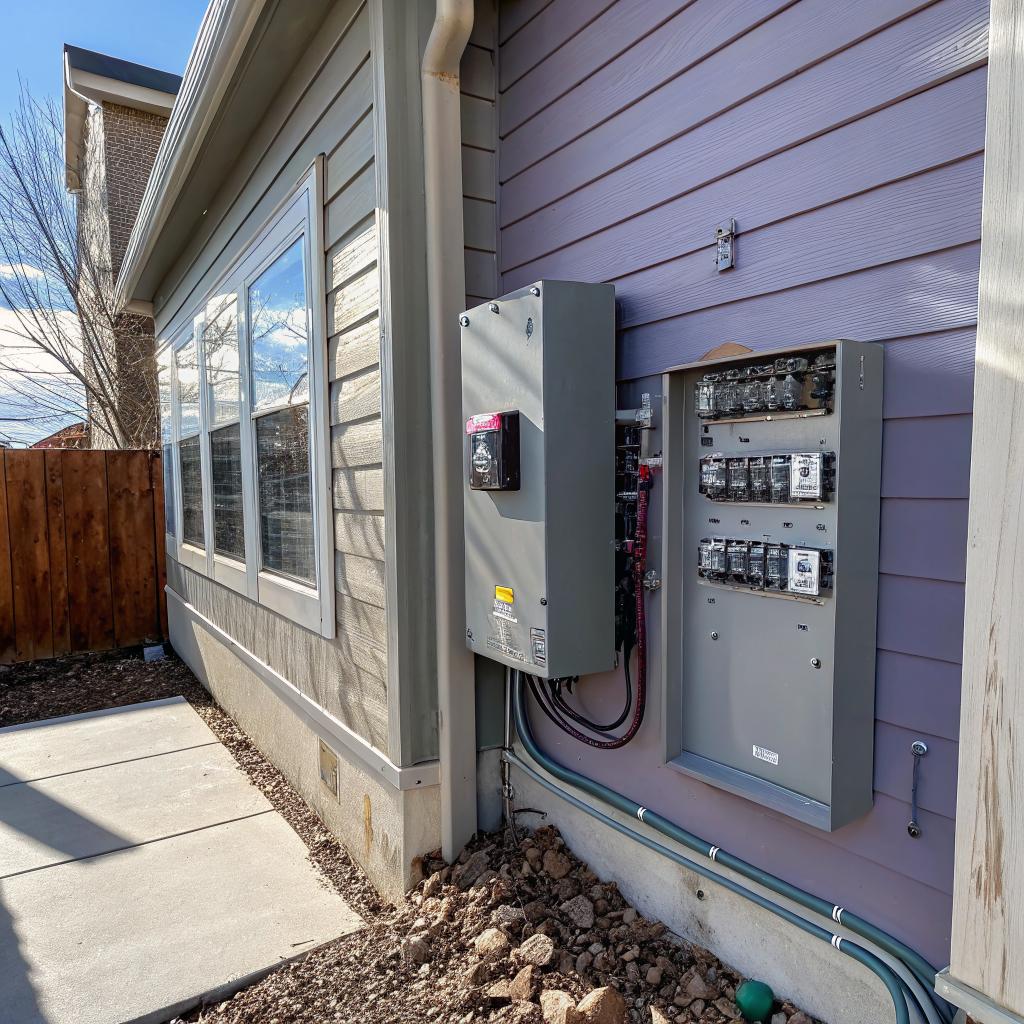
What if I told you that for a growing company in Colorado Springs, a $5,000 electrical decision can block a $500,000 growth plan before you even sign the lease? That happens more often than people admit. The bottleneck is not software, or marketing, or hiring. It is the gray metal box on the wall that nobody looks at until everything starts tripping.
The short answer: if you want smart growth, more automation, more servers, more EV chargers, and a more digital, monitored building, you usually need an upgraded panel first. A well planned electrical panel upgrade Colorado Springs sets the base for safe expansion, stable power for your tech, and predictable operating costs. Skipping it often means surprise outages, delays with inspectors, and spending more on patchwork fixes over the next five years.
That is the practical piece. The more strategic part is that an electrical panel upgrade is not just a facility issue. It is an infrastructure and growth decision, just like cloud architecture or your CRM stack. If you treat it that way, it can support bigger revenue targets instead of quietly limiting them.
Why growth-focused companies should care about an old panel
Most business owners I talk with care about three simple things:
- Can we grow without constant downtime?
- Can we control costs instead of guessing every month?
- Can our building support the tech the team actually needs?
An outdated or undersized panel quietly works against all three.
Think about what growth has looked like in the last few years in Colorado Springs:
You add cloud-connected tools. Desktops turn into dual-monitor setups. You plug in more access points, more PoE-powered devices, security cameras, maybe a small server closet. Someone brings in a 3D printer or a test bench. You add a few Level 2 EV chargers for staff or customers. None of these alone are extreme. Together, they add up.
Older commercial and mixed-use buildings in the city were not planned for that kind of constant electrical load. Many of them still run on 100 or 125 amp panels, with lots of shared circuits and little room left for growth.
If your business plan talks about growth, but your panel is already at capacity, you are building on a ceiling, not a foundation.
That sounds dramatic, but in practice the failure points are boring and annoying:
You trip breakers on busy days. Your new equipment quote includes “panel work not included.” Your EV charger vendor tells you that you need service upgrades first. Or worse, the fire marshal or inspector flags your panel during a check.
The quiet cost of running on a tired panel
You can think of this in three buckets:
| Area | What happens with an outdated panel | How it affects growth |
|---|---|---|
| Reliability | Frequent tripped breakers, random resets, some outlets “you do not touch” | Interrupts work, hurts customer trust, blocks equipment upgrades |
| Costs | Higher maintenance visits, more emergency calls, hidden energy waste | Harder to forecast operating costs, eats into cash for expansion |
| Risk | Overloaded circuits, obsolete breakers, wiring that no one wants to touch | Insurance headaches, code issues, risk to staff and assets |
From a business side, the main question is not “Is the panel old?” The better question is: “Is the panel compatible with where we want this business to be in three to five years?”
If the answer is “I have no idea,” that is your first signal that you should look more closely.
How electrical capacity ties into your growth plan
When people talk about growth, they talk about:
- New product lines
- Hiring more staff
- Opening another location
- Adding automation or better equipment
Very few say “We need another 100 amps and better load management.” Yet the second group often decides whether the first group is realistic.
If you treat electrical capacity like a strategic resource instead of a sunk cost, the upgrade conversation changes from “Do we really have to?” to “When is the best timing so it supports our next step?”
Let me walk through a few common plans and how they bump into panel limits.
1. Adding staff and devices
Say you go from 8 people in a small office to 18.
Everyone has 2 monitors, a laptop dock, phone, maybe a personal heater when winter is rough. Then you add:
- More wireless access points
- Extra switches in the network rack
- Better lighting and more outlets
Each individual draw is small. Combined, on a shared 15 or 20 amp circuit that already powers a printer and a coffee machine, you hit problems on busy days. You might not blow the panel, but you hit circuit limits often enough that people complain. And if you keep patching by adding extension cords or daisy chaining power strips, risk goes up.
A modern panel with space for more dedicated circuits, plus some planning, lets you add people without renegotiating where they can plug things in.
2. Bringing in smarter equipment
Manufacturing, labs, and even small creative shops have a similar story.
You move from one CNC machine to three. Or from a basic 2D printer to a mix of 3D printers, laser cutters, or larger format printers. Or you bring in test benches with variable power supplies and measurement gear.
These often need dedicated circuits, higher amperage, or even three phase power. Your current panel might technically feed them, but only by overloading parts of the system or forcing odd workarounds.
The weak link is often:
- Panel capacity in amps
- Physical space for new breakers
- Compatibility between new breakers and an old panel brand
This is where many companies in Colorado Springs face an “upgrade now or stall growth” decision, usually on a tight schedule, which is the worst way to do it.
3. EV charging and future tenants
EV charging is where electrical and business strategy meet in a very visible way.
Companies want to:
- Offer Level 2 charging to staff as a benefit
- Provide customer charging
- Raise building appeal for future tenants
Each Level 2 charger can require a 40 to 60 amp circuit. Add several, and your 100 or 150 amp panel is outmatched quickly.
Owners try to share circuits or throttle chargers, but that undercuts the whole idea. And if you think you might sell the building or bring in tech-focused tenants later, having solid electrical capacity, with room reserved for EV circuits, can be a real selling point.
It is cheaper to plan panel space for future EV chargers now than to tear into walls twice because you treated them as an afterthought.
What an electrical panel upgrade really involves
Many people picture an upgrade as just “new box, more breakers.” That is only part of it.
A well planned project in Colorado Springs, especially for a company that cares about tech and growth, usually has a few clear steps.
Step 1: Load analysis and growth mapping
If an electrician walks in, looks at your panel for two minutes, and says “You need a 200 amp panel,” that is not really enough.
You want a real load calculation that includes:
- Your current equipment, HVAC, lighting, and general circuits
- Planned additions in the next 2 to 5 years
- Potential EV chargers and any planned machinery or server gear
This is where you connect your business plan with your electrical plan. It feels like extra work, but it avoids undersizing or oversizing the upgrade.
Step 2: Choosing the right capacity and layout
Common jumps for small and mid-size businesses:
| Current panel | Common upgrade | Typical scenario |
|---|---|---|
| 100 amp | 200 amp | Small office or shop, planning to add staff and moderate equipment |
| 125 amp | 225 amp | Growing operation with some heavier loads and future EV charging |
| 200 amp | 320 or 400 amp (often with new service) | Production, lab, or multi-tenant building with major expansion plans |
It is not only about amps. It is also about:
- Number of spaces for breakers
- Room for future subpanels
- Compatibility with smart breakers or metering devices
If you plan to track usage by tenant, department, or high draw equipment, planning for metering from the start matters more than people expect.
Step 3: Coordinating with the utility and inspectors
In Colorado Springs, utility involvement can be a real timing factor.
You often need:
- A service upgrade from the utility if your total capacity jumps a lot
- Coordination on shutoff and reconnection windows
- Inspection sign off before full energizing
From a business owner angle, this affects scheduling. You do not want a surprise two day outage. A decent contractor will help you plan:
- The best day and time for the cutover
- Temporary power solutions, if needed
- How to inform staff, tenants, or customers
This is where planning ahead by even a few weeks can save a lot of stress.
Step 4: Cost, ROI, and payback thinking
Many owners see “panel upgrade” as pure cost. I think that is partly the wrong way to see it.
Yes, it is capital expense. But it also:
- Prevents future emergency work
- Supports new revenue producing equipment
- Improves safety, which affects insurance and liability
- Raises building value if you own the property
A simple way to look at payback is:
1. Estimate the revenue you expect from the growth this upgrade enables. Extra production capacity, more workstations, new tenant, or added services like EV charging.
2. Compare that to the upgrade cost, spread over the lifespan of the panel, which can be decades.
3. Add in the avoided cost of outages and temporary fixes.
The math is rarely perfect, but it often shows that the panel is not a side expense. It is closer to foundational infrastructure for the next growth stage.
Smart growth means smart electrical too
If your company pays attention to cloud architecture, you probably think about redundancy, planned capacity, monitoring, and clean failover. Buildings are different, but the mindset can carry over.
Planning for monitoring and smart control
One part that connects well with the “business side of technology” crowd is monitoring.
Modern panels and add-on gear let you:
- Monitor energy use by circuit or area
- Track peak loads by time of day
- Spot circuits that run hotter than they should
This data ties into:
- Energy management and cost control
- Equipment planning
- Predictive maintenance
If you already care about dashboards and analytics elsewhere in your business, it is not a big jump to care about having similar visibility into how your building actually behaves.
Thinking beyond one building
For companies that plan to grow across multiple sites, electrical strategy starts to look more like IT strategy.
Questions such as:
- Do we want similar electrical standards at each site?
- Are we planning EV charging as part of the brand or benefits package?
- What baseline capacity do we need for our typical operation?
If you manage multiple locations, you know the pain of each building being completely different. Standardizing panels, capacities, and metering approaches can cut planning time for future expansions and reduce surprises.
Where risk management and growth meet
There is also the uncomfortable side: safety and liability.
Older panels can have:
- Breakers that no longer trip correctly
- Improvised wiring from past tenants or owners
- Known problem brands or models
From a risk angle, that touches:
- Insurance requirements
- Inspections tied to business licenses or permits
- Responsibility to staff and customers
I sometimes hear “We have not had a problem so far, so it is fine.” That is like saying “Our backup has never been tested, so we assume it is perfect.” It feels safe until it is not.
Practical signs that it is time to talk about an upgrade
Let us get more concrete. If you run or own a building in Colorado Springs, what are the real world hints that your panel is holding you back?
Everyday symptoms inside the building
Here are some frequent signs:
- Breakers trip often during peak hours
- Staff avoids certain outlets because “they always blow”
- Lights flicker when large equipment starts
- You use multiple power strips just to keep desks functional
- There is no labeled space left in the panel for new circuits
- You see double tapped breakers or obvious add ons that look unprofessional
Individually, one or two of these might not be a crisis. Together they tell a story: the system is stretched.
Growth-related red flags
There are also signs tied to your growth plans:
- Contractors keep telling you “We need more power in here”
- EV charger vendors talk about service upgrades before pricing anything else
- Your future equipment list includes multiple high draw devices
- You are negotiating a new lease and realize no one has checked the panel capacity at all
This is where a short planning conversation can prevent very expensive last minute changes.
Age and condition clues
Panels do not expire like food, but there are practical age markers.
- If your building is several decades old and the panel looks original
- If breakers look mismatched or harder to source
- If the panel has any heat discoloration or buzzing sounds
You do not need to panic, but you should have a qualified electrician inspect and give a clear opinion.
Connecting financial thinking with electrical decisions
Since this is for readers who like the business side of tech, let us talk dollars and planning a bit more.
Budgeting and timing the upgrade
The worst pattern is reactive:
Something fails, you rush to call an electrician, you have staff sitting idle, and you approve a big invoice under time pressure.
A slightly better pattern:
You know you need more capacity, but you postpone it three times, then must squeeze it in during your busiest season.
The better pattern:
You tie the panel upgrade to a planned milestone, such as:
- Renovation or tenant improvement
- Expansion of production or lab space
- Adding EV chargers as a formal project
- Preparing a building for sale or refinancing
That way, the cost is part of a larger investment that has clearer returns.
Looking at payback beyond just energy savings
Sometimes people ask “Will this upgrade reduce my power bill?” The honest answer is “Not directly, unless we also improve other things.”
The real returns usually show up as:
- Less downtime and emergency work
- Ability to add revenue generating equipment
- Better tenant quality and rent levels if you own the building
- Reduced risk of major electrical failure
You can treat those as “soft” benefits, but they are often larger than the energy savings from more efficient lighting or HVAC upgrades.
Thinking about resale and future buyers
If you might sell the property in the next few years, a modern panel with room for growth can help.
Buyers that care about tech and modern workspaces will likely ask about:
- Service size and panel capacity
- Support for EV charging
- Condition and age of critical electrical gear
Having clear answers, and a recently upgraded panel, makes those conversations easier and can keep you from last minute credits or price cuts.
Questions to ask before you commit to an upgrade
If you are at the point where an upgrade seems likely, the next step is usually to talk with electrical professionals. The way you frame that conversation matters.
Questions for yourself
Before you make calls, it helps to write down:
- How many staff or tenants you expect in the next 3 to 5 years
- What new equipment or services you plan during that time
- Whether EV charging is in your medium term plans
- How much downtime you can tolerate during work
- Whether you want energy monitoring integrated
This turns a vague “We might grow” idea into something an electrician can design around.
Questions for the electrician
When you talk with contractors, you can ask:
- What size panel do you recommend and why?
- How much space will we have for future circuits after the upgrade?
- What does coordination with the utility look like here in Colorado Springs?
- What is the expected downtime during cutover?
- Are there known issues with our current panel brand or model?
- Can we add monitoring or sub metering as part of this?
You do not need to know technical details. You only need clear, practical answers.
Bringing it back to smart growth
Smart growth is not just about adding more. It is about adding in a way that does not break what is already working.
From the business side, your electrical panel sits under three bigger ideas:
- Capacity: Can this building support the operation we want in three years, not just today?
- Reliability: Are we reducing surprise outages and emergency costs?
- Flexibility: Can we add devices, chargers, and equipment without a full redesign each time?
If you treat the panel as part of your infrastructure strategy, you gain more control over the pace and cost of growth.
To end on something practical, here is a simple question and answer that might be in your mind right now.
Q&A: Do I really need to upgrade, or can I keep patching things?
Q: Our building in Colorado Springs mostly works. We have some tripped breakers and limited capacity, but nothing catastrophic. Do we really need a panel upgrade, or can we just keep fixing things as they come up?
A: If your growth plans are modest and you are willing to accept occasional disruptions, you might be fine with careful maintenance and selective circuit work. But if you expect to add staff, heavier tech loads, or EV charging, and your panel is already near capacity, continuing to patch is a bit like running a growing software platform on a single aging server. It works, until it does not, and the failure tends to show up at the worst time.
A short assessment with clear numbers on current and future load can tell you where you really stand. From there, you can decide whether the cost and timing of an upgrade fit your growth plans, instead of letting that gray box on the wall decide for you.