
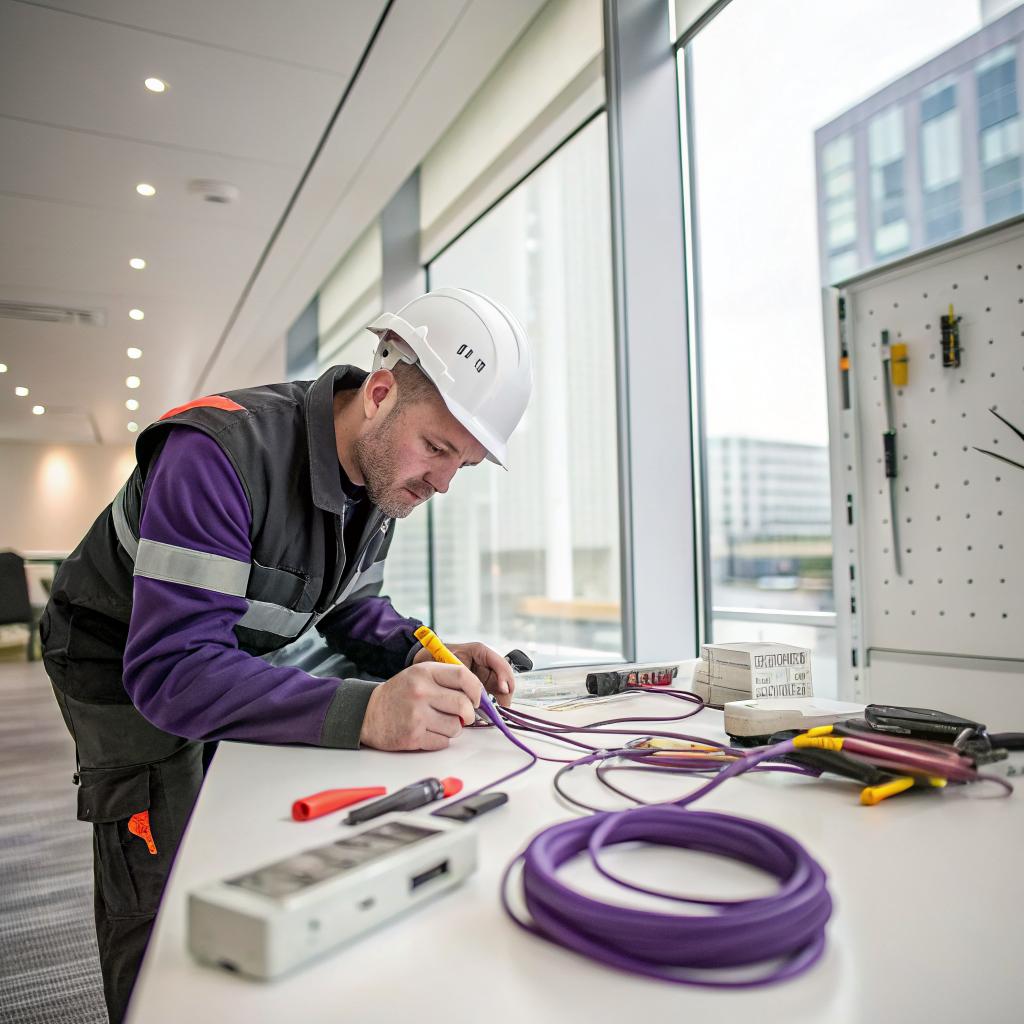
What if I told you the real risk to your next stage of growth is not your sales funnel, not your funding round, but the breaker panel in the back room that nobody has looked at in 12 years?
Here is the short answer: if you are running a growing business in Zionsville, you need a clear electrical plan that treats power, data, and equipment like part of your growth strategy, not just a repair line item. That usually means working with a local partner for Zionsville electrical repair who thinks in terms of capacity, redundancy, and cost of downtime, not only in terms of code compliance.
Most business owners do not start there. They call an electrician when a circuit trips or a light flickers. They get it fixed, pay the bill, move on. I used to think that made sense too. Then I started hearing the same types of stories from founders and operators:
A restaurant that had to delay weekend service because of a dead fryer circuit.
A small logistics company that lost a full day of scanning and shipping because of a panel issue.
A SaaS team that had a mini data closet meltdown, literally, when a cheap outlet overheated.
None of these stories sounds dramatic. But they all have one thing in common: the electrical work was treated as a one-off repair instead of part of the growth plan. If you are talking about runway, churn, LTV, and ARR, it is a bit strange to ignore the one system that keeps everything powered on.
Electric power as a growth and risk line item
If you think about your business in terms of growth, funding, and scale, it helps to view electrical work through the same lens. Not as a sunk cost, but as something that affects:
- Revenue stability
- Operating costs
- Expansion speed
- Safety and liability
This sounds a bit dramatic, I know. But it becomes very simple when you attach numbers to it.
A 2 hour outage during peak sales can erase the full cost of a thoughtful electrical upgrade that would have prevented it.
If your POS system, Wi-Fi, refrigeration, or production equipment is down, your growth story pauses. And unlike normal operating cost, that downtime often shows up as both lost revenue and extra overtime later.
When you look at Zionsville and nearby areas, most commercial spaces were not built with dense electronics, EV chargers, or constant video calls in mind. Panels were sized for lights and a few outlets, not multiple racks, high draw kitchen gear, or production lines.
This gap between old infrastructure and current load is where risk creeps in. And where you can actually find upside, if you treat power like part of your roadmap.
How growing businesses in Zionsville should think about electrical repair
Let us walk through a more practical way to look at electrical work. Not from the point of view of “What broke this week?” but from “What do we need power to do for us over the next 3 years?”
1. From reactive repair to capacity planning
Most calls to an electrician fall into one of three buckets:
- Something failed, and you need it back on.
- Something is annoying, like lights dimming or breakers tripping under load.
- You are adding new equipment or a new space.
Only the third bucket feels strategic. The first two feel like pure expense. That is the mindset shift to challenge.
Every repair visit is a chance to ask one extra question: “What does this tell us about our capacity and our next growth step?”
For example:
If a circuit is frequently tripping, maybe the real issue is that your equipment load and layout have changed, but your circuits have not.
If your lights dim when large motors turn on, your service might be undersized for what your business does now, not what it did when you signed the lease.
If your data rack is on a standard outlet with a cheap power strip, you might be fine today, but a bad storm could change that story.
You do not need a huge study to get value here. You only need to treat every repair as a signal, not just a problem to patch.
2. Matching power to your business model
Not every company in Zionsville needs the same electrical plan. The right approach depends heavily on how your business actually works and where your revenue comes from.
Here is a simple table to make this clearer:
| Business Type | Electrical Priorities | Key Risks | Good Next Step |
|---|---|---|---|
| Restaurants / Food Service | Kitchen circuits, refrigeration, HVAC, lighting | Spoiled inventory, service delays, safety hazards | Load check on kitchen panel, dedicated fridge/freezer circuits |
| Warehouses / Light Industrial | Motors, compressors, conveyors, high-draw tools | Equipment damage, production stoppage | Panel capacity review, motor-specific circuits, surge protection |
| Offices / Tech / Professional | Data racks, workstations, meeting rooms | Network outages, data loss, staff idle time | Dedicated circuits for racks, UPS integration, cleaner cable routing |
| Retail | POS systems, lighting, signage, small appliances | Lost card transactions, dark storefronts | POS power redundancy, lighting circuit mapping |
If you are pitching investors on how stable and repeatable your revenue is, this is part of that story. A 99.9 percent uptime claim looks a bit weak if your freezers are on an overloaded circuit.
3. Reducing the true cost of downtime
Founders often underprice the cost of small outages. A one hour outage might not sound bad, until you attach numbers:
- Average hourly revenue for that time window
- Staff that you still pay while they wait
- Rework or catch-up time after power comes back
- Possible product spoilage or equipment stress
- Customer trust or reputation hit
When you do the math, simple upgrades that feel “nice to have” start to make sense. For example:
If your peak hour brings in 2,000 dollars and a basic panel upgrade costs 6,000 dollars, avoiding just three major incidents can pay for the work.
I know this is a simplified example. Real numbers vary. But the pattern holds. Growth-focused teams often approve big software budgets while delaying basic building work that protects the entire operation.
What smart Zionsville businesses usually miss about electrical work
Now that the high level mindset is clear, we can get more concrete. Here are the areas where I see growing companies in Zionsville underestimate electrical needs.
1. Underpowered panels and overloaded circuits
Many commercial buildings in town were wired when:
- Offices used a few PCs, not large monitors and laptop plus dock per person
- Kitchens had less specialized equipment
- Warehouses had simpler motor setups
So you often see:
- Panels near their capacity, with no room to expand
- Multiple high draw devices sharing one circuit
- Piggybacking extra outlets through cheap extensions
This is not just a code issue. It blocks growth. If you want to:
- Add a second oven line
- Install EV chargers for staff or fleet
- Bring in more production equipment
- Expand your office headcount in the same space
You hit a ceiling fast if your electrical system has no room to grow.
A good commercial electrician in Zionsville will usually:
- Review your panel capacity and breaker layout
- Compare it to your actual and projected load
- Suggest either panel upgrades or circuit rebalancing
This sounds dry, but it is the electrical version of refactoring your codebase before you ship a big new feature. You can skip it, but you often pay for that choice later, and usually at a worse time.
2. Ignoring power quality for tech-heavy teams
For a modern office or tech company, “the power is on” is not enough. You also care about:
- Voltage stability
- Surge protection
- Grounding quality
Why? Because your revenue engine runs on:
- Switches, routers, and servers
- VoIP phones
- Cloud-connected devices
We usually blame the ISP when calls drop or systems act strange. Sometimes that is fair. But dirty power, minor surges, or bad grounding can cause:
- Mysterious equipment failures
- Shortened lifespan of expensive gear
- Random reboots that ruin work
It is not glamorous work, but adding panel surge protection, proper bonding, or dedicated circuits for racks can save you from hardware replacements and weird intermittent problems that your IT team struggles to diagnose.
3. Treating lighting as just “on” or “off”
Lighting feels trivial until you try to scale:
- A retail store that wants consistent shopper experience
- A restaurant that aims for a specific atmosphere at different times of day
- An office that tries to support focus and reduce eye strain
If you are planning multi-site growth, your lighting choices at one location become a template, whether you intend that or not.
Some practical questions:
- Are you still using old fluorescent fixtures that flicker and waste energy?
- Do you need separate lighting zones for different work areas?
- Can you reduce operating costs with LED upgrades and smart controls?
Simply moving from old fluorescent to LED, with smart zoning, can cut lighting power use by 30 to 60 percent while giving you more control over customer and staff experience.
From a growth view, that means:
- Lower monthly overhead
- Better experience that matches your brand
- A playbook you can reuse when you open your next site
4. Underestimating safety and liability
Founders often talk about risk in terms of market shifts, cash flow, or competition. Physical risk sits in the background, until it does not.
Old or poor electrical work raises the chance of:
- Electrical fires
- Shock risk for staff
- Code violations that slow expansion or remodels
If you are planning an exit, a funding round, or a major lease change, your buyers or landlords will care about building condition. A failed inspection or surprise electrical repair can delay deals and change terms.
Simple examples:
- Old panels from brands with known safety issues
- Worn outlets in high traffic areas
- Improvised wiring from past “quick fixes”
From a business angle, safety work is not just about avoiding rare disasters. It is also about keeping your timeline clean when you want to grow, rent more space, or negotiate from a strong position.
Connecting electrical repair to growth, funding, and expansion
Now let us connect all this to the topics you probably like to think about: scaling, funding, valuation, and go to market plans.
1. The lease, the buildout, and the surprise costs
If you are opening a new location or moving to a bigger one, electrical work is one of the main areas where budgets get blown. Early stage teams often:
- Assume the existing power setup is “good enough”
- Underestimate new equipment loads
- Forget to price code upgrades that trigger when work starts
You can catch most of this by bringing a commercial electrician into the process before you sign or at least before you finalize the buildout plan.
Things they can help you check:
- Service size vs your expected load in year 1 and year 3
- Panel space for new circuits
- Condition of wiring, outlets, and lighting
- Code gaps that might trigger mandatory upgrades later
From a negotiation angle, this can give you leverage:
- Ask the landlord to cover some upgrades
- Adjust tenant improvement budgets
- Choose between two locations with clear cost data
I have seen teams win real savings this way. They walked from a “great” location once they saw the hidden electrical costs, and picked a building that supported both current use and planned growth.
2. Electrical questions to answer before you scale headcount
If you plan to double or triple a team in the same Zionsville space, people think about:
- Desks and chairs
- Wi-Fi coverage
- Meeting rooms
Less often:
- Can the existing circuits handle dozens more devices?
- Is there enough capacity for added HVAC load?
- Are there spare circuits for extra racks or phone systems?
This is where a short electrical assessment can be very helpful. It does not need to be a big project. An experienced electrician can walk the space, review panel data, and tell you where the limits are.
Questions to ask directly:
- What is the realistic headcount this space supports before we need upgrades?
- Where are our weakest points right now?
- What low cost changes reduce the risk of issues as we grow?
You would not commit to a hiring plan without checking runway and revenue forecasts. Treat physical capacity, including electrical, at the same level of thought.
3. How investors quietly judge your operations
Most investors will not crawl behind your panels. But they do pay attention to how prepared you are. Little signs of operational maturity add up:
- A documented layout of circuits, panels, and key equipment
- Evidence of regular inspection or maintenance
- A clear plan for handling outages and maintenance windows
These are small items in a data room or a site visit, but they send a message: you treat your business like an engine to be maintained, not a lucky streak.
One founder told me a partner asked, very casually: “If your main panel failed tomorrow, who would you call and what would your staff do?” They had no real answer. That conversation turned a strong pitch into a “come back later” outcome.
Practical steps for Zionsville businesses that want to be smart about electrical work
Enough theory. Here is what you can actually do, whether you are a solo founder with one shop or an operator with several locations.
1. Create a simple electrical snapshot of your business
This does not have to be complex. A one page document is already better than nothing. Include:
- Panel locations and basic specs
- List of major equipment and where it is connected
- Any known “hot spots” or recurring issues
- Who you call for electrical work
- Preferred times for maintenance to avoid peak hours
Treat it like a basic system diagram for your power. Update it whenever you add big equipment or change layouts.
2. Turn the next repair call into a mini assessment
Next time you need something fixed, do not just say “Fix this, thanks” and move on. Ask the electrician to:
- Walk your panel and give quick feedback on capacity
- Point out anything that worries them
- Rank issues as: urgent, soon, or nice to have
You might not act on everything right away. That is fine. You now have a rough roadmap you can plan around instead of random surprises.
3. Budget a small yearly line for proactive electrical work
Many businesses only budget for electrical work if something breaks or they are planning a big remodel. A small annual amount, even a few thousand dollars, aimed at:
- Preventive checks
- Minor panel or circuit improvements
- Lighting or outlet upgrades
can keep you from larger, more painful costs. It also smooths your cash flow compared to reacting to emergencies.
You already accept this logic for IT, cleaning, or routine service contracts. Power should sit in the same mental bucket.
4. Bring your electrician into your 12 to 24 month plan
This might feel strange at first, but it is very useful. When you think about your next year or two, share that view with your trusted electrician.
Mention:
- Headcount targets
- New equipment you expect to add
- Any potential new locations or expansions
- Hours and seasons where downtime is most costly
Ask them:
- What electrical changes will we need if we hit these targets?
- What is the likely range of cost?
- How can we phase work to support growth without heavy disruption?
You do not have to commit on the spot. But when those growth moments come, you will not be starting from zero.
When does it make sense to choose a local commercial electrician in Zionsville?
You could, in theory, just pick whoever is cheapest or whoever can come fastest. Sometimes that is fine. Other times, it costs you more long term.
For growth minded companies in Zionsville, a local commercial electrician who:
- Knows local codes and inspectors
- Has real experience with businesses like yours
- Is willing to talk through capacity and future needs, not only fixes
often saves time and money across several years.
Things I would ask any commercial electrician before working with them:
- What kinds of businesses do you work with most often?
- Can you give an example of helping a client prepare for growth?
- How do you handle work that affects business hours?
- Can you help us map our current electrical setup so we understand our limits?
Do not be afraid to push back or ask for clearer answers. You are not buying a one time fix. You are building part of your operating system.
Bringing it all together with a simple mental model
If we strip out the technical jargon, the idea here is very plain.
Your electrical system should:
- Support your current operations without constant issues
- Have room to grow as you add people and equipment
- Protect your revenue from avoidable downtime
- Reduce safety and compliance headaches
That is it. No magic. Just matching a physical system to a business plan.
If your power, panels, and wiring would make sense for a company half your size, they are already behind. You are just lucky nothing has failed at the wrong time yet.
So, a practical question to end on:
Q&A: How can you tell if your Zionsville business needs to rethink its electrical setup?
Here is a short self-check. If you answer “yes” to two or more of these, it is probably time to talk with a qualified commercial electrician:
- Do breakers trip more than once a month under normal use?
- Do lights dim or flicker when equipment starts?
- Have you added major gear, fridges, servers, or workstations without updating circuits?
- Is your panel so full that every new project becomes a puzzle?
- Do you rely on many power strips and extension cords to make your layout work?
- Have you had unexplained equipment failures that your IT or vendors cannot fully explain?
If you are seeing these signs, it is not a reason to panic. It is a reason to treat power like the business tool it really is.
Your growth story needs marketing, product, and financing. But it also needs something more basic: clean, reliable power that matches what you are building.
Are you confident your electrical system is ready for the next stage of your business, or are you just hoping the lights stay on?