
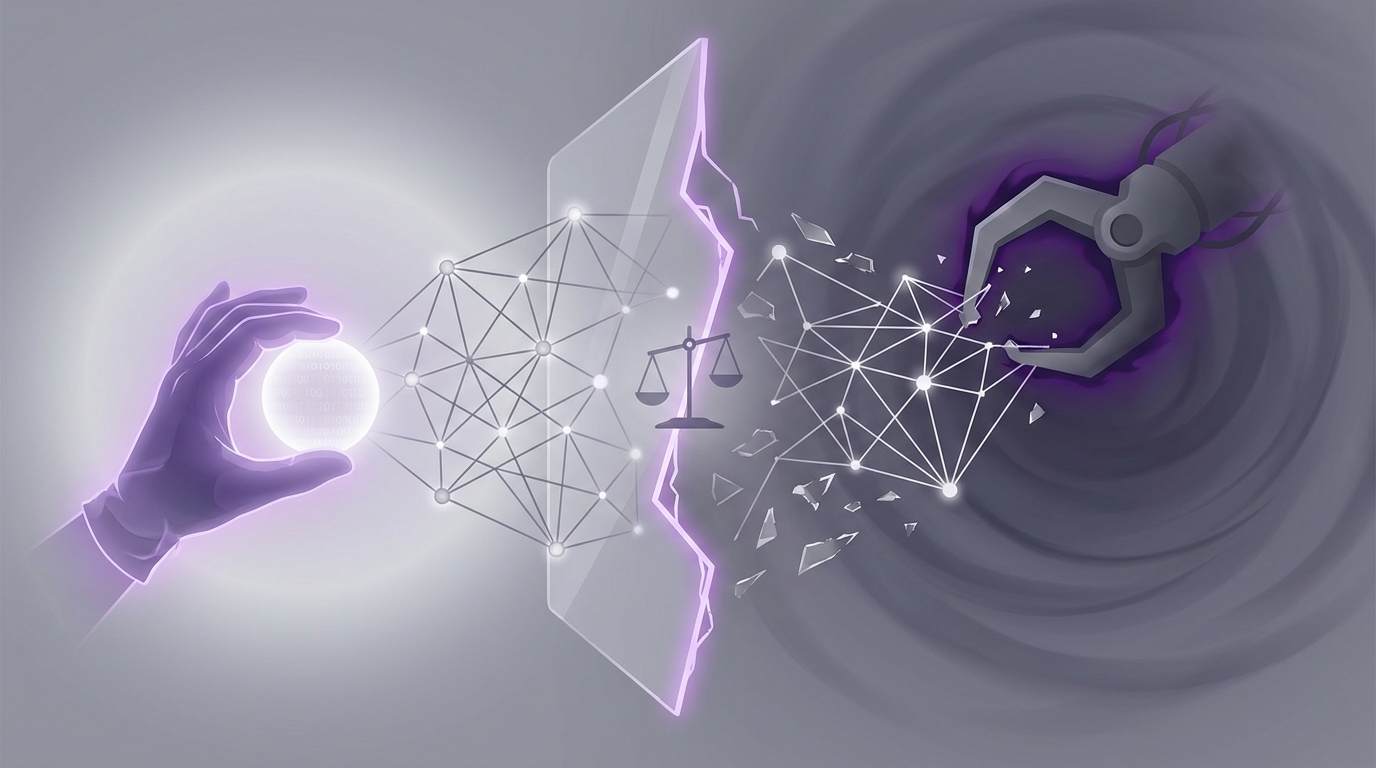
“At somewhere between the 10th and the 10 millionth request, scraping stops being research and starts looking like theft.”
Investors now ask one blunt question when they see a data-heavy product: “Are you building an asset or a lawsuit?” The commercial value of scraped data is rising, but so is the legal and reputational cost when teams cross the line from collection into extraction. The market shows a divide: founders who treat scraping as a cheap growth hack, and founders who treat it as regulated infrastructure. The second group is closing better deals, winning better partners, and avoiding expensive downtime driven by cease-and-desist letters.
The tension is simple. Every ambitious tech company wants data: training sets for models, lead lists for sales, prices for arbitrage, signals for product decisions. Public data looks free. Founders see HTML and JSON lying in the open and think: “If a browser can see it, my bot can see it.” For a while, that logic worked. Scraping fueled early search engines, price comparison tools, and lead gen platforms. It still fuels many of the largest AI models.
The market has shifted. Data owners now treat access as property, not promotion. If your product depends on scraping, you are in the business of negotiating power, not just bandwidth. Legal cases, API rate limits, and contract clauses tell the same story: platforms want to capture the ROI of their data exhaust, not donate it. Teams that ignore this are not just breaking norms, they are building on sand. CAC, churn, and gross margin all move when your data pipeline gets cut.
Expert view: “Founders who treat scraping as ‘just code’ miss that they are competing with the very platforms whose data they mine. Platforms rarely lose that contest.”
The ethics question is not abstract. It hits the P&L. When users or partners think your product steals, your sales cycle lengthens, procurement slows, and valuation multiples compress. Ethical data strategy is now a revenue strategy. Not because investors suddenly became moral philosophers, but because courts, regulators, and customers created real downside for companies that pretend the web is one big free buffet.
The trend is still forming. Courts send mixed signals. Some rulings protect scraping of public data. Others back platforms that block bots. Tech companies push “open” narratives when they scrape, and “property” narratives when they are scraped. The only stable advantage goes to teams that treat scraping as a governed resource: constrained, logged, explainable to lawyers and to customers. That mindset turns ethics from a PR line into a design spec.
The business case for scraping: cheap data vs real risk
Scraping took off because it looked like free arbitrage. No sales calls. No contracts. Just code. From a growth lens, the attraction is obvious.
Where scraping creates business value
There are three common patterns where scraping creates clear ROI:
1. Market intelligence
Founders scrape product catalogs, pricing, or reviews to spot gaps and trends. A lean team can watch competitors, test hypotheses, and move faster than old research cycles.
2. Lead generation
B2B tools harvest names, titles, and company data from public pages. Sales teams feed scraped contacts into outbound campaigns. CAC drops if conversion rates hold.
3. Product fuel
Marketplaces, comparison engines, and AI products often depend on third-party data volume. More listings, more prices, more examples. That volume drives user retention and revenue.
Data point: Internal seed-stage deal reviews at several funds now include a specific line item: “Data defensibility: 1-5”. Recycled or scraped data usually scores 1 or 2.
So the short-term ROI story looks strong:
– Lower data acquisition cost at the start
– Faster product iteration
– Differentiated features while competitors still negotiate partnerships
But that story only holds if three assumptions survive:
– The source does not block you
– The law does not move against you
– Users and customers do not push back on how you got their data
The more central scraping is to revenue, the more dangerous those assumptions become.
When scraping turns into a liability
Ethics becomes a business issue when there is a mismatch between your internal story and the outside story.
Internal story:
“We are just collecting public data. Everyone does this. We are harmless.”
Outside story:
“You copied our content and are monetizing it. You weakened our servers and violated our terms. You did this at scale without consent.”
That gap matters in four core areas:
– Legal exposure: lawsuits, injunctions, regulatory actions
– Technical risk: IP blocks, CAPTCHAs, throttling, data poison
– Commercial risk: loss of partnerships, channel conflicts
– Brand risk: users feel watched or exploited, not served
Investor comment: “We do not fund products where a single angry platform PM can kill the business with a rate limit change.”
Ethical scraping is not about virtue signaling. It is about reducing the probability that one angry platform PM, one lawsuit, or one headline can wipe out your future funding rounds.
Legal boundary lines: what courts are actually saying
Ethics and law are not the same thing, but founders live in both worlds. The law sets the floor. Ethics sets the ceiling. The market tends to punish you well before you hit the legal floor.
Across major markets, four issues keep coming up:
– Unauthorized access
– Breach of contract
– Data protection and privacy
– Intellectual property rights
Public vs private: the “authorization” question
One high-profile U.S. case centered on whether scraping publicly accessible professional profiles counted as “access without authorization.” The court leaned toward: public pages are fair game under that specific anti-hacking law. That gave many founders a false sense of security.
They heard: “Scraping public data is legal.”
What the court actually said was more limited: “Using automated tools to read public pages is not hacking under this law.”
That does not answer:
– Are you allowed to ignore terms of service?
– Are you allowed to reuse the content commercially?
– Are you allowed to profile individuals under privacy laws?
So the legal risk shifted from “hacking” toward contract, copyright, and privacy. Which are slower, more expensive fights.
Terms of service: contract vs behavior
Many platforms say in their terms: “No scraping. No automated access.” Founders then scrape anyway and argue:
– “Users posted this publicly, so we can read it.”
– “Terms of service are vague. Nobody reads them.”
Courts sometimes treat these terms as enforceable contracts. That lets platforms claim breach and pursue damages or injunctive relief.
For a startup, an injunction that forces you to turn off your core data feed can freeze revenue. Even if you win later, runway might be gone. Ethical thinking asks: “Would we still do this if the counterparty had equal power and budget to fight us?”
Privacy and consent: personal data moves the goalposts
The real fuse sits under privacy law. When scraping collects:
– Names, emails, phone numbers
– Employment history
– Location traces
– Social connections or inferred traits
then regulators care about:
– Consent
– Purpose limitation
– Data minimization
– Security
User expectations form part of the ethical line. Someone posting a comment in a niche forum may accept being read by other people. They do not necessarily accept being fed into an AI model, or a lead gen tool, forever, across products they never see.
For founders, the ROI question is sharp:
– Short-term gain: better targeting, better predictions, more contact data
– Medium-term cost: complaints, regulatory investigation, forced deletion, product redesign
In Europe and other strict regimes, scraped personal data often sits on regulatory thin ice. Ethical teams ask not only “Can we collect this?” but “Can we still justify keeping this in five years when rules tighten?”
The ethics lens: when collection starts to look like theft
Legality gives you a boundary. Ethics gives you strategy. There are four recurring ethical fault lines in scraping:
– Consent
– Fair competition
– Attribution and value sharing
– Harm to individuals or communities
Consent: visibility is not permission
Many scraping scripts assume: “If it is visible without logging in, it is free to copy.” Ethical review adds two extra questions:
1. What did the user think they were agreeing to?
2. Does your use create a new risk for them?
If a user posts on an e-commerce site to review a product, they likely expect:
– The seller and future buyers will read it
– Search engines might index it in context
They do not expect:
– Their review will appear in someone else’s UI as if the other company collected it
– A model will remix their words across unrelated products
– Third parties will label them as a “sentiment vector” or “propensity to complain” for targeting
Consent is not just a check box. It is a zone of expectation. Scraping that stays close to that zone looks like fair analysis. Scraping that moves far beyond it starts to resemble extraction.
Fair competition: free-riding vs building
Think about the cost side. Platforms spend real capital to:
– Attract users
– Moderate content
– Store and serve data
– Deal with abuse and legal requests
Scrapers often skip those costs. They piggyback on that infrastructure. Ethically, the key question becomes:
“Are we building new value on top of their investment, or are we routing around it to capture the same users and revenue?”
Some clear red flags:
– Scraping a rival marketplace to re-list their inventory with thinner fees
– Scraping a SaaS tool’s reports to build a cheaper clone
– Scraping an education platform to power a competing course site
Those patterns look like free-riding. You bear little of the original cost but chase the same monetization paths. That is where the theft narrative sticks in the minds of founders and regulators on the other side.
On the other hand, some use cases look more like commentary or analysis:
– Aggregating cross-site prices for user comparison
– Building search over fragmented public government filings
– Tracking job postings to study hiring trends
These use cases often preserve or increase traffic back to the sources. They feel more symbiotic to both users and platforms.
Attribution and value sharing
When your product feels like a black box powered by “mysterious data,” users grow suspicious. When they can see where the data comes from and how you treat sources, trust increases.
Key ethical levers:
– Attribution: do you name and link back to primary sources?
– Respect for robots.txt and explicit opt-out: do you offer ways for site owners or individuals to withdraw?
– Volume and frequency: do you throttle to avoid hurting other sites’ performance?
The closer your behavior stays to how a heavy human user would browse, the more your activity feels like collection rather than extraction.
Operator insight: “We saw a meaningful boost in partner deals after we added clear source labels and opt-outs. Once they saw their brand on our pages, not just their data, the tone of the conversation changed.”
Individual harm: when scraping targets people, not pages
A sharp ethical line appears when scraping moves from pages about products to pages about people.
Risk patterns include:
– Doxxing: collecting scattered identifiers into a single profile
– Surveillance scoring: tracking behavior across platforms to grade people
– Sensitive attributes: inferring health, politics, religion, or sexuality
Even if each individual data point is public, the combined profile can create new harm:
– Targeted harassment
– Discrimination in ads or services
– Reputation damage through old content resurfacing
From a business lens, these risks correlate with:
– Reputational damage
– Regulatory exposure
– Attrition among privacy-conscious customers and employees
When a product concept depends on scraping people, not products, investors now look for a much deeper ethical and legal treatment before writing checks.
Real-world examples: the gray areas founders live in
Ethical questions sharpen when we put them in specific product categories.
Price comparison and travel aggregators
Travel and e-commerce aggregators often began as scrapers. Over time many shifted to direct feeds and APIs. Why?
– Platforms started recognizing that comparison traffic converted well
– Scrapers caused server strain and data mismatches
– Legal teams on both sides preferred clear contracts
Ethical tension remains when aggregators:
– Misrepresent availability to push their own inventory
– Use scraped prices to undercut smaller sellers who lack negotiation power
– Mix scraped data with undisclosed paid placement
From a growth angle, founders who invest early in transparent source relationships often open up:
– Co-marketing
– Better rates
– Priority support during technical incidents
Those benefits have clear monetary value compared to running a shadow scraper in the background.
Lead generation and sales intelligence tools
Sales tech companies have scraped company sites, job boards, social profiles, and public filings for more than a decade. That data feeds:
– Contact databases
– Intent signals
– Tech stack profiles
The building tension here is privacy. Questions that come up in procurement:
– “Where did you get my team’s emails?”
– “Did our employees consent to this use?”
– “Can you delete us from all your systems?”
Teams that cannot answer lose deals. Ethics and revenue connect through the procurement checklist.
For lead gen products, ethical design features turn into sales features:
– Clear sourcing disclosure per record
– Opt-out links for individuals and domains
– Data freshness and deletion guarantees
Those features raise trust and usually support premium pricing tiers for “clean” compliant data.
AI training data: scraping at industrial scale
Generative AI models magnify every ethical issue in scraping:
– Volume: billions of pages
– Diversity: personal posts, news, creative works, code
– Reuse: one scraped piece of content can influence outputs for millions of users
Two hot questions dominate:
1. Consent and compensation for creators
2. Safety and bias from scraped content
Scraping content from blogs, forums, and documentation may be legal under certain interpretations, but ethical issues remain:
– Creators did not expect their work to train a system that competes with them
– Harmful content scraped at scale can leak into model outputs
– Private data accidentally exposed on the web can be absorbed before it is removed
From a business point of view, training on scraped data without clear terms sets a trap:
– Short-term: rapid model improvement
– Long-term: lawsuits, forced retraining, licensing costs, model shrinkage
AI companies now explore licensing deals and opt-out processes not out of pure goodwill, but because they want predictable input costs and reduced legal risk.
Revenue vs risk: framing scraping decisions like an operator
Ethics conversations often stall because they feel abstract. Founders need a more concrete framing: “What does this do to our revenue, cost, and valuation?”
Choosing a data acquisition model
For any data-hungry product, you can think in three main sourcing modes:
– Pure scraping
– Mixed scraping + API contracts
– Pure contracts / partnerships
Each has clear tradeoffs.
Growth metrics: scraping vs contracted data
| Dimension | Heavy Scraping Model | API / Partner Data Model |
|---|---|---|
| Time to MVP | Fast (days/weeks) | Slower (weeks/months) |
| Data cost in early stage | Low direct cost, high engineering time | Higher direct cost, lower legal risk |
| Resilience to platform changes | Fragile, frequent breakage | Higher, shared maintenance |
| Legal / reputational risk | High, especially with personal data | Medium to low, contractual guardrails |
| Exit / acquisition attractiveness | Discounted multiples, heavy diligence | Premium multiples, clearer asset value |
Investors tend to tolerate scraping at pre-seed and seed if:
– It is used for experimentation
– The team has a roadmap toward contracts
– The product does not target sensitive populations
By Series B and later, the expectation shifts:
– Data rights should be documented
– Large partners should know and accept your workflows
– Technical design should reflect rate limits and fair use norms
Pricing and business models that influence ethical choices
How you charge customers shapes how aggressively you will want to scrape. Two examples:
| Model | Revenue Driver | Ethical Pressure |
|---|---|---|
| Flat subscription for “unlimited” data | Upsell to higher tiers | Pressure to scrape more data for each marginal user, riskier behavior |
| Volume-based with transparency on sources | Charge per verified or contracted data unit | Incentive to invest in reliable, consented sources |
If your sales pitch is “we give you everything, from everywhere,” ethical and legal problems will track that promise. If your pitch is “we give you reliable, rights-cleared data with clear provenance,” you are selling safety and trust, not just volume.
Designing an ethical scraping strategy that investors accept
Founders do not need to abandon scraping entirely. They need to treat it like infrastructure with constraints. The question is not “Can we scrape?” but “How do we scrape in a way that survives scale?”
Principles that matter in board meetings
When boards and investors evaluate data-heavy products, they often look for signals that the team has internal guardrails. Common principles include:
– Respect for technical controls
– Honor robots.txt and explicit “do not scrape” instructions
– Avoid bypassing captchas or login walls with fake accounts
– Rate control and resource respect
– Limit request frequency so other services remain stable
– Schedule scraping during lower-traffic windows where possible
– Minimal collection
– Only scrape fields you intend to use
– Avoid unnecessary personal or sensitive attributes
– Clear provenance
– Track where data comes from and under what implied or explicit rights
– Separate “scraped” from “licensed” or “user-provided” in storage and reporting
– Exit path
– Design systems so you can delete data tied to one source if asked or ordered
These principles have direct ROI:
– Easier privacy and security audits
– Faster enterprise sales cycles
– Lower refactor costs when the law changes
Process: how ethical review becomes standard practice
Ethics tends to fail when it lives only in legal memos. Founders that handle scraping well treat it like security:
– Something you design for at the start
– Something you measure and log
– Something you staff with real responsibility
Practical steps:
– Map data flows
– From source (site, API, document)
– Through scraping and cleaning
– Into products and models
– Classify data types
– Public product or price data
– Public personal data
– Derived profiles and scores
– Assign risk levels
– Business impact if access is cut
– Harm potential if misused
Then tie those levels to concrete rules:
– High-risk flows require legal and exec sign-off
– Medium-risk flows need clear documentation and monitoring
– Low-risk flows still respect technical constraints and fair use
This structure helps founders explain to investors how they intend to grow without betting the company on one fragile, ethically questionable feed.
Building trust with platforms, users, and regulators
Ethical scraping is not just what you avoid. It is also how you communicate.
Making data sourcing part of your brand, not a footnote
Companies that depend on external data but gain trust often do three things:
– Publicly describe sourcing philosophy
– Which sources they use
– How often they refresh
– How they handle takedown requests
– Offer transparent controls
– Allow site owners to request reduced or no scraping
– Allow individuals to request removal or correction
– Report on changes
– Publish updates when laws, partners, or practices shift
This level of openness makes it easier to:
– Negotiate direct access when platforms notice your traffic
– Build regulator goodwill in case of an incident
– Reassure enterprise buyers who do not want surprises on the front page of a newspaper
Regulatory perspective: “We look more kindly on companies that are honest about gray areas and who invest in controls, even before the law forces them to.”
When to shift from scraping to partnerships
Every scraping-first company faces a tipping point where it makes more sense to sign contracts:
Common signals:
– Scraping consumes growing engineering time
– Platform defenses get stronger and more hostile
– Brand strength increases, so partners see value in distribution
– Investors push for more predictable input costs
The business logic:
– Early: scraping funds learning and proves market demand
– Mid-stage: mixed model stabilizes your data supply
– Late: contracts and direct feeds become the core asset in your valuation
If you cannot imagine a future where major data sources see you as a partner, not a parasite, you have an ethical and economic problem. You are building against the gravity of the market, not with it.
So, when does data collection become theft?
The line is rarely a single legal rule. From a business and ethics view, scraping starts to look like theft when these conditions stack:
– You extract more value from the data than you create for its original context
– You meaningfully harm the original host’s technical or commercial position
– You ignore expressed boundaries: legal terms, technical blocks, user expectations
– You target individuals in ways they did not foresee, with real risk of harm
– You build your core product and valuation on assets that you cannot defend under scrutiny
A founder who stays on the right side of that line still scrapes, but with intent:
– As a research tool, not a permanent subsidy
– As a bridge to partnerships, not a replacement
– As a controlled input, not an unexamined source of “free” growth
The market is moving toward a simple investor question:
“Show me the spreadsheet where your data strategy survives a hostile platform, a skeptical regulator, and an informed user.”
If your scraping story can live through that meeting, your ethics are not just a moral win. They are part of your growth engine.