
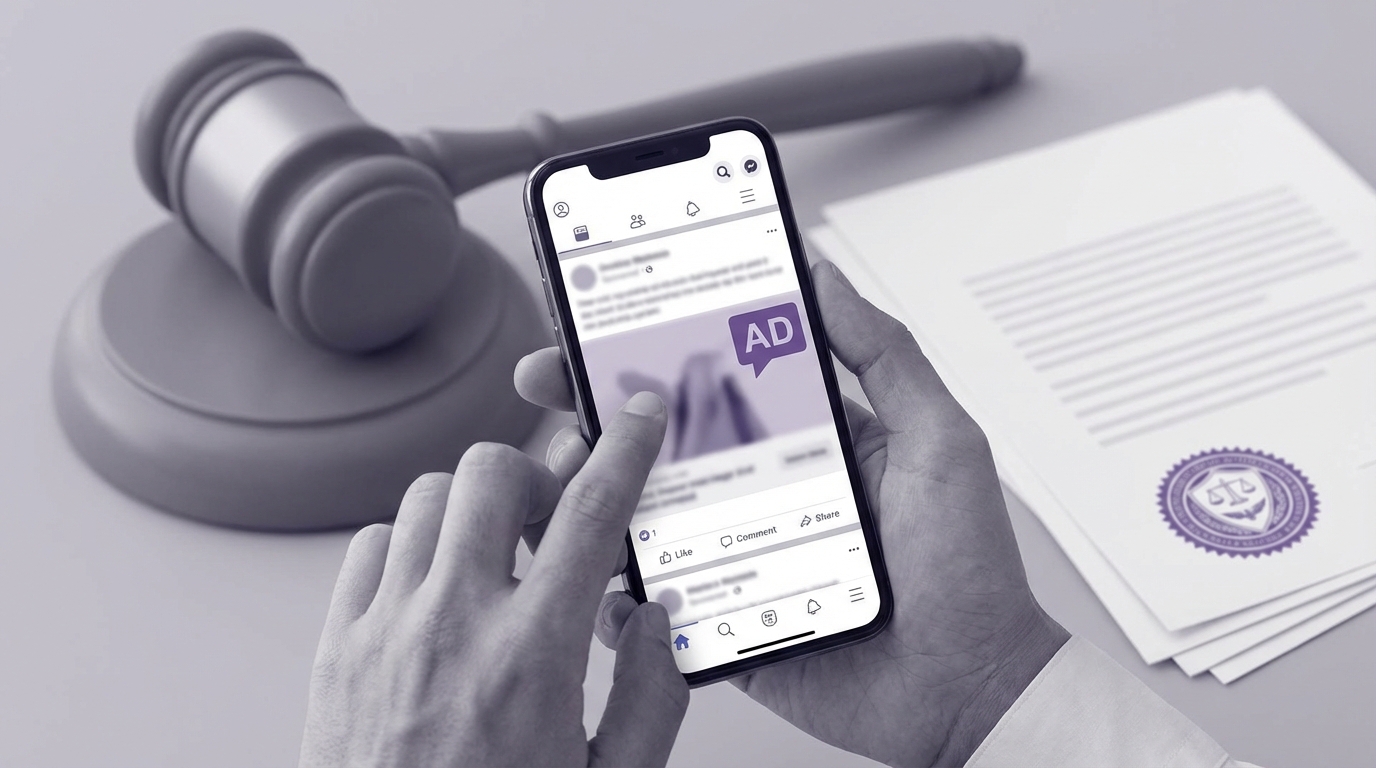
“Influencer marketing will not die from lack of reach. It will die from lack of trust.”
The market already priced this in: brands that handle influencer disclosure properly see higher long-term ROI on sponsored content, while those that ignore the Federal Trade Commission’s rules quietly burn money on campaigns that will never compound trust. The FTC is not just a regulator in this story. It is a proxy for consumer trust, and right now, many brands and creators act like those rules are optional fine print. They are not.
Investors watch this pattern. They see companies pour budget into creator programs, then bury disclosures under “partner” tags, tiny “ad” labels, or vague “thanks to XYZ” captions. That gives a short bump, but it does not build an asset. The ad spend behaves like a one-off expense instead of a repeatable growth channel. The irony: clear disclosure, which many fear will “kill engagement,” often does the opposite. It frames the relationship honestly and makes the endorsement more believable.
The tension comes from one simple conflict: performance marketers want every click and every sale. Legal teams want to avoid the next FTC press release. Founders and CMOs sit in the middle, juggling growth targets, legal risk, and brand equity. The FTC keeps updating its endorsement guides, but most operators still treat disclosure as a checkbox, not a growth lever.
The trend is not clear yet, but a pattern is forming. The brands that win over the next decade will not be the ones that hide the word “ad.” They will be the ones that build a system where disclosure is consistent, easy to execute, and framed as part of the brand story. That system-level thinking is where real business value shows up: lower legal risk, more predictable creator performance, and stronger LTV from customers who actually trust what they see online.
“If your influencer strategy only works when consumers are confused, you do not have a strategy. You have a liability.”
Why the FTC cares about influencer disclosure
The FTC’s endorsement guides are not about punishing creators for using brand deals. The focus is simple: stop deceptive marketing. If a post, video, or review could mislead a person into thinking a recommendation is independent when it is paid or incentivized, the FTC wants that made clear.
From a business point of view, this comes down to three questions:
1. Was there a “material connection” between the brand and the creator?
2. Would that connection matter to a reasonable viewer?
3. Was the connection clearly and conspicuously disclosed?
If the answer to 1 and 2 is yes, the answer to 3 must also be yes.
A “material connection” is broader than many people think. It is not just a wire transfer labeled “sponsorship.” It includes:
– Free products
– Discounts
– Commissions or affiliate payments
– Travel or event invites
– Early access to products
– Equity or revenue share
Investors look at this through a different lens: if a brand is building a growth channel on shaky legal ground, it introduces real downside risk. A single enforcement action is not just a fine. It can trigger:
– Forced corrective disclosures
– Loss of creator trust
– PR blowback
– Disruption to an acquisition or funding round if it exposes weak compliance
“Regulatory risk rarely shows up in the first pitch deck, but it is often one of the last questions before a term sheet.”
For growth-focused founders, influencer programs are attractive because they scale across platforms and geographies. The problem is that disclosure laws span countries, and the FTC rules often set the tone that other regulators follow. If your brand wants to sell in the US, you cannot ignore this.
What the FTC actually expects from brands and creators
The FTC’s public guidance on endorsements lays out several key expectations. The agency does not care about pretty language. It cares about clarity.
1. Disclosure must be clear and conspicuous
Clear means a normal person can understand that there is a paid or incentivized relationship.
Conspicuous means the disclosure is hard to miss, not buried.
In practice, that means:
– On social posts: the disclosure appears early in the caption, not cut off by “See more.”
– On video: the disclosure is spoken and visible on-screen at the time of the endorsement, not just in the description.
– On livestreams: repeated disclosures during the stream, not only at the very start.
– On blogs: placed near any affiliate links or sponsored sections, not hidden in a generic site-wide disclaimer.
The FTC has warned brands that vague terms like “partner,” “collab,” or a brand tag alone do not meet this standard. Neither do long lists of hashtags where “#ad” sits at position 15.
2. The disclosure must match the platform format
The same rule does not always work across formats. The FTC expects brands and creators to adapt.
For example:
– On TikTok or Reels, a spoken “This video is sponsored by…” early in the content plus a clear label on-screen carries more weight than a tiny “Paid partnership” toggle.
– On Instagram, “#ad” or “Sponsored by [Brand]” at the start of the caption is stronger than “partner” at the end.
– On YouTube, spoken disclosure within the first minute and on-screen text beats burying it in the description.
The FTC has stated that built-in tools like “Paid partnership” labels alone usually are not enough if they are small, easy to miss, or unclear about the nature of the relationship.
3. Brands are responsible, not just influencers
This is the part founders and marketing teams often underestimate. The FTC holds brands responsible for endorsements made on their behalf. That means:
– You need written guidelines on disclosure for creators.
– You need a process to review content for compliance.
– You need to monitor campaigns and correct non-compliant posts.
The agency has gone after brands that failed to train or supervise influencers, not just individual creators who posted unclear content.
This matters during due diligence. A buyer or investor will ask:
– Do you have influencer policies?
– Do you audit sponsored content?
– Have you ever received a regulatory notice?
A weak answer here can reduce valuation or slow a deal.
The most common ways brands and creators get disclosure wrong
Even large brands with in-house legal teams repeat the same patterns. They are not ignoring the FTC on purpose. They are prioritizing short-term performance over long-term trust.
1. Hiding disclosure for “better” engagement
Many marketers still worry that the word “ad” kills engagement. The data is mixed. In practice, the format of content and the relationship with the audience matter more than the label.
This leads to risky behavior:
– Putting “#ad” at the end of a long caption
– Using vague phrases like “partnered with [Brand]”
– Relying only on brand tags
– Shrinking on-screen disclosure text to near-invisible sizes
When campaigns are structured this way, the ROAS figure you log in your spreadsheet is fragile. You do not know how much of that performance relied on confusion. If disclosure becomes stricter or platforms change their rules, your numbers may crash.
2. Treating affiliate links as a gray area
Affiliate programs are still growth engines for many DTC and SaaS brands. They are also a disclosure trap.
Some common practices:
– Bloggers placing affiliate links without any per-page disclosure
– Creators calling links “support the channel” without explaining they earn a commission
– Brands giving “discount codes” that pay commission, but never instructing creators to disclose that part
The FTC views commission as a clear material connection. That means affiliate content needs disclosure as much as a flat-fee sponsorship. Ignoring this risk might give a small short-term edge on click-through. It also builds a library of non-compliant content that can be used against you.
3. Relying on platform labels alone
Platforms offer tools like:
– Instagram’s “Paid partnership”
– YouTube’s “Includes paid promotion”
– TikTok’s branded content toggle
These tools help, but the FTC has repeatedly signaled that they are often not enough on their own. They can be:
– Too small
– Not consistently visible
– Not understandable to all viewers
Brands that only rely on these labels without plain-language disclosure create legal and trust risk. The platform’s UX can change overnight. Your compliance position should not depend on a button you do not control.
4. Ignoring non-cash incentives
Many early-stage brands send free products instead of cash. Founders convince themselves that “no money changed hands,” so there is no need for disclosure.
The FTC disagrees. Free products count as a material connection if they could affect how someone talks about a brand. That includes:
– PR packages
– Long-term product loans
– Travel and event invites
– Beta access that others cannot get
If a founder builds a brand off heavy gifting and seeding without disclosure, the business accrues quiet risk. All that “organic buzz” may look impressive in growth graphs, but in a legal review it may look like a pattern of hidden promotion.
What compliant influencer disclosure looks like in practice
To move from theory to practice, you need a set of simple, repeatable rules. These rules must be easy for creators to follow without legal training, and they must be tied to measurable outcomes so the growth team cares.
Channel-by-channel examples
Below are examples that align with FTC expectations more closely than the vague approaches many campaigns still use.
Instagram feed & Stories
Good practices:
– Put “Ad” or “Sponsored by [Brand]” at the very start of the caption.
– For Stories, place “Ad” or “Paid partnership with [Brand]” in a large, readable font on the first frame where the promotion appears.
– If multiple frames include the product pitch, repeat the label at intervals.
Weak practices:
– “#ad” buried after multiple hashtags
– Only using “collab” or “[Brand] partner”
– Relying on the “Paid partnership” toggle without any text
TikTok & Reels
Good practices:
– Verbally say “This video is sponsored by [Brand]” within the first few seconds.
– Display on-screen text like “Sponsored by [Brand]” in a clear, large font.
– Use obvious tags like #ad or #sponsored in the caption, near the start.
Weak practices:
– Only using a brand hashtag
– Saying “working with [Brand]” without clarifying that it is a paid promotion
– Disclosing only in small text at the very end of the clip
YouTube
Good practices:
– Say “This video is sponsored by [Brand]” at the start, before the main content.
– Keep a small but readable on-screen label during the segment where the product is discussed.
– Include a clear description line at the top: “Sponsored by [Brand]. Some links are affiliate links, which means I earn a commission if you buy.”
Weak practices:
– Relying only on the YouTube “includes paid promotion” switch
– Mentioning the sponsorship halfway through without any text
– Hiding disclosure below a “Show more” fold in the description
Blogs & newsletters
Good practices:
– Add a short, clear disclaimer near the top of the article or email: “This post contains affiliate links. If you buy through these links, I may earn a commission.”
– For fully sponsored posts, state: “This article is sponsored by [Brand].”
– For review content, explain if the product was sent for free.
Weak practices:
– Hiding a generic disclosure in the site footer only
– Using vague language like “We may receive compensation from partners” without connecting it to particular links
– Adding a one-time site-wide banner that disappears on scroll
Business value: why clear disclosure protects and grows your brand
From an investor’s view, influencer programs with strong disclosure practices behave like a more stable asset. They are less likely to face sudden legal shocks, and they build trust that compounds over time.
There are three major business benefits.
1. Lower regulatory and legal risk
Clear disclosure reduces the chance of:
– FTC enforcement actions
– Class-action lawsuits for deceptive marketing
– Platform-level penalties
For a startup in growth mode, even one enforcement letter can disrupt:
– Ongoing fundraising
– Partnership negotiations
– A planned exit
Investors discount businesses with unquantified regulatory risk. A clear disclosure framework can support a higher valuation multiple for brands that lean heavily on creators.
2. Stronger performance metrics over time
Many marketers compare disclosed content and undisclosed content and see slightly lower click-through on the disclosed posts. They treat that as proof that disclosure “does not work.”
The issue is time horizon. When viewers repeatedly discover that recommendations were quietly sponsored, trust erodes. That hits:
– Long-term engagement
– Email and SMS performance
– Repeat purchase rates
Brands that lean into open disclosure see more stable numbers:
– Sponsored posts behave more like trusted recommendations.
– Creators can talk openly about why they work with a company.
– Conversion depends less on tricking the viewer and more on fit.
“Real performance marketing does not hide the truth. It tests the truth at scale.”
3. Better creator relationships and content quality
When brands are clear about disclosure expectations, good creators appreciate it. It helps them protect their own channel reputation.
A strong disclosure policy also forces better briefings:
– Why the product solves a real problem
– What type of content fits the audience
– Which claims are supported by data
This tends to produce content that sells on substance, not on confusion. That kind of content is more evergreen and can be repurposed in paid media, landing pages, and email flows with less legal risk.
How to build a compliant disclosure system inside your company
You do not need a giant legal team to get this right. You need structure. Think of it as building a small internal product for influencer compliance.
Step 1: Write a simple, plain-language disclosure policy
Marketing, legal, and founder/leadership should agree on a one or two-page document that answers:
– What counts as a material connection for this brand?
– What exact phrases should creators use per channel?
– Where should those phrases appear (beginning of caption, on-screen, etc.)?
– How will we review and approve content?
Avoid legal jargon. The creators reading this policy are often not lawyers. The more straightforward the document, the more consistent your compliance.
Step 2: Turn that policy into templates and checklists
Do not just send creators a PDF and hope for the best. Convert the policy into:
– Caption templates
– Script snippets for video
– Text overlays ready for use
– A simple checklist for your internal team reviewing posts
For example:
– Instagram caption template:
– “Ad: Working with [Brand] today to show you how I use [product] in my daily routine…”
– Video opener:
– “Quick heads up before we start: this video is sponsored by [Brand].”
These templates speed up content creation and reduce friction between performance and compliance goals.
Step 3: Build compliance into your contracts
Every influencer or affiliate agreement should cover:
– The obligation to follow your brand’s disclosure guidelines
– The right for the brand to request corrections or removal of non-compliant content
– The need to keep disclosures visible for as long as the content is live
This contract language does not mean you will audit every piece of content in real time. It gives you leverage to fix problems when you spot them.
Step 4: Monitor and audit campaigns
You need a basic monitoring loop:
– Before posting: spot-check sponsored content for correct disclosure.
– After posting: run periodic audits of live content.
– On discovery: request corrections promptly when you see non-compliance.
This can be manual at first. As your creator program scales, you might:
– Use influencer management tools that pull content into dashboards.
– Assign internal ownership for quarterly audits.
– Track a simple metric such as “percentage of reviewed posts compliant at first review.”
That last metric matters. It tells you if your guidelines are being followed or if you need better training.
Step 5: Train your internal team
Many disclosure mistakes start inside the company. A junior marketer may write briefs that emphasize performance and underplay disclosure. A founder might push for “softer” language to keep metrics high.
You need short training for:
– Growth and performance marketers
– Social media managers
– Affiliate managers
– Content and PR teams
The training does not need to be long. It should provide:
– A quick summary of FTC rules that affect your brand.
– Real examples of good and bad disclosures.
– A checklist for campaign setup.
Pricing models, growth, and the hidden cost of non-compliance
Influencer deals usually fall into a few pricing models. Each model has its own disclosure risk profile, and each one plays a different role in your growth plan.
Common influencer pricing models and compliance impact
| Model | How it works | Disclosure risk | Growth impact |
|---|---|---|---|
| Flat fee sponsorship | Fixed payment per post / video / series | Clear material connection; easy to disclose if guided well | Predictable cost; works well for brand launches and big pushes |
| Affiliate commission | Creator earns % of sales via links or codes | Often under-disclosed; risk of hidden incentives across many posts | Strong unit economics; can scale heavily if compliance is structured |
| Product seeding / gifting | Free products in exchange for potential content | Frequently treated as “organic”; high hidden risk if undisclosed | Low cash outlay; effective for early buzz but needs clear rules |
| Revenue share / equity | Creator holds a share of revenue or ownership | Significant material connection; must be very clear to viewers | Aligns long-term interests; powerful if disclosed openly |
| Whitelisting / paid social | Brand runs ads through creator accounts | Viewers may confuse ads with organic content; needs clear ad labeling | Can amplify top-performing creator content across larger audiences |
From a business angle, the highest short-term performance often shows up in places where disclosure is weak:
– Affiliates who never mention that links are paid
– Gifting campaigns where posts “look” organic
– Creator-boosted ads that feel like normal posts
This inflates ROAS on paper. It also inflates legal and trust risk. Mature brands treat this gap as a cost of goods problem: the “true cost” of acquisition includes the cost of compliance and the future cost of lost trust if they cut corners.
FTC signals investors and founders should watch
Regulators rarely move quickly, but they telegraph their direction. For influencer marketing, several signals matter to anyone betting big on this channel.
1. Updated endorsement guides and staff reports
The FTC periodically updates its endorsement guides, publishes examples, and issues staff reports. These documents show:
– Which practices the agency targets now
– How it views new formats like micro-influencers and short-form video
– How it thinks about platform tools and disclosures
Founders and marketing leaders should treat these updates like product changelogs from a key partner. They shape the guardrails for your growth plans.
2. Public enforcement actions
When the FTC brings a case, it often issues a press release and a detailed complaint. These documents show real-world behavior that triggered enforcement:
– Vague hashtags
– Hidden fees or terms in endorsements
– Fake reviews
– Lack of brand oversight
For investors, repeated enforcement in a particular sector can signal that the sector carries higher regulatory risk. That might change how they value influencer-heavy startups in that category.
3. Cooperation with other regulators
Regulators in other countries, such as the UK and EU, also publish guidance on influencers and endorsements. While each region has its own rules, the direction is similar: more clarity, more responsibility, more enforcement.
If your brand sells cross-border, your disclosure system should assume tighter rules, not looser ones. This avoids retrofitting your processes under pressure later.
Building influencer disclosure into your growth model
Most growth models for influencer marketing focus on metrics like:
– Cost per acquisition (CPA)
– Return on ad spend (ROAS)
– Content engagement rates
– New customer LTV
Very few models include:
– Compliance cost per campaign
– Probable regulatory risk exposure
– Trust impact from disclosure practices
That gap can distort decision-making. A more realistic model includes several levers.
Lever 1: Compliance as a fixed program cost
Treat:
– Policy creation
– Legal review
– Training
– Monitoring tools
as a fixed program cost, just like software or payroll. Spread this cost across campaigns to get a “compliance-adjusted CAC.” This gives a more accurate view of the true cost of the influencer channel.
Lever 2: Discount rate on shady tactics
If you see a campaign where strong performance only appears when disclosure is weak, apply a discount rate to that performance. Assume a portion of that revenue is fragile and might not repeat if rules tighten.
In model terms, you can:
– Reduce the expected LTV of customers acquired via under-disclosed campaigns.
– Lower the forecast for repeat engagement from those audiences.
– Assign a probability of regulatory intervention over time.
This forces you to compare clean and borderline tactics on a more level field.
Lever 3: Value of trust-rich audiences
Audiences that are used to seeing clear disclosure and honest reviews often have:
– Higher email open rates
– Higher referral conversions
– Better retention
You can see this in cohort analysis: customers from transparent creators often behave more like “brand fans” than deal hunters.
In your growth model, treat acquisition from high-trust creators as a separate cohort with:
– Higher LTV
– Lower churn
– Stronger referral volume
Disclosure is one of several factors that create this trust, but it can be measured and managed.
Why so many companies still ignore the guidelines
If FTC expectations have been public for years, why do many campaigns still skirt the rules?
Short feedback loops vs long consequences
Paid social dashboards provide instant feedback:
– Clicks
– Sales
– Cost per purchase
Disclosure risk rarely shows up on a weekly dashboard. It appears:
– In legal letters years later
– During M&A or funding due diligence
– In subtle erosion of audience trust
Humans bias toward what they can see now. Marketing teams optimize for this week, not for the chance of a regulatory action in five years. Without leadership pressure, compliance gets deprioritized.
Misaligned incentives across teams
Inside a growing company:
– Performance teams are judged on revenue.
– Legal is judged on avoiding risk.
– Founders are judged on growth and runway.
When incentives clash, performance often wins in the short term. If nobody attaches explicit value to trust and compliance, disclosure becomes a negotiation on every campaign.
A founder can change this by:
– Setting clear internal rules: “We do not run under-disclosed campaigns.”
– Baking compliance into bonus criteria, not just revenue.
– Making disclosure performance a visible metric.
The myth that consumers “do not care”
Many operators still claim that consumers do not care about disclosure as long as the content looks good. Surveys suggest a more nuanced reality:
– Many buyers accept sponsored content if they trust the creator.
– They resent feeling tricked later.
– Younger audiences in particular are more aware of sponsorships.
There is a business reason why some of the largest creators lean into clear sponsorship messaging. It protects their long-term earnings power. Brands that partner with these creators tap into that stability.
What founders should ask before scaling influencer spend
Before a company doubles or triples its influencer budget, leadership should ask a few blunt questions:
1. “If the FTC looked at our top 50 influencer posts, what would they see?”
Run a quick internal review:
– Are disclosures clear?
– Are they visible on all devices?
– Do affiliate posts explain commissions?
If the honest answer is “not really,” your program is exposed.
2. “Could we explain our disclosure process to a potential acquirer in one slide?”
An acquirer or late-stage investor will want to know:
– Who owns influencer compliance?
– What your documented process looks like
– How many non-compliance incidents you have had
If your answer is messy or informal, that becomes a negotiation point.
3. “Are we okay with walking away from creators who refuse proper disclosure?”
This is the hard one. Some creators will push back:
– “My engagement drops when I say ‘ad.'”
– “I use ‘partner’ and my audience understands.”
– “Other brands do not ask for this.”
If your brand caves to these arguments, you build your growth on an unstable foundation. Saying “no” to those deals is a test of how serious you are about trust and long-term value.
Where this is heading next
Technology, consumer behavior, and regulation do not move at the same speed, but they influence each other.
Several trends are worth watching:
– Platforms adding stronger native disclosures and possibly enforcing them more strictly under pressure from regulators.
– Tool vendors adding compliance features into influencer management and affiliate dashboards.
– More class-action law firms targeting influencer campaigns that blur lines around endorsements, health claims, or financial products.
– AI-generated content blending with influencer content, raising new questions about what “real” endorsement even means.
Through all of this, one principle remains stable: if you pay or reward someone to say good things about you, the audience deserves to know. Brands that build growth engines around that principle will spend marketing dollars that compound in trust, not just in impressions.
“The cheapest ad is the one you never have to apologize for.”