
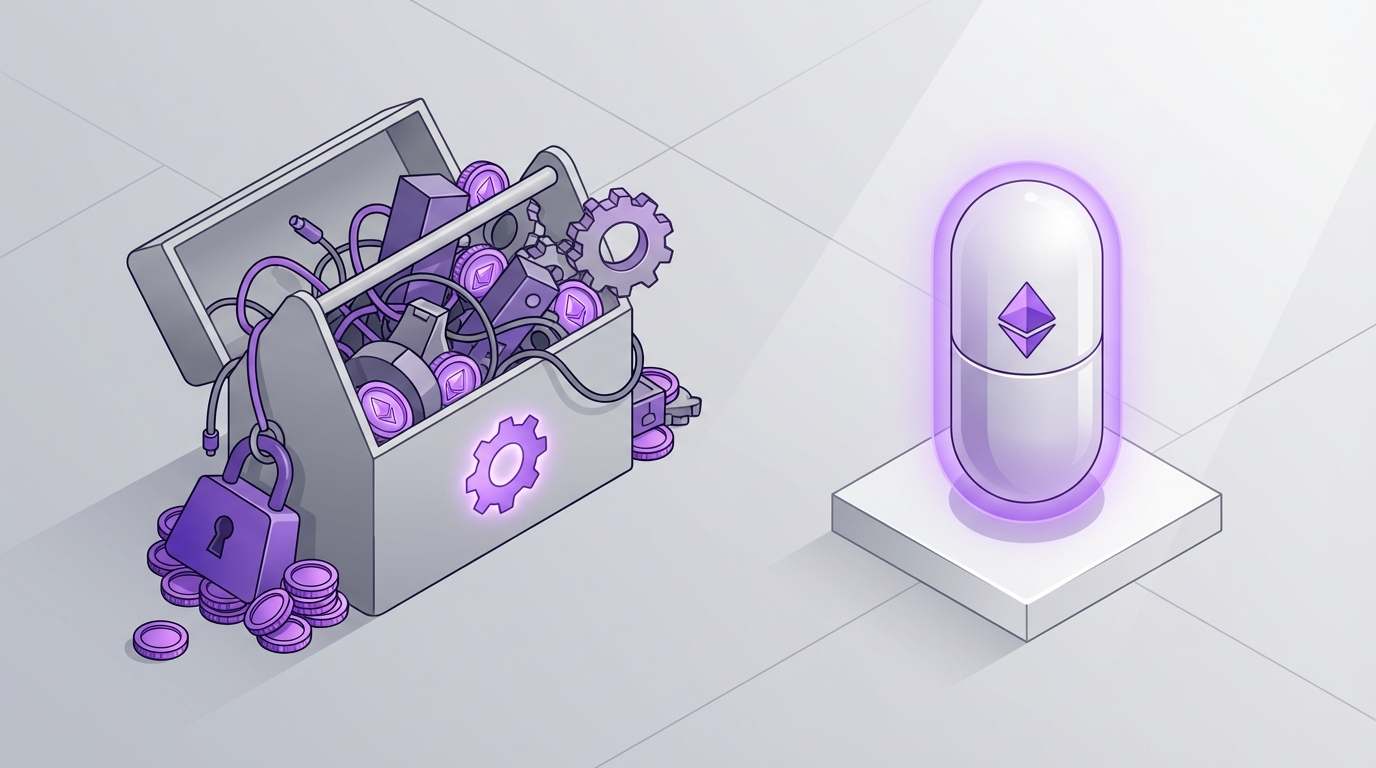
“Open source is free like a puppy, not free like a beer.”
The market keeps proving the same uncomfortable truth: for many stores doing between 1 and 10 million dollars a year in online revenue, WooCommerce often costs more than Shopify when you factor in development, maintenance, extensions, and lost time. The sticker price misleads founders. The total cost of ownership decides the winner.
Investors look at one thing first: how fast every new dollar in revenue appears, and how little it costs to keep that dollar. Founders, on the other hand, often start with another question: “Can I avoid paying a platform fee?” WordPress plus WooCommerce looks cheap at the start. Hosting seems affordable. Themes seem affordable. Extensions look like one-off buys. Then the hidden line items pile up: custom development, plugin conflicts, performance tuning, security work, broken checkout flows, and missed campaigns because the stack was down or too slow.
Shopify flips that trade. You pay a visible monthly fee and a processing rate. You agree to play inside their box. You win time back. The ROI comes from speed of execution and fewer unknowns. This is why private equity buyers and growth investors usually value a Shopify store higher than a WooCommerce store at the same revenue level. Revenue that runs on predictable infrastructure trades at a premium.
The trend is not clean. There are outliers. There are WooCommerce stores that run lean and throw off strong profit. There are Shopify builds that drown in app fees. The pattern still shows up again and again in real deals: once a store passes a certain revenue and complexity threshold, “free” open source starts to drag on growth like technical debt. The business question becomes simple: at what point does control stop being an asset and start being a cost center?
Expert Opinion: A mid-market eCommerce buyer shared that they apply a 0.25x to 0.5x revenue discount to WooCommerce stores compared to similar Shopify stores because “platform risk and maintenance overhead hurt future cash flow.”
This is the tension behind “WooCommerce vs. Shopify: When open source becomes too expensive.” It is not a discussion about features. It is a discussion about cost of growth, capital efficiency, and the thing founders rarely model: the opportunity cost of their own time.
Why “Free” Open Source Starts Burning Cash After Product-Market Fit
Once a store proves demand, the constraints change. Early on, the founder cares about avoiding fixed costs and launching something that works. After product-market fit, investors look at:
– How fast the team ships new campaigns
– How stable the checkout is during traffic spikes
– How hard it is to hire talent for that tech stack
– How predictable the tech budget is over a 12 to 24 month period
WooCommerce, by design, hands you control over nearly everything. That control has real business value at a certain phase. You can tweak every part of the stack. You can run any experiment. You can host anywhere. But with control comes ownership of every future problem.
Data Point: In portfolio reviews across several small funds, technical leaders report that WooCommerce stores above 3 million dollars in annual revenue often carry 1.5x to 2x the maintenance cost of similar Shopify stores, counting freelance and internal developer time.
If you are a solo founder with strong WordPress skills, that trade feels fine. Your dev time is “free” in your internal mental accounting. Once headcount grows and the business has a marketing team, support team, and growth targets, that trade shifts. Every hour your only senior engineer spends chasing a plugin conflict is an hour they are not building a better subscription flow, not improving AOV, not fixing the retention funnel.
At scale, engineering time is an expensive currency. The platform that demands less of it usually wins on ROI.
The Core Cost Model: WooCommerce vs. Shopify
Most content compares WooCommerce and Shopify by listing features or plugin counts. That misses the real story for growth businesses: the cost structure and its impact on speed.
Below is a simplified annual cost model for a store doing about 1.5 million dollars a year in online sales.
Base Platform & Transaction Cost Comparison
| Cost Area | WooCommerce (Self-Hosted) | Shopify (Standard) |
|---|---|---|
| Platform license | $0 (plugin is free) | $948 (79/month) |
| Hosting | $1,200 to $4,800 (100 to 400/month for decent managed hosting) | Included in platform fee |
| Payment processing | ~2.9% + 0.30 via Stripe/PayPal | 2.9% + 0.30 (Shopify Payments basic tier) |
| Core extensions / apps | $500 to $3,000 (annual licenses) | $600 to $4,000 (monthly app fees) |
| Maintenance & updates | $3,000 to $15,000 (part-time dev or agency support) | $0 to $3,000 (light front-end or theme support) |
| Performance & security work | $2,000 to $10,000 (caching, security hardening, audits) | Mostly covered by Shopify, some cost for audits at scale |
In raw platform and hosting cost, WooCommerce usually looks cheaper or equal. The gap opens when you add the human layer:
– Who updates plugins without breaking checkout?
– Who debugs a theme conflict when a plugin pushes an update on Black Friday week?
– Who configures caching and database tuning when you run a flash sale?
Shopify offloads that operational burden to its core platform. You still need someone to manage themes and apps, but you are not responsible for the server, PHP versions, database engines, and core security patches. Founders rarely give that a dollar value at the start. Buyers and investors do.
Where WooCommerce Starts Out Strong
Before we talk about when WooCommerce turns expensive, we need to be fair about where it wins. Investors look for the story behind why a tech choice made sense at the time.
Low Initial Cash Outlay
For bootstrapped founders, WooCommerce offers:
– No platform license
– Very cheap themes
– Huge plugin library
– Ability to run on low-cost hosting
You can go from idea to live store with a few hundred dollars and a weekend of work if you already know WordPress. That matters when you are testing an unproven product and have no outside capital.
Control Over Stack And Data
For brands with special needs, WooCommerce offers:
– Control over hosting provider and region
– Ability to integrate with unusual back-office systems
– Full access to database and codebase
This is attractive for teams that want to control every technical detail or have regulatory or data residency needs that standard Shopify plans cannot solve without heavy workarounds.
Synergy With Existing WordPress Content
A lot of DTC brands grow out of content sites. They already run:
– Established blogs
– SEO-heavy resource libraries
– Lead capture funnels
Adding WooCommerce on top of that feels natural. One CMS. One login. Shared plugins for SEO and content. Short term, that gives a nice marketing lift.
All of this makes sense in the zero-to-one phase. The trade becomes harder when you move from proof-of-concept to repeatable growth.
The Hidden Cost Curve Of WooCommerce After Growth Kicks In
The market pattern repeats: a WooCommerce store hits a few inflection points where costs spike in unexpected ways.
Inflection Point 1: Performance Under Real Traffic
At low traffic, almost anything works. A cheap shared hosting account loads pages slowly but not terribly. Once your marketing starts to work, performance becomes a serious line item.
There is a direct link between load time and conversion rate. Shaving even 0.2 or 0.3 seconds from checkout can yield more revenue without more ad spend. On WooCommerce, that gain usually demands:
– Better hosting (VPS or managed WordPress)
– Caching configuration
– Image compression and CDN setup
– Database cleanup and query tuning
– Debugging plugin bloat
Data Point: A common benchmark from agencies: moving a WooCommerce store from cheap shared hosting to tuned managed hosting can cut median page load times by 40 to 60 percent, but also increases hosting and dev cost by 3x to 5x for that line item.
Shopify, in contrast, ships on a tuned infrastructure out of the box. You can still hurt performance with bloated themes and too many apps, but you are not worried about PHP workers or MySQL bottlenecks.
At this point, WooCommerce is not just a “platform.” It behaves like a partial engineering department you have to finance.
Inflection Point 2: Plugin Sprawl And Technical Debt
WooCommerce runs on the WordPress plugin model. That flexibility is the main value and the main risk.
Early on, founders install a plugin for everything:
– Abandoned cart recovery
– Custom fields
– Complex shipping rules
– Various payment gateways
– Analytics connectors
Over time you end up with 30, 40, or more active plugins. Each one adds:
– Code to load
– Possible conflicts
– Update cycles
– Security surface
When one plugin update breaks another, your checkout might go down for hours or days. That is not just a technical event. It has direct revenue impact and can wreck ad campaigns.
Shopify has a similar app model, but apps run in a controlled environment and the core update risk is much lower. You are still exposed to app outages, but rarely to full-store crashes because of a theme function collision.
From an investor viewpoint, plugin sprawl is a risk factor. It signals unstructured technical decision making and hidden maintenance cost.
Inflection Point 3: Talent And Vendor Dependence
There are many WordPress developers. There are fewer who are strong at WooCommerce at scale under traffic, with complex integrations and custom logic.
As the store grows, you need:
– Reliable dev support with clear SLAs
– People who understand checkout flows and performance
– Capacity for new features and experiments
If your stack is a one-off, with heavy custom code and random plugins, you end up dependent on a single freelancer or agency. If they go away, your bus factor is one.
Recruiting for Shopify is easier in many regions because the platform is more standardized, the documentation is shaped for merchants, and the theme system has clearer conventions.
Investors ask questions around this when they do technical due diligence. They want to know how hard it will be to maintain or extend the system. WooCommerce with bespoke customizations and no documentation gets a valuation haircut.
Direct Cost Comparison: Sample Scenario
To make this tangible, here is a stylized comparison for a brand doing about 5 million dollars a year online, with modest complexity: 200 SKUs, some bundles, basic subscriptions, and campaigns across email and paid social.
Annual Operating Cost Snapshot
| Category | WooCommerce Setup | Shopify Setup |
|---|---|---|
| Platform & hosting | $6,000 (managed WordPress hosting + premium plugins) | $3,588 (299/month Shopify Advanced) |
| Apps / Extensions | $3,000 (subscriptions for key WooCommerce extensions) | $5,000 (email, reviews, upsells, reporting apps) |
| Engineering / Maintenance | $36,000 (0.5 FTE dev at $72k fully loaded) | $12,000 (0.1 to 0.2 FTE front-end / theme work) |
| Performance & security projects | $10,000 (annual clean-up and tuning) | $2,000 (audits and minor work) |
| Emergency fixes | $5,000 (unplanned outages, plugin conflicts) | $1,000 (rare theme or app issues) |
| Estimated annual total | $60,000 | $23,500 |
The exact numbers will vary by market and vendor rates, but the pattern is common: WooCommerce carries a larger engineering and “unexpected issue” budget. Shopify carries a larger app and platform fee budget. The real cost is decided by staffing, not license price.
From a business value standpoint, the Shopify structure is more predictable. Finance teams prefer predictable operating cost over random emergencies. That predictability feeds straight into valuation models.
When Open Source Is Still A Win
Open source does not always become too expensive. There are clear cases where WooCommerce keeps its edge long term.
Case 1: Strong Internal WordPress Capability
If the founding team or in-house dev team already:
– Lives in the WordPress stack daily
– Maintains several large WordPress sites
– Has monitoring, deployment, and security baked in
Then the incremental cost of adding WooCommerce can be low. The team treats it as another service in their stack, not as a one-off project. They have good habits around:
– Version control
– Staging environments
– Automated testing for checkout
In this case, WooCommerce can remain cheaper and more flexible, especially if the brand wants heavy content and commerce in one platform.
Case 2: Very Specialized Logic Or Compliance
Some businesses need things Shopify will not support easily without moving to higher-tier enterprise agreements or custom workarounds, for example:
– Very unusual pricing rules
– Country-specific regulatory workflows
– Complex integrations with legacy ERP or government systems
WooCommerce, as open source, can bend to those needs with custom code. The development cost can still be high, but there is no platform rule blocking the path.
Case 3: Margin Profile That Cannot Absorb Platform Fees
If the business operates with thin margins and low order value, Shopify fees combined with app subscriptions might squeeze profit too hard, especially in certain regions where processing fees are higher.
WooCommerce can support:
– Alternative payment providers
– Custom rate negotiation for hosting
– More control over cost stack
In that kind of business, the trade-off between engineering overhead and platform fees might still favor WooCommerce, especially at small scale.
When Shopify Wins On Total Cost Of Ownership
The phrase “when open source becomes too expensive” usually points to three triggers: revenue level, growth speed, and leadership focus.
Trigger 1: Revenue Passes Roughly 1 Million Dollars Per Year
There is no strict number, but many operators report that once a store passes about one million dollars a year in revenue, every fractional gain in conversion rate, AOV, or repeat purchase has a large dollar impact.
At that point:
– Performance issues hurt more
– Downtime hurts more
– Slow experimentation hurts more
If your WooCommerce setup slows down marketing and experimentation, the opportunity cost of staying on it is larger than any platform fee savings.
Shopify makes it easier to:
– Swap themes without re-architecting everything
– Install and test new apps quickly
– Run A/B tests with common tools
Investors value that speed because it feeds directly into revenue growth with the same marketing budget.
Trigger 2: Founder Needs To Switch From “Tech Person” To “Business Leader”
Many WooCommerce stores are run by founders who are comfortable in WordPress. In the early stage, they jump in and fix code, debug CSS, or patch a plugin. That is an asset at the start and a risk later.
There is a moment where that founder time is more valuable:
– Hiring and training team members
– Negotiating better supplier deals
– Improving product and brand
– Building new distribution channels
If the founder is still inside cPanel at midnight tuning PHP settings, the opportunity cost is high.
Shopify forces a different pattern. The founder is less likely to be in the platform’s internals. Their time leans toward marketing, product, and operations instead of tech maintenance. That leadership shift is a key driver of valuation.
Trigger 3: Funding Or Exit Becomes A Near-Term Goal
When a company is preparing for:
– Seed or Series A round
– Strategic partnership
– Acquisition or roll-up
The tech stack comes under scrutiny. acquirers and investors look for:
– Predictable infrastructure
– Low platform risk
– Clean integrations with CRM, analytics, and ops tools
– Clear vendor support
A messy WooCommerce setup with no documentation and a single freelancer in another time zone maintaining it can scare buyers. Shopify is not perfect, but it removes a large class of infrastructure risk questions.
Investor View: One growth investor explained their filter this way: “If the store runs on Shopify, I can assume a certain level of stability. If it runs on WooCommerce, I reserve time and budget for stabilization before scaling paid acquisition.”
That mental model influences term sheets and valuations. The lower the perceived tech risk, the higher the multiple they will pay on revenue.
Hybrid And Migration Strategies
The choice is not always binary for the life of the business. Some brands move between platforms as their needs change.
Path 1: WooCommerce For Validation, Shopify For Scale
For many, the rational path looks like this:
1. Start on WooCommerce to validate product and audience, using cheap hosting and simple themes.
2. Once revenue is predictable and marketing channels work, invest in a stable Shopify build.
3. Migrate the catalog, customer history, and core content.
4. Rebuild the blog or content strategy on a separate WordPress install if needed, connected to the Shopify store.
This path accepts that the first platform was a stepping stone, not a permanent home. The migration has cost, but the long-term operating cost and growth speed justify it.
Path 2: Staying On WooCommerce But Professionalizing Everything
Some brands make a different choice: they keep WooCommerce and treat it like a core software asset. That means:
– Hiring or retaining strong engineering talent
– Putting monitoring, error tracking, and deployment pipelines in place
– Reducing plugin count and consolidating functionality
– Running regular load testing and audits
This increases short-term cost but turns WooCommerce into a reliable platform. The business benefit is full control with fewer surprises. For brands with complex requirements, this can be more appealing than moving to Shopify Plus.
Path 3: Shopify Core With WordPress Content Frontend
Another pattern is to:
– Run the core store on Shopify
– Use WordPress as a headless or semi-headless content site
– Connect product data and purchase flows through APIs or embeds
This gives marketing teams the content tools they like in WordPress, while the transactional parts live on Shopify. The trade is added integration work, but the store’s operational risk and performance rely on a more predictable base.
ROI Lens: How To Decide For Your Own Store
Stripping away tech bias, the decision comes down to return on investment across three buckets:
1. Cash outlay
2. Time and focus
3. Risk
Calculate The Real Annual Cost
Do a simple annual projection that covers:
– Hosting / platform / apps
– All developer and technical contractor hours
– Time you or your leadership spends on technical firefighting
– Lost revenue from outages or major bugs
Put a conservative dollar value on your own time. Many founders ignore that. For a growth business, that cost is real.
Create two scenarios:
– Keep or adopt WooCommerce with a realistic support model
– Keep or adopt Shopify with reasonable apps and maybe theme support
Compare the totals. If WooCommerce only “wins” because you price your own time at zero and under-price risk, that should trigger a second look.
Measure Impact On Growth Speed
Next, ask three questions for each platform:
– How fast can we launch a new sales funnel or landing page variant?
– How fast can we test new post-purchase upsells or bundles?
– How fast can we connect new analytics or marketing tools?
Whichever platform lets you answer “days” instead of “weeks” usually wins on long-run ROI, because compounding small improvements in conversion and retention matter more than saving a few thousand dollars a year in fees.
Assess Risk Tolerance
Finally, check your appetite for:
– Downtime during peak campaigns
– Dependence on a handful of external developers
– Security incidents from plugin vulnerabilities
If your brand runs heavy seasonal campaigns, or your revenue is concentrated in a few key events, risk tolerance is low. A more standardized platform with managed infrastructure might be worth every penny.
If your business is experimental, low volume, and you enjoy tinkering, WooCommerce risk might be acceptable.
Signals That Open Source Is Already Too Expensive For You
If you are already live on WooCommerce, a few leading indicators tell you the platform is hurting your business more than helping it.
Operational Red Flags
– Your team delays marketing campaigns because “the devs are catching up.”
– You hesitate to update plugins because “something might break.”
– Your customer support inbox fills with “checkout not working” screenshots more than once a quarter.
– You keep a list of “don’t touch” plugins or features.
These are signals that the tech stack is constraining revenue. The financial statements will show it later. The operational chaos shows it early.
Financial Red Flags
– Dev and maintenance spending rises as revenue rises, instead of flattening out.
– Each new feature requires several weeks of engineering instead of configuration.
– Your gross margin looks fine, but your operating margin shrinks because of tech overhead.
When tech cost grows faster than revenue, investors call that an unhealthy curve. They want tech investment to support and scale revenue, not chase after it.
Strategic Red Flags
– Potential partners ask probing questions about stability and your answers are vague.
– You delay fundraising or exit conversations because you need “one more rebuild” first.
– Your best marketing ideas die in the backlog because the engineering queue is full of maintenance work.
These are clear signs that whatever control open source gave you at the start is now an anchor.
Positioning Your Choice For Investors And Buyers
Whether you choose WooCommerce or Shopify, the narrative matters. Investors are not religious about platforms. They care about how your choice supports growth and protects cash flow.
If You Are On Shopify
Your message can be:
– The platform cost is predictable.
– Infrastructure is handled by a large vendor.
– The team focuses on marketing, product, and customer experience.
– Changes and experiments ship quickly through themes and apps.
You can back this up with:
– Stable conversion rate metrics
– Low downtime logs
– Fast iteration history
If You Are On WooCommerce
Your story should cover:
– A clear plan for maintenance and security, with named resources.
– Evidence that performance is strong, with measured load times.
– A limited, curated plugin list and reasoning behind each choice.
– Documentation and process that reduce dependence on any single developer.
Investors will test that story. If they see a patched-together site with no process, they will assume future cash outlays to stabilize it and discount your valuation.
Closing Perspective: The Real Price Tag Of “Free”
Open source is not bad. Shopify is not perfect. The key is to look past the first month of hosting bills and platform fees and model the next 36 months of growth.
The market trend shows that for many growing eCommerce brands:
– WooCommerce is a strong tool for validation, content-heavy sites, and specialized cases.
– Shopify tends to win when speed of execution, predictability, and capital efficiency matter more than total control.
In other words, the place where open source becomes too expensive is not only in your budget. It is in your calendar, your backlog, and your ability to say yes to growth opportunities without asking, “Will the site hold up?”